
If you’re new to reef keeping, these ten LPS corals are your best bet.
Candy Cane, Acanthastrea, and Open Brain are forgiving, low on aggression, and don’t need perfect water—just moderate light and flow.

Gentle current for moderate-flow LPS without stressing tentacles.
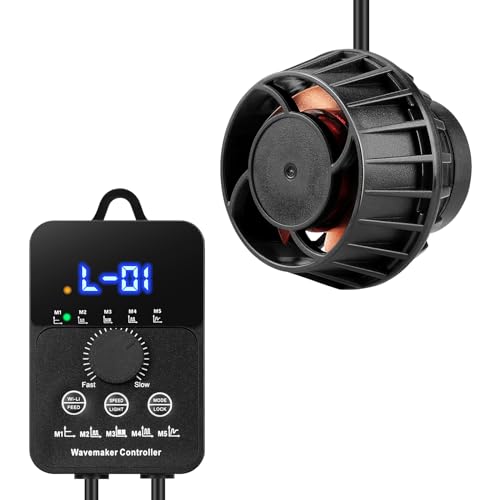
Adjustable wavemaker creates soft water movement, perfect for beginner corals.

Reliable circulation keeps nutrients suspended for feeding and coral health.
Check discounted items inAquarium Pumps
Frogspawn and Bubble need a few inches of space from neighbors to avoid stinging, whereas Hammer and Torch thrive with stronger current.
Favites and Lobophyllia offer electric colors with easy care. Bottom line? Stick to moderate light, stable alkalinity, and gentle flow, and you’ll succeed.
Stick around to see which one matches your tank best.
At A Glance
- Beginner-friendly LPS corals include Candy Cane, Acanthastrea, Open Brain, Lobophyllia, and Bubble corals.
- These corals tolerate moderate light and flow, reducing beginner setup complexity.
- Low aggression species like Acanthastrea and Lobophyllia minimize tank conflicts.
- Stable alkalinity (7–12 dKH) and pH 8.3 are critical for healthy LPS coral growth.
- Secure attachment with reef-safe epoxy putty ensures coral stability and growth.
Why These 10 LPS Corals Are Perfect for Beginners
Since keeping coral often sounds like a high-stakes chemistry experiment, but these ten LPS species prove it’s more like starting with a forgiving houseplant. You’re not failing—you’re learning.
Acanthastrea? It’s lazy aggression, just stomach-prods, not sweeper tentacles.
Lobophyllia? Tolerates low flow, slumps anywhere.
Hammer Coral? Creates that dramatic “hammer wall” when clustered, but demands vigilant water checks.
Torch Coral? Fast-growing, but needs strong current placement.
Favites? Bright electric greens, high visual payoff, moderate lighting.
Using a quiet HOB filter under 40 dB keeps water movement gentle for these corals without stressing them.
These corals forgive your rookie mistakes, making you feel like part of the reef club. Start here, build confidence, then grow. For healthy daytime growth, consider a light with full-day cycles to reduce stress on fish and corals.
Candy Cane Coral: The Easiest LPS for New Reef Keepers
Why does everyone recommend Candy Cane Coral for beginners? Since it’s almost impossible to screw up, and I’ve tested that theory.
Why does everyone recommend Candy Cane Coral for beginners? Because it’s almost impossible to screw up.
You’ll spot it by its red-and-white stripes—like candy canes, but underwater.
It doesn’t attack neighbors, so you won’t start a reef war.
Put it anywhere; it handles moderate light without drama. For consistent results, match it with a full‑spectrum RGBW light to support healthy growth.
You’ll feel like a pro when it grows fast, forgiving your rookie mistakes with water quality.
It’s the coral that says, “Hey, you belong here.”
No sweeper tentacles, no fuss—just easy wins.
Bottom line: grab one, and you’re off to a solid start.
If you’re upgrading to a rimless tank, grab a cover with high light transmission to keep corals thriving while preventing jumps.
Acanthastrea: A Low-Maintenance Coral With Big Color
What’s not to love about a coral that grows in a perfect circular pattern and comes in a vivid red that screams “look at me” without being a total diva? Acanthastrea’s your ticket to instant reef cred.
It doesn’t wave sweeper tentacles around like some drama queens; instead, it shoots its stomach out to claim space—so give it a few inches of clearance.
Place it in the lower-middle tank region with moderate light, and you’re golden. This coral’s forgiving, grows fast, and makes you look like you know what you’re doing. You’ll belong in no time. For secure attachment to rockwork, consider using a reef-safe epoxy putty that cures underwater without harming your tank.
Just as biological media like ceramic rings host beneficial bacteria to maintain water quality, this coral benefits from a stable, clean environment for steady growth.
Bottom line: Easy, stunning, and chill. Get one.
Open Brain Coral: Best Starter Coral for a Striking Look
If you’ve ever seen a coral that looks like a human brain—wrinkled, folded, and undeniably weird—you’ve met the Open Brain Coral (Trachyphyllia spp.). It’s your ticket to an instant centerpiece without the headache. This coral is forgiving, tolerating moderate light and flow—perfect for your first reef tank. You won’t need to stress about exact placement; it’s chill. Just give it some space from aggressive neighbors. A uniform PAR distribution prevents shadows and polyps stress that can affect this coral. Using a reliable heater with automatic shut‑off helps maintain the stable temperatures this coral prefers.
If you’ve ever seen a coral that looks like a human brain, you’ve met the Open Brain Coral.
- Color: vivid reds, greens, blues—a real showstopper.
- Care: easy, ranks high for beginners.
- Aggression: mild, no sweeper tentacles.
Bottom line: for a striking look you can actually keep alive, this is your coral.
Frogspawn Coral: How to Place It Safely Around Aggressive Neighbors
The Open Brain Coral’s chill vibe is a tough act to follow, but the Frogspawn Coral (Euphyllia divisa) brings its own drama—and a few rules. Its six-inch sweeper tentacles, those stinging nighttime ninjas, won’t play nice with aggressive neighbors like Bubble or Torch corals. Pairing your Frogspawn with noise reduction components like the Ultum silencer and Maggie Muffler Mini on your sump can help keep the overall aquarium environment calmer. To place it safely, give it a solid six-inch buffer zone. Pair it with Hammer Corals instead—they’re surprisingly chill cousins. Stick it in moderate flow, mid-tank, where its branching polyps can sway without tangling with enemies. For freshwater setups, using a flocculant can clear suspended particles without harming coral or fish. Skip high-traffic areas near aggressive stinging corals. Bottom line: space is your friend. Measure twice, glue once—your Frogspawn will thrive without becoming a tank bully.
Hammer Coral: How to Create a Beautiful “Hammer Wall
Since you’ve already got your Frogspawn squared away with space and flow, let’s turn up the drama with the Hammer Coral (Euphyllia ancora)—the undisputed star of the “hammer wall.” You can cluster several together at the bottom of your tank, where strong water current makes their anchor-shaped polyps sway in a hypnotic wave, forming that signature “hammer wall” look. Don’t skimp on water quality, though—this beauty demands vigilance. Keep alkalinity and calcium stable, or it’ll sulk. Stick to moderate lighting; high light bleaches them fast. Place three or four heads an inch apart; they’ll fuse into a living curtain you’ll brag about at meetups. For a stable foundation that supports healthy coral attachment, dense ceramic weight prevents drift during powerhead surges. Bottom line: proper flow and pristine water turn this coral into your tank’s showstopper. For a stable foundation that supports bacterial growth and mimics natural reef structure, consider using dry base rock as your substrate.
Torch Coral: Fast Growth and Why It Moves So Dramatically
You’ve already got the Hammer Coral swaying like a rockstar, so let’s crank the energy up with the Torch Coral (Euphyllia glabrescens)—it’s fast‑growing, dramatic, and a little bit of a bully.
| Feature | Why It Matters |
|---|---|
| Sweeper tentacles | Reaches 6+ inches, stings neighbors |
| Growth speed | Doubles size in 6–12 months |
| Flow need | Strong current for that wild sway |
Place it on the bottom or near the top with high flow—those branches twirl like they’re on fire. But keep space; its sweeper tentacles pack a punch. Getting a Torch means you’re part of the club that loves drama with payoff. Just don’t cramp its style. This coral thrives in slightly acidic water conditions that also help keep your aquarium stable. For stable alkalinity, maintain a target of 7‑12 dKH using a quality buffer supplement.
Favites Brain Coral: Electric Colors With Moderate Demands
If you want brain corals that practically glow in the dark without the high-maintenance drama, Favites Brain corals are your ticket. Their electric greens and purples pop under moderate lighting—no fussy placement needed. You’ll get high visual impact without strict rules.
But here’s the catch: they’re aggressive. Long sweeper tentacles mean you’ll need space from neighbors. Think of them as the cool, slightly edgy friend in your tank.
- Lighting: Moderate. Easy.
- Flow: Not demanding.
- Aggression: Yes. Plan accordingly.
For a bold, low-hassle centerpiece that fits your crew, Favites deliver. You’re in the club now.
To reduce tank noise, consider adding rubber isolation pads to any metal stand supporting nearby equipment.
If you need to attach frags rock or fill gaps, a reef‑safe cyanoacrylate gel ensures permanent bonds within seconds.
Lobophyllia Brain Coral: An Easy LPS for Any Tank Location
The Lobophyllia brain coral is a great option if you want an LPS that doesn’t demand a specific spot in your tank. You can place it anywhere—low light, low flow, no problem. It’s less aggressive than other brain corals, so you won’t stress about sweeper tentacles ruining your setup. Just give it moderate lighting and gentle current, and it’ll thrive. For optimal water quality, consider pairing this coral with a filter that maintains consistent flow rates to prevent dead zones. Using a kit with low‑noise filtration helps maintain stable conditions without disturbing the coral.
| Feature | Detail |
|---|---|
| Lighting | Moderate; tolerates low |
| Flow | Low to gentle |
| Aggression | Low; rarely stings neighbors |
| Placement | Anywhere in tank |
| Beginner-friendly | Yes; forgiving of mistakes |
Bottom line: It’s the coral that fits in, just like you.
Bubble Coral: How Much Space It Needs to Prevent Sweeper Damage
Since bubble corals pack a wallop with those sweeper tentacles, giving them space isn’t just a suggestion—it’s a survival strategy for your tank.
Giving bubble corals space isn’t a suggestion—it’s a survival strategy for your tank.
You’ll need at least 6–8 inches of clearance on every side, maybe more.
Those tentacles stretch out at night, reaching for neighbors like a grumpy octopus.
Place yours on an isolated rock, far from Frogspawn or Hammers.
A drop checker can help you monitor CO₂ levels in the water, which supports stable coral growth.
- Keep it low-to-mid tank, with moderate flow.
- Watch for sudden deflation—it’s stressed.
Bottom line: give it room to breathe, or you’ll be playing reef referee.
Seachem Reef Buffer maintains stable pH 8.3 for marine tanks to support coral health.You’ve got this.
Frequently Asked Questions
How Many LPS Corals Can I Keep in a Beginner Tank?
You can keep 3 to 5 LPS corals in a beginner tank—no need to crowd them.
Start with easy ones like Candy Cane or Open Brain. They’re forgiving and won’t wage war on each other if you space them a few inches apart.
Give aggressive types like Torch extra room (their sweeper tentacles sting up to 6 inches).
Test water weekly: ammonia 0, nitrates under 1 ppm.
Stick to this number, and you’ll avoid a coral turf war.
Do LPS Corals Need Special Lighting for Vivid Colors?
You don’t need *special* lighting, but you can’t cheat. Most beginner LPS—like Candy Cane or Open Brain—thrive under moderate LEDs or T5s, no $500 fixtures required.
Want vivid color? Aim for 50-100 PAR; anything less yields dull polyps. Use a cheap light meter to avoid guessing. Your corals won’t scream at you like kids on a road trip—they’ll just fade.
For a flashy tank, invest in a decent fixture; it’s cheaper than replacing bleached corals later. Bottom line: moderate, consistent light beats fancy but harsh setups every time.
Can I Mix LPS Corals With Fish Like Clownfish?
Yeah, you can absolutely mix LPS corals with fish like clownfish—they’re a classic pair.
Clownfish won’t pick at corals, though they might host in a hammer or torch coral, which can stress the coral.
Keep aggressive LPS, like bubble or Favites, spaced out to avoid stinging.
Your clownfish will happily ignore them, and you’ll get a lively, colorful tank without much fuss.
Just watch for those sneaky sweeper tentacles at night.
How Often Should I Test Water Parameters for LPS?
You should test water parameters weekly for LPS corals—that’s the sweet spot. More often if you’re fiddling with supplements or seeing issues.
Key targets? Ammonia and nitrite at zero, nitrate ≤1 ppm, calcium 350‑450 ppm, magnesium 1250‑1350 ppm, pH 8.1‑8.3.
Testing every seven days catches problems early. If your tank’s stable, skip a week sometimes, but don’t slack. Consistency keeps them thriving, and you’ll avoid that “oops, my coral’s sad” moment.
What Is the Easiest Way to Feed LPS Corals Without Overfeeding?
You’ve got a secret weapon: a turkey baster—cheap, precise, and a lifesaver for overfeeding.
Use it to target-feed mysis shrimp or Polyp Labs Reef Roids during calm water, when fish are distracted on the other side of the tank.
That way, polyps snag the food, not the filter.
No messy leftovers, no nitrite spikes.
It’s that simple—your corals eat, you don’t panic, and the tank stays stable.
Done and done.
Rounding Up
So, you’ve got your list. Now, don’t overthink it—pick one coral, not ten. Start with candy cane or open brain; they’re basically the goldfish of the reef world, forgiving your inevitable mistakes.
Bottom line: Spend $40–$60 on a single hardy specimen, give it six inches of space, and call it a win. You’ll look like a genius in a month. Trust me, your tank won’t judge you for starting small.
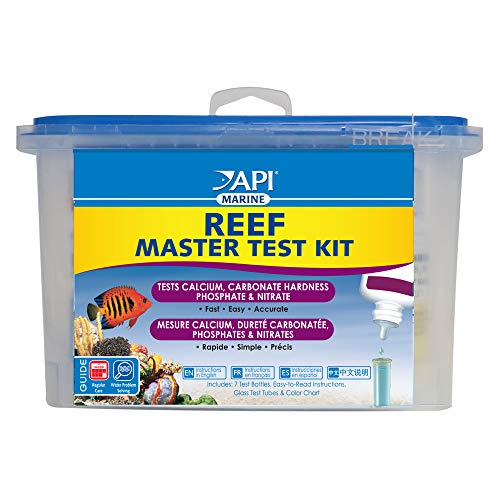
Complete calcium, alkalinity, and phosphate checks for stable LPS water.

High-precision alkalinity readings keep your tank in the 7–12 dKH sweet spot.

Instant pH readout helps avoid dangerous swings and keeps corals thriving.
See today's deals onAquarium Test Kits


