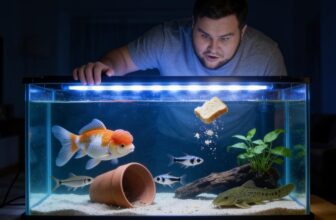
You’ll need a 20‑gallon tank for five Rosy Barbs, though 30 gallons gives them more room to dart and flash their pink‑red colors.
Keep the water between 64‑79°F, slightly acidic to neutral, with a steady filter current they can swim against.
Feed them flakes, frozen bloodworms, or brine shrimp twice daily, just enough that they finish in two minutes.
Breed them in a shallow tank with fine‑leaf plants for the sticky eggs, then move the parents out before they snack on the fry.
Choose tank mates like Zebra Danios or Swordtails, but skip slow fish with flowing tails since nipping happens when barbs get bored or cramped.
Watch for pale colors or fin fraying, signs that something’s off with their group size or water.
There’s more waiting if you want the fuller picture.
At A Glance
- Rosy Barbs need a minimum 20‑gallon tank for five fish, with 30+ gallons preferred for larger groups.
- Keep at least five together to prevent fin nipping, stress, and washed‑out colors in these active swimmers.
- Ideal tank mates include Zebra Danios, Cherry Barbs, and Gouramis; avoid slow, long‑finned fish like Guppies.
- Feed varied diet of flakes, frozen bloodworms, and vegetables twice daily, removing uneaten food promptly.
- Breed in shallow tanks with fine‑leaf plants; fry require infusoria and baby brine shrimp for survival.
Are Rosy Barbs Right for Your Aquarium?
A net bag of bright, darting fish hangs under the pet store lights, and you wonder if they belong in your tank at home.
You watch the males flash pink and red like tiny underwater flames, as females gleam gold.
Their aquarium aesthetics bring warm color to planted tanks with driftwood and Java fern.
You need a group, at least five, for healthy community dynamics—they’re shy alone, bold together.
They’ll nip slow fins though, so you must choose tank mates with short tails like neon tetras.
You check your 20-gallon minimum, test your water, and decide if you’re ready for five years of care.
For added filtration efficiency in their active setup, consider a FijiCube baffle kit to maintain stable water flow and reduce maintenance demands in your sump system.
How Big Do Rosy Barbs Grow?
Walk into any pet store, and you’ll spot them—small, shimmering fish no bigger than your thumb, packed into tanks like living confetti. Those juveniles trick you, friend.
Rosy Barbs grow to six inches long, like a small banana, once they mature around two and a half inches. That lively Rosy Barb coloration you admire—males fiery red, females golden—develops fully only as they reach adult size.
Lifespan variation depends heavily on space and care. With clean water and room to swim, you’ll see five years. Cramped tanks steal years quickly. Choose accordingly. Adult Rosy Barbs need substantially more swimming space than the Fluval SPEC 5‑Gallon Kit mentioned for bettas, requiring tanks of 30 gallons or more for proper schooling behavior.
What Tank Size Do Rosy Barbs Need?
Those six‑inch swimmers you now picture need room to turn, to flee, to rest without bumping glass.
Six inches of muscle and fin need space to turn, flee, and rest without meeting glass.
You should house five Rosy Barbs in a twenty‑gallon tank minimum, though thirty gallons lets them breathe easier. This bre size prevents crowding stress, which makes fish hide and sicken.
Add strong filtration, meaning a hang‑on‑back filter that moves water well, since these active fish create waste that fouls quickly.
When you shop, practice sustainable sourcing—ask stores if their stock comes from farms, not wild rivers, so you protect distant waters. You feel calmer knowing your choices help both your fish and their homeland.
If you plan to upgrade later, a 40‑gallon stand with power outlets provides ample capacity for your growing shoal while keeping equipment cords tidy and safe.
What Water Conditions Keep Rosy Barbs Healthy?
Your thermometer and test strips sit ready on the counter since water that looks clear can still harm your fish.
| Parameter | Ideal Range | Why It Matters |
|---|---|---|
| Temperature | 64-79°F (optimal 72-74°F) | Steady warmth keeps their metabolism balanced, like a comfortable sweater |
| Water hardness | 4-10 KH | Moderate minerals support their scales and gill function properly |
| pH | 6.0-7.0 | Slightly acidic to neutral matches their home streams |
| Lighting intensity | Moderate (8-10 hours daily) | Too bright stresses them; dim light feels like dappled forest shade |
You check these numbers weekly since stress hides in small shifts. Stable conditions let their colors glow, that quiet satisfaction of knowing they trust their home. For tanks trending toward neutral or slightly alkaline conditions, a targeted pH buffer helps maintain the 6.0-7.0 range without phosphate-induced algae issues.
What Should You Feed Rosy Barbs?
- Picture golden flakes swirling down like autumn leaves, catching light as hungry mouths rise to meet them.
- Imagine frozen bloodworms, ruby-red and wriggling, disappearing into eager bellies.
- See bright green peas sinking slowly, their sweetness a gentle surprise.
- Watch brine shrimp glide through water, living treats that spark hunting instincts alive.
Watch your feeding frequency close—you’ll feed small amounts twice daily, no more than they finish in two minutes. Overfeeding fouls their water, and that brings trouble you can prevent. For a thriving planted aquarium that supports their natural behavior, consider supplementing with a balanced macro‑micronutrient blend to keep aquatic vegetation healthy.
How Many Rosy Barbs Should You Keep Together?
You need at least five Rosy Barbs, though more brings out their best nature. A small group invites stress behavior—hiding, pale colors, skittish swimming—because these fish feel exposed without companions.
In larger numbers, you’ll notice richer color variation, especially among males competing for attention. Their pink and gold hues deepen when they feel secure.
Think of them like children at recess: alone, they shrink; together, they flourish.
A twenty-gallon tank holds five comfortably; thirty gallons lets you keep eight or more.
Give them company, and they’ll reward you with confidence.
While Rosy Barbs thrive in standard freshwater setups, reef keepers using calcium reactor media must maintain entirely different water chemistry for their marine systems.
Are Rosy Barbs Aggressive or Fin Nippers?
Even though Rosy Barbs flash bright colors that catch your eye, you might worry those quick fins mean trouble.
You can relax. Rosy Barbs aren’t aggressive bullies, though they’ll sometimes chase slow fish with long, flowing fins. That behavior is called fin nipping, and it happens more when you keep too few of them.
Picture this:
- Five Rosy Barbs swimming tight together like a silver-and-rosy cloud
- One lonely Barb darting nervously, nipping a Guppy’s tail out of stress
- A financing bar of bubbles rising from your filter, giving them oxygen and confidence
- Your tank calm and balanced, no torn fins in sight
Keep at least five, and you’ll see peaceful, playful fish.
Using a programmable daily timer helps maintain consistent lighting that reduces stress-induced fin nipping behaviors.
Which Fish Make Good Tank Mates for Rosy Barbs?
When you’re picking friends for your Rosy Barbs, you’ll want swimmers who match their energy and pace.
Skip slow fish with fancy tails, since your barbs might nip them when excited.
Good companions include Cherry Barbs, whose color morphs range from cherry red to golden, and active fish like Zebra Danios or Swordtails.
Active tank mates like Cherry Barbs, Zebra Danios, and Swordtails match the Rosy Barb’s lively energy without becoming targets.
You’ll find Dwarf Gouramis and Pearl Gouramis fit well too, as they’re calm but not sluggish.
Watch breeding behavior closely if you keep mixed sexes, as chasing can stress tank mates.
Always maintain groups of at least five Rosy Barbs, since confidence in numbers keeps everyone peaceful and your community harmonious.
If you plan to breed your Rosy Barbs, a floating breeding box with reinforced mesh works well for temporarily isolating aggressive individuals or protecting fry from adult tank mates.
When and How Do Rosy Barbs Breed?
A shallow tank, often no deeper than your hand is wide, becomes the stage when your Rosy Barbs decide it’s time to start a family.
You’ll notice breeding cues when the female turns brighter and her belly swells with eggs. The male chases her gently, nudging plants.
Here’s what happens next:
- She lays sticky eggs on leaves, like tiny clear beads glued to green ribbons.
- The male follows, spreading milk-white milt to fertilize them.
- You remove the parents quickly, or they’ll eat the eggs.
- You prepare fry nutrition: infusoria, then baby brine shrimp when they hatch in thirty hours.
Installing a quick connect water filter can help maintain the pristine water conditions essential for successful egg development and healthy fry growth.
How Do You Raise Rosy Barb Fry?
Where do you begin when the eggs have hatched and thirty hours have passed? You pick up a turkey baster, the kind with the rubber bulb, and you move the fry to a shallow rearing tank with two inches of water.
You add fine‑leaf plants as breeding substrates, places where tiny creatures hide. You wait until the yolk sac disappears, about three days, then you offer infusoria—microscopic food you can’t see but they can.
You check your fryflow control twice daily, making sure the filter doesn’t suck them up. You grow them on baby brine shrimp, and you feel proud.
Once the fry are large enough to handle gentle water movement, you can introduce a floating cave to provide surface‑level rest and reduce stress in the rearing tank.
What Diseases Affect Rosy Barbs?
Common Diseases and Symptoms
Your Rosy Barb’s flickering fins, once steady as a heartbeat, might show a dusting of white spots, each one barely the size of a grain of sugar, as Ich has found its way into your tank.
Outbreak prevention begins with weekly water changes, testing strips that read like a thermometer for invisible trouble, and quarantining newcomers in a separate glass box for two weeks.
Medication protocols demand copper-based drops measured in milliliters, following labels like a recipe you can’t taste.
- White grains multiplying across scales, like salt shaken too hard
- Fins fraying into wispy threads, soft as torn fabric
- Gills pumping fast, the fish breathing shallow and quick
- Bodies huddling near warm filters, seeking comfort they can’t find
How Long Do Rosy Barbs Live?
How Long Do Rosy Barbs Live?
When you set up your tank with clean water and good food, a Rosy Barb can keep you company for about five years, sometimes a little more, sometimes less.
Lifespan genetics play a big role, just like how your family history affects your own health.
| Factor | Impact on Years | What You Control |
|---|---|---|
| Water quality | ±1–2 years | Test weekly, change water |
| Barb coloration | Signals health | Bright fish live longer |
| Tank size | ±6 months | Give them 30 gallons |
Poor conditions fade their Barb coloration and steal years. You hold their fate in your hands, truly.
Where Can You Buy Quality Rosy Barbs?
Where to Find Quality Rosy Barbs
A five-dollar bill sits in your pocket, warm from waiting, and you wonder exactly which glass box will hold your new companions.
You’ve learned these fish trace their habitat origins to clear streams in India and Bangladesh, so you’ll want sellers who understand those roots.
- The corner pet store, where tanks glow blue and clerks bag fish with practiced hands.
- A breeder’s basement, tubs humming with filtered water, each fish named by spawn date.
- Online vendors tracking import trends, shipping healthy juveniles in insulated boxes.
- Aquarium club swaps, tables lined with coffee cups and bagged barbs exchanged between friends.
You choose based on clear eyes and steady swimming, not haste.
What Red Flags Should You Avoid When Buying Rosy Barbs?
Spotting Unhealthy Fish Before You Buy
Before you hand over your crumpled bill, you’ll want to inspect the tank glass like a detective studying a window for cracks.
Inspect the tank like a detective studying glass for hidden cracks.
You’ll spot trouble when color variation looks wrong—all pale fish, or odd patches where scales should gleam red-gold. Healthy males blush bright, females shine silver.
You’ll feel uneasy when price consistency breaks, like one tank costing triple its neighbor for the same small swimmers. That gap whispers neglect, disease, or deceit.
You’ll count dead floaters, watch for gasping gills, and walk away when water smells sour. Trust your gut. Your future fish deserve better, and so does your wallet.
Frequently Asked Questions
Can Rosy Barbs Thrive in Outdoor Ponds?
Yes, you’ll find rosy barbs thrive in outdoor ponds where pond water temperature stays within their 64-79°F range. Their temperature seasonal adaptation lets them handle moderate fluctuations, though you’ll need to monitor extremes and provide adequate space and oxygenation.
Are Rosy Barbs Sensitive to Bright Aquarium Lighting?
You won’t find rosy barbs particularly troubled by bright illumination; their lighting sensitivity ranks low. You’ll still want to manage photoperiod effects carefully, aiming for 8–10 hours daily to prevent stress and encourage natural behaviors.
Do Rosy Barbs Change Color With Age or Mood?
You’ll notice color maturation as your Rosy Barbs age, with males developing deeper red hues and females staying gold. Mood shifts similarly affect their appearance, as stress dulls colors yet contentment brightens them.
Can Rosy Barbs Jump Out of Uncovered Tanks?
Yes, you’ll need a tank lid since Rosy Barbs jump when their behavior patterns include fleeing stress triggers like sudden movements or poor water quality, and shallow water depth doesn’t stop their powerful leaps.
Are Albino or Long-Finned Rosy Barbs Available?
You’ll find both albino availability and long finned availability in the aquarium trade. Specialized breeders and selective breeding programs have developed these varieties, so you can purchase them through reputable online retailers or local fish stores.
Rounding Up
Your Rosy Barb tank starts with one healthy fish, then five, then a small shoal swimming together like friends on a playground. You provide clean water, space to grow, and food that brings out their rose and gold colors. They reward you with movement, sparkle, and five years of quiet companionship. The work is steady, not hard. The result is a living room full of light.