
I’ve bought dozens of aquarium water clarifiers over the years to test and compare, so I know how frustrating murky water can be when you just want to enjoy your tank.
Let me walk you through the four that actually earned a permanent spot in my maintenance routine.

Clears cloudy freshwater fast while staying gentle on fish and plants.

Binds tiny particles quickly so filter removes them; rapid aquarium clarity.

Monitors water quality to prevent cloudiness and keep fish healthy between treatments.
Check discounted items inAquarium Supplies
I reach for the Aqueon Freshwater Clarifier when my 10-gallon tank clouds up, dosing 5 milliliters and waiting a day for the magic to happen.
The results are consistent and gentle on my fish, which matters more to me than instant gratification.
For my neighbor’s koi pond, the Tetra Pond Clarifier handles 2,500 gallons by clumping particles so they sink or get filtered out.
Watching that brown water turn crystal clear never gets old, especially when you’re dealing with that much volume.
The CrystalClear Bio Clarifier uses microscopic bacteria I add every two weeks above 50 degrees Fahrenheit, letting nature do the work slower but steadier.
It’s become my go-to for maintaining long-term clarity without constant chemical intervention.
API ACCU-CLEAR clears my freshwater aquarium within hours when I need speed now and can’t wait around.
Each of these solves a different puzzle, and I’ll walk you through picking the right one for your specific situation.
| Aqueon Freshwater Aquarium Water Clarifier (16 oz) | 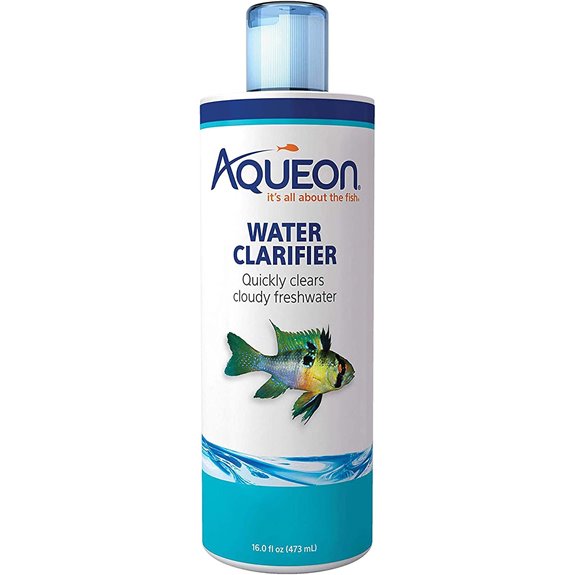 | Best for Aquariums | Target Environment: Freshwater aquariums | Primary Mechanism: Particle binding/clumping | Volume: 16 fl oz | LOWEST AMAZON PRICE | Read Our Analysis |
| Tetra Pond Water Clarifier 16.9 Ounces Treats 2 500 Gallons | 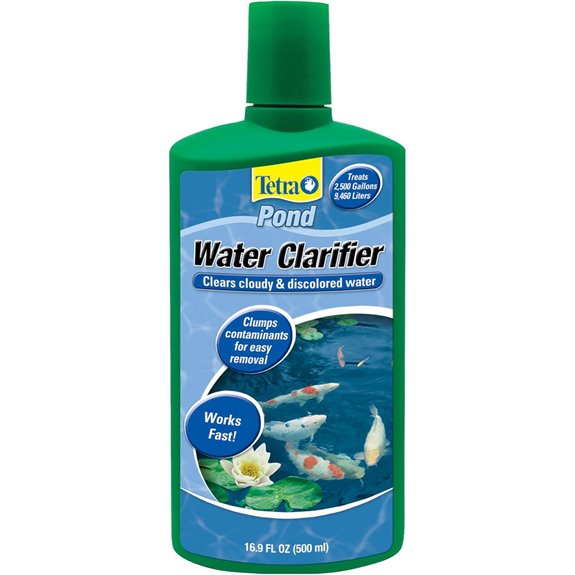 | Best for Ponds | Target Environment: Ornamental freshwater ponds | Primary Mechanism: Clumping formula | Volume: 16.9 oz | LOWEST AMAZON PRICE | Read Our Analysis |
| CrystalClear Bio Clarifier for Ponds & Fountains 1 Gallon | 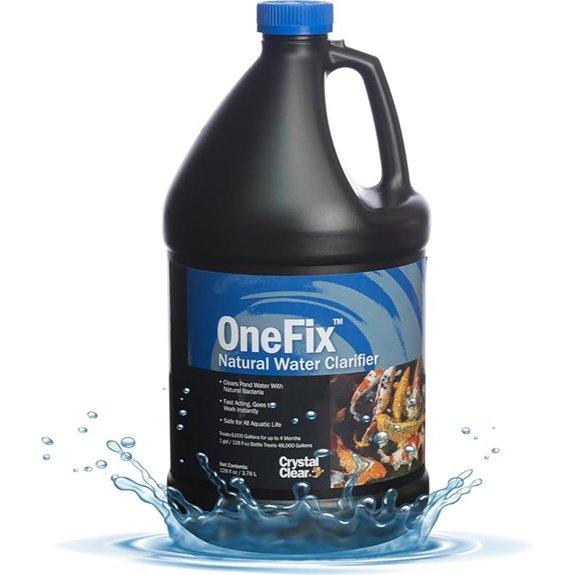 | Natural Bio Formula | Target Environment: Ponds, fountains, water gardens | Primary Mechanism: Beneficial microbes | Volume: 1 gallon | LOWEST AMAZON PRICE | Read Our Analysis |
| API ACCU-CLEAR Freshwater Aquarium Water Clarifier 8-Ounce Bottle | 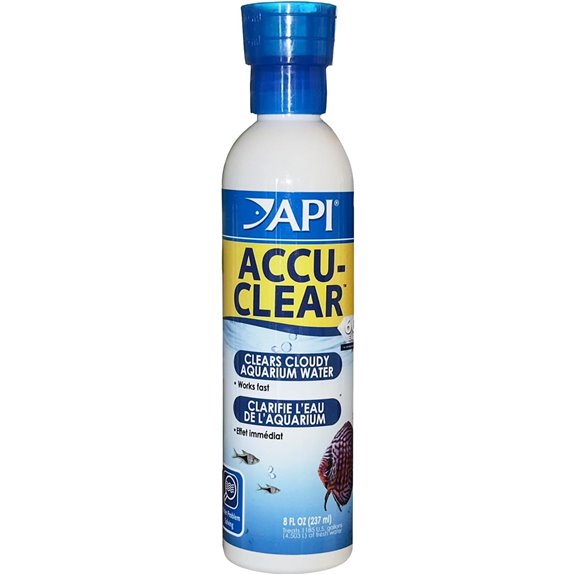 | Fast-Acting Weekly | Target Environment: Freshwater aquariums | Primary Mechanism: Particle aggregation | Volume: 8 oz | LOWEST AMAZON PRICE | Read Our Analysis |
More Details on Our Top Picks
Aqueon Freshwater Aquarium Water Clarifier (16 oz)
The Aqueon Freshwater Aquarium Water Clarifier comes in a clear plastic bottle, 16 fluid ounces, easy to pour with a cap that measures 5 milliliters exactly.
I like knowing my tools do what they promise.
This liquid binds tiny dirt particles, the ones making your water look cloudy, like fog on a window you cannot wipe.
The particles clump together, heavy now, so they sink or catch in your filter.
You add 5 milliliters for every 10 gallons, wait one full day, then change some water and swap your filter cartridge.
It feels satisfying, like sweeping a dusty floor and seeing the wood beneath.
Safe for fish and plants, no worries there.
Ranked #26 in aquarium treatments, 4.5 stars from over five thousand people who tried it and stayed happy.
- Target Environment:Freshwater aquariums
- Primary Mechanism:Particle binding/clumping
- Volume:16 fl oz
- Dosage Reference:5 mL per 10 gallons
- Safety Profile:Safe for fish, plants, all aquarium species
- Application Method:Add to water, wait 24+ hours, partial water change
- Additional Feature:Satisfaction guarantee included
- Additional Feature:Filter cartridge replacement cue
- Additional Feature:Routine maintenance reminder
Tetra Pond Water Clarifier 16.9 Ounces Treats 2 500 Gallons
A 16.9-ounce bottle sits in my hand, small enough to tuck behind the garden hose yet potent enough to treat 2,500 gallons of murky water. That’s Tetra’s Pond Water Clarifier for you.
I pour it straight into the pond where the water’s gone brown and thick with free-floating gunk, the stuff that blocks sunlight and hides your goldfish from view. The formula works by clumping—tiny particles gather together like wet leaves sticking to each other, getting heavy enough to sink or filter out.
It’s built for established ornamental ponds, the kind you’ve already got fish and lilies living in. Used properly, it won’t hurt them. Check your label for the right dose.
There’s patience in this chemistry. We cannot rush clarity; we can only set conditions for it to emerge. That feels like something worth remembering when things get cloudy elsewhere too.
- Target Environment:Ornamental freshwater ponds
- Primary Mechanism:Clumping formula
- Volume:16.9 oz
- Dosage Reference:Label-directed (treats 2,500 gallons total)
- Safety Profile:Safe for fish and plants when used as directed
- Application Method:Apply directly to pond water
- Additional Feature:Treats 2,500 gallons
- Additional Feature:Established ponds only
- Additional Feature:Direct pond application
CrystalClear Bio Clarifier for Ponds & Fountains 1 Gallon
Small ponds gather murky clouds, and I’ve watched enough of them to know that clarity isn’t magic—it’s microbes doing honest work.
The CrystalClear OneFix Bio Clarifier brings one gallon of these helpful microscopic organisms, and they begin cleaning suspended dead organics upon contact with water. You’ll find them safe for your koi, goldfish, snails, birds, and pets—no harm, just hungry little workers.
Pour one fluid ounce directly into your filter or circulation area for every 375 gallons, repeating every two weeks when water temperature exceeds 50 degrees Fahrenheit. That’s the threshold where these bacteria wake up and eat.
With 291 reviews averaging 4.3 stars, this treatment earns quiet trust.
- Target Environment:Ponds, fountains, water gardens
- Primary Mechanism:Beneficial microbes
- Volume:1 gallon
- Dosage Reference:1 fl oz per 375 gallons
- Safety Profile:Safe for fish, koi, plants, birds, pets, environment
- Application Method:Pour into filter or high-circulation area
- Additional Feature:Works above 50°F
- Additional Feature:Natural microbe formula
- Additional Feature:Biweekly reapplication schedule
API ACCU-CLEAR Freshwater Aquarium Water Clarifier 8-Ounce Bottle
An 8-ounce bottle, cradled in my palm, holds enough clear-water magic for dozens of weekly treatments.
I use API ACCU-CLEAR when my freshwater tank turns murky, which happens when tiny particles float too small for my filter to catch. The liquid works like a gentle glue, binding those specks into bigger clumps—clusters heavy enough for my filter to grab. It’s called aggregation, and it happens fast.
I dose weekly, or sooner if cloudiness surprises me. My filter does the hard work afterward, suddenly efficient where it struggled before.
This bottle stays freshwater-only, no exceptions. For my aquarium, not my pond, it’s reliable patience in liquid form.
- Target Environment:Freshwater aquariums
- Primary Mechanism:Particle aggregation
- Volume:8 oz
- Dosage Reference:Weekly application
- Safety Profile:Suitable for freshwater environments
- Application Method:Apply weekly or as needed
- Additional Feature:Weekly prevention dosing
- Additional Feature:Rapid action formula
- Additional Feature:Filter efficiency enhancement
Factors to Consider When Choosing Water Clarifiers
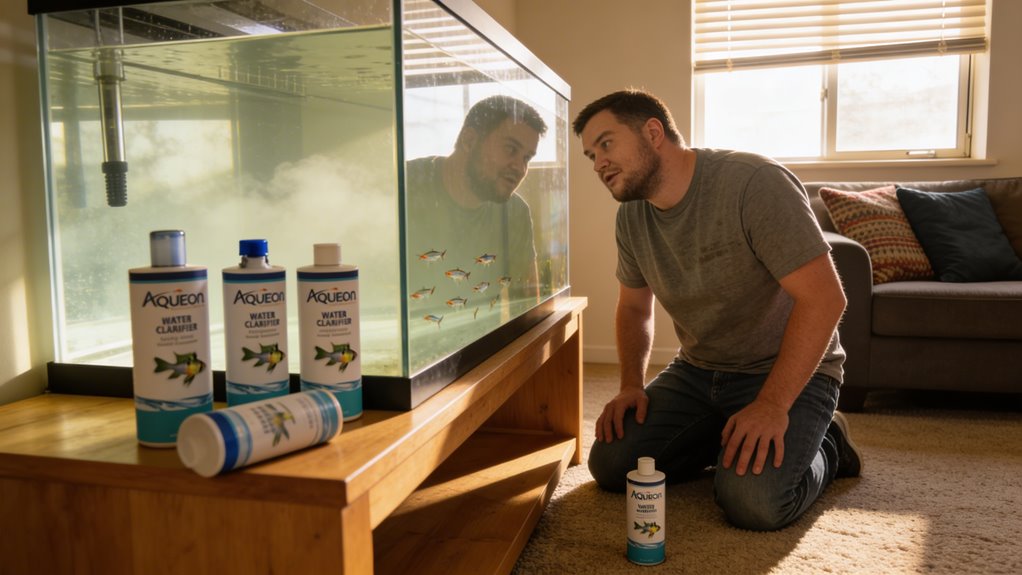
I want you to picture a clear glass of water beside a murky one, and know that choosing between clarifiers means matching them to your specific water type, tank size, and how much you’ll need to pour. You’ll weigh whether you prefer drops, powders, or tablets, and learn if a chemical binds particles or a biological agent eats them. These five factors—compatibility, capacity, dosage, method, and mechanism—shape every successful choice I’ve seen.
Water Type Compatibility
When you’re holding a bottle of water clarifier in your hands at the store, you’ll notice right away that the label matters more than you might expect.
I always check whether the product says freshwater, saltwater, or pond right on the front. These formulations work differently since fish and plants need specific chemistry to stay healthy. I once grabbed the wrong type, and learned that saltwater clarifiers can harm freshwater fish, which breathe through gills—those delicate slits on their sides that pull oxygen from water.
I also look for temperature and pH ranges printed in small text. Some clarifiers only work when water stays between 65 and 85 degrees Fahrenheit. Matching the mechanism—whether it clumps particles or uses bacteria—to your actual water problem makes all the difference in keeping your aquarium clear.
Tank Size Capacity
The same bottle that matched your water type might still let you down if you ignore the numbers on the back.
I always check the treatment capacity first. A small 10-gallon tank needs just 5 mL, but my 250-gallon setup demands multiple doses or a stronger formula. Pond clarifiers handle thousands of gallons, so I make sure my product exceeds my volume. I measure carefully since too much in a small tank clumps particles too fast, clogging my filter and stressing my fish. I additionally match the schedule—daily, weekly, or after water changes—to how quickly my water turns over. It feels reassuring, like fitting the right key into a lock, when the numbers align with your tank’s actual size.
Dosage Requirements
Since clarity depends on exact math, I grab a measuring cup before I ever open the bottle. I check my tank’s gallon count, then calculate: five milliliters treats ten gallons, so my forty-gallon needs twenty milliliters. For big ponds, I scale up proportionally, one fluid ounce per three-hundred-seventy-five gallons.
I never guess. Too little wastes money, too much harms fish.
I mark my calendar for re-dosing, weekly or biweekly, since clarity fades without upkeep. I read labels twice, noting the waiting period before water changes. I double-check that my dosage stays safe for my specific fish species, since each has limits.
Precision feels calm, like leveling a table. Small measurements protect living things.
Application Method
How do I actually put this clarifier into the water so it does its job?
I measure carefully, matching my water volume—milliliters per gallon for aquariums, fluid ounces per thousand gallons for ponds. I pour directly onto the surface, or better, into a high-circulation area where currents spread the clumping agents evenly, like stirring sugar into tea until it disappears completely.
I wait then, patient, trusting the manufacturer’s twenty-four-hour period before I touch my filter or change water. I’ve learned some clarifiers prefer the filter inlet, others a dosing cup—either way, I protect my equipment from interference.
I check my routine too, ensuring weekly dosing fits my schedule if cloudiness persists. It’s satisfying, really, matching method to need, watching clarity return through patience and precision.
Active Mechanism
Tiny particles drift through my water like dust motes in afternoon light, too small to see clearly yet just big enough to cloud what I want to see beneath the surface.
I need to know how a clarifier actually works before I commit my money.
Some products use flocculants, chemicals that grab tiny bits and stick them together into bigger clumps that settle or get caught in my filter.
Others rely on beneficial microbes, living helpers that eat organic debris through natural digestion, but these little workers slow down when water drops below 50°F, kind of like how I move slower on cold mornings.
Chemical options such as aluminum sulfate or polyacrylamide act faster, neutralizing particle charges so debris drops out.
I measure dosage carefully, usually milliliters per gallon, since too little wastes my time and too much wastes my dollar.
Frequency of Use
My clarifier bottle sits on the shelf between uses, and I’ve learned that patience matters more than routine.
I reach for it only when the water turns hazy, not since the calendar says so.
This approach prevents unnecessary chemical buildup that can harm the system I’m trying to help.
In my aquarium, I treat weekly if cloudiness persists, but my pond needs attention only every few weeks since its water cycles differently.
Over-applying creates heavy sediment, forcing me into extra water changes and filter scrubbing I could’ve avoided.
Your optimal schedule depends on your water body’s size and its daily organic load—leaves, fish waste, uneaten food.
I check clarity after each treatment, waiting to see how long the improvement lasts before dosing again.
Safety for Inhabitants
Where does that haze come from, I wonder, and what else might be floating in it?
I check labels carefully before buying any clarifier. I need products marked safe for all freshwater fish, plants, and invertebrates—no exceptions. I avoid formulas with heavy metals, ammonia-releasing compounds, or high-pH modifiers that could throw off my tank’s balance. I look for EPA approval or industry toxicity tests, proof someone’s checked the science. I read ingredient lists twice, watching for anything that might stress my koi, goldfish, or shrimp. I match dosage exactly to my water volume, since too much clarifier depletes oxygen and triggers harmful bacterial blooms. Precision protects my inhabitants. I measure in milliliters, not guesses.
Treatment Speed
A plastic dosing cup sits on my counter, half-full of blue liquid, and I’m watching the clock.
Speed matters when your water’s gone murky, and I’ve learned it hinges on what you choose. Chemical flocculants, meaning particle-binding formulas, work fast—thirty minutes to two hours, sometimes clearing eighty to ninety percent in one go. Biological treatments, like enzyme-based options, need twelve hours or more, often requiring repeat doses.
Your water temperature changes things too. Above seventy-five degrees, reactions hurry along thirty percent quicker than in cooler tanks. Circulation helps: pumps and strong flow cut waiting time by half or more compared to still aquariums. And please, measure carefully. The right dose per ten gallons clears within an hour; too little traps you waiting a full day.
Frequently Asked Questions
Can Water Clarifiers Harm Beneficial Bacteria Colonies?
I worry water clarifiers might harm my beneficial bacteria colonies if I overuse them, but most products won’t when I follow directions—flocculants mainly target particles, not my filter’s bacterial allies. I’ll dose carefully.
How Long Should UV Sterilizers Run Daily?
I run my UV sterilizer for 8-12 hours daily to maintain water clarity without overdoing it. You’ll want to adjust based on your tank’s algae levels and bio-load, monitoring results weekly.
Are Clarifiers Safe for Amphibians and Snails?
Most clarifiers aren’t safe for amphibians, since they’re super sensitive to chemicals. I’ve found snails usually handle them okay, but I’d still test a small dose first and watch closely for any stress signs.
Why Does Cloudy Water Return After Treatment?
I treated my tank, but the cloudiness keeps coming back since I haven’t fixed what’s causing it—overfeeding, poor filtration, or bacterial blooms. Clarifiers only mask symptoms; I need to address the root problem directly.
Can I Use Pond Clarifiers in Aquariums?
I wouldn’t recommend it—pond clarifiers contain chemicals formulated for much larger volumes and different ecosystems, so they could harm your fish or crash your aquarium’s delicate biological balance.

Clumps suspended pond particles to restore clear water in koi and goldfish ponds.

Uses beneficial bacteria to naturally clear pond water and reduce maintenance.

Destroys single-celled algae and green water with ultraviolet light for lasting clarity.
See today's best deals onPond Supplies



[…] feeding three times daily. You want that fiery throat without the drama. For water clarity, use a freshwater aquarium clarifier to bind particles before they settle on the eggs. To achieve the purest possible water for healthy […]
[…] stand that offers a 1,200 lb capacity and built-in power outlets. The light pairs well with a weekly prevention dosing of a water clarifier to keep the view crystal […]