You’re looking at a lumpy, dome-shaped coral with teal-purple swirls that grows slower than your patience might prefer, but Favia brain coral rewards steady hands with decades of color – provided you nail the basics: 50–150 PAR lighting, twice-weekly feedings of mysis or Reef Roids after lights out, and enough space between neighbors that their nighttime sweeper tentacles don’t start drama.
Now, the skeletal walls tell the real story here. Two distinct walls between corallites means Favia; one shared wall means Favites, and mixing them up at the fish store costs you more than pride.
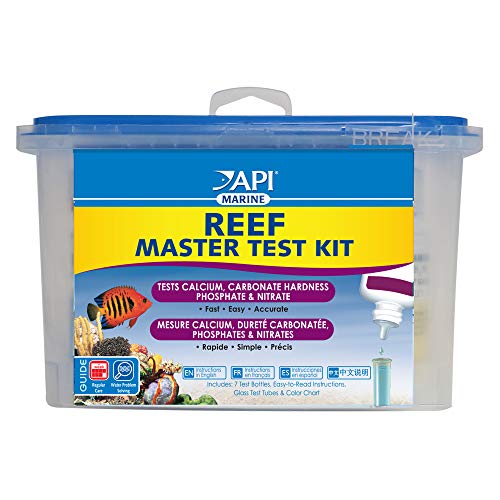
Measures calcium, alkalinity, pH, nitrate, and phosphate so your Favia parameters stay in range.

Instant pH checks help you catch swings before Favia tissue becomes stressed and prone to infection.

Simple, accurate alkalinity reads keep the 8-12 dKH range Favia needs to build its skeleton.
Check discounted items inAquarium Test Kits
Either way, you’re dealing with forgiving LPS parameters – alkalinity 8–12 dKH, calcium around 420 ppm, flow gentle enough that polyps don’t get blasted – and growth so incremental you’ll measure progress in seasons, not weeks.
Fragging’s straightforward if you’re brave with a saw: iodine dip, low-flow recovery tank, and a rubber band mounting trick that feels improvised but works.
Tank mates matter less than spacing; keep Acans, Elegance corals, and anything with “coral” in its diet at arm’s length, and you’ll avoid the brown jelly nightmare that turns colonies into aquarium lore.
Stick around and you’ll uncover exactly how to spot stress before it becomes a eulogy.
At A Glance
- Feed zooplankton three times weekly at night with pumps off for 20–30 minutes.
- Maintain 50–150 PAR lighting; position on sand bed in tank’s lower third.
- Grow ~0.5 inches over several months; patience required for seasonal progress.
- Space corals 6 inches apart; avoid aggressive LPS and corallivorous tank mates.
- Frag with iodine dip, reef glue disk, and quarantine stressed specimens two weeks.
What Is Favia Brain Coral?
If you’re staring at a lumpy, dome-shaped rock that looks like it swallowed a golf ball and developed a grudge against the light, you’ve probably found yourself a Favia brain coral – though, I mean, “brain” is generous except your brain has two skeletal walls and a taste for zooplankton at midnight.
Now, cor history runs deep here. Favias dominated reefs for millennia, and hobbyists noticed. Market demand spiked when rare variants like Scorpion King and Moon Stone emerged – I mean, teal-purple swirls sell themselves. You’re chasing belonging, right? Start with something luminous, slow-growing, forgiving. That’s Favia.
Creating the right environment starts with choosing a quality substrate such as instant cycling bio-substrate that supports beneficial bacteria and stable water parameters for these sensitive LPS corals.
Favia vs. Favites: How to Tell Them Apart
Since you’ve probably stood there squinting at a coral, wondering if you’re looking at Favia or its devious cousin Favites, let’s break this down before you drop forty bucks on a misidentification.
Skeleton identification is your friend here, and it’s embarrassingly simple once you know the trick. Here’s the skeletal wall comparison that separates the insiders from the confused newbies:
- Favia: Two distinct skeletal walls between corallites – you’ll see actual gaps
- Favites: One shared wall, corallites pressed tight like crowded subway cars
That’s it. Two walls, you’re in; one wall, you’ve been fooled.
Proper tank maintenance tips from aquarium hobbyists emphasize that stable water parameters matter more for coral health than chasing rare specimens.
Is Your Tank Ready for Favia Coral?
When exactly did you decide your tank was ready for a slow-growing, occasionally temperamental hunk of calcium carbonate that’ll outlive your next three relationships?
You’ve checked your budget health, I mean, really checked it, since that upfront price stings less than watching your investment melt into brown jelly.
Now you’re wondering if you’ve got the patience.
Here’s the thing: you’ll need stable parameters, low-to-moderate flow around 20-40× turnover, and lighting at 50-150 PAR.
You’ve got this.
The reefkeeping community’s packed with people who’ve botched their first Favia and lived to frag another day.
Since Favia corals are heavy calcium carbonate depositors, you’ll want to ensure your reef can maintain 410-440 ppm calcium through reliable supplementation methods like a properly sized reactor or dosing regimen.
Water Parameters for Healthy Favia Coral
Even though your tank might look pristine from the couch, Favia corals don’t care about aesthetics – they’re demanding tenants with chemical preferences, and you’ll need to lock down your parameters before they even consider opening up.
Now, water chemistry isn’t optional hobby trivia here, it’s your coral’s language, and you’re learning to speak it.
You’ll want:
- 1.023–1.025 salinity
- 8.0–8.4 pH
- 8–12 dKH alkalinity
- 350–450 ppm calcium
- 1,200–1,350 ppm magnesium
But here’s the thing: parameter stability matters more than chasing perfection. These corals forgive slight imperfection, they don’t forgive your Tuesday chemistry swing because you forgot top-off water.
Swings stress tissue, invite infection, turn your prize frag into a skeleton lesson. I mean, we’ve all been there.
Test twice weekly, automate what you can, and accept that you’re now a chemist who keeps pets.
For accurate pH monitoring that matches their 8.0–8.4 requirement, invest in a ±0.01 precision meter to catch drift before it stresses your colony.
Where to Place Favia Coral in Your Tank
You’ve got your water locked down, or at least you’re pretending to as secretly testing every other day. Now, placement aesthetics matter – you’ve got lighting gradients to navigate, pal.
Stick your Favia on the sand bed, bottom third of the tank. Low-to-moderate flow keeps those polyps happy without blasting them into submission. You’re chasing 50–150 PAR, ideally around 100, but hey, nobody’s perfect.
Tuck your Favia low and let it bask in that sweet, sweet 100 PAR glow.
Here’s the move:
- Position for gentle, swirling water – not direct fire hose action
- Leave 6 inches between neighbors; sweepers get spicy
- Face the dome upward, show off those color patterns
Watch it settle in, adjust if it’s cranky.
For tanks with demanding SPS higher up, consider dual‑channel dimming on your LED fixture to create distinct PAR zones without cross-contamination.
Light and Flow Levels for Favia Coral
Since your Favia’s not about to tolerate your guess-and-check phase, let’s talk numbers. Optimal lighting means 50 to 150 PAR, though you’ll want to land somewhere near 100 PAR, and hey, start low because bleaching’s a real mood killer.
Moderate flow keeps things interesting – think 20 to 40 times your tank’s volume, so maybe 2,000 to 4,000 GPH if you’re running a hundred gallons. Too much current and your coral’s basically living in a washing machine, too little and debris settles like unwanted guests.
Position matters, obviously. Sand bed, bottom third, somewhere that light hits gently and water moves past without bullying. Acclimate slowly; we’re talking weeks, not days. Your Favia’s not impatient, just particular.
Installing calm, silent sump operation with proper baffles and flow distribution prevents turbulent micro-bubbles from irritating your coral’s delicate tissue.
What to Feed Favia Coral and How Often
Light nailed, flow sorted, your Favia’s sitting pretty – now it’s time to talk food. You’re looking at zooplankton, mysis shrimp, brine shrimp, Reef Roids – standard stuff, nothing fancy.
Your nutrient schedule? Three times weekly, minimum. That’s your feeding frequency locked in. Now, I know what you’re thinking – “Isn’t that a lot?” For these slow-growers, maybe ½ inch over months, it’s barely enough. They’re not gorgers, they’re grazers with standards.
Skip the daytime buffet. Your coral’s nocturnal, like that friend who only texts after midnight. Feed when the polyps actually extend, and you’re in the club.
Before introducing any new specimens, consider using a plant-based dip to reduce stress and protect their tissue from hidden hitchhikers.
How to Feed Favia Coral at Night
Nighttime’s when your Favia actually wakes up, so if you’re dumping food in at noon, you’re basically throwing a party nobody’s coming to. Your coral’s polyps extend after dark, hunting zooplankton, so you’ll want to sync your tank’s routine with their biology.
Now, establishing that nocturnal feeding schedule means patience. I mean, you’re basically becoming a reef DJ, reading the room.
Your night feeding rhythm needs:
- Dim or blue-spectrum actinic lights to simulate dusk
- Pumps off for 20–30 minutes so food settles
- Target feeding with Reef Roids or mysis
Week three, they’ll anticipate you. That’s the membership card.
While consistency in timing matters for corals, iron dosing in planted tanks shares this same principle, where skipping scheduled applications leads to deficiencies.
Favia Coral Growth Rate: What to Expect
You’ll see maybe half an inch over several months if you’re lucky. It’s slow, steady work – like watching paint dry, except the paint is alive and vaguely judgmental.
Now, season growth matters here. Your coral pumps out tissue faster in summer when your tank runs warmer and metabolism speeds up, then practically hibernates come winter. I mean, don’t take it personally.
Summer’s sprint, winter’s nap – your Favia grows on its own schedule, not yours.
Lighting effects hit different too. Too bright and you’ll bleach the poor thing; too dim and it’ll stagnate, sulking in the shadows. Aim for that 50–150 PAR sweet spot, and remember: patience isn’t just a virtue here, it’s mandatory.
Maintaining 7-12 dKH alkalinity with a quality reef buffer supports the calcium carbonate skeleton buildup that fuels this glacial pace.
Compatible Fish, Corals, and Inverts for Favia
Choosing tank mates for your Favia isn’t **rocket surgery, but it’s not exactly “throw everyone in and hope for the best” either. You want neighbors that respect personal space**, and your brain coral rewards you with seasonal color shifts when it’s feeling safe.
Your Favia hosts symbiotic algae, so you’re already running a tiny solar farm. Now, peaceful fish – blennies, clownfish, small reef species – keep things lively without causing drama. Cyphastrea, Kenya Tree, Ricordea, and leather corals make excellent company.
- Keep LPS and SPS corals at arm’s length
- Feather dusters and sexy shrimp add movement, not menace
- Provide 4–6 inches between Favia and aggressive growers
Before introducing new fish, consider a 3‑day preventive treatment with API MELAFIX Freshwater Bacterial Remedy to protect against fin rot and bacterial infections common during tank transfers.
Corallivores and Aggressive Species to Avoid
Troubleshooting Favia Coral Damage
Why’d your Favia suddenly look like it lost a bar fight? You’ve probably got a neighbor problem, friend. Those territorial sweeper tentacles stretch farther than you’d think – six, maybe eight inches on a bold night – and they’ll sting anything within reach.
Your Favia didn’t lose a bar fight – it’s just got terrible neighbors with six-inch punches and a midnight attitude problem.
Now, here’s who crashes the party:
- Acan Lords, Elegance Corals, Frogspawn – aggressive LPS that fight back
- Chocolate chip starfish, Atlantic peppermint shrimp – opportunistic pickers
- Any corallivorous fish browsing your colony like a buffet
Give your Brain Coral room, maybe a foot of buffer, and watch those midnight tentacle extensions. I mean, nobody wants trench warfare in their sand bed.
How to Frag Favia Coral Safely at Home
Fragging Favia Coral at Home
Once you’ve got a healthy colony that’s outgrown its real estate, fragging your Favia isn’t rocket surgery – just bone surgery, and the coral kind of bone at that. Grab your fragging tools – tile saw, band saw, Dremel – and work between those double skeletal walls, nice and clean.
Safety protocols matter here. You’re not just hacking; you’re joining a lineage of reefkeepers who pass coral like stories. So suit up, eye protection on, and stabilize that colony.
- Wear gloves and goggles, always
- Dip frags in iodine, no exceptions
- Work slow – patience builds the community
Then stick around, since the next part’s where patience really pays.
How to Heal and Mount Favia Frags
How do you turn a Franken-frag into a thriving mini-brain that actually wants to stick around? You heal smart, mount smarter.
Your fragging techniques matter, certainly, but the aftermath – that’s where you prove your reef-keeping cred.
First, the soak. Iodine bath, ten minutes, maybe twelve if you’re feeling paranoid. Kills nasties, seals wounds.
Now, mounting methods. You’ve got options:
| Method | Best For |
|---|---|
| Reef glue + disk | Quick setup, small frags |
| Epoxy putty | Heavy heads, awkward angles |
| Rubber band + plug | Healing tissue, gentle hold |
Place your mount in low flow, dim light – baby steps, remember. Feed after a week. Watch it grip, inflate, forgive you.
You’re building something here. Welcome to the club.
Signs of Stress and Jelly Infection Treatment
When your Favia starts looking like it’s having a bad day – tissue pulling back, that bony skeleton showing through like ribs on a stray cat – you’ve got trouble brewing, and you need to know what you’re seeing before it becomes a funeral. Stress markers mean more than ugly; they mean your coral’s immune system is waving a white flag.
Now, jelly infections, they’re the nightmare – brown goo, tissue liquefying, stinking like low tide at noon. You’ve gotta act fast, cut the rot out with a band saw, and soak everything in iodine. That jelly cure isn’t optional, it’s survival.
- Receding tissue means frag immediately, don’t wait for permission
- Iodine dips stop infection spread, ten minutes max
- Quarantine saves your whole tank, keep frags isolated two weeks minimum
Frequently Asked Questions
Can Favia Coral Change Color Over Time?
Yes, your Favia coral can shift color over time, and you’re wise to watch for it.
– Color adaptation happens as lighting changes – more blue, actinic light brings out purples and greens you’d swear weren’t there last month.
Now, seasonal variation plays a role too; tank temperature swings, even subtle ones, nudge pigment expression.
You might see a yellow rim fade to cream, then blaze back come summer.
Keep notes, you’ll spot the pattern.
Do Favia Corals Benefit From Bubble Tip Anemone Hosting?
You won’t see true bubble symbiosis here – Favia don’t host anemones, and anemones don’t host them.
But you can create indirect nutrient exchange benefits.
Place your Favia down-current from a bubble tip, maybe 8–12 inches away, and you’ll catch some scraps and dissolved organics.
It’s loose, it’s messy, but your coral’s feeding three nights a week anyway, so every little bit helps.
Just don’t let them touch.
How Long Can Favia Coral Survive Without Feeding?
You’ve got weeks, maybe two months if you’re lucky.
Favia corals store nutrients in their thick tissue, so they won’t starve immediately, but you’re pushing your luck.
Without regular feeding frequency, they’ll shrink, recede, and eventually succumb.
Keep that nutrient storage topped off – aim for those three weekly feeds – and you’ll avoid the slow decline.
Neglect it, and you’re watching a countdown.
Should Favia Coral Be Dipped Before Adding to Tank?
Yes, you should dip Favia coral before adding it to your tank.
Establish a consistent dip schedule – typically iodine or coral dip solutions for 10–15 minutes – to eliminate pests and bacteria.
Check tank compatibility by ensuring your water parameters match: temperature 72–84°F, pH 8.0–8.4, and stable alkalinity.
You’ll prevent disease spread and give your coral the best start in its new home.
Can Favia Coral Recover From Complete Bleaching?
Yes, you can coax Favia back from complete bleaching, though it’s a grind. Stress resilience varies – some colonies bounce back in weeks, others take months, and some don’t make it.
Your move list:
- Drop lighting to 50 PAR, maybe lower
- Stabilize temp at 78–80°F, no swings
- Feed heavily – zooplankton, Reef Roids – three times weekly
Now, water quality‘s non-negotiable. Zero phosphate spikes, calcium ~400 ppm. Patience isn’t optional; it’s the whole game.

Packed zooplankton blend that triggers Favia's nighttime feeding response and supports tissue growth.

Protein-rich mysis pieces make target feeding easy and give your Favia a natural grazing meal.

Classic protein-rich brine shrimp offers variety and provokes eager polyp extension at feeding time.
Browse discountedAquarium Fish Foodon Amazon