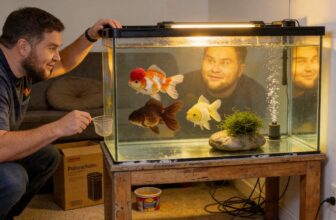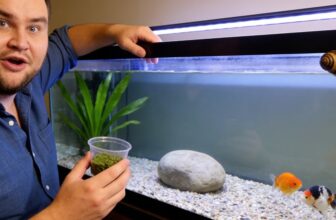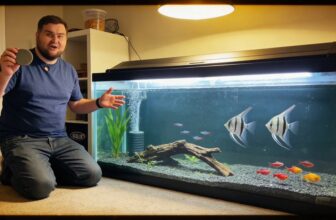
You’ll need at least a 40‑gallon breeder for a small group of six to eight keyhole cichlids—they’re peaceful cichlids that won’t uproot your plants or pick fights, so a 55‑gallon tank with fine sand, driftwood, and gentle current lets them sift and spawn.
Keep pH between 6.5 and 7.0, temperature steady at 78‑80°F for breeding, and feed small portions of cichlid pellets rotated with daphnia or bloodworms.
Weekly 25‑30% water changes keep nitrates below 20 ppm.
Stick around for the finer points on egg care and tank mate choices.
At A Glance
- Minimum 20-gallon tank for one fish; 55 gallons for a group of six to eight.
- Soft, tea-stained blackwater with fine sand substrate, driftwood, and dim lighting.
- Feed high-quality cichlid pellets or flakes, rotating live foods like daphnia and bloodworms.
- Raise temperature to 78-80°F with a flat stone to trigger spawning.
- Maintain pH 6.5-7.0, hardness 12-30 dGH, with weekly 25-30% water changes.
Why Keyhole Cichlids Make Awesome Aquarium Pets
Why bother with the usual fin‑niping drama queens of the aquarium world? You deserve a fish that actually plays nice.
Keyhole cichlids bring calm, not chaos, to your tank. They’re not flashy—just classy, with that subtle keyhole spot and sweeping fins.
- Peaceful personality: They rarely fight, breeding aside.
- Hardy & adaptable: Tolerate pH 6.0‑8.0, temps 72‑80°F.
- Long‑lived: 7‑10 years; you’ll bond.
- Wallet‑friendly: $9‑13 each.
You want a community that works. Keyholes deliver. They’re the reliable friend in a world of drama queens.
Bottom line: skip the headaches, join the calm club. To maintain their health, ensure dim lighting and plenty of driftwood for hiding. Additionally, weekly water changes of 25‑30% help prevent stress and ammonia buildup.
What Size Tank Does a Keyhole Cichlid Need?
So, what’s the magic number for a Keyhole cichlid tank? You’re looking at a minimum 20‑gallon for a single fish, but you’ll want at least a 40‑gallon breeder to keep a proper group.
These guys thrive in numbers—aim for 6–8, not just two lonely buddies. A bigger tank means less squabbling and more natural behavior.
Think of it this way: you’re not just housing fish; you’re creating a community. A 20‑gallon works for a pair, but a 55‑gallon gives room for plants, driftwood, and a gentle current. When choosing a stand, look for models with a heavy‑duty metal frame to safely support the full weight of a large aquarium.
Bottom line: Get the largest you can afford—your Keyholes will thank you with calm, healthy antics. A 55-gallon setup can be supported by steel-frame stands rated for 1,100 lb total load, ensuring both safety and vibration reduction.
Best Water Parameters for a Healthy Keyhole Cichlid
Since your Keyhole cichlid hails from soft, acidic blackwater rivers in Venezuela and Guyana, replicating those conditions is the secret to a long, stress‑free life—and possibly a few spawns.
You’re aiming for a pH between 6.0 and 8.0, but stick closer to 6.5–7.0 for that “just right” sweet spot.
Water hardness? Keep it at 12–30 dGH—don’t let it creep lower.
Temperature should sit steady between 72 °F and 79 °F; a heater’s your best friend here, especially in smaller tanks.
Regular water changes keep nitrates down, so your cichlid feels like it’s home.
Consistency is everything, friend.
To stabilize these conditions, consider using a KH Buffer Supplement to maintain the carbonate hardness that supports consistent pH and alkalinity in the aquarium. A digital pH meter with a precision of 0.01 helps you monitor those daily fluctuations accurately.
Recreate a Keyhole Cichlid’s Natural Habitat at Home
You’ve dialed in the water chemistry, so now let’s set the stage.
Mimic their wild Venezuelan haunts—slow, tea-stained water with gentle flow from an adjustable filter.
Drop in driftwood and flat stones; they’re your cichlid’s spawning slate.
Drop in driftwood and flat stones; they’re your cichlid’s spawning slate.
Skip strong currents; these guys aren’t marathon swimmers.
A heater keeps temps steady at 72–79°F.
This setup isn’t rocket science—it’s just making them feel at home.
You’re not alone in this; we’re all chasing that calm, natural vibe.
Get it right, and they’ll reward you with years of peaceful company.
Keep water stability essential for calm, long-lived fish, as stable parameters prevent stress and disease.
Choose a glass tank for its scratch resistance and long-term clarity, ensuring your setup remains pristine for years.
Best Substrate and Plants for Keyhole Cichlid Tanks
During a sandy, fine-grained substrate isn’t the flashiest choice, it’s the smart one. Keyholes spend hours sifting through it for food, and it won’t scratch their delicate bellies. For plants, you’ll want hardy species that thrive in lower light—they’ll feel right at home. For a darker biotope build that supports stable cycling, consider Aqua Natural Midnight Pearl gravel in 2-4 mm grain size. To maintain stability in humid environments, the stand should include six non-slip leveling feet to prevent wobbling on uneven floors.
| Substrate | Pros | Cons |
|---|---|---|
| Fine Sand | Gentle on fish, natural look, easy to clean | Can cloud water if rinsed poorly |
| Pool Filter Sand | Inexpensive ($10/bag), smooth texture | Slightly coarser than play sand |
| Plant Substrate | Nutrient-rich for root feeders | Costly ($25+/bag), messy to install |
Stick with sand, add some Anubias or Java fern, and you’re part of the savvy crew.
Feeding Keyhole Cichlids: A Complete Diet and Schedule
If your Keyhole Cichlid could talk, it’d probably ask for variety—not just the same flake food every day.
You’re in luck since they’re not fussy. Stick to a high‑quality cichlid pellet or flake as the base.
You’re in luck since they’re not fussy. Stick to a high‑quality cichlid pellet or flake as the base.
Then, rotate in live or frozen treats like daphnia, bloodworms, or brine shrimp. Toss in blanched peas or zucchini occasionally. Using a coral dipping solution can also help eliminate pests from live foods that may introduce parasites to the tank.
Feed small portions two to five times daily, or larger meals once or twice.
This mix keeps them lively, healthy, and eager at feeding time. A varied diet? That’s how you earn their trust—and their best color. Using a clear mesh aquarium lid with high light transmission supports healthy plant growth, which helps your cichlid feel secure during feeding.
Ideal Tank Mates for a Peaceful Community Setup
Keyhole Cichlids are the laid‑back introverts of the cichlid world, so their ideal tank mates are fish that won’t bulldoze them into hiding. You’re building a chill, low‑drama community, so pick friends that share that vibe.
- Corydoras catfish – peaceful bottom‑dwellers that keep to themselves.
- Small tetras (neon, cardinal) – fast, small, and won’t compete for territory.
- Rasboras (harlequin, chili) – gentle schoolers that add movement without menace.
- Otocinclus – mini algae‑eaters that mind their own business.
- Dwarf gouramis – calm surface swimmers that match Keyholes’ temperament.
Stick with these, and your tank stays a peaceful neighborhood. For optimal color and health, chili rasboras should be kept in groups of eight or more to reduce stress and promote brighter coloration. To complement the natural aesthetic, consider adding anchor base plants for terrariums that require no substrate and provide stable hiding spots.
Are Keyhole Cichlids Friendly? Behavior and Temperament
So, are Keyhole Cichlids actually friendly? Yes, they’re the chill cousins of the cichlid world. Unlike their aggressive relatives, these guys are calm, curious, and rarely start trouble. You’ll see them peacefully exploring together, not squabbling. They also benefit from gentle lighting that mimics their native dimly lit environments, reducing stress.
- They’re gentle with tank mates of similar size.
- Breeding can spike a little territoriality, but it’s mild.
- In a group of 6–8, you get natural, relaxed social behavior.
Bottom line? If you want a peaceful, personable fish that won’t wreck your community vibe, you’ve found your match. They’re the kind of fish that makes you feel like a good tank parent. For keeping their environment pristine without aggressive cleaning, a gravity siphon water change system can streamline maintenance and reduce stress.
How to Sex Keyhole Cichlids and Spot a Bonded Pair
No, they don’t exactly wear nametags, but telling a male Keyhole Cichlid from a female is doable once you know what to look for. You’ll spot a bonded pair by their constant side‑by‑side swimming, no drama.
- Males have longer, pointier dorsal and anal fins; females’ fins are shorter and rounder.
- Males are slightly larger (4.75 in vs 4 in) with a bolder black keyhole stripe.
- Females’ bellies go fuller and pinkish when ready to pair.
- Bonded pairs swim together, gently nudge each other, and defend a shared spot.
- Unpaired fish bicker; a bonded pair ignores everyone else.
Look for these signs, and you’ll feel like one of the crew, not just a keeper. A reliable way to confirm female readiness is to notice her belly becoming fuller and pinkish, which indicates she is prepared for spawning. Bonded pairs that spawn may scatter up to 200 eggs and should be removed to prevent egg consumption.
Breeding Keyhole Cichlids: Step-by-Step Guide
Before you start picking out tiny wedding hats for your Keyhole Cichlids, know this: breeding them is surprisingly doable, even though you’ve only got a modest 20‑gallon tank.
First, bump the temperature to 78–80°F to mimic rainy season trigger.
Then, place a flat stone—a slate tile works great—in a quiet corner.
Your bonded pair will clean it obsessively, then the female deposits up to 300 eggs.
Dad guards the spot as mom fans them.
Keep water stable, pH around 7.0, and dim the lights.
You’ve got this—your tank’s about to feel like a cozy nursery.
Dim lighting also helps reduce stress, similar to how gentle water movement supports goby health in brackish setups.
Consistent ammonia at zero ppm prevents egg and fry loss from toxic buildup.
Caring for Eggs and Fry After Spawning
Your bonded pair just finished their soap-opera-worthy cleaning ritual on that flat stone, and you’ve got a cluster of tiny, gelatinous eggs—up to 300 of them, looking like a patch of overcooked tapioca. Now, you’re part of the clean-up crew.
- Don’t panic if parents eat a few dud eggs—they’re just tidying, like a cautious housekeeper.
- Keep light dim; eggs are shy, like teenagers in bright hallways.
- Maintain steady 74-78°F water; sudden cold shocks them, and nobody wants that drama.
- Adding a general antifungal remedy like PIMAFIX or Melafix can help prevent fungal outbreaks on the eggs without harming beneficial bacteria.
- After 3-5 days, fry hatch; feed infusoria (microscopic critters) or powdered fry food—they’re tiny eaters.
- Parents guard for weeks, so let them do their job; you just watch and stay quiet.
- Maintain a pH of 6.6–7.8 to prevent fungal growth on unfertilized eggs.
Congratulations—you’re now a proud fry grandparent.
Prevent Common Keyhole Cichlid Health Issues
Keeping Keyhole Cichlids healthy is less about heroic intervention and more than avoiding a few common mistakes. You’ll dodge most trouble by watching for these signs early.
| Symptom | Likely Cause |
|---|---|
| Rubbing against objects | Ich (white spots) – often from temperature swings |
| Clamped fins | Stress – low group size or poor water flow |
| Swollen belly | Bloat – overfeeding or low‑quality pellets |
| Gasping at surface | Low oxygen – add a gentle air stone |
| Loss of color | Poor diet – you’re skipping live food, aren’t you? |
Feed varied, keep the group at six or eight, and test your pH. You’re part of the tribe that gets this right. Always maintain a weekly water change routine to support stability and longevity. Using an aquarium filter floss pad with fine-particle capture will help polish the water and reduce waste buildup between changes.
Maintain Water Quality for Long-Term Health
Since water quality is the single biggest factor in whether your Keyhole Cichlid lives five years or ten, you’ll want to treat your tank like a mini river, not a bucket.
Test your water weekly—it’s cheap insurance.
Keep these five numbers locked in your head:
- Ammonia & Nitrite: 0 ppm, always. No exceptions.
- Nitrate: Below 20 ppm; 40 ppm means you’re slacking on changes.
- pH: 6.0–8.0, but pick a value and stick with it.
- Temperature: 72–80 °F; a cheap heater’s your best friend.
- Hardness: 12–30 dGH; soft water’s fine, hard water’s fine—just don’t swing wildly.
Change 20–30% weekly. That’s it. You’re not a chemist—you’re a river keeper. Use a lab-accurate 7-in-1 test kit for reliable results on multiple parameters in 30 seconds.
How to Choose Healthy Keyhole Cichlids at the Store
Before you even grab a net, look at the whole tank. You want a calm, active group, not fish huddling in corners or gasping at the surface. Their keyhole spot should be dark and distinct, bodies plump without bloating, fins erect and unclamped. Watch for clear eyes, no white spots or frayed tails.
- Active, curious swimmers? Good sign.
- Lethargic or hiding? Pass.
Don’t buy the cheapest one at $9 if it looks sick. You’ll spend more on meds. Snag a robust pair from a clean tank. Your future community will thank you—no drama queens allowed.
Frequently Asked Questions
Can Keyhole Cichlids Be Kept With Shrimp or Snails?
You can keep Keyhole Cichlids with snails, but shrimp are risky. Snails’ hard shells deter them, whereas shrimp look like a snack. Stick to larger snails like nerites; they’ll survive.
For shrimp, try amanos—they’re bigger and faster. Expect losses with cherry shrimp, though. Your tank’s setup matters: lots of plants and hiding spots buy shrimp some time.
Honestly, if you want shrimp, go species‑only. Snails? No worries. Bottom line: snails work, shrimp are a gamble you’ll probably lose.
How Do I Reduce Stress When Introducing New Keyhole Cichlids?
You’ll lower stress by matching their old water—temperature 72–79°F, pH 6.0–8.0, and hardness 12–30 dGH.
Float the bag for 15 minutes, then add small tank water every 5 minutes.
Keep lights dim, flow gentle—use a sponge filter if you’ve got one.
They’re skittish, so provide hiding spots: driftwood or dense plants.
Feed small portions after 24 hours, and avoid tankmates for a week.
It’s not rocket science, just steady hands.
You’ve got this.
What Is the Best Way to Quarantine New Keyhole Cichlids?
Set up a separate 10‑gallon tank with a sponge filter and heater at 75°F—no substrate, just a PVC pipe for hiding.
Quarantine your new keyhole cichlids for 4–6 weeks, dosing with aquarium salt (1 tbsp per 5 gal) to ward off parasites.
Watch for clamped fins or flashing; feed sparingly with flake food.
It’s boring but beats losing your whole school.
Bottom line: patience now saves headaches later.
Do Keyhole Cichlids Jump Out of Open Aquariums?
Keyhole cichlids aren’t notorious jumpers, but yes, they can leap from open tanks when startled.
You’ll want a tight-fitting lid, especially during breeding—those flat stones for spawning get them territorial.
Losing a $10 fish to a dry floor? Not your finest moment.
Keep water flow gentle (adjustable filter), add floating plants to calm them, and secure that cover.
It’s cheap insurance for a 7–10 year friend who’d rather stay wet.
How Can I Tell if My Keyhole Cichlid Is Sick Before Visible Symptoms Appear?
You’ll notice subtle changes first: hiding more than usual, refusing food, or clamping fins against its body.
Watch for erratic swimming or rubbing against decorations—that’s often internal irritation before anything visible.
Check water parameters daily; high nitrates stress them fast.
Your cichlid might additionally hover near the surface, gasping softly.
These early signs? They’re your cue for a partial water change and a quick filter check.
Don’t wait for spots or swelling—catch it now, and you’ll save yourself a headache later.
Rounding Up
So, here’s the verdict: Keyhole Cichlids are the introverts of the cichlid world—calm, stylish, and not prone to tank tantrums. You’ll need a 20-gallon minimum, soft acidic water, and plenty of driftwood hideouts. For about $10–$15 each, you get up to ten years of low-drama fish-keeping.
- Pros: Peaceful, breed easily on flat stones, eat varied diet (pellets, daphnia, veggies).
- Cons: Sensitive to poor water quality.
Bottom line: If you want a mellow, beautiful fish without the attitude, this is your guy.