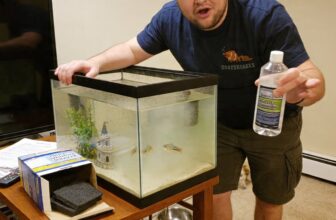
You wedge a siphon hose between tank and sink, letting gravity drain water as your shoulders rest.
A USB air pump, plugged into a pocket‑size battery, keeps bubbles flowing through blackouts.
Dollar‑store pillow stuffing trays debris like expensive floss.
An embroidery hoop corralled with mesh tames floating plants.
A turkey baster pinpoints gravel dirt in seconds.
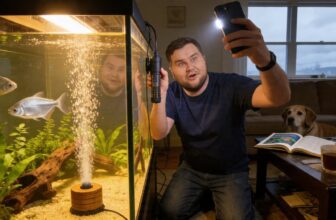
Binder stripping redirects lid drips, black paper deepens fish colors, and a flashlight with cloth diffuser catches their true scales.
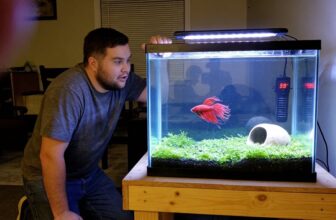
Mirror sessions stir betta curiosity without exhaustion.
Each tool carries a quiet promise that simpler days wait just ahead.
At A Glance
- Automate water changes with gravity siphons or electric pumps to eliminate heavy lifting and save time.
- Maintain emergency oxygen with a USB air pump paired with a rechargeable battery for power outage protection.
- Use inexpensive polyester pillow stuffing as DIY filter floss and blanched zucchini for natural snail control.
- Freeze food in single portions and use clear airline feeding rings to prevent waste and manage fry precisely.
- Build floating plant islands with embroidery hoops and spot-clean gravel with a turkey baster for quick maintenance.
Siphon Water Changes Without Lifting a Bucket
Water changes wear you out since you’re hauling heavy buckets back and forth, and your back remembers each trip.
You’ll find relief through gravity siphon, a simple mechanism where water flows downward through a hose without pumps. Position your drainage end lower than your tank, start the flow, and physics handles the rest.
Your bucketless drainage system connects directly to a sink with a threaded adapter, or drains into a floor-level container you never lift. Water travels continuously, saving twenty minutes and your shoulders.
You feel capable, not exhausted. The fish get fresh water. You get to keep standing upright.
Electric and water-pressure powered systems like the 49‑ft Hygger pump eliminate priming struggles entirely while moving hundreds of gallons per hour without a single bucket lift.
Run Your Air Pump Days on a Portable USB Charger
When the lights flicker and die during a summer storm, your fish keep breathing quietly in the dark, and you want that quiet to continue.
Grab a USB pump from any pet store, usually costing less than fifteen dollars. Plug it into portable power—a rechargeable phone battery you already own, perhaps ten thousand milliampere-hours, which means days of runtime.
A fifteen-dollar USB pump and a phone battery you already own—suddenly your fish have days of backup oxygen, no panic required.
This battery backup becomes your invisible guardian. It delivers emergency oxygen automatically, no setup when panic hits. You feel prepared, not scared.
Keep this pair charged and ready in a drawer. Simple tools, big peace. Your fish trust you; this hack makes that trust deserved.
For longer backup periods, consider pairing this setup with a noise reducer like the Ultum silencer or Maggie Muffler Mini to maintain calm water flow and minimize equipment strain during extended outages.
Cut Filter Costs With Dollar-Store Pillow Stuffing
Since filter floss disappears like magic every two weeks, you’re probably tired of buying tiny white pads that cost too much.
You can make DIY filter media from unscented, 100% polyester pillow stuffing found at discount stores. This pillow filter traps debris just as well, costs mere pennies per handful, and lets you cut pieces to any shape your filter needs.
Stuff a mesh bag loosely, rinse it first to remove dust, then swap it monthly. You’ll feel smart, not stingy, as your fish swim through crystal water.
For even better results, consider pairing your DIY setup with a dual‑density design that uses a coarse side for large debris and a fine side for polishing.
Keep an extra bag dry under your tank.
Build a Floating Plant Island From an Embroidery Hoop
Saving money on filters feels good, but your plants need attention too, and here’s a clever trick that costs almost nothing.
Grab a plastic embroidery hoop from any craft store, the kind with two rings that tighten together.
Unscrew the outer ring, stretch clean mesh or nylon stocking across the inner circle, then tighten the outer ring back on.
You’ve made a floating platform.
For hoop anchoring, tie fishing line to each side and attach small suction cups to your tank walls, keeping the island centered where you want it.
Your water lettuce or frogbit rests on top, roots dangling below.
Plant stability comes from the taut surface, no more plants drifting into your filter intake.
Fish gather underneath for shade, and you feel a small pride at solving two problems with five dollars.
Just as certain bio-substrate sands can accelerate your tank’s nitrogen cycle by introducing beneficial bacteria, this simple DIY project jumpstarts your aquascape’s visual and functional potential without waiting or extra expense.
Spot-Clean Gravel With a Turkey Baster
Why lug out the heavy gravel vacuum when you’ve only got five minutes and a few dirty spots?
You’ll grab a simple turkey baster instead, that rubber bulb tool you probably already own for cooking.
Squeeze the bulb, plunge the tip into the gravel, release, and watch debris disappear.
It’s precise debris targeting without the fuss.
- Basin cleaning made quick—you’ll finish before your coffee gets cold.
- Debris targeting saves water—no draining gallons for two dirty patches.
- You’ll feel quietly capable—small tools, small effort, big satisfaction.
While you’re working in tight corners with limited tools, remember that nano tank monitoring with compact devices like the SunGrow Digital Betta Thermometer’s 2-inch body and 39 cm probe keeps your water parameters just as precisely controlled as your gravel cleaning.
Hide Airline Tubing With Black Paint or Heat-Resistant Tubing
If you’ve ever sighed at the zig-zag of clear airline tubing against your dark background, you’ll understand why aquarists reach for paint or black tubing instead.
You can paint tubing with aquarium-safe black acrylic, or swap in heat-resistant silicone tubing that won’t harden near warm equipment. Both methods create concealed piping that fades into shadows behind your plants and rocks. You’ll feel calmer when you look at your tank, since your eye follows fish instead of plastic lines.
The 1 mm wall thickness found in quality black tubing options guarantees kink resistance and long-term durability under pressure.
| Method | Best For |
|---|---|
| Black paint | Existing tubing you already own |
| Heat-resistant tubing | New setups, warm filters |
| Paint + primer | Rough or textured surfaces |
| Silicone black tubing | Frequent repositioning |
| Two light coats of paint | Even, streak-free coverage |
You deserve a view that feels peaceful, not cluttered.
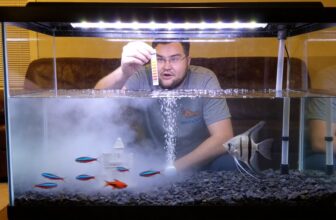
DIY Brine Shrimp Hatchery From a Two-Liter Bottle
Your painted tubing now fades like a whisper into the background, and that same spirit of quiet invention brings us to feeding.
You want live food for tiny fish, and a DIY hatchery solves this quietly.
Take your two-liter bottle, cut the bottom off, flip it so the neck points down, and you’ve built your bottle setup.
Aeration matters. You push air through an airline tube with a simple valve, bubbling upward, keeping cysts suspended.
Brine shrimp hatch in about 24 hours, drawn to the light you place below.
- Cut two inches from the bottle bottom for observation windows.
- Attach a valve to control gentle, steady bubbles.
- Harvest when orange clouds gather near the light.
You feel capable, watching life you’ve cultivated swirl and thrive.
A peristaltic dosing pump can automate the harvesting process by precisely transferring brine shrimp from your hatchery to multiple aquariums without manual siphoning.
Freeze Single-Serving Fish Food in Ice Cube Trays
When you open your freezer, you see neat rows of possibilities waiting to become meals.
You can bring that same order to your fish’s diet by freezing live or prepared foods in ice cube trays.
Measure one teaspoon of bloodworms or brine shrimp into each compartment, then fill with dechlorinated tank water. Freeze until solid, usually overnight.
Pop out a single cube at feeding time. You’ve achieved portion control, giving exactly what your fish need without waste. The quick-freeze method locks in nutrients, so you get true flavor preservation and maximum health benefits.
No thawing mess, no guessing amounts, no spoiled food forgotten in the fridge door.
Your fish swim excitedly, you feel capable and calm, and the routine becomes almost meditative.
For longer trips or automated feeding, you can complement this method with an automatic fish feeder offering half-gram accuracy and Wi-Fi connectivity for remote portion control.
DIY Feeding Ring for Fry From Airline Tubing
Reach into your toolbox, and grab the airline tubing lying there, the clear plastic hose that carries air bubbles to your tank.
The most important tool for this job is already in your aquarium cabinet—simple airline tubing transformed into a precision feeding station.
You’re going to build a tubing ring that keeps food where fry can find it.
Cut about eight inches of tubing, form a circle, and join the ends with a small suction cup pressed into place. This floating boundary corrals tiny flakes or powdered food, preventing waste from drifting into filters or sinking into gravel.
For fry feeding, precision matters. These small fish tire easily, and scattered food means missed meals.
- Position the ring near gentle water flow, not strong currents—matching the low-flow settings available on adjustable pumps designed for nano tanks
- Drop food inside slowly, watching fry gather
- Lift the ring out for cleaning after each meal
Trap and Remove Pest Snails With Blanched Zucchini
How do you stop a snail invasion without a single drop of chemicals? You set a zucchini bait, and watch the snails march to dinner.
Blanch a slice for thirty seconds. Drop it in at lights-out.
By morning, the vegetable becomes a living snail trap. Lift it slowly, and you’ve removed dozens. No stress, no toxins.
| Step | Action | Timing |
|---|---|---|
| 1 | Slice zucchini into coins | 5 minutes |
| 2 | Boil briefly, then cool | 2 minutes |
| 3 | Float in tank overnight | 8–10 hours |
| 4 | Remove with attached snails | Morning |
| 5 | Repeat weekly until controlled | Ongoing |
You feel relief, seeing balance return. The tank breathes easier.
A well-maintained filtration system with surface skimming like the YCA OF‑1000 or Taddiens models keeps your water pristine between these manual interventions, removing oily films that can harbor snail eggs and debris.
Grow Fresh Algae Snacks in a Sunny Jar
Cultivate living algae snacks for your aquarium inhabitants in a simple sunlit jar.
Pest snails leave the tank, but your shrimp and fish still hunger for something green and living.
You grab a mason jar, drop in a smooth river rock, and fill it halfway with old tank water. Place it on your windowsill, where morning sun pours through the glass. Sunlit cultivation begins, patient and quiet.
Within five to seven days, a thin, fuzzy film coats the stone. That’s your harvest, rich in algae nutrition, a fresh buffet for hungry mouths.
- Choose a clear glass jar, one quart size, so light reaches every corner.
- Rotate the rock gently, exposing fresh sides to the sun.
- Scrape growth weekly, feeding small amounts to prevent waste.
Stop Aquarium Lid Drips With Binder Spine Stripping
Water beads on your aquarium lid, swelling into droplets that fall onto your lights, your floor, your patience.
You cut clear binder spine stripping—those flat plastic strips from office supply stores—to fit your lid edges. This creates gentle binder sealing that redirects moisture back into your tank.
You still need lid venting, so you leave small gaps at corners where stripping doesn’t meet. Your hatched fish breathe, your equipment stays dry, your frustration fades.
| Problem | Solution | Benefit |
|---|---|---|
| Water drips on lights | Apply stripping to front edge | Protects electronics from damage |
| Condensation escapes | Leave ½-inch corner gaps | Allows necessary air exchange |
| Evaporation wastes water | Seal three sides completely | Reduces refill frequency |
| Stripping slips off | Use ¾-inch width for grip | Stays put without adhesive |
| Mold forms on lid | Wipe weekly during water changes | Keeps setup clean and healthy |
You spend two dollars, you save your sanity.
Boost Fish Colors With a Black Paper Background
Your betta’s scales look dull against that pale wall, and you’re squinting to spot your neon tetras in the glare. Taping black construction paper to the back glass changes everything, and you’ll wonder why you waited.
The dark surface creates color contrast, making silver shimmer and blue blaze. You’ll feel calm watching fish pop like jewels against the void. Background depth transforms a flat box into a window into another world.
Cutting and Attaching the Paper
Cut paper precisely to your tank’s height and width, leaving no gaps. Attach with clear tape at corners, smoothing bubbles flat. Replace yearly, or try navy, forest green, or deep purple for variety.
Shoot Vivid Fish Photos With a Simple Flashlight
Bringing Fish Colors to Life With a Simple Flashlight
Why do your fish look gray and lifeless in every photo you snap? You are missing light placement, friend.
Grab a basic flashlight from your drawer. Turn off harsh room lights, dim the space. Hold your flashlight at a low angle, shooting across the tank, not straight down. This creates color contrast, making reds pop and blues deepen. Use a thin white cloth over the beam for flashlight diffusion, softening harsh spots. Wait for your fish to pause, curious about the glow. Click.
| Problem | Your Fix |
|---|---|
| Flat, dull colors | Side-angle flashlight placement |
| Harsh bright spots | Flashlight diffusion with cloth |
| Dark shadows swallow fins | Raise light slightly higher |
| Fish appear washed out | Shoot in full tank darkness |
| Blurry movement | Wait ten seconds, let them settle |
You capture their true beauty now, sharp and alive.
Exercise Your Betta With Brief Daily Mirror Sessions
Brief Daily Mirror Sessions
Pull out a small mirror from your drawer, the kind you might use to check your teeth.
Hold this Betta mirror against the glass for three to five minutes, watching your fish flare his fins and chase his reflection. This daily reflection mimics natural territorial behavior, giving him needed exercise.
You’ll notice he swims harder, breathes faster, and rests calmer afterward.
Limit each session to prevent exhaustion—proper stress reduction depends on brevity, not marathon staring contests.
Time It Right
Set a phone timer so you don’t overdo it.
Watch His Cues
Remove the mirror if he hides or loses color.
Stay Consistent
Same time daily builds healthy routine.
Frequently Asked Questions
How Often Should I Replace Pillow Stuffing Filter Media?
You should replace pillow stuffing filter media every two to four weeks, checking for reduced water flow. Monitor your filter stuffing frequency and watch for media lifespan signs like discoloration or clogging to maintain optimal filtration.
Can I Use Colored Embroidery Hoops for Floating Islands?
You can’t. Colored hoops often contain dyes or coatings that leach toxins, so you’d compromise floating island safety. You’re safer choosing plain, 100% plastic hoops—those were designed without harmful additives, so they’d protect your fish.
Will Black Paint on Airline Tubing Harm My Fish?
You’ll risk paint toxicity except you choose aquarium-safe paint labeled non-toxic and fully cured. Standard paints leach chemicals. For tubing durability, heat-resistant black airline tubing lasts longer and needs no paint at all.
How Long Can a USB Air Pump Run on a Phone Charger?
You’ll typically get 5-12 hours of pump life from a standard 10,000mAh phone charger, though charger compatibility varies—check your pump’s wattage draw and your charger’s output to calculate exact runtime before emergencies strike.
Is Mirror Exposure Safe for Female Bettas?
Mirror exposure isn’t safe for female bettas as it triggers betta aggression and causes mirror stress, potentially exhausting them. You’re better off limiting mirror time significantly or skipping it entirely to maintain their health.
Rounding Up
Your toolkit now holds fourteen practical fixes, and you feel ready. You will spend less money, less time, less worry. Small choices compound into lasting calm. Pick one hack this week, try it, notice the difference. Your aquarium rewards patience with quiet beauty. Keep going.