A 150-gallon aquarium looks enormous in a living room, yet it holds less water than a kiddie pool. Redtail catfish outgrow such spaces within two years, their bodies compressing, organs failing, lifespans halving. The fish feels stress as a human feels chronic worry—unseen, damaging, cumulative. Owners face a choice most do not anticipate.
At A Glance
- Adult redtails require 1,500–2,000 gallons minimum, far exceeding typical home aquariums.
- Continuous heating and filtration generate substantial electricity costs over 15 years.
- Weekly protein intake escalates dramatically as fish grows beyond three feet long.
- Tank boundaries and solitary conditions stunt growth compared to wild specimens.
- Legal permits, equipment replacements, and impossible home breeding add logistical burdens.
Why 1,000 Gallons Isn’t Enough for Adult Redtails
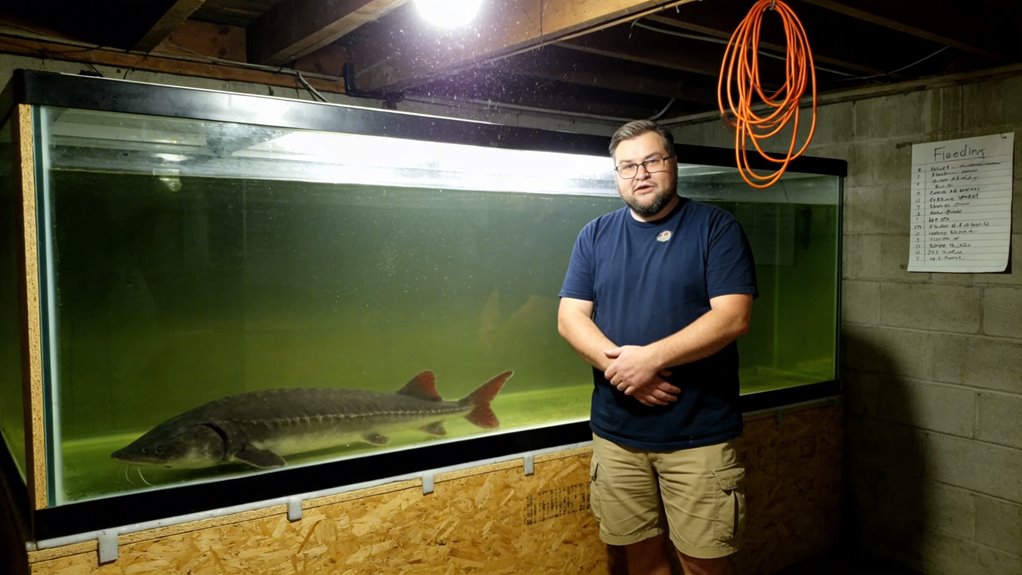
A single car, parked in an ordinary garage, takes up about the same floor space as a 1,000-gallon aquarium.
That sounds enormous, yet it fails these fish.
Adult redtails stretch four feet, sometimes five. They cannot turn properly, cannot swim freely, in such confinement. The connection between diet tank size and feeding frequency matters here: cramped fish digest poorly, grow stunted, suffer stress that shortens their fifteen-year lives.
Four feet of muscle and instinct, reduced to tight circles and stunted years.
Kept properly, they need 1,500 gallons minimum, preferably 2,000. This allows normal metabolism, appropriate feeding frequency without fouling water, and genuine movement. Anything less betrays the animal’s dignity, and the keeper’s promise.
What Redtail Catfish Ownership Actually Costs Over 15 Years
Space carries a price tag, and that price grows heavier with each passing season.
The budget cost begins with a 1,500-gallon aquarium, custom filtration running 24 hours daily, and heating systems maintaining 68–80°F across fifteen years. Electricity bills accumulate steadily, month after month. Food demands grow as the fish expands beyond three feet, requiring pounds of protein weekly. Legal permits may be necessary in certain states or municipalities, especially where invasive species laws tighten restrictions. Equipment fails and needs replacement, typically every five to seven years. Those who commit to this responsibility join a small community of dedicated caretakers, bound by shared sacrifice and steady patience.
Redtail Catfish Basics: Size, Lifespan, and What You’re Signing Up For
Every redtail catfish begins as a palm-sized fingerling, deceptively small, swimming in pet store tanks with other hopeful prospects.
Palms cradle beginnings that tanks cannot contain.
The body grows thick and heavy, dark grey with scattered dots, that famous red tail flaring like a warning flag. In captivity, three to four feet becomes ordinary, sometimes five in the wild. Fifteen years stretches ahead for the committed keeper, though neglect steals years quickly.
Feedingtail myths promise easy care, docile giants who fit any tank. They lie.
Breeding challenges remain nearly insurmountable in home aquariums, another boundary between dream and reality.
This fish demands space, filtration, and honest self-assessment.
Captive vs. Wild: How Big Do Redtails Really Grow?
The ruler stops at forty-two inches, and that is where most captive redtails finally rest, though their bodies keep thickening for years.
Growth vs. wild reveals stark truths about growth potential. Wild specimens stretch past sixty inches, swimming Amazon currents that sculpt giants. Captivity imposes quiet limits.
Four factors shape this divergence:
- Tank boundaries — walls replace endless rivers
- Diet rhythms — scheduled feeding versus constant foraging
- Water chemistry — stable parameters versus seasonal floods
- Social signals — solitary confinement versus complex wild hierarchies
The fish feels these constraints, though it cannot name them. Keepers who understand this gap join a patient fellowship, accepting responsibility for lives diminished by love’s best intentions.
Water Conditions and Filtration That Keep Redtails Thriving
Water carries secrets in its warmth, its softness, its invisible chemistry, and the redtail catfish notices each one with a body scaled for sensing. Temperature must rest between 68 and 80 degrees Fahrenheit, pH between 6.0 and 7.5, like the rivers it remembers.
Water flow cannot whisper; it must move steadily, carrying waste away from resting spaces.
Filter media, the layered materials inside filters, require frequent changing—mechanical sponges catch debris, biological surfaces host helpful bacteria that eat poisonous ammonia.
Clean water means years together. Neglect steals those years quietly.
Tank Mates That Survive With Redtail Catfish: And What Doesn’t
A heavy body floating in dark water does not negotiate; it simply decides what fits inside its mouth. The bretail temperament—patient, then sudden—makes community placement feel like guessing which guest a sleeping lion might ignore.
Breeding potential disappears when one partner eats the other overnight.
Compatible companions require specific traits:
- Size exceeding twelve inches at adulthood
- Equivalent water temperature tolerance, 68–80°F
- Robust body structure, not ornamental fins
- Equal or greater aggression, establishing mutual respect
Oscars work. Pacu work. Anything smaller vanishes, becoming food not friend. Shared space demands shared threat.
Why Redtail Catfish Stunt: And Other Preventable Health Mistakes
Four inches of glass and a wish cannot contain what rivers made to wander.
Stunting, the slow crushing of a fish’s body by small spaces, happens quietly.
| Cause of Mistake | What Actually Helps |
|---|---|
| Tank too small, under 1,500 gallons | Room to turn, to stretch, to grow |
| Wrong nutrition habitat, one food only | Varied diet: fish, fruit, crustaceans |
| Feeding frequency daily, always | Every two to three days, measured |
| Dirty water, weak filters | Strong flow, weekly testing |
The fish feels hunger, feels confinement, though keepers may not notice.
Belonging to this hobby means choosing size over convenience, patience over hurry.
Is a Redtail Catfish Actually Right for You?
Perhaps the first question is not how to keep one, but whether you should.
The redtail catfish demands fifteen years of unwavering commitment, a tank swallowing half a small room, and legal requirements many regions impose without warning.
Four truths deserve weighing:
- Space: 1,500 gallons minimum, no negotiation possible.
- Longevity: Poor care steals years rapidly; the fish feels this loss.
- Legal requirements: Permits, size bans, or outright prohibition may govern your location.
- FeedingStrategies: Whole proteins, not flakes, sustain growth—messy, expensive, relentless.
Belonging to this community means honesty first. Some keepers belong here; most, kindly, do not.
Frequently Asked Questions
Can Redtail Catfish Recognize Their Owners?
Redtail catfish respond to owner interaction through scent recognition and familiar vibrations, forming cautious bonds with consistent caregivers.
They detect amino acids in skin oils, distinguishing regular feeders from strangers.
This mirrors how the fish navigates murky Amazon waters, tracing chemical trails to food sources.
Caretakers report tentative recognition after months of routine, the catfish surfacing expectantly at set feeding times.
Do Redtails Need Driftwood or Hiding Spots?
Driftwood and hiding spots matter less for redtails than one might expect. These fish, with their tankitter preferences, favor open swimming space over cluttered environments. Sparse substrate selection—bare bottom or smooth sand—prevents harmful ingestion during feeding. Thick-bodied and confident, they rarely seek concealment. The keeper’s priority remains vast water volume, not décor. A redtail’s comfort lies in room to turn, not caves to enter.
How Often Should You Feed Juvenile Redtails?
Live earthworms, tilapia chunks, or sinking carnivore pellets rest at the bottom of a juvenile redtail catfish’s tank. Feeding frequency demands once daily, six days weekly, with one fasting day to support healthy digestion. This steady schedule matches their rapid growth rate, which can exceed two inches monthly during the first year. Portions should disappear within three minutes, preventing waste buildup in the water.
Can Redtail Catfish Live in Outdoor Ponds Year-Round?
Redtail catfish can survive in outdoor ponds year-round only where water stays between 68–80°F through all seasons, requiring temperature management with heaters or climate-appropriate geography. Seasonal growth cycles slow when temperatures drop, and cold snaps below 68°F cause stress, suppressed immunity, and potential death. Pond depth must exceed four feet to buffer thermal swings. Success demands vigilant monitoring, backup heating systems, and regional climate honesty—some keepers face impossible winters in spite of dedication.
What Signs Indicate Redtail Catfish Stress or Illness?
Stress signs include rapid gill movement, faded coloration, and hiding behavior. Illness indicators appear as white spots, torn fins, or swollen eyes. A redtail catfish refusing food for more than two days warrants concern, as these fish typically eat eagerly. Labored swimming near the surface suggests oxygen deprivation. Erratic scratching against tank walls indicates external parasites. Prompt water testing, measuring ammonia at zero parts per million, prevents most health complications.
Rounding Up
A 2,000‑gallon tank, 24‑hour filter, and $20,000 across fifteen years buy a fish as long as your arm, heavy as a small dog.
That investment asks for humility, patience, and room to grow—otherwise the giant shrinks, suffers, and dies too soon.
The redtail catfish belongs to keepers who measure twice, build once, and love what requires more than they expected.