You hold a tiny plastic bag at the pet store, water sloshing inside, and you wonder if you’ve made a mistake. Bumblebee gobies—striped like fuzzy insects, barely an inch long—stare back with bulging eyes. They’re beautiful, yes, but you’ve heard the rumors: they sicken in freshwater, they starve, they vanish into filter intakes. The fear feels familiar, like bringing home a fragile thing you might break. Here’s what nobody told you. The secrets aren’t complicated, but they’re specific—numbers matter, timing matters, and patience matters most. You’ll need to slow down. You’ll need to measure salt with care, not guesswork. And you’ll need to accept that these fish demand attention most aquarists won’t give. The reward, though, is watching a creature most people fail with thrive for years under your hands. But first, you have to decide if you’re willing to build something most hobbyists skip entirely.
At A Glance
- Provide brackish water at 1.002–1.006 specific gravity using marine salt and dechlorinated water.
- Cycle the filter 4–6 weeks before adding fish until ammonia and nitrite read zero.
- Use fine sand substrate with scattered caves, driftwood, and smooth stones for hiding.
- Feed frozen bloodworms, baby brine shrimp, or micro-pellets 2–3 times daily near hardscape.
- Change only 20% water weekly, keep dim lighting six hours, and plant heavily to control algae.
Brackish Water Setup: Your First Critical Decision
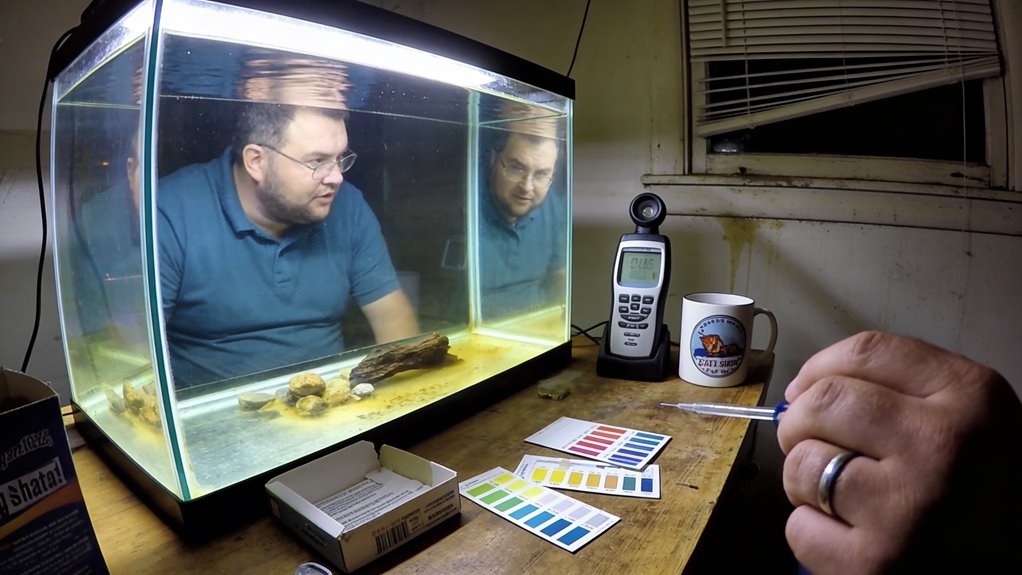
Before you bring home those tiny striped fish with their bright yellow bands, you’ll need to prepare water that feels like home to them.
You’ll gather fine sand, soft as beach dunes, so their little mouths can sift and feed. You’ll shape DIY driftwood into caves where shy hearts hide from bright lights. You’ll feel proud when algae control keeps their windows clear, balancing plant food against fuzzy overgrowth. You’ll notice how quiet filters move water like gentle streams, not roaring rivers. You’ll understand that building this world means joining a patient circle, watchers who make small spaces safe.
Exact Salinity: Mixing Brackish Water for Bumblebee Gobies
Where do you begin when salt and fresh water must meet? You start with a simple hydrometer, the kind that floats like a little boat telling stories of weight and balance. Mix one level teaspoon of marine salt per gallon of dechlorinated water, stir until crystals disappear entirely, then wait. This creates brackish water, not ocean-strong, not river-weak, but exactly where bumblebee gobies feel welcome, specific gravity 1.002 to 1.006. You’re building belonging, drop by measured drop.
Water testing becomes your weekly ritual, a quiet conversation with glass vials changing color. You’ll feel calm watching parameters settle, knowing your gobies thrive since you paid attention. Aquarium aesthetics emerge naturally from this care—clear water, active fish, peace. Trust the process.
Bumblebee Goby Tank Size and Stocking Rules
A ten-gallon glass box, roughly twenty inches long, one foot front to back, holds the starting line for bumblebee gobies, though you’ll want more space if you can spare it.
You’ll house six to seven gobies comfortably in fifteen gallons, giving each fish room to claim small territories.
Water cycling matters tremendously—run your filter for four to six weeks before adding fish, testing until ammonia and nitrite read zero.
Tank aesthetics shape their wellbeing; scattered caves and gentle plants calm these shy creatures.
Think of it as building a neighborhood where everyone has their own doorway.
Substrate and Hardscape for Digging Instincts
Since their bodies have evolved for life between fresh and salt, you’ll need to give them ground they can push through with their snouts. Choose a substrate texture of fine sand, about one to two inches deep, soft enough for their small mouths to sift through comfortably.
Add hiding structures like coconut caves, half-buried driftwood, or smooth stones stacked with gaps between them. These create small territories where each goby can claim space without fighting.
You’ll feel the calm satisfaction of watching them dig, knowing you’ve built a home that fits their instincts, a place where they truly belong.
Lighting and Filtration for Sensitive Gobies
The sand and caves you’ve arranged will stay cleaner, and your gobies will stay calmer, when you choose the right light and filter for their water.
Arranged sand, steady caves, gentler gobies—light and filter chosen with care, their water stays calm, their trust remains yours.
- Dim LED spectrum mimics their shaded homeland, bringing comfort, not fear.
- Gentle filter media whispers through water, never roaring like a storm.
- Soft shadows let them own their corner of the world, together yet alone.
- Quiet machines say: you belong here, small friend.
You tend this glass world with patience, and they trust you for it. Fewer words pass between you, but the knowing remains.
High-Protein Foods Bumblebee Gobies Can’t Refuse
What do these tiny hunters need most when their stomachs are no bigger than a pea?
You must feed them protein, real protein, two or three times each day. Think of your feeding schedule like a promise you keep.
| Food Type | Why It Matters |
|---|---|
| Frozen bloodworms | They hunt these like wild prey, building confidence |
| Baby brine shrimp | Small enough for their tiny mouths, always |
| Micro-pellets | Sinks past aquarium décor to where they hide |
You scatter food near driftwood and rocks, places that feel safe. You’re not just feeding fish. You’re saying, “I see you, little one.”
Bumblebee Goby Behavior: Reading Stress Signals
A half-dozen tiny shadows flicker against your tank glass each morning, and you’ll learn to read their moods like weather coming.
Stress response timing shows up fast, sometimes within hours of something wrong, so you’ll want to watch closely every day. Body coloration indicators tell the true story: bright bands mean calm, faded stripes mean fear, and dark blotches spell trouble brewing.
- Faded stripes that dull like old paint, murmuring something hurts
- Hiding longer than three hours straight, refusing to peek at you
- Gulping air at the surface like lungs are burning
- Jerky swimming, like they’re trying to shake off an invisible hand
You’ll belong to their world when you notice.
Tank Mates That Work (And Ones That Don’t)
Before you pick any fish friends, you’ll need to picture your tank as a small neighborhood where everyone shares one kitchen and one bedroom.
Your bumblebee goby feels safest with peaceful neighbors who respect its space.
| Tank Mate | Why It Works | Watch Out For |
|---|---|---|
| Kuhli loach | Gentle bottom dweller, same water chemistry needs | Needs soft tank décor to burrow |
| Opae ula shrimp | Brackish tolerant, won’t outcompete | Keep water chemistry stable |
| Indian glass fish | Calm schooler, similar origin | Avoid fin-nipping varieties |
| Endler’s guppy | Small, adaptable to brackish | Fast swimmers stress gobies |
| Mollies (sailfin) | Hardy, share pH preferences | Needs plants for tank décor hiding |
Skip tetras, bettas, and cherry shrimp. They’ve wrong water chemistry needs, or they’ll bully, or they’ll become lunch. Choose wisely, and your little community thrives together.
Breeding Setup: Triggering Spawns Without Guesswork
Setting up a breeding tank starts with a plain ten-gallon glass box, nothing fancy, just clean and steady.
You’ll need water breeding conditions that feel safe, secure, like home. Your water chemistry must stay stable, pH between 7.5 and 8.2, hardness firm, so eggs can stick and grow.
Here’s what creates that belonging for spawning pairs:
- A ceramic tube barely two inches wide, dark inside, just right for hiding fears
- A slight freshwater rain, mimicking seasonal changes that whisper now is safe
- Live brine shrimp meals, building strength for the work ahead
- Quiet corners where males guard eggs undisturbed, feeling needed
Bumblebee Goby Diseases: Brackish-Specific Health Issues
Once your gobies finish guarding those eggs, your eyes need to turn toward something invisible.
Brackish water creates unique disease physiology, where salt fluctuations weaken immune barriers. You will spot velvet as golden dust, or Ich as white spots like sugar crystals. Gill rot creeps in when salinity drifts below 1.002.
Stable parameters belong in your hands. Treatment protocols begin with isolation tanks, then gentle heat to 82°F for parasites, or malachite green for fungus. Always match salinity to their home tank.
Your tiny guardians trust you to notice before symptoms spread, since belonging means protecting the vulnerable.
Weekly Water Maintenance That Extends Lifespan
Your test kit sits on the counter like a small promise, and you’ll reach for it every seven days since water you cannot see changing still changes your fish.
Packish cycling means you’re keeping the tank’s good bacteria alive, the tiny helpers that eat fish waste, and you protect them by changing twenty percent of the water every Saturday, never more than thirty percent, so they don’t wash away.
Packish cycling means keeping the good bacteria alive, those tiny helpers that eat fish waste, by changing just enough water to protect them.
For algae control, you dim your lights six hours daily, you wipe the glass with a soft pad, you plant thick greenery that starves algae of food.
You belong here, in this rhythm.
Frequently Asked Questions
Do Bumblebee Gobies Need Land Access Like Mudskippers?
You won’t need land access for your bumblebee gobies, since they differ from mudskippers in their terrain behavior. These small fish stay submerged, preferring brackish water with hiding spots for their social hierarchy. They establish gentle pecking orders among rocks and plants, not mudflats. Give them sandy bottoms, not dry surfaces, and you’ll see their peaceful nature flourish without any shoreline requirements whatsoever.
Can Bumblebee Gobies Live in Pure Freshwater Temporarily?
You can’t keep bumblebee gobies in pure freshwater for long, but you’ve got some freshwater tolerance for short periods. Their temporary adaptation works for a quick tank move, maybe an hour or two. After that, you’ll notice stress: they’ll gasp at the surface, lose their bright stripes, and feel afraid. Their bodies need salt to breathe properly through those tiny gills. Don’t let your worry wait—test the water, add marine salt to 1.002 specific gravity today.
How Do You Acclimate Bumblebee Gobies to Brackish Water?
You acclimate bumblebee gobies through gradual salinity adjustment over 7-10 days. Start with their current water, then add small amounts of brackish water daily, raising specific gravity by 0.001-0.002 each step. Test water parameters twice daily with a hydrometer. You move slowly since sudden changes shock their bodies, like jumping into a cold pool instead of wading in. Patience keeps them calm, healthy, and ready for their new home.
Do Bumblebee Gobies Recognize Their Owners?
You’ll notice your goby watching you during owner interaction near the tank glass. They develop visual memory of your shape, linking you to food and safety. Although not cuddly pets, they respond to owner cues like your footsteps or the tank light switching on. This recognition feels gentle, like a quiet nod from a shy neighbor. You’ve earned their trust through small, repeated kindnesses.
Why Do Bumblebee Gobies Change Color Intensity?
Your bumblebee goby shifts its stripes like a mood ring since of color stress behavior.
You’ll notice dull bands when water turns sour or tank mates chase too often, and bright bands when it feels safe. Its diet preferences matter too—poor nutrition fades those signature yellow-black bars. You’ll see the best colors when you feed live brine shrimp, keep the salt level steady at 1.004, and provide coconut hides. Watch closely; your fish speaks through its palette.
Rounding Up
Your glass tank, five gallons or more, holds everything they need.
You’ve learned the mix—one teaspoon of marine salt per gallon gives that special gravity of 1.005, the brackish water these little fish crave.
You’ve placed the smooth sand, the dim light, the soft caves.
You feed them tiny bites, morning and evening.
You check their stripes, bright for happy, dull for worried.
You change one-fifth of the water, weekly, always.
Now you wait, patient, and watch them thrive.