
You hold a tiny glass vial of chili rasboras, each no longer than your thumbnail, and you notice how their scarlet fins catch the overhead light like embers. These fish need soft water, pH 6.0‑6.5, and a tank no smaller than five gallons with leaf litter turning the water tea-brown. You’ll learn why their color dims in hard water, how breeding works in blackwater, and which tank mates become bullies. Turn the page.
At A Glance
- Keep schools of eight or more in heavily planted ten-gallon tanks with gentle filtration.
- Maintain soft, acidic blackwater: pH 6.0–6.5, dKH 3–12, and temperatures of 68–82°F.
- Feed varied protein-rich foods including micro-pellets, frozen brine shrimp, and live daphnia.
- House only with peaceful species like Neon Tetras, dwarf shrimp, and small Corydoras catfish.
- Prevent disease through weekly water testing, stable parameters, and slow acclimation of new fish.
Meet the Chili Rasbora: Tiny Fish, Explosive Color
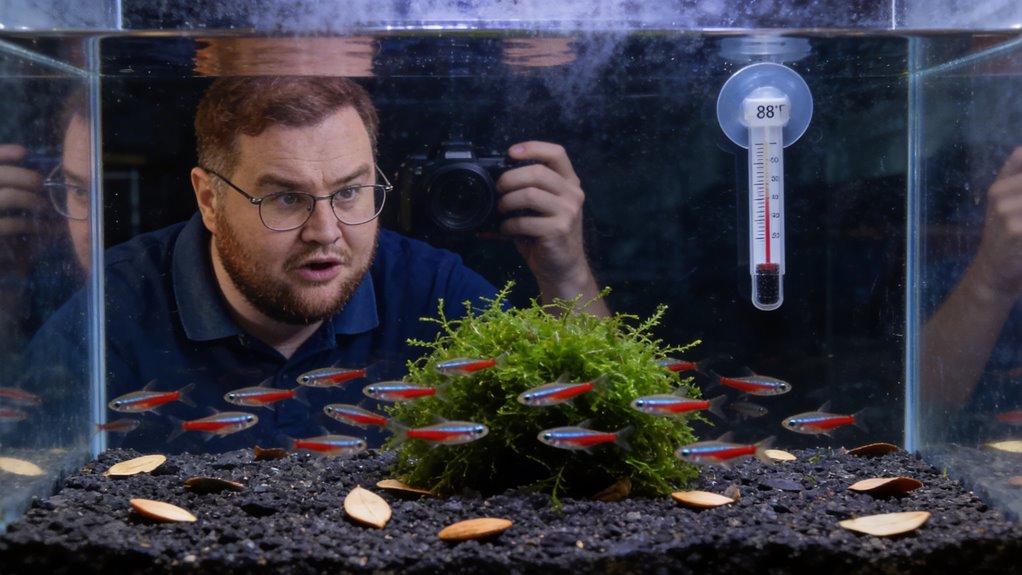
What catches your eye first when you peer into a well-kept aquarium?
You spot a tiny ruby flame, barely an inch long, flickering through shadow.
That’s your Chili Rasbora, Boraras brigittae, once called Mosquito Rasbora. Its colorwater adaptation lets you see how this fish turns blackwater tannins into living fire—the darker the water, the brighter males glow crimson. Females stay rounder, softer, less showy.
You notice breeding genetics at work when dominant males flash extra red spots on their fins, signaling health to potential mates. You’re witnessing natural selection made visible, slowed down for your careful observation.
Their large eyes catch light like polished buttons.
You feel wonder, quiet and patient.
You’re home here.
Minimum Tank Size for Healthy Chili Rasbora Schools
A ten-gallon tank rests on your desk, glass walls catching morning light, and you wonder if it might hold enough water for a small school of Chili Rasboras to sway together.
You can start with five gallons, but ten gives them room to belong.
| What You Choose | Why It Matters |
|---|---|
| Tank size | More space means braver fish, brighter colors |
| Tank lighting | Dim light keeps them calm, lets red glow shine |
| Substrate choice | Dark sand mirrors home streams, eases their worry |
| Group size | Eight or more friends, so no one hides alone |
Pick dark gravel, gentle bulbs, and enough room for a little crowd.
Water Chemistry That Unlocks Chili Rasbora Red Color
How does a glass of tea turn from pale yellow to deep amber when you let the leaves steep longer? You’re witnessing tannin modulation, the same gentle chemistry that coaxes your Chili Rasboras into their fieriest reds.
You add peat moss or driftwood, letting tannins seep into your water like tea leaves in warm water. These plant compounds, measured in gentle yellow-brown tints, calm your fish and signal safety in their bodies, triggering pigments to bloom.
Pair this with warm lighting spectrum, around 2700K to 3000K, mimicking dappled forest sun. You’re not just adjusting water; you’re building trust, and trust makes them glow.
Build a Blackwater Aquarium Chili Rasboras Thrive In
Your tinted water holds the first secret, but now you’ll shape the whole home beneath it. Dark substrate choice anchors your vision, mimicking leaf‑littered pond floors where these fish feel safest. Fine gravel or soft sand works best, nothing sharp against their delicate fins.
| Element | Your Purpose |
|---|---|
| Leaf litter | Releases tannins slowly, feels like home |
| Driftwood | Creates shadows, breaks open space |
| Dim blackwater lighting | Soothes their large eyes, lets red glow emerge |
You’ll float plants up top, letting roots wander down. They’ll school together then, brave and bright, since you built them somewhere they finally belong.
Slow Your Filter Flow: Protect Chili Rasboras From Strong Currents
Though you have built them a dark, soft home, your filter’s outflow can turn their sanctuary into a river they cannot cross. You have chosen soft gravel, driftwood, and floating plants, yet your tiny swimmers still struggle, pressed against glass by invisible force.
Filter placement matters more than you might expect. Position the outlet toward a tank wall or corner, not the open center. This spreads the current wide and thin, like breath across birthday candles.
Flow regulation completes your care. Adjust the valve, add a sponge pre‑filter, or raise floating plants to break the stream.
They will thank you with calm, steady swimming, and you will belong to their peace.
Why Do Chili Rasboras Keep Hiding?
If you’ve set up the dark water and gentle flow they need, yet your Chili Rasboras still dart behind the Java fern when you approach, you’re witnessing something deeper than simple fright.
These creatures carry ancient wiring. In Borneo’s blackwater streams, where tannins stain the water tea-brown and sunlight barely pierces the canopy, survival meant vanishing.
Their core habitat preferences demand shadow, density, broken sightlines. Open spaces feel like exposure, like standing in an empty parking lot with nowhere to run.
Predator avoidance isn’t cowardice—it’s collective wisdom encoded in their cells. When you enter the room, they read you as possible threat.
Watch: settle beside the tank, motionless, for ten minutes.
You’ll see them emerge, tentative, testing. They’ll reevaluate you, recalibrate risk. This patience builds trust, slowly, like friendship does.
Give them floating plants, driftwood caves, visual barriers. Create neighborhoods within the glass where they control visibility.
Hiding means they’re not broken.
Hiding means they’re home.
What Do Chili Rasboras Actually Eat?
What does a fish no bigger than your thumbnail hunt in dark, tea-colored water?
You’ll find your answer drifting through their tropical habitat, where Chili Rasboras act as micro predators. They snap up plankton, tiny worms, and insects, practicing constant predator avoidance as they dart between roots and leaves.
In your tank, you’ll feed them micro-pellets, quality flakes, and frozen treats like brine shrimp or daphnia. You’ll sprinkle protein-rich live foods—baby brine shrimp, tubifex—once or twice weekly. This variety keeps them glowing, strong, and brave enough to swim openly. You’re not just feeding fish; you’re building trust, bite by tiny bite.
Tank Mates That Won’t Intimidate or Prey on Chili Rasboras
Your Chili Rasboras need friends, not enemies.
You want tankmates who share your gentle spirit, not bullies who chase or gobble. Pick Neon Tetras, Celestial Pearl Danios, or Sparkling Gouramis, fish who swim slowly and mind their business. Dwarf shrimp, like Cherry Shrimp, scuttle peacefully across dark gravel, their substrate compatibility matching your Rasboras’ preference for soft, shadowed floors. Add Cory Catfish or Otocinclus, small cleaners who won’t frighten anyone.
Build aquarium decoration wisely, dense plants and driftwood creating hiding spots where shy fish feel brave together. Avoid large, fast swimmers or predators. Your community thrives when everyone feels safe, seen, and belonging.
How to Breed Chili Rasboras Successfully
Where does new life begin for these tiny fish?
You create a soft world first, a brewater tinted like steeped tea, where chemistry hums low and gentle. Your hands place fine-leaved plants, maybe Java moss, making a thick nest where eggs can stick and hide.
You watch the pair move, then you notice eggs, smaller than grains of sand.
Fry emerge hungry, so small they need special food, infusoria or powdered meals, delivered with patience. You learn that nutrition nutrition shapes their survival, and diet builds their strength.
You’ve joined a quiet circle now, keepers who coax life from water, one careful choice at a time.
Why Chili Rasboras Get Ich (And How to Treat It)
Once your fry grow strong and your breeding tank quiets down, you’ll notice something else matters just as much: keeping your tank of Chili Rasboras free from Ich, a parasite that appears as white dots on their bodies.
Ich attacks when stress weakens their defenses. Fluctuating temperatures, poor water hardness outside the 3–12 dKH range, or sudden pH swings invite trouble. These tiny fish feel safe when parameters stay steady, just like you feel calm when your room stays familiar.
Watch for these stress signals that open the door to Ich:
- Temperature swings beyond 68–82°F
- Water hardness climbing too high or dropping too low
- New fish added without proper quarantine time
- Filtration gaps that let ammonia build up
- Crowded conditions without enough hiding spots
If spots appear, move infected fish to a hospital tank immediately. Raise the temperature slowly to 86°F for three days—this speeds up the parasite’s life cycle so medication can reach it. Use copper-free Ich treatments labeled for scaleless fish, following doses exactly.
Prevention beats cure every time. Test your water weekly, adjust water hardness with distilled water when needed, and acclimate newcomers slowly. Your Rasboras will reward you with schooling, sparkling color, and the quiet pride of a healthy, belonging community.
How to Maximize Chili Rasbora Lifespan
A single Chili Rasbora, no bigger than your thumbnail, can brighten your tank for eight years if you treat it right.
You start with substrate choice. Dark sand, two inches deep, mimics the blackwater floors they know, easing their nerves so they live longer.
You manage the light cycle precisely. Ten hours daily, no more, using a timer. Gradual dawn and dusk settings mirror their wild home, keeping stress hormones low.
You test water weekly, keeping pH near 6.0 and temperature steady at 74 degrees.
You feed varied foods: flakes, then brine shrimp on Wednesdays.
You watch them school, feeling calm return, knowing you belong to their world.
Frequently Asked Questions
Do Chili Rasboras Need a Heater Year-Round?
You’ll need a heater most of the time. Chili Rasboras feel safe when their water stays between 68-82°F, and you’re aiming for 74°F—that’s room temperature on a warm day, but most homes drop below that in winter. A small, reliable heater keeps their heater temperature steady, which matters since these fish get stressed easily. Seasonal lighting changes don’t replace warmth; they need both. Your thermostat shifts with the calendar, so you should check their tank weekly, adjusting the heater as needed. Missing this invites lethargy and illness.
Can Chili Rasboras Live Alone or Need Companions?
You can’t keep a Chili Rasbora alone; they need companions. These tiny fish suffer stress and bre aggression—meaning they become weak and afraid—without others nearby. They don’t show true solitary behavior; instead, they form tight schools for safety. You’ll see them glow brighter, swim bolder, and live longer in groups of eight or more. Give them that school, and you’ll feel their relief, too.
How Often Should Chili Rasbora Water Be Changed?
You should change 25% of your Chili Rasbora’s water weekly, using a gravel siphon to remove waste from the bottom.
Keep your water temperature steady at 74°F during changes, matching new water to the tank’s warmth so your fish don’t feel shocked.
Don’t forget filter maintenance—rinse the cartridge in old tank water monthly, not tap water, so you preserve helpful bacteria that keep your fish healthy.
Do Chili Rasboras Jump Out of Open Tanks?
Yes, Chili Rasboras jump. You’ll need a lid for tank safety, even with a small tank size like five gallons. These bright red fish feel fear easily, and sudden movements send them darting upward. A glass canopy or mesh cover stops escapes. You won’t regret this simple step. Peace comes from knowing your tiny swimmers stay secure, schooling below where they belong, safe in their planted home.
Why Did My Chili Rasboras Lose Their Red Color?
Your Chili Rasboras lost their red color because of lighting stress, poor diet diet, or water problems. Dim light fades their bright stripes, like a flower wilting without sun. Check your tank lights, feed varied protein‑rich foods, and test water parameters. Healthy, comfortable fish glow crimson; stressed ones turn pale gray. You can restore their lively beauty with small, steady changes over days.
Rounding Up
A small glass tank, dark with tannins from soaked leaves, holds eight tiny fish flashing like scattered embers.
You’ve learned they need soft water, gentle flow, and dim amber light to show their best red. You understand that patience, steady care, and attention to small details—pH between 6.0 and 6.5, temperature near 74 degrees—bring out living color. These principles mirror your own life: quiet consistency, gentle environment, and time reveal what is livid and true. Trust the process, and watch them glow.



[…] protein-rich supplement also supports vivid crimson coloration in fish like Chili Rasboras when combined with proper lighting and water […]