Foxface Rabbitfish need 90+ gallons, low light, and rockwork packed with algae to graze.
They’ll eat dried marine algae, nori, and the occasional veggie treat – skip the meaty stuff.

Essential algae grazing for foxface rabbitfish, supports natural diet and reduces coral nipping.
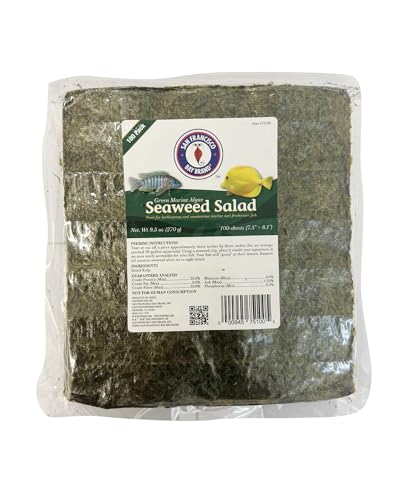
Convenient daily grazing, keeps foxface healthy and prevents coral nibbling.

Holds nori and vegetables securely, encourages natural feeding behavior.
Check discounted items inMarine Fish Food
Handle with thick gloves; those dorsal spines pack a painful, non-lethal venom.
Hot water soaks treat stings.
Compatible tankmates include tangs, clownfish, and peaceful angelfish in spacious setups.
With proper care, count on five years, maybe seven.
There’s more beneath the surface – stick around.
At A Glance
- Omnivorous grazers need dried marine algae, nori, and vegetables; avoid exclusive pellet or daily meaty diets.
- Typical captive lifespan reaches five years, potentially seven with exceptional water quality and nutrition.
- Compatible with tangs, surgeonfish, clownfish, peaceful angelfish, and cleaner shrimp in spacious tanks.
- Venomous dorsal spines require thick gloves during handling; treat stings with hot water immersion immediately.
- Requires 90–125 gallon tanks with low-light shading, branching rockwork, and ample algae growth areas.
Is the Foxface Rabbitfish Right for Your Tank?
The foxface rabbitfish, *Siganus vulpinus*, demands honest self-assessment. Reaching 8–10 inches with venomous dorsal spines, this species commands space, respect, and thick gloves.
Venomous spines, serious size, unforgiving temperament: the foxface demands respect before it ever demands food.
Breeding compatibility? Practically nonexistent – no captive successes exist, so aspiring breeders must look elsewhere.
Aquarium aesthetics suffer without planning: abundant live rock, caves, and tunnels are crucial, and bright lighting actually stresses these fish rather than showcasing them. Low-light environments suit them better anyway.
Reef-safe with caution, territorial when mature, deceptively easy care hiding genuine risks – this fish belongs with patient keepers who value character over convenience, community over control.
Worth it? Depends on your tank community.
Given their sensitivity to water turbulence and noise, implementing noise reduction solutions such as acrylic silencers and flow-dampening accessories helps maintain the calm, low-stress environment these fish require.
Tank Size and Water Parameters for Foxface Rabbitfish
Where exactly does an eight‑inch fish with anger‑management spines and a taste for privacy belong?
– 90 gallons minimum, though 125 lets everyone breathe
Now, water cycling matters – start with fully cycled systems, since this fish has opinions about ammonia spikes.
Tank maintenance keeps parameters locked: 72‑82°F, pH 8.0‑8.4, dKH 8‑12, salinity 1.020‑1.025. I mean, they’re hardy, not miracle workers.
Provide rockwork, caves, hiding spots. Territorial when cramped. Mess with their space, get the side‑eye – and maybe a spine demonstration.
While the Foxface Rabbitfish demands substantial marine systems, aquarists with smaller secondary quarantine or frag tanks might consider a rimless low‑iron glass design with minimal visual obstruction for clear observation of fish health parameters.
Why Foxface Rabbitfish Do Best in Low Light
Once the tank’s footprint and chemistry settle into something respectable, the conversation turns to atmosphere – specifically, how much photon bombardment these fish actually want.
Now, *Siganus vulpinus* hails from shadowed reef slopes, not sun-drenched shallows. Bright light? That’s low light stress waiting to happen – skittish behavior, washed coloration, the whole anxious package. Dim corners, meanwhile, keep them grazing confidently.
And here’s the kicker: algae grazing efficiency actually improves under subdued illumination. Their eyes, adapted to twilight hunting, pick at filamentous growths with surgical precision when not squinting against glare.
Foxface rabbitfish recovering from aggression or disease may need temporary relocation to crystal‑clear plastic hospital containers that maintain stable water chemistry while keeping them in subdued lighting conditions.
Rockwork and Hideaways Your Foxface Needs
In the wild, these fish haunt the cracks and crevices of reef slopes, and that instinct doesn’t vanish simply as the glass walls have price tags.
Cave placement matters – tunnels near the bottom, maybe two or three per specimen, since nobody likes waiting in line when spooked.
Rock texture should be porous, not glass-smooth nonsense; rough surfaces feel like home, plus algae grip better.
Building It Right
- Stack live rock into branching structures with multiple exits
- Position caves where low-light zones already exist
- Use rubble and rubble-sized pieces to fill gaps
- Secure every stack – earthquakes happen, fish get cranky
- Leave swimming lanes; claustrophobia kills the vibe
Consider incorporating floating canopy plants around the tank’s perimeter to create dappled shade that mimics their natural reef-slope environment.
What Foxface Rabbitfish Eat: A Complete Herbivore Diet
Why do so many foxface rabbitfish turn into coral-nipping menaces? Simple: people skip the algae scraping, treat them like decoration, wonder why polyp snacks happen. These fish evolved for nutrient cycling on reefs, mouths built for constant grazing – filamentous algae, turf, macroalgae, maybe some seagrass if lucky. Without that herbivore foundation, they improvise. Badly.
Temperature stability in reef tanks relies on precise dual‑outlet controllers to manage both heaters and cooling devices, preventing the thermal swings that can stress herbivores like foxface rabbitfish and trigger unusual feeding behaviors.
Now, the menu that keeps peace in the tank:
| Primary Staples | Occasional Treats | Absolute No-Go |
|---|---|---|
| Dried marine algae, nori sheets, chaetomorpha | Blanched zucchini, peas, spinach | Exclusive pellet diets, meaty foods daily |
Supplement sparingly. Your reef depends on it, really.
How Often Should You Feed to Prevent Coral Nipping?
Feeding frequency matters more than most aquarists realize, and twice daily is rarely enough. Three to four small portions scattered across daylight hours keeps these fish grazing, not hunting. A tight feeding schedule anchors algae control and coral health, though some tanks need tweaking – maybe three times, maybe five, depends on your foxface’s mood, honestly. Consider gradual sunrise simulation lighting to extend the photoperiod and keep these diurnal grazers active longer throughout the day.
- Feed three to four times daily, small portions
- Prioritize algae-heavy foods for sustained algae control
- Adjust feeding frequency upward if nipping starts
- Spread meals across the photoperiod
- Observe coral health as your feedback loop
Will Your Foxface Rabbitfish Eat Your Corals?
Usually, a well-fed foxface leaves corals alone, though “usually” does the heavy lifting there.
| Coral Type | Risk Level | Algae Competition Factor |
|---|---|---|
| Soft corals (leather, toadstool) | Low | Minimal; these satisfy grazing urges |
| LPS (hammer, frogspawn) | Moderate | Fleshy polyps mistaken for algae film |
| SPS (acropora, montipora) | Low-Moderate | Clean bases reduce unwanted nibbling |
| Zoanthids, palythoa | Moderate-High | Thick mats trigger feeding response |
| Nutrient-loving nuisance algae | High attraction | Direct coral interactions when starving |
Hunger changes everything. A foxface facing algae competition in a sparse tank – that fish inspects corals differently. Hobbyists notice polyp nipping, mucus grazing, the occasional vanished zoanthid. But fill that belly with nori, spirulina, quality greens, and most reef keepers sleep soundly. I mean, it’s not a guarantee. Individual personalities vary. Some foxfaces are model citizens; others, repeat offenders. Now, spacious systems with established algae films help. So does observation. Watch for picking behavior, relocate persistent problems, and remember: this fish earns its reef-safe label – conditionally. For aquarists managing planted refugiums alongside reef displays, copper-free fertilizer formulations ensure invertebrate safety while supporting beneficial algae growth that can divert grazing pressure from corals.
Which Fish Can Live With Your Foxface Rabbitfish?
Once a keeper knows whether their foxface might snack on corals, the next puzzle sits right there: who shares the tank without triggering a soap opera of fins and spines? The foxface prefers low aquarium lighting, so tankmates should tolerate dim corners and rocky hideouts. Breeding habits in captivity remain a mystery – no documented successes – so pairs won’t spawn in home tanks, sparing you the territorial aggression that often accompanies spawning fish. Maintaining stable water parameters becomes easier with an automated environment controller that regulates temperature and lighting to suit these low-light preferences.
Peaceful companions create harmony:
- Tangs and surgeonfish of similar temperament
- Clownfish with established territories
- Wrasses that keep to themselves
- Cleaner shrimp, which no one objects to
- Peaceful angelfish, given enough space
Handling Territorial Behavior in Smaller Tanks
Where does a fish draw the line between cozy and cramped? For the foxface, that line sits somewhere between 90 gallons and regret.
Tank size matters, people – it really does. Drop this eight-to-ten-inch grazer into something smaller, and territorial aggression surfaces fast. They’ll claim rocks, glare at neighbors, basically become that roommate who labels milk cartons.
Now, the fix isn’t mysterious:
- Upgrade. 125 gallons, ideally – room to roam, algae to graze, politics to ignore.
- Add structure. Caves, tunnels, visual barriers. Boundaries, blurred.
- Stock carefully. Peaceful tank mates only; no fellow foxfaces if you’ve got serious square footage.
I mean, cramped quarters make grumpy fish. Grumpy fish make hobbyists sad.
Unlike nano aquariums under 3 gallons, which rely on slim self-cleaning filters and hidden back-filtration to maintain water quality in tight spaces, foxface rabbitfish demand substantial volume and robust mechanical systems to handle their bio-load and grazing behavior.
Are Foxface Rabbitfish Venomous?
Territory handled, spines await. Now, about that venom. Yes, Foxface Rabbitfish pack venom toxicity in those dorsal spines – not the killing kind, but definitely the yelling kind. Spine handling demands respect; thick gloves, slow movements, and no sudden netting. The venom glands run along the anterior dorsal fin, and as it won’t finish you, you’ll remember the encounter. Most aquarists learn this the hard way, which is, I mean, a bonding experience in the hobby.
Foxface venom won’t kill you, but you’ll definitely remember the lesson – most aquarists learn it the hard way.
- Wear thick gloves during tank maintenance
- Never squeeze the fish during transport
- Keep a first aid kit within arm’s reach
- Learn spine anatomy before handling
- Warn new tank helpers about hidden risks
Maintaining proper water oxygenation with fine bubble diffusion can reduce fish stress and minimize defensive behaviors during tank maintenance.
What If You Get Stung? First Aid Guide
What If You Get Stung?
Even though most stings send aquarists straight to the chair, it’s rarely the emergency room.
The venom treatment protocol starts simple, I mean, almost insultingly so: immerse the wound in water hot enough to hurt but not scald, roughly 110–115°F, for 30–60 minutes. Heat breaks those protein-based toxins down fast. Now, don’t play hero – remove visible spine fragments with tweezers, not fingers.
Emergency response stays local unless breathing goes weird or swelling travels up a limb. Then it’s hospital time, no debate. Wear thick gloves next round. Live and learn, or at least live.
Ich, Parasites, and Slime Coat Problems to Watch For
Parasites and Slime Coat Problems
Though the foxface sheds its slime coat like it’s changing outfits, this habit masks a vulnerability you can’t ignore.
- White‑spot parasites, visible as salt grains, demand early atom monitoring before outbreaks spread
- Black ich, darker and sneakier, rides in on live rock from untrusted sources
- Excessive slime‑coat shedding signals stress, poor water chemistry, or looming infection
- Velvet disease, a dusty gold coating, moves fast and hits hard in neglected systems
- External parasites love stressed fish, so stability, not heroics, keeps your foxface whole
Watch for rubbing behavior and clamped fins – these fish suffer quietly, and by the time you notice, the colony’s already watching too.
Treating Common Foxface Rabbitfish Diseases
So your foxface is looking rough – now what? First, breathe. Everyone’s been there.
Quarantine Protocols
Isolate the fish, check water parameters – yes, all of them – and observe. Catching problems early keeps you in the club, and trust me, that’s where you want to be.
Medication Dosage
Too little wastes time; too much kills the patient. Start conservative, maybe half-strength, then watch. Foxfaces shed slime coats constantly, so don’t panic at white strings – that’s normal defense, not disease.
Now, ich looks like salt, black ich like pepper. Both respond to copper, but dose carefully. Always. Follow manufacturer guidelines, then maybe dial back ten percent.
Warm water, dim lights, patience. You got this.
How Long Do Foxface Rabbitfish Live?
Average Lifespan and Long-Term Care
Once the meds are put away and the quarantine tank’s drained, most hobbyists start wondering about the long haul – how many years, exactly, they’re signing up for with this fish.
Foxface rabbitfish typically clock a brief lifespan of roughly five years in captivity, though outliers push toward seven with exceptional care. I mean, it’s not forever, but it’s respectable for a reef fish. Now, captive breeding remains virtually nonexistent – no protocols, no commercial sources – so every specimen arrives wild-caught. That five-year clock starts ticking the moment they hit your tank.
Wild-caught foxface rabbitfish bring a five-to-seven-year commitment – ocean-dependent, no captive breeding, and the clock starts now.
- Five years is the standard expectation, plan accordingly
- Exceptional water quality buys you extra months, maybe a year
- Wild-caught origins mean acclimation stress shortens that brief lifespan
- No captive breeding success exists, so supply stays ocean-dependent
- Accept the timeline, enjoy the fish, don’t mourn what you knew you’d get
Frequently Asked Questions
Can Foxface Rabbitfish Jump Out of Open Tanks?
Yes, they can. Foxface rabbitfish possess documented tank escape behavior, though they aren’t chronic jumpers like wrasses or tangs.
Now, tank size matters here – stressed fish in cramped 90-gallon setups, roughly 340 liters, leap more readily than those in spacious 125-gallon environments with ample hiding spots.
I mean, low light and live rock caves reduce anxiety-driven escapes.
Keep a lid, yeah? It’s cheap insurance against a dry-floor tragedy.
Do Foxface Rabbitfish Change Color When Stressed?
Foxface rabbitfish exhibit stress induced coloration, darkening dramatically when frightened or unwell. This behavioral signaling serves dual purposes – camouflage in shadowed reef zones and warning to potential threats.
The shift happens fast, sometimes within seconds, and fades as conditions stabilize.
Keep lighting low, provide ample hiding spots, and monitor these changes closely.
A pale foxface isn’t necessarily sick, but persistent darkening demands attention to water quality or tank dynamics.
Should I Quarantine Foxface Rabbitfish Before Adding to Main Tank?
Quarantine protocols matter, yes.
Tank acclimation comes after, but isolation first – two to four weeks, typically – to catch marine ich, white‑spot, black ich before it spreads.
Drip method, an hour or two, once quarantine clears.
Solid eighth‑grade advice: wait, watch, then welcome.
Confidence in community tanks starts here.
Can Foxface Rabbitfish Be Kept in Pairs or Groups?
Yes, pair compatibility exists, though social hierarchy complicates things.
Two foxfaces may bond, or one dominates the other until it hides, wastes away, dies – unpleasant, that.
Groups? Risky.
Space matters: 180+ gallons for a pair, minimum, and even then, temperament trumps planning.
Introduce simultaneously, watch for chasing.
Success isn’t guaranteed; it’s managed uncertainty, like most reef keeping.
Do Foxface Rabbitfish Make Sounds or Vocalizations?
Foxface rabbitfish do not engage in vocal communication or acoustic signaling.
These fish lack the specialized anatomy – swim bladder adaptations, sonic muscles, or other sound-producing structures – that allow true vocalization in some aquatic species.
Any movement noises, certainly, they happen, but intentional sound production? No.
Their social interactions rely instead on visual displays, body posture, and those venomous dorsal spines as clear, silent messaging.
Quiet characters, these ones.
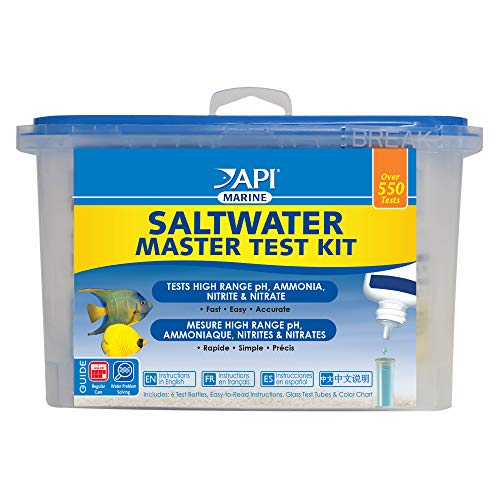
Monitors ammonia, nitrite, nitrate, pH for stable water parameters.

Accurate salinity readings, essential for saltwater tank health.

Quick pH checks, ensures optimal conditions for sensitive fish.
Browse discountedAquarium Water Test Kits