I’ve bought dozens of fish medications over the years to test in my own tanks, and three products on my workshop shelf have earned permanent spots through sheer reliability.
API General Cure powder handles parasites like ich and flukes with fast-dissolving packets that get to work immediately.
For fish too sick to eat on their own, Seachem MetroPlex bound to food using Focus sticky granules delivers medicine straight past their lips—a trick that saved a whole batch of neon tetras for me last winter.
Torn fins and open wounds get API Melafix, brewed from tea tree oil, which clouds water far less than old-school remedies and won’t devastate your beneficial bacteria.
Seachem PolyGuard represents where aquarium medicine is headed in 2026—five drugs compressed into one tiny bottle that saves precious shelf space when emergencies strike.
Each bottle on my shelf marks a hard lesson learned: the fin rot outbreak that nearly wiped out my angels last March, the velvet invasion that hit my quarantine tank in July.
I will walk you through matching the right fish medication to whatever crisis you’re facing right now.
| Seachem SC 10g POLYGUARD 0.4oz |  | Best For Broad-Spectrum | Form: Liquid | Target Environment: Freshwater/Marine | Primary Treatment Type: Broad-spectrum antibacterial/antifungal/antiparasitic | LOWEST AMAZON PRICE | Read Our Analysis |
| Ultimate Aquarium Treatment Bundle Pack | 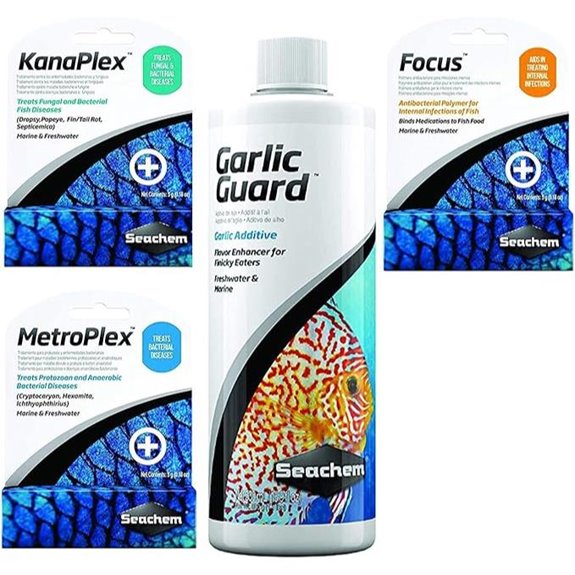 | Best Treatment Bundle | Form: Powder/Liquid bundle | Target Environment: Freshwater/Saltwater | Primary Treatment Type: Multi-treatment bundle | LOWEST AMAZON PRICE | Read Our Analysis |
| API General Cure Fish Powder Medication (10-Count) |  | Best For Parasites | Form: Powder (packets) | Target Environment: Freshwater/Saltwater | Primary Treatment Type: Antiparasitic | LOWEST AMAZON PRICE | Read Our Analysis |
| API PIMAFIX Antifungal Freshwater and Saltwater Fish Remedy 16-Ounce Bottle |  | Best Antifungal Remedy | Form: Liquid | Target Environment: Freshwater/Saltwater/Reef | Primary Treatment Type: Antifungal/antibacterial | LOWEST AMAZON PRICE | Read Our Analysis |
| API FIN & BODY CURE Freshwater Fish Powder Medication 10-Count Box |  | Best For Bacterial Infections | Form: Powder (packets) | Target Environment: Freshwater only | Primary Treatment Type: Antibacterial | LOWEST AMAZON PRICE | Read Our Analysis |
| MICROBE-LIFT Herbtana Fish Medicine 8oz (HERB08) |  | Best Herbal Treatment | Form: Liquid | Target Environment: Freshwater/Saltwater/Reef | Primary Treatment Type: Antiparasitic/immune booster | LOWEST AMAZON PRICE | Read Our Analysis |
| Fish Medication for Parasites & Flukes (5G) | 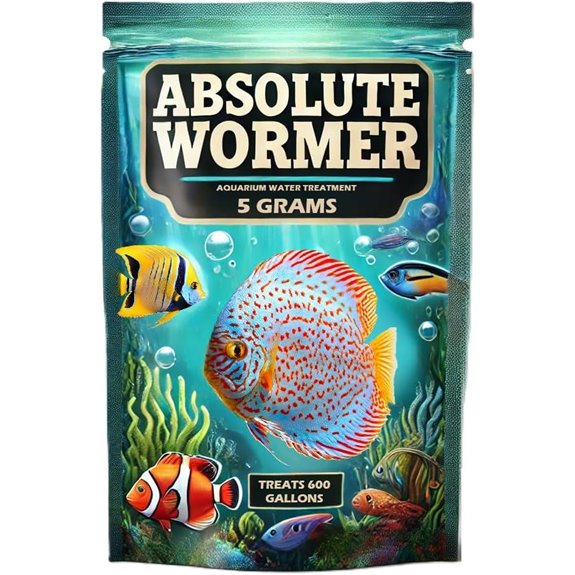 | Best For Flukes & Worms | Form: Powder | Target Environment: Freshwater/Saltwater | Primary Treatment Type: Antiparasitic/anthelmintic | LOWEST AMAZON PRICE | Read Our Analysis |
| API Liquid Super Ick Cure Fish Medication (4 fl oz) |  | Best For Ich | Form: Liquid | Target Environment: Freshwater/Saltwater (no reef) | Primary Treatment Type: Antiparasitic (ich) | LOWEST AMAZON PRICE | Read Our Analysis |
| API MELAFIX Freshwater Fish Bacterial Infection Remedy 16-Ounce Bottle |  | Best Natural Antibacterial | Form: Liquid | Target Environment: Freshwater only | Primary Treatment Type: Antibacterial | LOWEST AMAZON PRICE | Read Our Analysis |
| Seachem Focus 5gram | 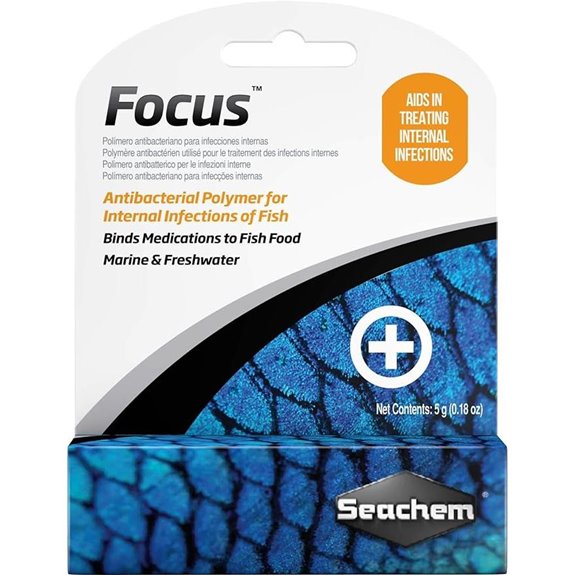 | Best For Internal Infections | Form: Powder/granules | Target Environment: Freshwater/Marine | Primary Treatment Type: Antibacterial/antifungal | LOWEST AMAZON PRICE | Read Our Analysis |
| Seachem MetroPlex Aquarium Medication |  | Best For Protozoan Diseases | Form: Powder | Target Environment: Freshwater/Saltwater | Primary Treatment Type: Antiprotozoan/antibacterial | LOWEST AMAZON PRICE | Read Our Analysis |
| MICROBE-LIFT Herbtana Fish Medicine 8oz (HERB08) | | Best Large-Volume Herbal | Form: Liquid | Target Environment: Freshwater/Saltwater/Reef | Primary Treatment Type: Antiparasitic/immune booster | LOWEST AMAZON PRICE | Read Our Analysis |
| MICROBE-LIFT Artemiss Immune Booster for Fish (8 oz) |  | Best Immune Booster | Form: Liquid | Target Environment: Freshwater/Saltwater | Primary Treatment Type: Antifungal/antibacterial/immune booster | LOWEST AMAZON PRICE | Read Our Analysis |
| API BETTAFIX Betta Fish Infection & Fungus Treatment (1.7oz) |  | Best For Betta Fish | Form: Liquid | Target Environment: Freshwater/Saltwater/Reef | Primary Treatment Type: Antibacterial/antifungal | LOWEST AMAZON PRICE | Read Our Analysis |
| Brightwell Fish Recover FW All-Natural Remedy 500ml |  | Best All-Natural Remedy | Form: Liquid | Target Environment: Freshwater only | Primary Treatment Type: Antibacterial/antifungal | LOWEST AMAZON PRICE | Read Our Analysis |
| Tetra Ick Guard 8 Count Quick Remedy For Ick In aquariums,Golds & Yellows |  | Best Fast-Dissolving Tablets | Form: Tablets | Target Environment: Freshwater only | Primary Treatment Type: Antiparasitic (ich) | LOWEST AMAZON PRICE | Read Our Analysis |
| API POND MELAFIX Pond Fish Remedy 16-Ounce Bottle |  | Best For Pond Fish | Form: Liquid | Target Environment: Freshwater/Marine ponds only | Primary Treatment Type: Antibacterial | LOWEST AMAZON PRICE | Read Our Analysis |
| Kanaplex 5 g(0.18 oz) |  | Best For Dropsy & Popeye | Form: Powder | Target Environment: Freshwater/Marine | Primary Treatment Type: Antibacterial/antifungal | LOWEST AMAZON PRICE | Read Our Analysis |
More Details on Our Top Picks
Seachem SC 10g POLYGUARD 0.4oz
I want to start with the small bottle itself, since that tiny 0.4-ounce container holds five different medicines mixed together, which means I don’t have to guess which single drug my sick fish needs.
The formula includes sulfathiazole at 36%, plus malachite green and three other agents in smaller amounts.
I feel relieved when I see that 4.7-star rating from 362 reviews; it tells me other aquarists have trusted this mix.
You add it to freshwater or marine tanks, but never to fish you’ll later eat.
The liquid measures 11.3 milliliters, enough for careful dosing.
I think of it like a well-stocked first-aid kit, compact but complete.
The brand, Seachem, packages complexity into simplicity.
That’s kindness I can understand.
- Form:Liquid
- Target Environment:Freshwater/Marine
- Primary Treatment Type:Broad-spectrum antibacterial/antifungal/antiparasitic
- Active Ingredient Base:Chemical (sulfathiazole, malachite green, nitrofurantoin, nitrofural, quinacrine)
- Carbon Removability:Not specified
- Invertebrate Safety:Not specified
- Additional Feature:Five active ingredients combined
- Additional Feature:61% excipient formulation
- Additional Feature:Ornamental species exclusive
Ultimate Aquarium Treatment Bundle Pack
A 500‑milliliter bottle of Garlic Guard sits beside three tiny 5‑gram powder packets, and that combination tells me exactly who this bundle belongs to.
This belongs to someone who loves fish like discus or marine angelfish, the picky eaters who turn up their noses at dinner.
I picture you, reader, sitting before a tank that’s gone quiet.
Seachem packs four tools here, each doing different work.
Garlic Guard, 500 milliliters, is smell and taste magic—it makes food tempting when fish feel sick and stop eating.
Metroplex, Kanaplex, and Focus—these three 5‑gram powders fight infection.
Metroplex handles internal and external troubles without crashing your filter.
Kanaplex uses kanamycin, a strong antibiotic, for fish too weak to eat.
You mix it with Focus, a binder, so medicine sticks to food.
This matters since sick fish often refuse meals, and putting medicine in water wastes it.
The bundle ranks #146 in aquarium treatments with 4.6 stars from 805 reviews in 2026.
I feel hopeful seeing these tools together, like a small first‑aid kit for creatures who cannot speak.
You remove mistakes with carbon if needed.
Simple, gentle, prepared.
- Form:Powder/Liquid bundle
- Target Environment:Freshwater/Saltwater
- Primary Treatment Type:Multi-treatment bundle
- Active Ingredient Base:Chemical/natural bundle (metronidazole, kanamycin, botanicals)
- Carbon Removability:Metroplex/Kanaplex removable with carbon
- Invertebrate Safety:Safe for invertebrates (Metroplex/Kanaplex in food)
- Additional Feature:Four-product bundled system
- Additional Feature:Garlic-based appetite stimulant
- Additional Feature:Medicated food mixing kit
API General Cure Fish Powder Medication (10-Count)
The small blue-green box of ten powder packets sits quiet on the shelf, but it holds a question worth asking: what makes one fish medicine the right pick for your tank?
I reach for API General Cure when I see the telltale signs: fish scratching against gravel, their gills working too hard, or that hollowed-out look behind the eyes we call wasting disease.
Each pre-measured packet treats parasitic infections—flukes, those flat worms that latch onto skin and gills, plus hole-in-the-head and swollen belly. I sprinkle two packets into the water every 48 hours. The diagnostic chart on back helps me confirm my suspicions before I start.
It works in freshwater or saltwater, which matters when I’m treating multiple tanks. The powder dissolves fast, and I appreciate not measuring powders with kitchen spoons, worrying I’ll hurt someone with math.
Ten packets mean five full treatments, enough for a stubborn outbreak. I keep one box in my cabinet, since parasites don’t send warning notes.
- Form:Powder (packets)
- Target Environment:Freshwater/Saltwater
- Primary Treatment Type:Antiparasitic
- Active Ingredient Base:Chemical (metronidazole, praziquantel)
- Carbon Removability:Not specified
- Invertebrate Safety:Not specified
- Additional Feature:Pre-measured powder packets
- Additional Feature:Diagnostic chart included
- Additional Feature:48-hour dosing interval
API PIMAFIX Antifungal Freshwater and Saltwater Fish Remedy 16-Ounce Bottle
Bottles of amber liquid line my shelf, each one holding a promise of healing for sick fish.
I reach for my 16-ounce bottle of API PIMAFIX when I spot fungal growth, those cottony tufts on fins or mouths that spread fast.
This remedy uses West Indian Bay Tree extract, a natural compound that fights fungus and certain bacteria.
I measure carefully: five milliliters treats ten gallons. I dose daily for seven days, following the label like a recipe.
I’ve used it on delicate tetras and discus fry without harm, and it plays nice with reef tanks—corals stay safe, filters keep working.
Pair it with API MELAFIX for tougher infections that need broader coverage.
The 4.5-star rating from nearly eight thousand reviewers tells me I’m not alone in trusting this bottle.
- Form:Liquid
- Target Environment:Freshwater/Saltwater/Reef
- Primary Treatment Type:Antifungal/antibacterial
- Active Ingredient Base:Natural (West Indian Bay Tree extract)
- Carbon Removability:Not specified
- Invertebrate Safety:Safe for reef invertebrates
- Additional Feature:West Indian Bay extract
- Additional Feature:7-day treatment course
- Additional Feature:Combines with MELAFIX
API FIN & BODY CURE Freshwater Fish Powder Medication 10-Count Box
Ten small packets sit in a bright blue box, and I’m holding one now, wondering if your fish need me to open it. Each packet holds one dose of medicine that fights bacterial diseases in freshwater tanks.
This powder treats six specific problems: body slime, cloudy eyes, rotting fins and tails, open red sores, gill disease, and hemorrhagic septicemia—blood poisoning that turns fish bellies red.
You sprinkle one packet daily for four days when symptoms appear. The water turns slightly yellow, like weak tea. Don’t worry. Activated charcoal, a black filter material, removes that color afterward.
Ten doses wait here, enough for two full treatments, or ten single days of care. I find comfort in counting what’s possible, in small preparations against trouble.
The box knows fish get sick quietly. So do I.
- Form:Powder (packets)
- Target Environment:Freshwater only
- Primary Treatment Type:Antibacterial
- Active Ingredient Base:Chemical (unknown specific)
- Carbon Removability:Removable with activated charcoal
- Invertebrate Safety:Not specified
- Additional Feature:Four-day bacterial treatment
- Additional Feature:Slight water discoloration
- Additional Feature:Charcoal-removable color
MICROBE-LIFT Herbtana Fish Medicine 8oz (HERB08)
A green-glass bottle, 8 ounces, sits on my shelf with a white cap I’ll twist off each evening.
I measure one milliliter for every five gallons, a small dose that builds protection over ten days. This herbal medicine strengthens my fish’s immune system, their body’s defense army, without using antibiotics that germs learn to defeat. It pushes out parasites like Ich, those white spots that look like salt, and flukes that hide in gills.
I turn off my UV sterilizer when dosing, since light destroys the medicine before it works. The liquid feels gentle, safe enough for reef tanks with delicate corals.
I feel hopeful watching my fish recover, their fins spreading wide again.
- Form:Liquid
- Target Environment:Freshwater/Saltwater/Reef
- Primary Treatment Type:Antiparasitic/immune booster
- Active Ingredient Base:Natural/herbal (botanical extracts)
- Carbon Removability:Not specified
- Invertebrate Safety:Safe for all ornamental aquatic life including reef
- Additional Feature:Herbal immune stimulant
- Additional Feature:Antibiotic-free resistance prevention
- Additional Feature:Pairs with Artemiss
Fish Medication for Parasites & Flukes (5G)
This small jar of powder, just five grams that fits in my palm, holds enough medicine to treat six hundred gallons of water—imagine a swimming pool in your basement.
The active ingredient is flubendazole. It works differently than other fluke treatments, starving parasites to death, which means I can use it regularly without fear.
I’ve found it safe for my Discus, Angelfish, and saltwater species too. My plants stay green, and my filter keeps running—I just remove the carbon so the medicine isn’t absorbed.
It kills gill flukes, body flukes, tapeworms, roundworms, and even those pest snails that overtake my tank. I’ve watched camallanus red worms disappear in days.
The pH barely shifts. I leave my UV sterilizer plugged in. I follow the directions, measuring carefully, and trust this small jar to protect hundreds of fish I’ll never even meet.
- Form:Powder
- Target Environment:Freshwater/Saltwater
- Primary Treatment Type:Antiparasitic/anthelmintic
- Active Ingredient Base:Chemical (flubendazole)
- Carbon Removability:Remove activated carbon for full effect
- Invertebrate Safety:Safe for plants/chemical filtration
- Additional Feature:Flubendazole starvation mechanism
- Additional Feature:Pest snail eradication
- Additional Feature:600-gallon capacity coverage
API Liquid Super Ick Cure Fish Medication (4 fl oz)
The small amber bottle I’m holding holds four fluid ounces of medicine that fights white-spot disease, the tiny parasites that look like grains of salt on your fish’s fins and body.
I notice how light it feels in my palm, this liquid made by API, a company that’s been figuring out fish health for over fifty years now.
You’ll dose once daily for five days, starting right when you spot those itchy white dots. It works fast, killing the parasite within about a day as coating your fish in a protective slime that guards against bacterial trouble afterwards.
The water may turn colors, but activated carbon clears that right up. I appreciate that it covers both freshwater and saltwater tanks, though I’d keep it away from reef setups with corals.
For delicate scaleless fish, you’ll halve the amount.
There’s comfort in knowing something so small can stop an outbreak before it takes your whole tank. That’s care, measured in ounces.
- Form:Liquid
- Target Environment:Freshwater/Saltwater (no reef)
- Primary Treatment Type:Antiparasitic (ich)
- Active Ingredient Base:Chemical (unknown specific)
- Carbon Removability:Removable with activated carbon filter
- Invertebrate Safety:Not recommended for reef invertebrates
- Additional Feature:Synthetic slime coat protection
- Additional Feature:24-hour parasite kill
- Additional Feature:Scaleless fish half-dose
API MELAFIX Freshwater Fish Bacterial Infection Remedy 16-Ounce Bottle
My 16-ounce bottle of API MELAFIX sits on the top shelf of my aquarium cabinet, its white cap catching the morning light, since I’ve learned that bacterial infections in fish can spread fast and quiet, like a secret you don’t notice until it’s almost too late.
This remedy holds 16 fluid ounces of tea-tree extract, a natural medicine from the melaleuca tree that fights bacteria without harsh chemicals.
I measure 5 milliliters—about one teaspoon—for every 10 gallons of water.
For sick fish, I treat daily for seven days.
For new fish, three days prevents trouble before it starts.
I always remove activated carbon first, or the medicine gets absorbed like a sponge soaking up spilled juice.
API, made by Mars Fishcare, has researched aquarium health for over fifty years.
This bottle won’t change my water color or harm the good bacteria living in my filter.
I feel relieved knowing I can treat fin rot, ulcers, and open wounds in my community fish, cichlids, or goldfish without fear.
The 16-ounce size means I’m prepared, not panicked, when trouble arrives.
- Form:Liquid
- Target Environment:Freshwater only
- Primary Treatment Type:Antibacterial
- Active Ingredient Base:Natural (tea-tree/melaleuca extract)
- Carbon Removability:Remove activated carbon before use
- Invertebrate Safety:Not specified
- Additional Feature:Tea-tree botanical extract
- Additional Feature:New fish preventive protocol
- Additional Feature:Over 50-year heritage
Seachem Focus 5gram
A small jar of pale granules sits on my shelf, 4.54 grams of antibacterial polymer that I’ll reach for when a fish shows clamped fins, or that hollow, shrinking look they get when something’s wrong inside.
Seachem’s Focus binds medication to food, keeping medicine where it belongs—in the fish, not drifting wasted through the water. Think of it like peanut butter helping pills go down, except this coat sticks to antibiotics, antifungals, whatever you’ve mixed in.
I use it for freshwater and saltwater fish, never for shrimp or corals, since they’ll absorb what they shouldn’t.
The granules feel gritty between my fingers, dissolve slow, and mask bitterness that makes fish spit their medicine. It’s trust, really—how we hide what’s necessary inside what they’ll accept.
- Form:Powder/granules
- Target Environment:Freshwater/Marine
- Primary Treatment Type:Antibacterial/antifungal
- Active Ingredient Base:Chemical (nitrofurantoin, polymer)
- Carbon Removability:Not specified
- Invertebrate Safety:Not recommended for invertebrates/corals/crustaceans
- Additional Feature:Polymer binding technology
- Additional Feature:Reduces medication diffusion loss
- Additional Feature:Invertebrate/coral exclusion warning
Seachem MetroPlex Aquarium Medication
Small jars of white powder sit on my shelf, each one holding a promise I learned to trust the hard way.
Seachem MetroPlex is metronidazole, medicine for sick fish.
I dose it two ways. Sometimes I sprinkle it straight into the water, 1-2 measures per 10 gallons. Other times, I bind it to Focus, making medicated food so fish eat it inside their bodies. This protects shrimp and snails living in the same tank.
It kills protozoans—tiny parasites like Ich—and anaerobic bacteria, the kind that thrive where oxygen runs low. Cryptocaryon, the saltwater equivalent of Ich, dies too. Hexamita, which hollows out fish from within, stops.
The powder doesn’t clog my filter. When treatment ends, I run carbon and it vanishes.
At 0.63 ounces, one jar lasts. Seventy-nine percent of 797 reviewers on Amazon gave four or five stars. Ranked forty-first among aquarium treatments, it isn’t famous, but it works.
I keep it since failure taught me preparation matters more than hope.
- Form:Powder
- Target Environment:Freshwater/Saltwater
- Primary Treatment Type:Antiprotozoan/antibacterial
- Active Ingredient Base:Chemical (metronidazole)
- Carbon Removability:Removable with carbon filtration
- Invertebrate Safety:Safe for invertebrates when mixed into food
- Additional Feature:Metronidazole protozoan treatment
- Additional Feature:Anaerobic bacteria coverage
- Additional Feature:Gentle low-overdose risk
MICROBE-LIFT Herbtana Fish Medicine 8oz (HERB08)
Clear brown glass sits in your hand, sixteen ounces of plant-powered protection for the fish you watch each morning.
I shake the bottle well, feeling the herbs settle, then measure one milliliter for every five gallons of water.
The medicine works like a gentle coach, not a fighter, strengthening your fish’s own immune defenses as parasites lose their grip.
Those white spots you dread—Ich, Costia, the flukes gliding across gills—float away without harsh chemicals burning tender tissue.
I dose daily for ten days, watching fins steady, breathing calm, the quiet return of normal.
Turn off your UV sterilizer, trust the plants, and wait.
The tank heals slowly, honestly, like a scraped knee under a parent’s patient care.
- Form:Liquid
- Target Environment:Freshwater/Saltwater/Reef
- Primary Treatment Type:Antiparasitic/immune booster
- Active Ingredient Base:Natural/herbal (botanical extracts)
- Carbon Removability:Not specified
- Invertebrate Safety:Safe for all ornamental aquatic life including reef
- Additional Feature:Extended 10-day dosing
- Additional Feature:Algaecide/copper exclusion protocol
- Additional Feature:Routine health maintenance suitable
MICROBE-LIFT Artemiss Immune Booster for Fish (8 oz)
This 8-ounce bottle of MICROBE-LIFT Artemiss sits in my hand like a small promise, 237 milliliters of clear liquid meant for fish who breathe in water we cannot.
I shake it hard before each use since the good stuff settles.
Turn off your UV sterilizer, that blue light that kills germs, plus any protein skimmer or ozone machine.
Keep your filter running though; the fish still need clean water.
I add it fast when I spot dropsy, that swollen belly that looks wrong, or fungus spreading like white cotton, or fins rotting away.
It works for freshwater and saltwater tanks both, which matters as I keep changing my mind about what I want to watch swim.
The label says ornamental fish only, never fish you might eat, and I obey that although I do not eat my fish.
Eight ounces feels small until you measure doses by drops.
I feel relief when wounds start closing, when milky skin turns clear again, when a stressed fish from the pet store finally settles.
This is not magic.
It is chemistry plus time plus watching carefully, the way you would bandage a child’s scraped knee and check it every morning.
- Form:Liquid
- Target Environment:Freshwater/Saltwater
- Primary Treatment Type:Antifungal/antibacterial/immune booster
- Active Ingredient Base:Natural/herbal (botanical extracts)
- Carbon Removability:Not specified
- Invertebrate Safety:Not specified
- Additional Feature:Dropsy specific treatment
- Additional Feature:Mouth rot/fungus coverage
- Additional Feature:Accelerates tissue regeneration
API BETTAFIX Betta Fish Infection & Fungus Treatment (1.7oz)
A 1.7-ounce white bottle sits on my shelf, and I reach for it when a Betta’s fins start to fray like old cloth.
API BETTAFIX contains melaleuca, which is tea-tree oil, and it fights bacteria and fungus naturally. I use 9 drops per pint of water, or half a teaspoon for a full gallon, once daily for up to 7 days. Mars Fishcare has made this since June 2004, and I’ve seen it heal fin rot, mouth fungus, and those cottony white growths that look like mold on bread.
The medicine doesn’t just kill bad germs; it helps good tissue grow back. I feel relieved when I see new, clear fin edges emerging after treatment. It’s gentle enough for preventive use too—3 days when I add new fish keeps trouble away.
- Form:Liquid
- Target Environment:Freshwater/Saltwater/Reef
- Primary Treatment Type:Antibacterial/antifungal
- Active Ingredient Base:Natural (tea-tree/melaleuca extract)
- Carbon Removability:Not specified
- Invertebrate Safety:Not specified
- Additional Feature:Betta-specific formulation
- Additional Feature:Handling damage healing
- Additional Feature:Drop-based precise dosing
Brightwell Fish Recover FW All-Natural Remedy 500ml
Freshwater aquariums carry invisible risks that show up as frayed fins, pale patches, or cloudy eyes on fish I’ve grown attached to.
I keep a 500ml bottle of Brightwell Fish Recover FW within arm’s reach since it treats what I can’t see coming.
This all-natural remedy uses botanical extracts, which are plant-based medicines that won’t create resistance, meaning germs won’t learn to ignore it. I dose it at the first sign of trouble—open sores, fin redness, that cottony slime—and watch damaged tissue regrow. It’s sulfite-free, safe for my shrimp and snails, gentle on plants.
When I add new fish, I treat proactively. Pairing it with Vitamarin C boosts their immune system, their body’s defense army. Made in USA, 4.1 stars from fellow aquarists who’ve faced similar worries.
- Form:Liquid
- Target Environment:Freshwater only
- Primary Treatment Type:Antibacterial/antifungal
- Active Ingredient Base:Natural/herbal (botanical extracts)
- Carbon Removability:Not specified
- Invertebrate Safety:Safe for snails/shrimp
- Additional Feature:Vitamin C pairing recommended
- Additional Feature:Snail/shrimp safe formula
- Additional Feature:Prophylactic new fish introduction
Tetra Ick Guard 8 Count Quick Remedy For Ick In aquariums,Golds & Yellows
Eight tiny tablets sit in a foil strip no bigger than a playing card, and each one holds enough medicine to protect ten gallons of water.
I hold the Tetra Ick Guard in my palm, feeling its slight weight, and I think about how something so small stops a parasite called Ichthyophthirius multifiliis, which fishkeepers call “Ick.” This tiny protozoan covers fish with white spots like grains of salt, and untreated, it kills them.
The tablet fizzes, dissolving fast, releasing treatment without my heating the tank. One pack treats eighty gallons total. That’s eight tablets, eight chances to save fish I’ve grown attached to, perhaps foolishly.
I appreciate the pre-measured doses. No guessing means no overdosing. The gelatin-free formula matters for sensitive species, I’ve learned.
Sitting at #13 in fish medications with 4.5 stars from 1,820 reviews, this isn’t fancy. It works simply, directly, like a good neighbor lending tools.
I trust tools that do one job well.
- Form:Tablets
- Target Environment:Freshwater only
- Primary Treatment Type:Antiparasitic (ich)
- Active Ingredient Base:Chemical (unknown specific)
- Carbon Removability:Not specified
- Invertebrate Safety:Not specified
- Additional Feature:Fast-dissolving fizz tablets
- Additional Feature:No temperature increase required
- Additional Feature:Gold color variant specified
API POND MELAFIX Pond Fish Remedy 16-Ounce Bottle
The 16-ounce bottle of API POND MELAFIX sits in my hand like a small promise, its liquid filled with tea-tree extract from the Melaleuca tree, which is a plant that grows in warm places and has natural healing powers.
I pour ¼ cup per 600 gallons, watching the amber ribbons curl through my pond water.
This remedy heals ulcers, open wounds, and fin rot by killing bacteria, the tiny living things that make fish sick.
My koi’s torn fins knit together in about four days.
I treat for seven days when infection shows, or three days when new fish arrive, like washing hands before dinner.
The formula won’t harm my filter’s good bacteria, my snails, or the frogs that visit.
It’s safe for freshwater and saltwater ponds, though not for small aquariums.
Apple-free means my neighbor’s allergic daughter can help me dose.
Ranked eleventh in fish medications, it carries 4.6 stars from over a thousand keepers.
Healing works best when we tend it early, and this bottle lets me do exactly that.
- Form:Liquid
- Target Environment:Freshwater/Marine ponds only
- Primary Treatment Type:Antibacterial
- Active Ingredient Base:Natural (tea-tree/melaleuca extract)
- Carbon Removability:Not specified
- Invertebrate Safety:Safe for snails/aquatic plants
- Additional Feature:Pond-exclusive formulation
- Additional Feature:Wildlife safe application
- Additional Feature:Visible 4-day improvement
Kanaplex 5 g(0.18 oz)
A small plastic jar of white powder sits on my aquarium stand, and I reach for it when my fish stops eating and hides in the corner.
This is Kanaplex, made by Seachem, and it weighs 5 grams, about the same as a nickel.
I feel worried when my fish gets sick, but this medicine helps me stay calm. The powder dissolves in water, and my fish absorbs it through their skin and gills, so they don’t need to eat it. That matters when they refuse food.
It treats dropsy, which makes fish swell, and popeye, where the eye bulges. It also fights fin rot, where fins fray like torn cloth.
I use it in freshwater and saltwater tanks. It won’t harm my filter bacteria, and carbon removes it when treatment ends.
- Form:Powder
- Target Environment:Freshwater/Marine
- Primary Treatment Type:Antibacterial/antifungal
- Active Ingredient Base:Chemical (kanamycin)
- Carbon Removability:Easily removed with carbon filtration
- Invertebrate Safety:Not specified
- Additional Feature:Kanamycin antibiotic base
- Additional Feature:Skin/gill absorption pathway
- Additional Feature:Food-refusal infection solution
Factors to Consider When Choosing Fish Medications

I want you to picture a small glass bottle sitting on your tank stand, since that’s where every treatment decision starts. When I’m choosing medication, I weigh five things carefully: whether it matches my fish species, what’s actually inside the bottle, how I’ll get it into the water, if it’ll harm my plants or bacteria, and how exact I need to be with measurements. Getting any of these wrong means sick fish, wasted money, or a crashed cycle, so let’s look at each piece together.
Target Species Suitability
When I stand in front of the aquarium medications at my local shop, I feel a swirl of worry mixed with hope, since picking the wrong bottle can turn a sick fish into a dead one.
I always check the label first, looking for “freshwater,” “marine,” or “both”—as Seachem SC and API PIMAFIX only work in specific water types, and mixing them up wastes precious time.
I read the target species list carefully too.
Some medicines, like API BETTAFIX, are gentle on tropical fish but deadly to shrimp and reef invertebrates.
I match the formulation to my fish’s habits—powders that absorb through gills help when they’re too sick to eat.
I scan for toxicity warnings about sensitive species like discus or marine angelfish.
Every detail matters, as my fish depend on me getting it right.
Active Ingredient Types
The bottle in my hand lists three long words I can’t pronounce, so I flip it over and read what each one actually does.
Antibiotics like nitrofurantoin fight细菌的感染—that means bacterial infections—but I use them sparingly, since fish can grow resistant, just like people do with too many pills.
Antifungals such as malachite green tackle fin rot and white cottony mouth fungus by breaking the fungus cell wall, it’s like peeling wallpaper off a damaged room.
For parasites—ich, flukes, tapeworms—I choose antiparasitics like flubendazole, which paralyze the invaders so fish can shed them.
Some bottles hold herbal immune-boosters, these don’t kill germs but strengthen the fish’s own body guards, like eating oranges to prevent colds.
Combination formulas mix types together, helpful for tricky mixed infections, though I measure twice to avoid poisoning my tank.
Treatment Form Selection
Three bottles sit on my shelf, and each one holds the same medicine but in a different suit of clothes.
The liquid dissolves fast, spreading even like food coloring in water, though it may tint things amber till carbon clears it.
Powder blends with food for sick fish who’ve lost their hunger, sneaking medicine inside where it belongs.
Tablets drop in quick, fizzing bubbles that chase ich off scales before you finish counting.
Granules cling like wet sand, staying near the fish instead of vanishing down the filter, giving longer healing time.
I pick by who shares the tank, too, keeping reef-unsafe bottles far from my corals.
The right form reaches the right trouble, gentle on everything else.
Tank Environment Compatibility
My medicine cabinet holds more than glass bottles, it holds the quiet worry that I’ll hurt what I mean to heal.
I check each medication’s active ingredients against my biological filter’s needs, since copper-based compounds can kill the good bacteria that keep my water safe.
I turn off my UV sterilizer and protein skimmer when the label demands it, letting the medicine work without interference.
I read the environment label carefully: freshwater, saltwater, or reef. Tea-tree oil works in my reef tank, but other formulas would harm my corals.
I choose water-phase or food-phase based on my filter. Activated carbon steals water-soluble meds, so sometimes I feed the treatment instead.
I protect my shrimp, my plants, my anemones by selecting non-toxic options. What heals one creature can wound another.
Dosage Precision Needs
A plastic syringe sits on my kitchen table, its small black lines marking tenths of a milliliter I can barely see.
I need these marks since five milliliters for my ten-gallon tank means something entirely different for your hundred-gallon one. The label’s ratio—one milliliter per five gallons—is my starting point, not my finish.
When I measure powders, I convert. Volume becomes weight using the density printed on the jar, like turning cups of flour into grams on a kitchen scale.
I check concentration too. Thirty-six percent sulfathiazole means only that fraction is actual medicine; the rest is filler.
Water changes steal my careful work. A ten percent replacement drops my dose ten percent, so I top it back up.
I use calibrated tools, not guesswork, since half a milliliter wrong changes everything ten percent. My fish depend on my steady hands.
Medication Combination Risks
Since my medicine cabinet holds two bottles, not one, I face a choice that matters more than I first thought.
Some medicines fight each other when mixed together. Antibiotics and antifungal agents can clash, like two people talking at once, leaving the fish weaker instead of better. Copper treatments and UV sterilizers cancel each other out completely.
I must also watch for double trouble on the same pathway. Metronidazole and flubendazole, if doubled up, can overdose my fish. Melaleuca oil helps fish but kills shrimp and corals slowly.
When I use powder plus liquid, I dissolve every grain first. Uneven medicine stresses the fish, and stress opens doors to new sickness.
One wrong mix turns cure into harm.
Resistance Prevention Strategies
Since my fish tank holds living things I cannot see, every drop of medicine I pour creates a small battle that happens invisibly. I rotate antibiotics and anti-parasitic agents like swapping keys on a lock, so pathogens don’t learn the pattern.
I use the lowest effective dose and shortest duration—overdosing is like yelling when a whisper works, and bacteria grow stubborn ears. After treatment, I run activated carbon or change water to wipe away drug traces that would otherwise train survivors slowly.
I quarantine new fish, but I never medicate the healthy; that’s medicine looking for illness, like fixing what isn’t broken. When a drug fails, I stop immediately, since continuing breeds soldiers who laugh at the cure.
Frequently Asked Questions
Can Expired Fish Medication Harm Aquarium Inhabitants?
I wouldn’t risk using expired fish medication in my tank. Chemicals break down over time, turning ineffective or toxic. I’ll always check dates and properly dispose of old products to keep my aquarium inhabitants safe.
Should I Remove Carbon Filters During Treatment?
I always remove carbon filters before treating my aquarium since activated carbon absorbs medications, rendering them ineffective. I’ll put the carbon back once treatment ends and I’ve done a water change.
How Long After Treatment Can I Reintroduce Shrimp?
I’ll wait seven to ten days after my last medication dose before reintroducing shrimp, since I’ll need time to run carbon and complete water changes that remove residual chemicals from my system.
Is Human Amoxicillin Safe for Fish Infections?
I wouldn’t use human amoxicillin for my fish without veterinary guidance. Dosage differs significantly between species, and improper administration harms aquatic life. I always consult fish-specific medications or a qualified aquatics vet instead.
Can Medicated Fish Be Consumed Safely?
I wouldn’t eat medicated fish—antibiotics and chemicals linger in tissues, posing health risks. I always check withdrawal periods and local regulations before consuming any treated aquaculture stock.



[…] cause flashing, where your fish scrapes against substrate texture to dislodge them. You can use API General Cure to treat such parasites in freshwater tanks. To confirm water quality isn’t worsening the […]
[…] disease is also tricky since activated carbon removal is often required for many medications, which complicates shared tank […]
[…] a stable, food‑rich, low‑competition world. In these habitats, bettas naturally encounter parasites like flukes and other pathogens that require targeted treatments. Hobbyists can manage such threats with a […]
[…] water. Those transmission mechanisms are what you need to watch. For example, using a product like API General Cure can help treat parasitic causes such as flukes or ich that may be contagious to other […]
[…] fin rot improves with clean water. For parasite outbreaks like ich or flukes, a product containing API General Cure Powder offers fast‑dissolving treatment suitable for both freshwater and marine tanks. Using a quality […]