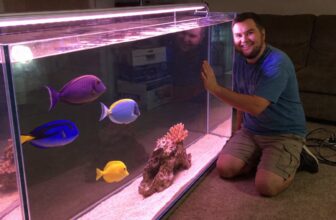
You’ll get 15 saltwater shrimp that add charm, pest control, and weird quirks to your tank. Start with budget-friendly Yellow Tail Shrimp ($5–$10) for 10-gallon nanos, or Peppermint Shrimp ($15–$30) that hunt Aiptasia day and night.
Cleaner Shrimp ($20–$40, 30-gallon tanks) set up cleaning stations for fish. For a showpiece, try Blood Red Fire Shrimp ($20–$35, 55 gallons) or Boxer Banded Shrimp ($10–$40, 20 gallons).
Tests ammonia, nitrite, nitrate, pH; essential for stable shrimp-friendly water.

Detoxifies ammonia and nitrite, safe for shrimp during water changes.
Creates natural seawater for healthy molting and vibrant shrimp coloration.
Browse discountedSaltwater Aquarium Supplies
Avoid Mantis Shrimp ($50–$100)—they crack glass. Stick with reef-safe, peaceful species except you’re a glutton for punishment.
Keep reading to match each shrimp’s personality to your setup.
At A Glance
- Bumblebee, Bamboo, Yellow Tail shrimp add charm to 10-30 gallon nano reefs.
- Cleaner shrimp establish fascinating cleaning stations in 30+ gallon tanks.
- Scarlet Skunk and Blood-red Fire shrimp provide vibrant color and parasite control.
- Coral-banded shrimp offer striking red-white bands as a visual focal point.
- Small-tank species like Bumblebee shrimp are active at night, adding unique behavior.
Choosing the Right Shrimp for Reef Safety and Tank Size
So, you’re picking shrimp for a reef tank—let’s cut straight to the chase: reef safety and tank size are the two non-negotiable filters. Think of them as your bouncers; they decide who gets in.
For reef-safety, most shrimp are fine, but watch out for nippers like the Coral Banded or Marbled shrimp—they’ll snack on corals if hungry. For size, smallest tanks (10 gallons) fit Peppermint or Bumblebee shrimp, while larger systems (55+ gallons) handle bigger species like Blood Red Fire shrimp.
- Peppermint Shrimp: $15–$30, 10+ gal, eats Aiptasia.
- Bumblebee Shrimp: $10, nano, hides during day.
- Coral Banded: $10–$40, 20+ gal, may nip.
Bottom line: match your tank’s volume first, then check coral compatibility. You’ll fit right in. Remember that larger tanks require less frequent water changes, making them easier to maintain for saltwater shrimp setups. Using a reliable pH meter helps ensure stable water conditions for sensitive shrimp species.
Cleaner Shrimp: Fish-Inspecting Parasite Eaters for Peaceful Tanks
Why would a tiny crustacean be the best fish doctor you never knew you needed?
Since cleaner shrimp turn your tank into a fish spa.
You’ve seen them—waving those long antennae, dancing on a rock, offering your fish a parasite‑removal service they can’t resist.
They’re reef‑safe, peaceful, and set up cleaning stations where customers line up.
Expect to pay $20‑$40, and give them at least 30 gallons.
They’ll munch dead tissue and frozen brine too.
Bottom line: these little docs keep your fish healthy and your tank calm.
You’re part of the clean crew.
The mesh of a cover net used on your tank ensures no jumper escapes while you maintain their spa habitat.
Ensure your water temperature stays within a safe range by monitoring with a TempPro TP50 for optimal shrimp health.
Peppermint Shrimp: The Best Ally Against Aiptasia Anemones
What’s the worst thing you can find clinging to your live rock?
Aiptasia anemones—those ugly, invasive glass‑anemone pests that sting corals and spread fast.
Enter the Peppermint Shrimp (Lysmata wurdemanni), your tiny, affordable hitman.
For $15‑$30, this 1‑inch Caribbean native hunts Aiptasia polyps relentlessly, day and night, without damaging your prized corals.
It’ll additionally form cleaning stations on your rock, nibbling parasites off fish.
You get a natural, chemical‑free solution that works best in tanks ≥10 gallons.
No elaborate feeding required—it happily scavenges leftovers, too.
For optimal biological filtration, place ceramic bio filter media in a high-flow area of your sump to support the shrimp’s waste processing.
Ensure adequate flow for each reactor or media chamber to maintain consistent water movement and nutrient processing.
Bottom line: For Aiptasia control, this shrimp’s your new best friend.
You’ll fit right in with the reef‑keeping crowd.
Boxer Banded Shrimp: Bristle-Worm Hunters With a Dancing Display
If bristle worms are your tank’s uninvited guests, the Boxer Banded Shrimp (Lysmata amboinensis) will evict them with style.
You’ll love their nightly hunting routine—they’re peacekeepers, not bullies.
Certainly, they’ll square off with other banded shrimp, but solo they’re reef‑safe stars.
- Cost: $10‑$35, a bargain for a 2‑3 year pal.
- Size: 3 inches; needs ≥20 gallons.
- Behavior: That frantic “dancing” when threatened? Pure entertainment.
Watch them patrol live rock, snagging bristle worms like pros.
They’re nocturnal scavengers, so expect twilight action.
Bottom line: add one to your community—you’ll feel like you’ve joined an exclusive cleanup crew.
Their diligent grazing helps maintain clean glass surfaces just as a pleco would in freshwater tanks.
For feeding, blanched vegetables can supplement their diet when natural algae is scarce.
Blood Red Fire Shrimp: Striking Color for Nighttime Cleaners
Since you’re after a shrimp that looks like a tiny ruby explosion, the Blood Red Fire Shrimp (Lysmata debelius) delivers, but it’s not for the timid tank planner. This nocturnal cleaner, maxing 3 inches, emerges at night to pick parasites off your fish’s gills and scales, earning its keep. For smaller setups, a 2‑gal Betta Smart Tank offers a self‑cleaning system and quiet pump for low‑maintenance shrimp keeping. A heavy-duty metal stand can support the required 55‑75 gallon tank with built‑in power outlets for filters and lights.
- Needs a 55-gallon minimum; territorial, it may nip LPS/SPS corals if hungry.
- Cost: $20–$35; lives 1–2 years.
- Diet: detritus, algae, small inverts—also munches Aiptasia anemones.
Bottom line: If you’re building a community that appreciates a dramatic, hardworking nighttime cleaner, you’ll fit right in with this fiery gem.
Coral Banded Shrimp: Red-White Stripes and Scavenging Habits
The Coral Banded Shrimp (*Stenopus hispidus*) is a visual showstopper—bright red and white bands wrapping a body that maxes out at three inches.
The Coral Banded Shrimp is a visual showstopper, with bright red and white bands on a body that maxes out at three inches.
You’re adding a bold, clean-up crew member that’s both décor and utility.
It’s reef-safe but might nip corals if hungry, so feed it well.
This nocturnal scavenger devours leftover food and carrion, keeping your tank tidy.
Expect a 2-3 year lifespan and a cost of $10-$40.
Fair warning: they’re territorial toward other banded shrimp.
For that bold stripe look and solid scavenging, you can’t go wrong.
Bottom line: a reliable, flashy addition you’ll enjoy watching after lights out.
Pistol Shrimp: the Noisy Burrow Builder With a Popping Claw
As you’re picking out shrimp for your tank, don’t overlook the pistol shrimp—it’s the noisy burrow builder with a popping claw that packs a punch. You’ll hear its signature snap, a cavitation bubble that stuns prey. Reef-safe and moderate, it’s a burrower, not a nipper. When transporting your new shrimp, a collapsible 5‑gallon bucket ensures a secure and splash-free trip.
- Size 0.5–1.5 inches, perfect for 10+ gallons.
- Cost $8–$25, a steal for that sound effect.
- Diet plankton, small crustaceans, frozen foods.
- Lifespan 2–3 years of popping fun.
Don’t worry about it wrecking corals—yours won’t. It’s a shrimp that earns its keep with personality and noise. Bottom line: grab one, you’ll fit right in. When aquascaping its burrow, use Kingrui Natural Seiryu Rock for stable, reef-like caves.
Scarlet Skunk Shrimp: Red-Spotted Cleaners for 20-Gallon Tanks
So you’ve heard the pistol shrimp’s snap, but maybe you want a cleaner that actually cleans. Meet the Scarlet Skunk—your tank’s new fish dentist. They’ll pick parasites right off your fish, and they’re safer than fire shrimp. For a 10-gallon tank, these shrimp would benefit from a filter that operates at about 30 dB to keep noise to a minimum.
| Feature | Detail | Your Take |
|---|---|---|
| Size | 1.5 inches | Won’t dwarf your tank |
| Cost | $12–$20 | Cheaper than a vet bill |
| Tank size | 20+ gallons | Perfect for your setup |
| Lifespan | ~2 years | Good run for your money |
These red‑spotted cleaners get along with everyone except other skunks. They’re semi‑transparent, active at dawn, and they love frozen brine. However, unlike freshwater loaches that require a tank at least 50 gallons for a small group, these shrimp thrive in a compact 20-gallon setup. Bottom line? They’re the reliable cleaning crew your 20‑gallon deserves—no snapping, just scrubbing.
Bumblebee and Bamboo Shrimp: Tiny Filter Feeders for Nano Reefs
Want a shrimp that doesn’t need a spotlight—just a gentle current and some plankton? Bumblebee and Bamboo shrimp are your nano-reef buddies.
The Bumblebee’s a tiny, inch-long charmer, hiding by day, grazing at night. The Bamboo, slightly bigger, sits in flow, fanning water with its feathery claws like a living filter.
Key perks:
- Reef-safe for nano tanks (10–30 gallons)
- Bumblebee: ~$10, lifespan ~18 months
- Bamboo: $10–$20, lives 1–2 years
Just give them steady water movement and plankton—they’ll thrive without fuss. They’re low-maintenance, high-charm members of your reef community.
To keep their fan-shaped claws healthy, provide stable water conditions to support stress-free molting and fan regeneration. For optimal health, maintain gentle filter media and a quiet water flow to avoid stressing these delicate filter feeders.
Harlequin Shrimp: the Obligate Starfish Eater With Bold Patterns
For a truly balanced diet, however, many aquarists rely on Tetra PRO PlecoWafers for their bottom-feeding species.
Bottom line: only buy if you’re ready to be a starfish dealer.
Commensal Emperor Shrimp: A Host-Dependent Cleaner for Tiny Tanks
If the Commensal Emperor Shrimp (Periclimenes imperialis) sounds too fancy, you’re half right—fancy price tag (think $60 to $100), fancy host requirements (sea cucumbers or nudibranchs), but a tiny, tidy package.
At just 1.2 inches, it’ll thrive in a tiny tank—as small as 2 gallons—as long as you’ve got its host.
This shrimp’s a cleaner, nibbling parasites and leftovers off its host, keeping everyone tidy.
You’re not just buying a shrimp; you’re joining a select circle of reefkeepers who appreciate this oddball partnership.
Using beneficial microbes can also help maintain water clarity in your setup, similar to how the shrimp cleans its host. This setup must maintain stable conditions to prevent stress in the shrimp and its host.
Bottom line: worth it for the right nano setup.
Coleman Shrimp: Living Exclusively on Fire Urchins
Even though you’d think a shrimp that lives exclusively on a fire urchin would be high-maintenance, the Coleman Shrimp (Alpheus sp.) is actually a low-hassle pet—if you can find one.
It’s a tiny, obligate symbiont, meaning it can’t survive without its spiky host, which cleans and feeds it.
For quarantine purposes, a plastic triple‑chamber design can separate the shrimp from other tank inhabitants during acclimation.
They’re almost never for sale, so you’ll likely never own one, but if you do, you’re part of an exclusive club.
- Tiny size: barely 0.75 inches, perfect for a nano display.
- Simple diet: just eats algae, plankton, and debris on its urchin.
- Short lifespan: roughly one year, so enjoy the novelty as it lasts.
Collectors frequently use a desktop nano tank to house such rare symbiotic specimens.
Bottom line: a fascinating oddity, but not a practical choice for most of us.
Yellow Tail Shrimp: Budget-Friendly Marine Scavengers for Small Tanks
Whether you’re on a tight budget or just starting out, the Yellow Tail Shrimp (Neocaridina davidi) is a solid, no‑fuss choice for a small marine tank. You get a cheerful little guy—bright yellow tail included—for just $5‑$10. It’s reef‑safe, maxes out at 0.8 inches, and thrives in a 10‑gallon setup. For a larger tank option, consider setup similar to the 10‑gal Glass Aquarium Tank with a self‑cleaning system for easier maintenance. A manual siphon with a priming bulb can simplify water changes in a small shrimp tank without disturbing the substrate.
Whether you’re on a tight budget or starting out, the Yellow Tail Shrimp is a solid, no‑fuss choice for a small marine tank.
- Eats algae, biofilm, and frozen foods.
- Peaceful and easy to keep.
No drama, no special gear—it just works. You’re not missing out by skipping pricier options; this shrimp pulls its weight. For a tiny, budget‑friendly cleanup crew, you’ve found your match.
Donald Duck and Durban Dancing: Unique Shapes for Peaceful Communities
Why settle for the usual when you can have a shrimp that looks like it’s wearing a tiny duck mask? The Donald Duck Shrimp (1.5″) sports that goofy snout, earning its name. Peaceful and reef-safe, it needs 30+ gallons.
Meanwhile, the Durban Dancing Shrimp (2″) lives up to its name—it wiggles and waves when threatened, a quirky defensive show. Easy keepers both, they won’t bully your fish. For their daily nutrition, a calcium‑to‑phosphorus balance of 3:1 helps support healthy shell growth.
- Donald Duck Shrimp – approx. $20; omnivorous scavenger; best in a chilled community tank.
- Durban Dancing Shrimp – $8–$10; nocturnal; may nibble corals if underfed, so feed well.
- Peaceful pros – both get along with docile tankmates, making your aquarium feel like a quirky, inclusive club.
To further enhance your tank’s charm, consider pairing them with a Fluval spray bar for gentle return water distribution that reduces stress on these unique shrimp.
Bottom line: these oddballs belong in your peaceful community.
Mantis, Vampire, and Marbled: Specialized Shrimp for Advanced Hobbyists
So you think you’re ready for a shrimp that fights back—or one that never comes out? Mantis Shrimp pack a punch that’ll crack your tank glass, and they’re not reef‑safe. Vampire Shrimp lurk in deep‑sea shadows, needing 50‑100 gallons and costing $80‑$150. Marbled Shrimp are easier but still nibble corals. These aren’t for the faint-hearted—they’re for hobbyists who want a challenge.
So you think you’re ready for a shrimp that fights back—or one that never comes out?
- Mantis: aggressive, smashes fish, costs $50‑$100.
- Vampire: reclusive, carnivorous, lives 5‑7 years.
- Marbled: cheap at $5‑$10, but watch those polyps.
Bottom line: skip these unless you’re craving a headache. Stick with cleaner shrimp for community peace.
Frequently Asked Questions
Can I Keep Multiple Shrimp Species Together in One Tank?
Yes, you can, but it’s a gamble—some species get along, others don’t.
Stick to peaceful, reef-safe types like Peppermint or Cleaner Shrimp with similar tank size needs (≥10-20 gal).
Avoid mixing aggressive ones like Mantis or Boxer Banded Shrimp, as they’ll fight or hunt others.
A combo of Peppermint ($15-30) and Scarlet Skunk ($12-20) works in a 20-gallon.
Just guarantee enough hiding spots and food—think of it as a shrimp potluck, not a brawl.
Bottom line: pick compatible, calm species.
How Do I Safely Acclimate Saltwater Shrimp to My Aquarium?
You’ll want a drip acclimation setup—it’s the gold standard for shrimp.
Slowly match your tank’s water parameters over 45–60 minutes, using airline tubing with a drip rate of 2–3 drops per second.
This avoids shocking their delicate gills.
Skip the “float the bag” method; it’s too fast.
Test salinity first, keep lights dim, and never pour bag water into your tank.
You’re giving them a gentle entry—they’ll repay you with years of charm.
Just don’t rush; patience beats panic every time.
Do Saltwater Shrimp Need a Specific Water Flow or Current?
Yeah, they do. Water flow isn’t just a preference; it’s survival for many.
Filter feeders like Bamboo Shrimp need a steady current to catch plankton—aim for moderate, random flow, not a blast.
Other types, like Peppermint or Cleaner Shrimp, prefer calmer areas with gentle movement—they’ll hide from strong jets.
You don’t need a powerhead surge, just enough current to keep detritus suspended and oxygen high.
Your tank’s flow should mimic their wild home, not a washing machine.
What Should I Feed My Shrimp if They Refuse Prepared Foods?
Don’t panic—they’re probably just being picky.
Your shrimp mightn’t recognize frozen or flake foods as food, especially wild-caught types (like cleaners).
Try live baby brine shrimp or tiny bits of raw shrimp, clam, or fish—they’ll smell it and snap out of their hunger strike.
Additionally, drop some nori or algae wafers at night near their hiding spot; most scavengers (like Peppermint or Skunk shrimp) can’t resist detritus and leftover scraps.
If they’re still snubbing your offerings, check your water flow—some need slow currents to feed comfortably.
Bottom line: coax, don’t starve.
Are There Any Shrimp That Will Eat Unwanted Bristle Worms?
Yeah, you’ve got options. Boxer Banded Shrimp (Lysmata amboinensis) are your best bet—they actively hunt bristle worms at night. They’re peaceful otherwise, but don’t keep two together; they’ll fight. Expect to pay $10–$35, need a 20‑gallon tank min, and they live 2–3 years.
Peppermint Shrimp (Lysmata wurdemanni) likewise work, though they’re less aggressive hunters. For $15–$30, a 10‑gallon setup works. Both are reef‑safe, so no worries there.
Bottom line: go Boxer Banded if you’ve got the space.
Rounding Up
So, you’re basically getting free pest control, a tiny performance, and a fish spa—all for around $15 to $40. Not bad for a shrimp that can’t even grill.
Bottom line: pick your shrimp based on your tank’s bad guys. Aiptasia? Go Peppermint. Bristle worms? Boxer Banded. Just want something neon that cleans at night? Blood Red Fire. Just don’t expect them to do dishes.
- Cleaner shrimp: safe, social, cost ~$30.
- Peppermint: aiptasia assassin, ~$15.
- Mantis shrimp: cool but will destroy your rockwork. You’ve been warned.
Go practical, not pretty. Your tank’s problems will thank you.

Removes organic waste and keeps water pristine for sensitive shrimp.

Colonizes beneficial bacteria to stabilize nitrogen cycle in marine tanks.

Protects shrimp from being sucked into filters while providing grazing surface.
See today's best deals onAquarium Filtration