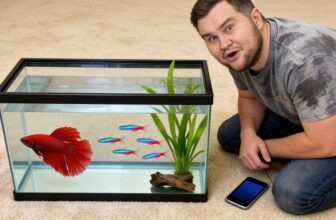
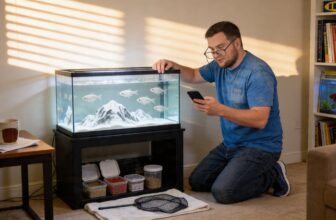
Bottom feeders are your tank’s quiet helpers, scraping algae and cleaning scraps you’d otherwise miss.
Small options include Otocinclus catfish, just two inches long, grazing plant leaves in groups of six to eight, and Corydoras catfish, perfect twenty-gallon residents who sift soft sand with whisker-like barbels.
Medium choices bring Siamese algae eaters, tough enough for beginners, and bristlenose plecos, living twelve years with their funny face bristles detecting food in dim corners.
Larger tanks suit yoyo catfish, needing five friends to feel brave, or twig catfish, demanding strong filters for spotless water.
Some, like bumblebee gobies, need brackish water—saltiness measured 1.005 to 1.010—while common plecos grow two feet, overwhelming most homes.
Each species teaches patience through specific care, and matching their needs to your space rewards you with healthy, visible activity.
The full list ahead shows exactly which fits your hands-on experience.
At A Glance
- Otocinclus and Bristlenose Plecos excel at algae control in planted freshwater aquariums.
- Corydoras and Zebra Loaches are gentle, active bottom feeders ideal for community tanks.
- Yoyo Catfish and Kuhli Loaches need social groups of five or more to thrive.
- Twig Catfish and Siamese Algae Eaters require strong filtration for pristine water conditions.
- Bumblebee Gobies need brackish water; Common Plecos demand 75+ gallon tanks.
Corydoras Catfish: The Perfect Starter Bottom Feeder for Community Tanks
When you peer into a busy aquarium, your eyes first catch the bright fish darting near the top, but if you look closer at the sandy floor, you’ll spot something wonderful: tiny catfish with whiskers, moving together like a team of cleaners.
These are Corydoras catfish, and you’ll find their community compatibility makes them ideal neighbors. They rarely cause trouble, preferring to sift through sand for leftover food.
You’ll appreciate how Corydoras breeding happens naturally in planted tanks, females carrying eggs on their fins like small treasures.
A group of six fits comfortably in twenty gallons, bringing gentle motion to your aquarium’s lowest spaces.
Choose a 2‑gallon self‑cleaning tank or larger setup with gentle filtration to maintain the stable water conditions these sensitive catfish prefer.
Bottom Feeder Matchmaker: Find Your Species by Tank Size and Experience
Choosing the right bottom feeder feels like picking a pet that fits your home and your habits, and you’ll want to match smartly from the start.
Start small when you’re learning. Corydoras fit 20-gallon tanks with soft substrate choices and gentle filtration types. Their water hardness tolerance stretches wide, like arms open for a hug.
Move bigger as confidence grows. Bristlenose plecos need driftwood, specific temperature ranges, and dim lighting preferences. Pencil your feeding schedules firmly; irregular meals invite trouble.
Watch for breeding potential in livebearers—it signals health. Disease prevention means stable parameters, never rushed changes.
Match plant compatibility to each mouth type. Your tank’s a partnership, not a solo act.
Proper oxygenation supports all bottom feeders, and using fine bubble diffusion with 300-500 µm bubbles improves fish respiration and root health for any planted substrate you choose.
Siamese Algae Eater: Bulletproof Bottom Feeder for Beginners
A glass scraper clears your aquarium wall in long, smooth strokes, and you might wish for a living tool that works just as steadily.
Enter the Siamese Algae Eater, your tireless partner in algae control. This fish scrapes green film from leaves and glass with small, constant motions. You’ll appreciate its tank compatibility, too. It stays peaceful among community fish, never nipping fins or claiming territory. Hardy and forgiving, it accepts varied water conditions, giving beginners breathing room as you learn.
- Eats algae constantly, keeping surfaces clean without rest.
- Tolerates beginner mistakes in water chemistry.
- Thrives alongside tetras, rasboras, and other gentle fish.
You select a fish that works as you watch, and that steadiness builds trust.
Like a well-matched pump sizing system that quietly maintains water clarity through consistent operation, this fish delivers reliable performance without demanding constant attention.
Otocinclus Catfish: Tiny Bottom Feeders That Keep Plants Spotless
Peer through the glass at your planted tank, and you might spot what looks like a tiny brown comma clinging to a leaf—that’s an Otocinclus Catfish, no bigger than your thumb at just two inches long.
You’ll want to keep six to eight together, since they feel safer in groups, like kids at recess who stick close until they know the playground.
Their algae control is gentle and precise.
You’ll watch them rasp biofilm from leaves without tearing tissue, a plant interaction that’s almost tender.
They need steady, clean water, so test weekly.
Reward them with peace, and they’ll keep your greenery spotless.
Consider pairing them with silk leaf compact plants that have soft edges and fin-friendly detachable leaves, as these won’t harm their delicate mouths during grazing.
Bristlenose Pleco: Long-Lived Face-Whiskered Cleanup Crew
As you’re scanning the tank bottom for movement, you’ll notice a fish that looks like it’s wearing a tiny beard of rubbery tentacles—that’s the Bristelnose Pleco, and those bristles are actually sensory tools that help it find food in dark corners.
You’ll appreciate this fish’s aquisker lifespan, since it stays with you up to twelve years, building trust like an old friend who knows your routines. Its algae-scraping behavior keeps glass and rocks clean, working quietly as you watch.
- You’ll spot whisker-like bristles growing from its snout, used for sensing food in dim corners.
- You’ll enjoy low-maintenance care, as it adapts to varied water conditions without fuss.
- You’ll watch it rasp wood and glass, turning stubborn algae into meals.
If you’re breeding Bristlenose Plecos, a mesh net breeding box allows free water circulation while keeping fry safe from adult fish.
Synodontis Catfish: Squeaky Upside-Down Swimmers for African Cichlid Tanks
When the Bristlenose Pleco keeps to itself with quiet wood-rasping, you might want a bottom dweller that puts on more of a show.
You’ll find it in the Synodontis Catfish, a squeaky, upside-down swimmer that turns your tank into theater.
These fish rub their spines together to make sounds like a rusty hinge, and they dart through water belly-up, showing off spotted patterns that catch the light.
They make excellent tank mates for African cichlids, sharing the same water parameters: 72-82°F, pH 7.5-8.5, moderately hard water.
You get bursts of activity without drama, peaceful cohabitation with feisty neighbors, and a bottom feeder that refuses to hide.
A well-designed sump baffle system helps maintain the stable water quality and gentle flow these active swimmers prefer in community setups.
Zebra Loach: Daytime-Active Bottom Feeder That Sifts Sand
Most loaches hide until the lights go out, but you’ll spot the Zebra Loach scooting across your tank floor in broad daylight, its black-and-white stripes looping like rings on an old tree. This aquatic diurnal creature behaves like an active feeder when others sleep. You’ll enjoy watching this daytime forager at work.
Your Zebra Loach will appreciate gentle background foliage like Java Fern to create shaded resting spots between its active sand-sifting sessions.
- Soft sand substrate: You’ll need soft ground, since this sand sifter pushes its snout through grains searching for snacks.
- Substrate sifting: Your bright stripes companion stirs bottom debris, keeping things tidy.
- Gentle temperament: It’s community friendly and low maintenance, fitting peacefully alongside neighbors.
Yoyo Loach: Social Glass-Interacting Bottom Dweller With Hypnotic Patterns
Your aquarium glass becomes a window into friendship when you add the Yoyo Loach, a striped swimmer that presses its nose against the barrier like a curious child at a pet store.
You’ll notice interactive glass play immediately. These bold *Botia lohachata* fish press their patterned camouflage—alternating gold and dark bands resembling the letters “Y-O-Y-O”—against your view, following your finger with eager eyes.
Their social nature demands company; keep five or more together, or they’ll hide in lonely silence.
A fine-mesh net is essential when transferring these active bottom dwellers to protect their delicate fins from damage during routine maintenance or tank relocations.
| Yoyo Trait | What It Means for You |
|---|---|
| Glass interaction | Daily entertainment, visible bonding |
| 10–15 year lifespan | Long commitment, deep attachment |
| Narrow water tolerance | Weekly testing prevents heartbreak |
Stay attentive, and you’ll witness ten years of aquatic friendship.
Intermediate Challenge: Twig Catfish Demands Pristine Water
If you’re ready to look harder than most fish owners, the Twig Catfish waits for you, a six-inch stick come to life on your tank floor.
You’ll need robust water filtration running constantly. This fish demands pristine conditions, nothing less.
Weekly water changes become your rhythm. You’ll test parameters with care, watching ammonia and nitrate levels like a guardian.
Weekly water changes become your rhythm. You’ll test parameters with care, watching ammonia and nitrate levels like a guardian.
Your reward arrives in algae control. These fish graze biofilm methodically, leaving glass gleaming.
- Invest in premium water filtration systems rated above your tank’s volume
- Schedule twenty-percent water changes every seven days without exception
- Supplement their grazing with blanched vegetables when algae grows thin
Commit, and they’ll thrive for ten years.
A dual-chamber sponge filter provides ideal mechanical and biological filtration without disrupting the gentle currents these sensitive fish prefer.
Kuhli Loach: Eel-Like Bottom Feeder That Vanishes Into Substrate
Where do you look when a fish plays hide-and-seek beneath your feet?
The Kuhli Loach, shaped like a tiny eel about four inches long, slips beneath dark gravel or sand and simply disappears. This is substrate camouflage, a trick where the fish’s brown, banded body matches the shadows and debris between pebbles.
You feel mild surprise, even concern, until a twitching whisker betrays its hiding spot. Kuhli behavior follows night rhythms; they investigate openly after lights dim, threading through plants like curious threads.
You’ll want soft ground, three or more companions, and gentle patience. These creatures teach that stillness conceals life, and observation reveals what rushing overlooks.
Proper aeration supports their nocturnal foraging habits, especially in planted tanks where CO₂‑rich conditions demand silicone tubing that remains flexible in cooler water.
Brackish Specialist: Bumblebee Goby for Small Salty Tanks
No Teaspoons, Please—Exact Brackish Parameters Matter
A striped body no longer than your thumb presses against the aquarium glass, watching you watch it.
You’ll spy alternating bands of yellow and black, like fuzzy insects darting across your brackish tank floor. These tiny hunters need salt mixed in their water to keep their organs working properly—measured precisely, not eyeballed.
Keep six or more together for goby schooling, which calms their nervous hearts and stops bossy pecking. They’ll flutter and pose in groups, each fish watching its neighbors for safety signals.
A ten-gallon vessel holds one small colony comfortably, though fifteen gallons gives them room to establish tiny territories along the bottom. They accept frozen foods eagerly, turning up their noses at flakes that float past.
Note their large, rounded fins, which they fan like polite hand gestures while waiting for dinner to settle near the gravel.
1. Brackish Tank Setup
Mix marine salt to 1.005–1.010 specific gravity, matching their coastal homeland.
2. Goby Schooling Behavior
Groups of 6–8 transform shy individuals into confident, visible characters.
3. Feeding Technique
Offer sinking foods; their upturned mouths can’t snatch floating fare.
Caution: Crayfish Don’t Play Nice With Most Fish
Crayfish Tank Mate Compatibility
Those bright little gobies with their bee-striped bodies ask only for salty water and company; crayfish demand something else entirely—your honest attention to who they’ll share space with.
You’ll notice crayfish aggression surfaces quickly when territory feels threatened. Those heavy claws, built for crushing snail shells, don’t discriminate between food and finned neighbors. Fish compatibility becomes your puzzle to solve.
| Safe Tank Mates | Avoid Completely |
|---|---|
| Fast top-dwelling danios | Slow bettas with flowing fins |
| Large, armored cichlids | Bottom-sleeping loaches |
| Quick zebra fish | Tiny neon tetras |
| Other crayfish (with caves) | Sleeping catfish on substrate |
| Mystery snails (sometimes) | Any fish resting on gravel |
Choose wisely, or you’ll witness tragedy.
Common Pleco: 2-Foot Bottom Feeder That Outgrows Home Aquariums
What You’re Really Bringing Home With That Small Spotted Fish
Since you’ve likely seen them at pet stores, those small spotted fish clinging to glass with suction‑cup mouths, you’ll need to know what you’re really bringing home.
A Common Pleco grows to two feet, like a ruler times two, far too large for most tanks. You’ll feel surprised, maybe worried, when your ten‑gallon dream becomes impossible.
- Space needs: Plan for 75+ gallons minimum, though 150+ suits adulthood.
- Co filtration strategies: Install canister filters handling heavy waste; these fish eat constantly and poop proportionally.
- Tank cycling essentials: Complete nitrogen cycles before adding; they suffer in unstable water.
Consider smaller plecos instead, protecting both fish and your feelings.
Expert Only: Tiger Shovelnose Catfish Needs 500 Gallons
Tank Requirements That Separate Owners From Enthusiasts
Your heart might still be racing from picturing that two-foot pleco wedged in a tiny tank, so let me show you something that makes even that giant look small.
The Tiger shovelnose stretches three to four feet, nose to tail, and lives twenty years.
That 500 gallon requirement isn’t negotiable—it’s survival.
Picture a glass box six feet long, two feet wide, two feet tall; that’s your starting point for this massive tank size.
You’ll need industrial filtration, concrete floors beneath, and a plan decades long.
Keep the Tiger shovelnose only if you’re ready to build an indoor pond.
Freshwater Snails: The Overlooked Bottom Feeder Cleanup Crew
Freshwater Snails as Tank Cleaners
Pick up a shell from any stream bank, and you’re holding one of the most reliable cleanup crews freshwater aquariums ever had.
Freshwater snails work constantly, scraping snail algae from glass, plants, and driftwood with their tiny, ribbon-like tongues called radulas.
You provide calcium for healthy shell growth through cuttlebone or crushed coral, watching their spiraled homes thicken over months.
They’re patient creatures, moving slowly, teaching you that steady effort matters more than speed.
- Nerite snails – excellent algae eaters, can’t breed in freshwater
- Mystery snails – colorful, grow to 2 inches, need air to breathe
- Ramshorn snails – flat spiral shells, reproduce easily
You let them be. They clean. You watch. Both rest easier.
Frequently Asked Questions
Do Bottom Feeders Eat Dead Fish?
Yes, bottom feeders consume dead fish, aiding bacterial breakdown as scavenging. You’ll notice they’ll patrol the substrate cleaning debris, though you shouldn’t rely solely on them—remove large carcasses swiftly to maintain water quality.
Why Is My Bottom Feeder Floating Upside Down?
Your bottom feeder’s floating buoyancy issue often signals swim bladder disease, which you’ll notice disrupts normal positioning. You’re likely observing this when tank flow pushes the fish around. You’ll need to check water quality immediately, adjust your feeding schedule, and reduce current as monitoring for improvement.
Can Bottom Feeders Survive Without Algae?
Yes, you’ve got it—bottom feeders achieve algae independence through diet flexibility. You’ll feed them sinking pellets, vegetables, bloodworms, or detritus instead. They’ll thrive on varied nutrition without relying on tank algae at all.
Do Bottom Feeders Need Special Food?
You must tailor your feeding schedule and substrate preference to each species: some need sinking pellets or algae wafers, whereas others thrive on uneaten food and biofilm they’ve scavenged from the bottom.
Why Did My Bottom Feeder Stop Eating?
Your bottom feeder likely stopped eating since Stress signals like hiding or rapid breathing indicate poor water quality, incorrect temperature, or bullying. Check Tank size—overcrowding causes competition—and test parameters immediately.
Rounding Up
Your gravel, dark with mulm, waits for the right crew.
You choose fish that fit your tank’s size, your hands’ experience, and your heart’s patience. Small Corydoras stir the sand like gardeners. Otocinclus clean leaves with mouths like gentle vacuums. Bristlenose Plecos grow slowly, stay small, live years. You skip the Common Pleco, which reaches twenty-four inches—longer than most aquariums are wide. You feel careful pride watching your selected fish work, knowing you matched need to nature.