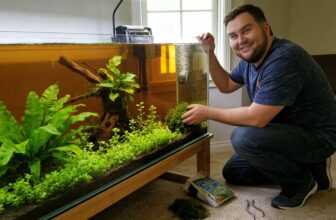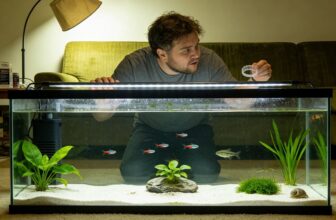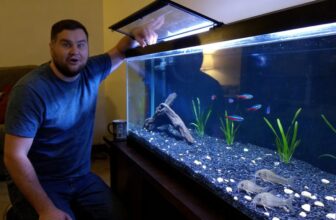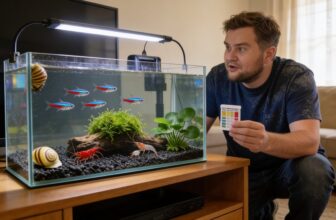
You’re better off ditching that cheap gravel—it’s basically a sterile parking lot for roots.
Your plants get 80% of their nutrition from the substrate, not the light or filter.
So choose a nutrient‑rich base (like Fluval Stratum) or layer inert gravel with root tabs.
Depth matters: two to two-and-a-half inches anchors roots without trapping anaerobic gas.
Match grain size to your fish—Corydoras need smooth stuff.
Rinse only if the bag says so (Eco‑Complete? No rinse).
Getting this right means lush growth, not a “gravel tomb.”
Keep going to see how CO₂ changes everything.
At A Glance
- Substrate anchors roots and provides 80% of plant nutrition.
- Inert gravel needs root tabs; nutrient-rich soil feeds plants longer.
- Ideal depth is 2–2.5 inches to avoid anaerobic pockets.
- Match substrate to fish: smooth for Corydoras, acidic for certain plants.
- Rinse guidelines vary by brand; some require no rinse to preserve nutrients.
What Makes a Planted Tank Substrate Different From Standard Gravel?
Well, plain gravel’s just rocks—inert, sterile, no nutrients. Your plants starve. Specialty substrates, though, pack the good stuff: minerals locked inside granules, slow-release iron, a stable pH. They’re screened to size, soft for delicate roots. Gravel leeches nothing, plants need everything.
Let’s be honest: you want lush growth, not a gravel tomb. So skip the cheap stuff, grab something like Eco‑Complete or Stratum. Your plants will root deep, grow strong. You’ll belong to the “it works” club, not the “why aren’t these plants alive?” club. For optimal root development, supplement with a liquid chelated iron fertilizer like API Leaf Zone to prevent yellowing leaves.
Why Does Substrate Matter More Than Light or Filter?
Light might get all the glory, and filters hog the maintenance spotlight, but substrate is the silent, grubby foundation your planted tank actually depends on.
Without it, roots starve, plants float, and your expensive light becomes a pretty disco ball over dead leaves.
You belong to a community that knows: the ground floor matters.
- Substrate anchors roots; lights don’t keep plants from uprooting.
- It stores nutrients; filters only remove waste, not feed your plants.
- Without it, fertilizers vanish into water, not where roots need them.
- It buffers pH; your filter never softens water for delicate species.
- Roots absorb 80% of nutrition; lights just help them use it.
- Rinsing your chosen gravel twice prevents cloudy tank syndrome and ensures bacteria colonize properly.
Stop obsessing over gear. Fix your floor first.
The 3 Macro and 2 Micro Nutrients Roots Actually Absorb
You’ve convinced yourself the substrate is the real hero, but now you need to know exactly what it feeds your plants.
Roots absorb three macros—nitrogen, phosphorus, potassium—for leaves, roots, and overall strength.
Then, two micros: iron for lush green growth, and manganese for photosynthesis.
Without these, your plants starve, plain and simple.
You’re building a planted community, so get a substrate that delivers these five.
ADA Amazonia packs them in, or supplement inert sand with root tabs.
Your plants don’t need a menu; they need these specific meals at the root zone.
Feed them right, and they’ll reward you with growth you’ll show off proudly.
All alkalinity supplements work on a buffer capacity principle measured in milliequivalents per liter for predictable pH stability.
How Substrate Depth Affects Root Growth and Fertilizer Placement
How deep should your substrate actually be? You’re aiming for 2 to 2.5 inches—that’s the sweet spot. Too shallow, and roots can’t anchor; too deep, and fertilizer tablets get buried where roots won’t reach.
- Roots need room to roam—a shallow bed stunts growth, leaving plants weak and wobbly.
- Fertilizer placement matters—tablets work best when placed 1–2 inches down, right in the root zone.
- Deeper isn’t better—beyond 3 inches, nutrients get trapped, and anaerobic pockets form.
- Even depth prevents gaps—uneven spots create dead zones where roots struggle.
- Measure twice, pour once—use a ruler to ensure consistent depth across the tank.
Bottom line: keep it shallow enough for roots, deep enough for fertilizer. Simple. Many root tabs, such as those using slow‑release chemistry, are designed to activate only after proper substrate insertion at this depth.
How to Match Substrate to Plant Species and Fish Compatibility
For fish compatibility, soft-bellied species like corydoras need smooth gravel—ADA Aqua Soil Amazonia works, but sharp pebbles shred their barbels.
Hard-water fish, like livebearers, reject acidic substrates; inert Spectrastone Shallow Creek ($15 per 10 pounds) keeps pH stable.
Bottom line: Match substrate toughness and nutrition to your plants’ needs, then check your fish’s comfort. You’ll get a happy, balanced community. For specific setups, CaribSea Aquatics Life Rock mimics natural live rock without requiring live coral. That’s the goal, right?
ADA Aqua Soil: Why Acid-Loving Plants Thrive in It
One of the most talked-about substrates is ADA Aqua Soil Amazonia, and for good reason—it’s practically a cheat code for acid-loving plants. It drops your pH naturally, giving crypts, buce, and ferns the slightly sour water they crave. You won’t need chemical buffers; this stuff does the work for you.
Here’s why it’s a community insider’s pick:
- It’s peat-based, so it softens water and lowers pH without effort.
- Ammonia leaches out slowly, feeding plants as you cycle your tank.
- Small, smooth granules let soft-bellied fish dig without injury.
- Rich trace elements prevent deficiencies, reducing your dosing math.
- It creates a clean, dark base that makes your plants pop visually.
You get thriving, acid‑loving growth with less fuss. That’s the ADA payoff. This setup pairs well with high light transmission covers, which help your plants photosynthesize efficiently.
Seachem Fluorite: A Dense Clay Option for Stable pH Tanks
What if you want stable pH and dense, root‑anchoring substrate without the acidic drift? Well, Seachem Fluorite’s your answer—a porous, red clay that locks roots in place like a hug from a friendly earthworm. It won’t mess with your water chemistry, so you don’t need to chase pH swings. This steady parameter support is especially helpful for tanks housing fish like the redtail catfish, which require pH between 6.0–7.5 to avoid stress and illness.
Why it works:
- Iron‑rich granules feed roots steadily, no ammonia spike.
- Porous structure traps bacteria and fertilizers.
The catch:
– You gotta rinse it—multiple times—or you’ll get a dust storm.
Bottom line: If you want stable pH and solid anchoring, Fluorite’s your low‑maintenance buddy.
Carib Sea Eco-Complete: Pre-Seeded With Bacteria and Ready to Use
Since you’d rather not rinse a bag of dust before you can even start planting, Carib Sea Eco-Complete steps in as the lazy aquarist’s dream—it comes pre‑seeded with live bacteria and already nutrient‑rich, straight from the bag. You belong with a substrate that lets you skip the prep work.
- You dump it in, gravel‑vac it gently, then plant immediately—no waiting.
- Those bacteria kickstart your nitrogen cycle, reducing cycling time.
- Basaltic ore binds iron and trace elements for confident root development.
- Its brick‑red color makes green plants pop, creating a polished, cohesive look.
- Weighs more than Fluval Stratum, so your heavy driftwood stays anchored.
Bottom line: You want instant setup with biological backup—grab a bag, you’re part of the club. This substrate’s rounded gravel is acceptable only if sand is unavailable for bottom-dwellers.
Fluval Stratum: Lightweight Volcanic Soil for Fragile Roots
If your plants have the root systems of a delicate Victorian heiress, Fluval Stratum is the lightweight volcanic soil that won’t crush their spirits—or their roots.
You’ll love how this cocoa‑colored stuff practically floats during settling, making it a dream for fragile stems.
It acidifies the root zone, which helps certain plants thrive, but expect some dust—no rinsing here, or you’ll get mud.
You’re part of a crew that values gentleness over brute force.
Stratum’s porous granules lock in nutrients, slowly releasing them.
Perfect for beginners or anyone who’s accidentally killed a plant with heavy gravel.
Just add CO₂ and fertilizers—this soil starts you off right.
For optimal nutrient cycling and water clarity, the fine particle capture of a 40 PPI sponge pairs well as a mechanical pre‑filter.
Spectrastone Shallow Creek: Pretty Pebbles That Need a Fertilizer Boost
Undoubtedly, so you’ve fallen for clean, decorative pebbles, but Spectrastone Shallow Creek won’t feed a single root on its own. These epoxy‑coated pebbles are pretty, definitely—dust‑free, won’t mess with pH—but they’re inert. You’ll need a serious fertilizer boost.
- Inert as a rock: zero nutrients, zero help for plants.
- Epoxy coating means no dust, no staining, no mess.
- Won’t alter pH, so perfect for finicky fish.
- Add root tabs monthly; without them, plants starve.
- Ideal for low‑tech tanks with easy, non‑hungry species like Anubias.
Bottom line: great looks, but your plants’ll demand a supplement—or they’ll sulk.
For root‑feeding plants like crypts or swords, consider adding Root‑Tab Substrate Fertilizer to provide slow‑release nutrients directly at the roots.
Should You Rinse Substrate Before Adding It to the Tank?
You’ve picked your substrate and you’re ready to dump it in—but first, a quick question: should you rinse it? Well, it hinges on what you bought. Some substrates punish you for rinsing; others demand it. Here’s the scoop:
| Substrate | Rinse? | Why? |
|---|---|---|
| ADA Aqua Soil | No | Turns to mud; loses nutrients |
| Seachem Fluorite | Yes | Dusty clay clogs your filter |
| CaribSea Eco-Complete | No | Live bacteria, ready to go |
| Fluval Stratum | Lightly | Volcanic dust; quick swish only |
Don’t be that person who ruins their scape before it starts. Check your bag’s label—it’s your new best friend. Skip the rinse for soil-based stuff, but flush that clay. Your plants will thank you, and you’ll fit right in with the planted-tank crew.
If you’re ever uncertain about sediment cleanliness, a quick gravity siphon can help remove floating dust from the water column after adding substrate.
How to Layer Substrates Without Clouding the Water
When you’re layering substrates without clouding the water, patience is your new best friend—and so is a spray bottle or a plate.
Fill your tank halfway, then gently pour your nutrient layer—like ADA Aqua Soil Amazonia, $40 for 9 lbs—through a water‑filled spray bottle nozzle.
Fill your tank halfway, then pour the nutrient layer gently through the spray bottle nozzle.
Wait ten minutes before adding the cap layer; rushing stirs up dust.
- Spray the dry substrate with a misting bottle before adding water.
- Use a dinner plate or plastic bag to pour water onto, not directly onto the substrate.
- Add water slowly via a hose, trickling it against the tank glass.
- Let each layer settle for 15 minutes before disturbing it.
- Cap fine soils with 1–2 inches of inert sand or gravel to lock them down.
This dark, soft sand substrate approach prevents clouding and supports fish health.
You’ll dodge the mud pit—I promise.
Why No Substrate Covers All Plant Nutrients (And What’s Missing)
Even if you drop $40 on a bag of ADA Aqua Soil Amazonia, you’re still signing up for supplemental fertilization—no single substrate holds a complete buffet of plant nutrients. Think of it like soil: it’s just one part of the meal. Here’s what’s missing:
| Nutrient Group | Why It’s Missing in Substrates |
|---|---|
| Macronutrients (N, P, K) | Quickly consumed or not stored; needs liquid dosing. |
| Iron & Trace Elements | Oxidize or bind to substrate; chelated liquid supplements fix this. |
| Carbon (CO₂) | Must be injected as gas; substrate can’t hold it. |
| Potassium | Leaches rapidly; root tabs or dosing compensate. |
A programmable peristaltic dosing pump can reliably deliver these missing liquid nutrients on a precise schedule.
How CO₂ Fertilization Boosts Substrate Nutrient Uptake
Since CO₂ is basically rocket fuel for plant roots, your fancy substrate only works as hard as the carbon available to burn. Without it, those nutrient‑packed granules just sit there, waiting—like a car with a full tank but no ignition. CO₂ fertilization changes that, sparking root‑zone action.
CO₂ is rocket fuel for plant roots—without it, your substrate is just a parking lot.
- Cranks root metabolism, so roots actively grab iron, potassium, and nitrogen from your substrate.
- Turns inert substrates into functional ones—your gravel becomes a grocery store.
- Nourishes beneficial bacteria that break down waste into plant food.
- Prevents “root hunger” without upping your fertilizer dose.
- Synergizes with CO₂ tabs, doubling nutrient delivery efficiency, real-time.
Add CO₂ before blaming your substrate. You’ll see the difference in a week, roots recharged. Consistent fertilization and stable water parameters also reduce stress-induced disease in tank inhabitants, ensuring the entire ecosystem thrives.
Frequently Asked Questions
Can I Mix Different Specialty Substrates Together?
You certainly can mix specialty substrates, but don’t just dump them in like a chaotic salad.
Layering works best—think of it as a lasagna for roots.
For example, put nutrient-rich Aqua Soil on bottom, cap with inert gravel for stability.
This avoids muddy water and gives plants access to both minerals and a firm anchor.
Just remember, mixing light and heavy substrates can shift over time.
Bottom line: layer strategically, not randomly, for thriving growth.
How Long Does Planted Aquarium Substrate Typically Last?
You’re looking at 1-3 years before it poops out, but it really depends on the brand.
Active substrates like ADA Amazonia or Fluval Stratum slowly lose their nutrient-holding ability over time—think of them as rechargeable batteries that wear down.
Seachem Fluorite or CaribSea Eco-Complete? They’re more like inert clay; they last indefinitely but need fertilizer tabs to stay useful.
Bottom line: replace active stuff every couple years, or just supplement inert ones. Easy fix.
Do I Need to Replace Substrate When Replanting or Rescaping?
Not usually, no—you’re overthinking it. Replanting or rescaping doesn’t automatically mean replacing your substrate. If your existing layer is still nutrient-rich and 2–2.5 inches deep, leave it be. Disturb it too much, and you’ll cloud the water and bury root tabs deeper than they should go.
- Keep it if it’s healthy, uncrushed, and free of dead spots.
- Replace only if it’s exhausted, compacted, or you’re switching plant types entirely.
Bottom line: don’t rip out what works—just refresh with fertilizer tablets.
What Happens if I Use Too Little or Too Much Substrate?
Too little substrate, and your plant roots won’t have enough depth to anchor or pull nutrients—they’ll struggle like a fish out of water.
Stick to 2–2.5 inches for most setups.
Too much, and you’re just wasting money, plus it can create dead zones where anaerobic bacteria thrive, fouling your tank.
Aim for that sweet spot: enough for root development, not so much that it buries your plants’ crowns.
Depth matters more than you think.
Can I Use Garden Soil Safely in a Planted Tank?
You can, but you’re playing with fire. Garden soil decays, turns your tank into a murky mess, and can release hydrogen sulfide—that rotten‑egg gas. Pros use it only under gravel with expert care.
Stick to a specialty substrate like Fluval Stratum ($20 for 8.8 lbs), which feeds roots without the rot. It’s lightweight, acidifies the root zone, and won’t stink up your living room.
Bottom line: Garden soil? Not worth the risk. Grab a bag of real plant substrate instead.
Rounding Up
Bottom line: you don’t need the priciest substrate to grow plants—you need the right one for your setup. Skip fancy marketing. Instead, match depth (2–3 inches for root feeders, 1 inch for epiphytes like Java fern) to your fertilizer plan. Use a nutrient-rich base like Fluval Stratum ($20/bag) for heavy rooters, or save cash with inert sand plus root tabs. Your filter won’t fix a bad root zone. Get this right, and your plants grow without you hovering. Simple as that.