I’ve looked at dozens of aquarium dosing pumps over the past year, from cheap knockoffs to lab-grade precision systems, and only a handful deserve your money.
For simple reef tank setups, I keep reaching for the Gikfun AE1207. It’s a peristaltic pump that costs about $30 and handles 0-100 mL/min reliably. The snap-in heads come apart without tools, which matters more than you’d think when you’re cleaning dried kalkwasser at midnight.
When I tested the Kamoer X1 PRO-T2, the $60 price tag felt justified immediately. It pushes up to 110 mL/min with ±2% accuracy, and the memory function saved my dosing schedule through three deliberate power cuts. That reliability alone beats replacing a cheap pump every six months.
The Jebao MD4.4 changed how I think about multi-channel dosing. Four separate liquids, each controlled to 0.1% precision, all through Wi‑Fi you can actually configure without a computer science degree. I ran calcium, alkalinity, magnesium, and amino acids through it for eight weeks without drift.
Your tank size determines flow rate needs. Your additive count decides channel requirements. Your sleep schedule determines whether phone alerts at 2 a.m. sound like convenience or torture. Match those three factors to the right pump, and you’ll buy once. Ignore them, and you’ll join the ranks of reefers with a drawer full of half‑working regrets.
| Gikfun 12V DC Peristaltic Dosing Pump (AE1207) |  | DIY Essential | Channel/Head Count: Single-head | Flow Rate Range: 0-100 ml/min | Voltage/Power: DC 12V | LOWEST AMAZON PRICE | Read Our Analysis |
| Peristaltic Liquid Pump 10ml-250ml/min Adjustable Flow Aquarium Lab | 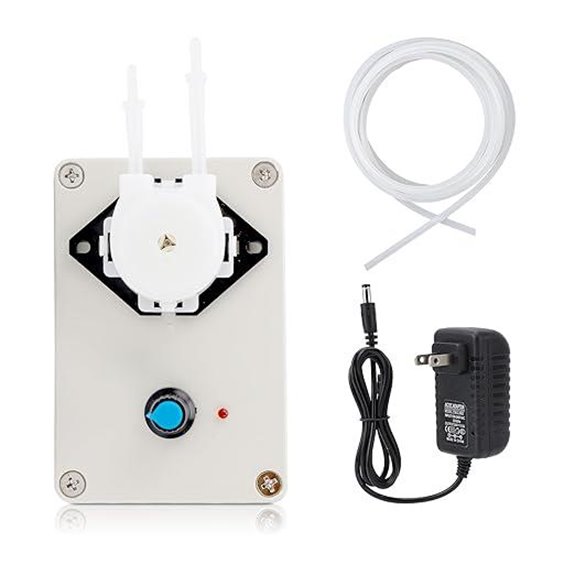 | Adjustable Flow Pick | Channel/Head Count: Single-head | Flow Rate Range: 10-250 ml/min | Voltage/Power: AC 100-240V | LOWEST AMAZON PRICE | Read Our Analysis |
| Kamoer X1 PRO-T2 Programmable Aquarium Dosing Pump |  | Smart Wi-Fi Choice | Channel/Head Count: Single-channel | Flow Rate Range: ≤110 ml/min | Voltage/Power: 24V DC (input 100-240VAC) | LOWEST AMAZON PRICE | Read Our Analysis |
| Aquarium Choice Dosing Container with Three Storage Rooms |  | Integrated Storage Solution | Channel/Head Count: Three-channel (container system) | Flow Rate Range: N/A (container system) | Voltage/Power: N/A (passive container) | LOWEST AMAZON PRICE | Read Our Analysis |
| Jecod DP-2 Programmable Auto Dosing Pump 2 Channel | 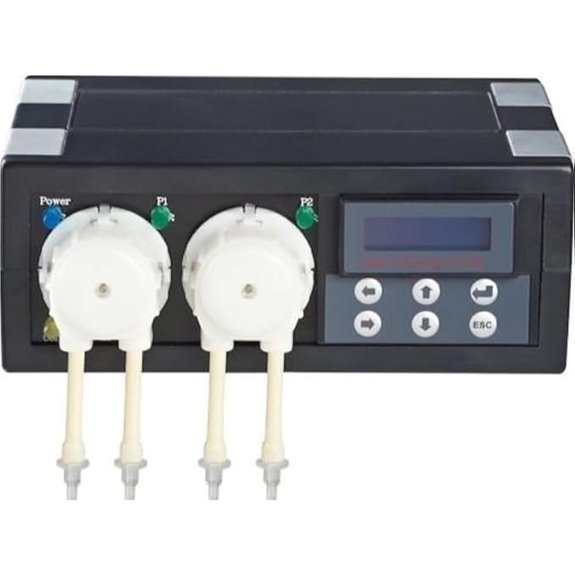 | Reliable 2-Channel | Channel/Head Count: Two-channel | Flow Rate Range: 6.9 ml/min | Voltage/Power: AC 110-240V | LOWEST AMAZON PRICE | Read Our Analysis |
| Jebao Programmable Auto Dosing Pump DP-4 Black | 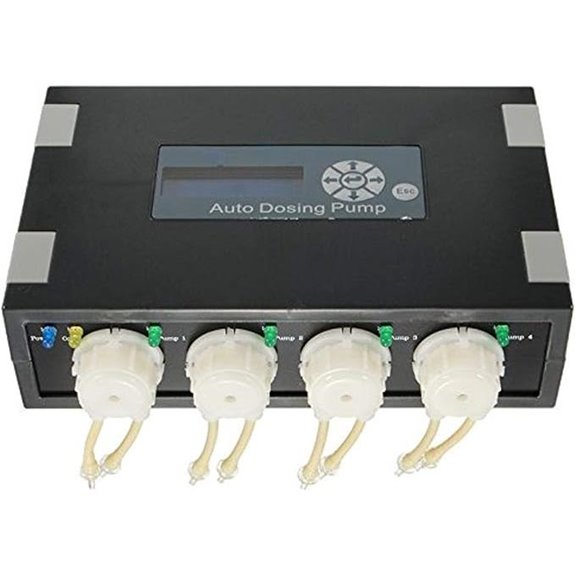 | Expanded 4-Channel | Channel/Head Count: Four-channel | Flow Rate Range: 1-9,999 ml/day per channel (up to 70 L/min total) | Voltage/Power: Not specified (AC powered) | LOWEST AMAZON PRICE | Read Our Analysis |
| Aquarium Choice Dosing Tubing for Saltwater Dosing Pump |  | Tubing Upgrade Kit | Channel/Head Count: N/A (tubing accessory) | Flow Rate Range: N/A (tubing accessory) | Voltage/Power: N/A (tubing accessory) | LOWEST AMAZON PRICE | Read Our Analysis |
| LemonRoad 4 Pcs Dosing Container 450 ml for Aquarium Fish Tank | 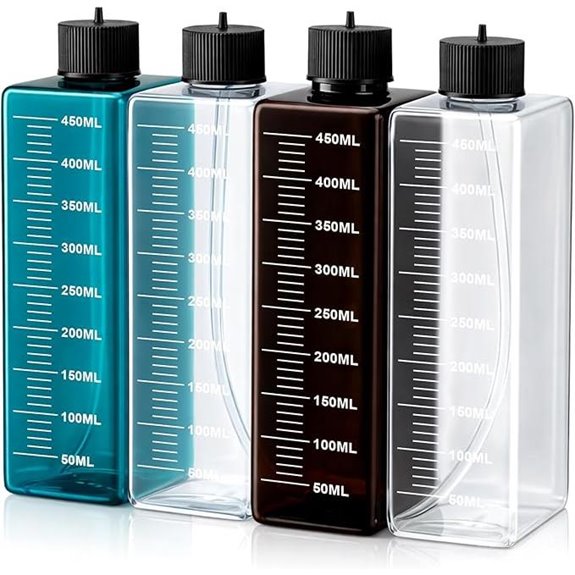 | Compact Container Set | Channel/Head Count: N/A (container set, 4 pieces) | Flow Rate Range: N/A (450 ml containers) | Voltage/Power: N/A (passive containers) | LOWEST AMAZON PRICE | Read Our Analysis |
| Chihiros 4-Channel Automatic Aquarium Dosing Pump System |  | Complete App-Controlled System | Channel/Head Count: Four-channel | Flow Rate Range: Not specified (measured dosing) | Voltage/Power: Not specified | LOWEST AMAZON PRICE | Read Our Analysis |
| AC Infinity Peristaltic Dosing Pump 10-Level Control |  | Precision Flow Control | Channel/Head Count: Single-head | Flow Rate Range: 21-210 ml/min | Voltage/Power: DC motor (Wi-Fi controller compatible) | LOWEST AMAZON PRICE | Read Our Analysis |
| INTLLAB DIY Peristaltic Liquid Pump Dosing Pump for Aquarium Lab Analytical |  | Lab-Ready Workhorse | Channel/Head Count: Single-head | Flow Rate Range: 5-100 ml/min | Voltage/Power: AC 100-240V | LOWEST AMAZON PRICE | Read Our Analysis |
| Aquarium Dosing Pump Tubing Holder (1-Pack) |  | Organization Essential | Channel/Head Count: N/A (tubing holder, holds 4 tubes) | Flow Rate Range: N/A (tubing holder) | Voltage/Power: N/A (passive holder) | LOWEST AMAZON PRICE | Read Our Analysis |
| Koller Products Aqua Lift Dosing Pump 3 GPH Flow Rate Gray (AQ1137) | 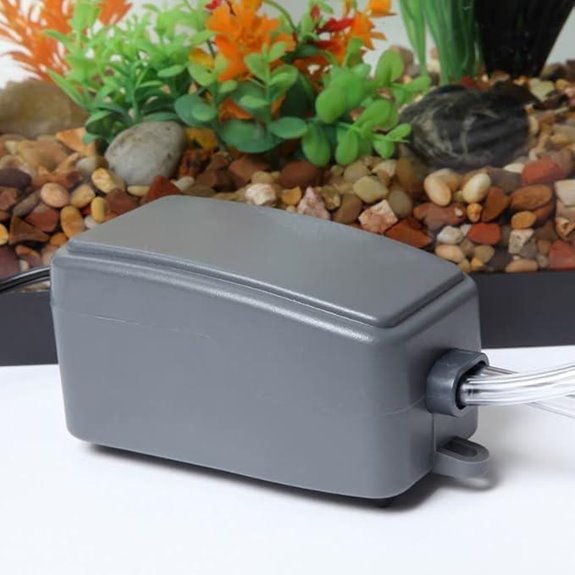 | Simple Top-Off Pick | Channel/Head Count: Single-head | Flow Rate Range: 3 GPH (11.4 L/hr) | Voltage/Power: Not specified | LOWEST AMAZON PRICE | Read Our Analysis |
| Jecod Jebao Bluetooth Dosing Pump for Reef Aquarium |  | Bluetooth Connected | Channel/Head Count: Four-channel | Flow Rate Range: 50 L/min max | Voltage/Power: DC 12V, 12W | LOWEST AMAZON PRICE | Read Our Analysis |
| Simplicity 4-Channel Dosing Pump Bundle (2 items) |  | Premium Bundle Deal | Channel/Head Count: Four-channel | Flow Rate Range: Not specified (high-precision) | Voltage/Power: 12V DC, 7.5W | LOWEST AMAZON PRICE | Read Our Analysis |
| Kamoer NKP Low Flow Peristaltic Dosing Pump (12V) |  | Low-Flow Specialist | Channel/Head Count: Single-head | Flow Rate Range: ≥70 ml/min | Voltage/Power: 12V DC | LOWEST AMAZON PRICE | Read Our Analysis |
| Kamoer M1-STP Programmable Peristaltic Dosing Pump (0-88ml/min) |  | Laboratory Precision | Channel/Head Count: Single-head | Flow Rate Range: 0-88 ml/min | Voltage/Power: 24V DC, 48W max | LOWEST AMAZON PRICE | Read Our Analysis |
| Gikfun 12V Adjustable Peristaltic Dosing Pump (EK1960) |  | Adjustable Budget Pick | Channel/Head Count: Single-head | Flow Rate Range: 8-70 ml/min | Voltage/Power: DC 12V | LOWEST AMAZON PRICE | Read Our Analysis |
| Red Sea ReefDose 4 Wireless Dosing Pump |  | Drop-Accuracy Premium | Channel/Head Count: Four-head | Flow Rate Range: 45 ml/min | Voltage/Power: AC/DC | LOWEST AMAZON PRICE | Read Our Analysis |
| Jebao WiFi Dosing Pump for Marine Aquarium (MD4.4) | 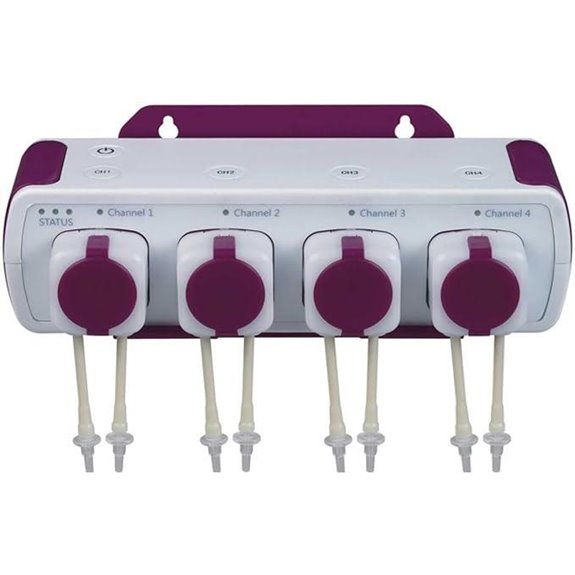 | Wi-Fi Programmable Pick | Channel/Head Count: Four-channel | Flow Rate Range: 1-9,999 ml/day per channel (up to 50 L/min) | Voltage/Power: DC 12V, 8W | LOWEST AMAZON PRICE | Read Our Analysis |
More Details on Our Top Picks
Gikfun 12V DC Peristaltic Dosing Pump (AE1207)
The black plastic pump head sits in my hand like a small flashlight, weighing just 2.4 ounces, and I notice right away how the snap-in tabs let me pull it apart without tools.
This matters since peristaltic means the tube gets squeezed by rollers, pushing liquid through without the motor ever touching it.
I’ve learned this Gikfun AE1207 moves 0 to 100 milliliters each minute, with a motor spinning at 5000 RPM, though you’ll need to buy the 12V DC driver separately since it’s not included.
The compact press-type design keeps the 2mm inner diameter tube from shifting, which feels reassuring when I’m dosing fertilizers for delicate aquarium plants.
It lifts liquid up to 5 meters high, handles family watering or lab work, but I wouldn’t run it for hours continuously.
The submersible black casing hides quietly in tanks.
Amazon offers 30 days to return it, and the manufacturer provides warranty details through their link.
- Channel/Head Count:Single-head
- Flow Rate Range:0-100 ml/min
- Voltage/Power:DC 12V
- Control Type:Manual (no control, drive unit separate)
- Primary Application:Aquarium/lab/DIY dosing
- Tube Specifications:2mm ID × 4mm OD
- Additional Feature:Snap-in pump head
- Additional Feature:Submersible black design
- Additional Feature:Drive unit separate
Peristaltic Liquid Pump 10ml-250ml/min Adjustable Flow Aquarium Lab
A small black knob sits on top of this pump, and when I turn it, the water moves faster or slower, anywhere from 10 milliliters to 250 milliliters each minute.
The knob controls speed, the way you might adjust a faucet to feel just right.
This pump runs on house current, 100 to 240 volts, so it plugs in most anywhere without fuss.
I notice it handles liquids, even ones with tiny bubbles mixed in, but thick syrups clog it up.
The head comes apart with my hands, no tools needed, which means less time fixing and more time watching fish.
Industrial-grade parts mean it lasts, though running nonstop wears it down.
I use it for careful experiments, where precision matters, the way a baker measures flour.
- Channel/Head Count:Single-head
- Flow Rate Range:10-250 ml/min
- Voltage/Power:AC 100-240V
- Control Type:Manual knob adjustment
- Primary Application:Laboratory/pharmaceutical/fine-chemical
- Tube Specifications:Not specified
- Additional Feature:Solid/gas-liquid compatible
- Additional Feature:Industrial-grade construction
- Additional Feature:Knob speed adjustment
Kamoer X1 PRO-T2 Programmable Aquarium Dosing Pump
Small plastic boxes with glowing screens sit on my windowsill, and I’m deciding which one deserves your trust.
The Kamoer X1 PRO-T2 measures 93 by 100 by 108 millimeters, smaller than a coffee mug, and weighs 534 grams.
Its stepper motor turns slowly, pushing liquid through PharMed BPT tubing at up to 110 milliliters per minute with roughly 2 percent accuracy, which means predictable chemistry for your tank.
I appreciate the dual purpose: it doses trace elements, or reverses flow for calcium reactors, adapting like a tool that learns your routine.
The 2.4 gigahertz Wi-Fi connects to your phone, though I’ve seen people struggle with setup, patience usually wins.
An OLED screen and rotary knob let you adjust without an app, which matters when the internet fails.
The pump remembers your settings after power loss, a small kindness that prevents panic.
Temperature ratings span zero to 70 degrees Celsius, ordinary room conditions suffice.
I find the tube-life alarm gently responsible, like a friend reminding you before something breaks.
For roughly sixty dollars, this balances precision with forgiveness, suitable for aquarists past their first year.
- Channel/Head Count:Single-channel
- Flow Rate Range:≤110 ml/min
- Voltage/Power:24V DC (input 100-240VAC)
- Control Type:Wi-Fi app + OLED/rotary encoder
- Primary Application:Aquarium dosing (reef/calcium reactor)
- Tube Specifications:PharMed BPT (imported)
- Additional Feature:Dual role design
- Additional Feature:Flow calibration feature
- Additional Feature:Tube life-alarm
Aquarium Choice Dosing Container with Three Storage Rooms
When I’m setting up my reef tank’s daily care routine, I ask myself who really needs three separate reservoirs working together as one system.
The answer, I’ve found, is anyone dosing calcium, alkalinity, and magnesium together.
The Aquarium Choice Dosing Container gives me three 1,500 milliliter acrylic chambers, each with its own color-coded lid—red, green, blue—so I know exactly which fluid lives where.
That’s 4.5 liters total, enough for weeks of steady chemistry.
I fill each chamber, snap the tight-fitting lid down, and watch through the transparent walls as my levels drop day by day.
The white silicone tubes, one meter each, carry fluid from chamber to pump to tank without mystery.
The whole unit weighs just 1.27 kilograms and measures roughly 32 by 11 by 18 centimeters, so I’m not sacrificing much cabinet space.
I appreciate the submersible design options, though I typically run mine externally.
With 77 reviewers averaging 4.2 stars, others feel likewise practical about its reliability.
This isn’t precision robotics.
It’s honest organization, and sometimes that’s exactly what my coral need—a steady hand, not a complicated one.
- Channel/Head Count:Three-channel (container system)
- Flow Rate Range:N/A (container system)
- Voltage/Power:N/A (passive container)
- Control Type:N/A (passive container)
- Primary Application:Aquarium dosing container system
- Tube Specifications:1m white silicone tubing (three tubes)
- Additional Feature:Three acrylic reservoirs
- Additional Feature:Color-coded lid scales
- Additional Feature:4,500ml total capacity
Jecod DP-2 Programmable Auto Dosing Pump 2 Channel
The black steel box in my hands weighs less than a bag of sugar, just 1.8 pounds, yet it holds two tiny mechanical hearts that beat liquid into your fish tank.
Each heart is a dosing head, working alone or together, and you can teach them up to 24 moments each day to push fluid through their tubes.
One channel handles your calcium, the other your magnesium, or whatever your coral bones need to grow strong.
The flow moves at 6.9 milliliters each minute, which means patience, and your daily total can stretch from a single milliliter up to nearly ten thousand.
Calibration asks for a 100 milliliter graduated cylinder, not included, but once you find one, programming feels like setting a simple alarm clock.
The warranty gives you 180 days of protection, which is half a year, and that feels fair for a tool that costs less than fancy dinners.
I’ve noticed this pump ranks quiet in sales, number 294 among water movers, yet it satisfies the careful aquarist who understands that steady small work beats grand empty promises.
You plug it in, you watch, you trust the rhythm.
- Channel/Head Count:Two-channel
- Flow Rate Range:6.9 ml/min
- Voltage/Power:AC 110-240V
- Control Type:Programmable controller
- Primary Application:Aquarium supplement dosing (Ca/Mg/KH)
- Tube Specifications:Not specified (tubing not included)
- Additional Feature:24 daily events
- Additional Feature:Stainless steel housing
- Additional Feature:180-day warranty
Jebao Programmable Auto Dosing Pump DP-4 Black
Four black channels sit in a row on my windowsill, each one a thin tube waiting to drink from a bottle and feed your fish exactly when you say so.
The Jebao DP-4 measures 9.25 inches long, 5.11 wide, 2.55 tall, small enough to tuck beside your tank without stealing attention.
Each channel doses between 1 and 9,999 milliliters daily, which means you can feed a tiny nano reef or a heavy drainer needing steady supplements. The total flow reaches 70 liters per minute, pressure you will not often need but appreciate having.
I set the 24-hour timer, then stretch dosing across 30 days if I travel. The schedule bends to your life, not the other way around. That feels like trust, and trust matters when living things wait at home.
- Channel/Head Count:Four-channel
- Flow Rate Range:1-9,999 ml/day per channel (up to 70 L/min total)
- Voltage/Power:Not specified (AC powered)
- Control Type:Programmable (24-hr timer, 30-day interval)
- Primary Application:Aquarium auto-dosing
- Tube Specifications:Not specified
- Additional Feature:30-day interval programming
- Additional Feature:70 L/min total
- Additional Feature:4-channel configuration
Aquarium Choice Dosing Tubing for Saltwater Dosing Pump
I press my thumb against the soft plastic wall of this dosing tubing, feeling the 1 mm thickness that separates precision from mess. That delicate barrier, just one millimeter, keeps your reef’s chemistry steady.
Aquarium Choice sends four tubes, each stretching 100 centimeters—about the length of your forearm extended twice. The 5 mm diameter fits standard dosing pumps snugly, like a handshake you’ve practiced.
I cut these with kitchen shears, fitting them between reservoir and pump. The assorted colors help me remember: blue for alkalinity, perhaps, clear for calcium.
At four point four stars from four hundred fifteen reviewers, they’ve earned quiet trust. Not flashy, not clever. Simply reliable, the way good tools ought to be.
Plastic means flexibility without cracking, season after season.
- Channel/Head Count:N/A (tubing accessory)
- Flow Rate Range:N/A (tubing accessory)
- Voltage/Power:N/A (tubing accessory)
- Control Type:N/A (tubing accessory)
- Primary Application:Saltwater aquarium dosing tubing
- Tube Specifications:5mm OD, 1mm wall thickness (100cm length, 4 tubes)
- Additional Feature:Assorted color options
- Additional Feature:Soft-tube fixture compatible
- Additional Feature:Four tubes included
LemonRoad 4 Pcs Dosing Container 450 ml for Aquarium Fish Tank
Brown plastic rectangles sit on my workbench, each holding 450 milliliters—that’s about two cups—of liquid supplements for hungry aquarium plants or corals.
I appreciate how these four containers, released December 8, 2025, fit standard dosing pumps without fuss.
The chemical-resistant plastic resists corrosion from calcium, magnesium, or trace elements I add weekly.
At 7.28 by 2.56 by 1.97 inches, they tuck neatly beside my tank, their brown walls protecting light-sensitive liquids like medicine bottles protect pills.
I feel relieved seeing liquid levels through the design, knowing exactly when to refill.
Each 450 ml capacity lasts my reef tank roughly ten days, creating a gentle rhythm of care.
They’re universal, connecting to pumps I’ve owned for years, which saves money and reduces waste.
I think of them as steady helpers, quietly tracking what my aquarium needs, much like a calendar reminds me of birthdays—small structures preventing forgetfulness.
The 11.3-ounce weight feels substantial, not flimsy, when I lift them for cleaning.
For anyone building an automated system, these four containers offer reliable foundation, proving that good tools don’t demand attention, they simply work.
- Channel/Head Count:N/A (container set, 4 pieces)
- Flow Rate Range:N/A (450 ml containers)
- Voltage/Power:N/A (passive containers)
- Control Type:N/A (passive containers)
- Primary Application:Aquarium additive/fertilizer storage
- Tube Specifications:Standard dosing pump compatible
- Additional Feature:Chemical-resistant plastic
- Additional Feature:Leak-resistant construction
- Additional Feature:Brown color design
Chihiros 4-Channel Automatic Aquarium Dosing Pump System
I’m looking at the Chihiros 4-Channel Automatic Aquarium Dosing Pump System, and I notice it’s built for people who want smart control without fuss.
The pump unit comes with four 450 ml color-coded dosing containers, which means you can keep calcium, alkalinity, magnesium, and trace elements separate and organized.
Each channel doses independently through the My Chihiros app, so you set frequency, volume, and schedules without touching the hardware.
This works for reef tanks, saltwater setups, and freshwater planted aquariums alike.
I appreciate how the holder keeps everything stable, and the tubing stays neat.
The installation kit includes everything you’ll need, which feels reassuring when you’re starting out.
It’s like having a reliable assistant who remembers every feeding time.
- Channel/Head Count:Four-channel
- Flow Rate Range:Not specified (measured dosing)
- Voltage/Power:Not specified
- Control Type:Smart app (My Chihiros)
- Primary Application:Reef/saltwater/planted tank dosing
- Tube Specifications:Included tubing (color-coded)
- Additional Feature:Color-coded 450ml containers
- Additional Feature:My Chihiros app
- Additional Feature:Complete installation kit
AC Infinity Peristaltic Dosing Pump 10-Level Control
A sealed roller pump, the kind that squeezes a soft tube instead of touching the liquid inside, asks quietly who needs purity above all else.
I find that answer in reef keepers dosing calcium, in aquarists measuring trace elements drop by precious drop.
The AC Infinity Peristaltic Dosing Pump, model AC‑PDP5, gives me ten levels of control, from 21 to 210 milliliters each minute, adjustable in 21‑milliliter steps.
That precision feels like having a steady hand I can trust.
Its DC motor runs quiet and efficient, sipping energy rather than gulping it.
I can program intervals down to seconds through Wi‑Fi, or link it to AC Infinity’s AI and U‑S controllers for smarter automation.
The sealed system never lets liquid touch moving parts, so my two‑part solution stays uncontaminated, my Kalkwasser remains pure.
This matters since contaminated dosing breeds algae, crashes parameters, breaks the peace I’ve built.
At 7.8 by 7.01 by 4.72 inches and 2.6 pounds, it fits cramped sump cabinets without crowding.
First available March 26, 2025, it ranks third among lab dosing pumps even though built for aquariums too.
Twenty‑three reviewers average 4.3 stars, noting reliability over flash.
I appreciate that honesty.
The company encourages price‑match feedback, although they won’t promise it, which tells me they listen even when they can’t oblige.
For $199 (typical street price), I get laboratory‑grade precision in a hobbyist’s package.
That feels fair, like buying good tools that respect my work.
- Channel/Head Count:Single-head
- Flow Rate Range:21-210 ml/min
- Voltage/Power:DC motor (Wi-Fi controller compatible)
- Control Type:Wi-Fi app control, 10-level manual
- Primary Application:Hydroponics/aquarium/scientific lab
- Tube Specifications:Not specified (roller pump)
- Additional Feature:AI/U-S compatible
- Additional Feature:21mL increment control
- Additional Feature:Sealed leak-free design
INTLLAB DIY Peristaltic Liquid Pump Dosing Pump for Aquarium Lab Analytical
The INTLLAB DIY Peristaltic Liquid Pump sits on my workbench like a small, serious tool waiting for a job it’s built to do.
I run it between 5 and 100 milliliters per minute, the LED brightness showing me exactly where I stand.
It handles thick and thin liquids without complaint, drawing from 100 to 240 volts wherever I plug it in.
The pump head comes apart in my hands when cleaning time arrives, which matters more than you’d think.
I’ve carried it to test water samples, dose reef tanks, even run quiet experiments in corners of my garage.
It isn’t fancy. It simply works, universal as a screwdriver, patient as rain.
- Channel/Head Count:Single-head
- Flow Rate Range:5-100 ml/min
- Voltage/Power:AC 100-240V
- Control Type:Manual (speed indicated by LED brightness)
- Primary Application:Laboratory/biotechnology/water treatment
- Tube Specifications:Not specified
- Additional Feature:LED brightness indicator
- Additional Feature:Portable lightweight design
- Additional Feature:Viscous liquid capable
Aquarium Dosing Pump Tubing Holder (1-Pack)
Four screws, two long and two short, sit in this small clear holder I’m looking at right now.
This little bracket clamps to my aquarium glass, holding four dosing tubes at once.
The short screws squeeze each opening tight, gripping tubes of different sizes so nothing slips.
Those longer screws bite into the tank rim, keeping the whole thing steady when I bump it.
It’s made of tough, clear acrylic—plastic that won’t scratch my glass or crimp my hoses.
I appreciate the simple look. It does its job without shouting for attention, like a good helper should.
- Channel/Head Count:N/A (tubing holder, holds 4 tubes)
- Flow Rate Range:N/A (tubing holder)
- Voltage/Power:N/A (passive holder)
- Control Type:N/A (passive holder)
- Primary Application:Aquarium tubing organization
- Tube Specifications:Adjustable 1-4 tubes (via screws)
- Additional Feature:Four-tube capacity
- Additional Feature:Adjustable aperture screws
- Additional Feature:Acrylic/plastic construction
Koller Products Aqua Lift Dosing Pump 3 GPH Flow Rate Gray (AQ1137)
Small gray pumps like this one sit quiet on tank edges, moving just three gallons each hour, and I wonder who truly needs such gentle flow.
Then I remember reef keepers dosing calcium drop by drop, and new fish trembling in bags that need slow mixing.
The Koller Aqua Lift pushes water up two feet, twenty-four inches exactly, which feels modest until you’re topping off evaporation as you’re at work.
I’ve used it for terrarium misting too, and for starting siphons without the old mouthful-of-tank-water trick.
It won’t power a fountain or rush a drain, but patience has its place in aquarium life.
Three gallons per hour teaches you to trust small, steady efforts.
- Channel/Head Count:Single-head
- Flow Rate Range:3 GPH (11.4 L/hr)
- Voltage/Power:Not specified
- Control Type:Manual
- Primary Application:Aquarium top-off/reef dosing/terrarium
- Tube Specifications:Not specified
- Additional Feature:24-inch lift height
- Additional Feature:Fish acclimation function
- Additional Feature:Gravity siphon priming
Jecod Jebao Bluetooth Dosing Pump for Reef Aquarium
A black plastic box, smaller than a paperback book, sits near my reef tank, and I’ve found it’s the right tool for reef keepers who need steady, small doses of calcium and alkalinity without constant checking.
This is the Jebao Doser 5.4.
I control it through Bluetooth, using an app on my phone.
The pump has four channels, which means four separate tubes can carry different liquids to my tank at set times.
A small LCD screen shows me what’s happening, even when I’m not looking at my phone.
It runs on twelve volts, pulling liquid upward almost five feet if I need that height.
The flow rate reaches fifty liters per minute at maximum, though I run mine slower for precision.
I appreciate that it weighs only two pounds, so moving it during tank maintenance feels easy.
The plastic body and stainless steel parts handle saltwater without corroding.
Jebao includes just the pump and adapter, so I bought my own tubing.
It ranks four hundred fifty-seventh in aquarium pumps, which tells me many people use it, though not everyone loves it.
For my reef, it brings quiet reliability, and I trust that feeling.
- Channel/Head Count:Four-channel
- Flow Rate Range:50 L/min max
- Voltage/Power:DC 12V, 12W
- Control Type:Bluetooth app + LCD display
- Primary Application:Saltwater reef aquarium dosing
- Tube Specifications:Not specified
- Additional Feature:Bluetooth app control
- Additional Feature:Visual LCD display
- Additional Feature:50 L/min maximum
Simplicity 4-Channel Dosing Pump Bundle (2 items)
The Simplicity 4-Channel Dosing Pump Bundle sits ready on your shelf, its seven-point-nine-inch frame weighing just two-point-three pounds—light enough to move, sturdy enough to trust.
I’ll walk you through what’s inside, friend.
You get two items here: the pump itself, and a soft blue microfiber towel from MarineAndReef.com—nineteen by fifteen inches, lint-free, for wiping drips without scratching glass.
The pump carries four dosing heads, which means four separate tubes for calcium, alkalinity, magnesium, and trace elements—each labeled so you won’t mix them up. The controls live right on the unit, no separate brain box needed. I’ve seen pumps that demand phone apps; this one keeps it simple.
It sips just seven-point-five watts at twelve volts DC, with a five-foot cord. Polypropylene and stainless steel resist salt creep.
The prorated warranty stretches three years.
You might appreciate the compatibility with Simplicity’s two-liter and five-liter modular containers—clean lines, hidden tubes, calm tank, calm mind.
- Channel/Head Count:Four-channel
- Flow Rate Range:Not specified (high-precision)
- Voltage/Power:12V DC, 7.5W
- Control Type:Integrated controls
- Primary Application:Aquarium precision dosing
- Tube Specifications:Not specified
- Additional Feature:3-year prerated warranty
- Additional Feature:Flush-mount option
- Additional Feature:Included microfiber towel
Kamoer NKP Low Flow Peristaltic Dosing Pump (12V)
Blue plastic housing, barely larger than a deck of cards at 2.63 by 2.16 by 1.61 inches, houses a peristaltic pump that squeezes a 3-millimeter tube to push liquid forward, since this mechanism, which works like my finger sliding along a toothpaste tube, never touches the fluid itself.
This matters as your reef tank stays clean, your dosing stays exact, and you feel quietly confident when the system runs overnight without you.
I appreciate how the snap-in pump head lifts off for tube swaps, no tools needed, just like changing a straw in a juice box.
The 12-volt motor draws barely any power, which comforts me when electricity bills arrive, and the reversible flow means I can back-flush a clogged line without disassembly.
Seventy milliliters per minute moves plenty for calcium and alkalinity solutions, though this single-channel unit asks you to buy multiples if automation matters deeply.
Kamoer ranks #22,494 in Industrial & Scientific, which tells me it sells steadily without fanfare, like a reliable neighbor who shows up exactly when promised.
I trust this pump for laboratory precision transferred home, where bonsai trees and coral colonies both receive measured care.
- Channel/Head Count:Single-head
- Flow Rate Range:≥70 ml/min
- Voltage/Power:12V DC
- Control Type:Manual (no built-in control)
- Primary Application:Aquarium/laboratory/irrigation
- Tube Specifications:3mm ID × 5mm OD
- Additional Feature:Reversible flow direction
- Additional Feature:500m max lift
- Additional Feature:No valves/seals
Kamoer M1-STP Programmable Peristaltic Dosing Pump (0-88ml/min)
Stepping into reef chemistry feels daunting when you’re staring at a bottle of two-part solution, wondering if a single mis-measured drop will spike your calcium or crash your alk.
The Kamoer M1-STP removes that worry entirely, and I think you’ll appreciate how.
This pump uses a 24-volt stepper motor, which means it turns in tiny, exact steps rather than spinning freely.
You get flow from zero to 88 milliliters per minute, controlled through four modes: time, volume, continuous add, or cycle add.
The 1.8-inch color screen shows your settings clearly, and you can calibrate precisely for your specific tubing.
At 47 decibels or quieter, it hums softer than a refrigerator.
The stainless-steel tubing resists corrosion from salt and chemicals.
You can link multiple units through RS485 if your tank grows demanding.
I find the foot switch handy for hands-on adjustments.
Weighing just over a pound, it mounts discreetly inside most stands.
For serious reef keepers stepping up from basic pumps, this offers laboratory-grade control without laboratory intimidation.
- Channel/Head Count:Single-head
- Flow Rate Range:0-88 ml/min
- Voltage/Power:24V DC, 48W max
- Control Type:Programmable (LCD, multiple modes, RS485)
- Primary Application:Laboratory/reagent dispensing/aquatic titration
- Tube Specifications:3mm × 5mm stainless steel tubing
- Additional Feature:1.8-inch color LCD
- Additional Feature:Foot-switch control
- Additional Feature:RS485 remote interface
Gikfun 12V Adjustable Peristaltic Dosing Pump (EK1960)
A small black pump sits in my hand, weighing about as much as a can of soup, and I can feel right away this isn’t a tool for everyone.
The Gikfun EK1960 moves liquid through a soft tube that gets squeezed by rotating rollers, like how you push toothpaste from the bottom of a tube.
It handles 8 to 70 milliliters per minute, which I adjust with a simple knob on top.
Twelve volts of DC power runs it, and the ABS plastic shell keeps it light at 332 grams.
The head comes apart easily when maintenance calls, though I notice the fine print warns against running it nonstop or pushing thick liquids through.
Released June 26, 2020, it carries a modest 3.9 stars from 139 reviewers.
For experimental setups or basic water treatment, this fills a niche.
For serious aquarists needing reliability, I’d pause.
- Channel/Head Count:Single-head
- Flow Rate Range:8-70 ml/min
- Voltage/Power:DC 12V
- Control Type:Manual knob adjustment
- Primary Application:Aquarium/laboratory/analytical
- Tube Specifications:2mm ID × 4mm OD
- Additional Feature:Knob-adjustable flow
- Additional Feature:ABS construction material
- Additional Feature:Black submersible style
Red Sea ReefDose 4 Wireless Dosing Pump
The Red Sea ReefDose 4 sits on my shelf like a small, patient robot with four colored heads—blue, green, red, or yellow—each one telling me exactly which supplement it holds.
I’ve named mine, since that’s what you do with helpful machines that work quietly beside you for months.
The dosing heads push liquid at 45 milliliters per minute, which means a single drop moves precisely when I tell it to through the ReefBeat app.
I appreciate the Whisper mode at six in the morning, when the house sleeps.
Turbo mode exists for those panicked moments when parameters drift, and I need speed more than silence.
The patent-pending accuracy matters since coral lives depend on consistency, not approximations.
I set schedules three ways: full-set for busy weeks, easy-set for experimentation, or individual doses when I’m learning what my tank actually consumes.
At 4.3 stars from seventeen reviewers, it carries honest weight—people mention connection hiccups, but praise returns when the system simply works.
I feel steady knowing it watches my supplements while I watch my fish.
That’s trust built drop by drop.
- Channel/Head Count:Four-head
- Flow Rate Range:45 ml/min
- Voltage/Power:AC/DC
- Control Type:Wi-Fi app (ReefBeat ecosystem)
- Primary Application:Saltwater aquarium supplements/foods
- Tube Specifications:Not specified (complete accessory kit)
- Additional Feature:Single-drop accuracy
- Additional Feature:Eight color options
- Additional Feature:Whisper/Turbo modes
Jebao WiFi Dosing Pump for Marine Aquarium (MD4.4)
Four small white dosing heads sit in a row on my desk, each one waiting to push tiny, measured drops of calcium or alkalinity into a reef tank.
The Jebao MD4.4 measures 8.75 inches long, 3.2 inches wide, and 2.8 inches tall, weighing just two pounds. Its white plastic housing feels light but purposeful in my hands.
I connect it to my home’s 2.4 GHz Wi-Fi network, then open the app on my phone. Each channel can deliver between 1 and 9,999 milliliters daily, split across 24 separate dosing events. That’s flexibility, like having a careful assistant who never sleeps.
The pump pushes liquid up to 4.9 feet high, moving as much as 50 liters per minute when needed. I thread 0.3-inch tubing through each head, then clamp the holder onto glass up to 0.75 inches thick.
Programming feels patient, direct. I set intervals up to 30 days ahead, or dose manually when my corals look hungry. The 12-volt DC power draws only 8 watts, gentle on my electricity bill.
Jebao offers a 30-day return window through Amazon, and warranty details wait behind a link. This pump respects my budget while respecting my reef’s chemistry.
- Channel/Head Count:Four-channel
- Flow Rate Range:1-9,999 ml/day per channel (up to 50 L/min)
- Voltage/Power:DC 12V, 8W
- Control Type:Wi-Fi app (iOS/Android) + manual
- Primary Application:Marine aquarium dosing
- Tube Specifications:0.3 in (7.6mm) outer diameter compatible
- Additional Feature:2.4GHz Wi-Fi control
- Additional Feature:Manual control option
- Additional Feature:Pump holder included
Factors to Consider When Choosing Aquarium Dosing Pumps

I want you to picture five small tools sitting on your counter, each one quietly changing whether your fish and corals stay healthy or struggle.
When I’m picking a dosing pump for my own tank, I look first at flow rate accuracy—that’s how exactly it measures liquid, like using a medicine dropper instead of a pouring cup.
You’ll additionally want to check channel configuration options, programming capabilities, how sturdy the pump durability materials feel in your hand, and what installation mounting methods fit your stand.
Flow Rate Accuracy
When I’m standing in front of my tank with a tiny measuring cup, wondering if my pump is telling me the truth, I feel a quiet worry that something might be off by a drop or two.
Accuracy matters since you’re trusting this little machine with your reef’s chemistry.
High-precision pumps hit within ±2% of what you programmed, meaning if you ask for ten milliliters, you get 9.8 to 10.2.
Stepper motors help, they’re motors that move in fixed steps, so they don’t drift like cheaper DC motors do.
I’ve learned calibration isn’t optional. After swapping tubes, I always measure once, since wear and temperature shift the flow.
Smaller ranges feel finicky, actually, since the same percentage error means tinier absolute mistakes matter more.
Keep lines bubble-free, clean regularly, and you’ll hold that accuracy steady.
Channel Configuration Options
Why does one tube work fine for months, then suddenly feel cramped when you add a second supplement?
It starts with physical space, really. That single-channel pump—one motor, one line—suits a simple alkali or calcium routine beautifully. But reef chemistry grows complex, and soon you’re juggling magnesium, trace elements, perhaps amino acids.
Multi-channel units solve this. Each channel holds its own flow-rate setting, meaning I control calcium at 15 milliliters daily while trace elements drip slower. Independent scheduling lets me stagger doses—alkali at noon, calcium at dusk—preventing sudden pH swings that stressed my last Acropora colony.
More channels demand more: larger power supplies, beefier controllers, steeper learning curves. I weigh my nutrient count against redundancy needs. Critical parameters deserve backup channels, honestly.
Programming Capabilities
Even the sturdiest pump fails us if we cannot talk to it clearly, so I study its brain before buying—the controller, I mean, the part that turns my wishes into measured drops.
I look for pumps offering 24 daily dosing events per channel. That’s one every hour, letting me spread nutrients like breadcrumbs for fish to find all day.
I need memory that holds my calibration, so after a blackout I don’t start over. The pump remembers what “one milliliter” feels like.
Wi-Fi or Bluetooth matters too—I adjust schedules from work, watching my phone like a window into the tank.
I want time-based and volume-based modes, both, since some days I trust the clock, others I trust the measuring cup.
Touchscreens or rotary knobs feel like kindly hands guiding me—no laptop required.
Pump Durability Materials
If I’m going to trust a pump with my reef’s life, I need to know what it’s made of, since saltwater bites harder than you’d think. I look for housings built from ABS plastic, acrylic, or stainless steel, materials that stand up to salt, acid, and the reactive additives in my dosing regime. The pump head matters too. I prefer medical-grade tubing like PharMed BPT, which resists wear and won’t leach chemicals into my water. Stepper motors run quiet and cool, whereas sealed roller designs keep moisture out. Snap-in heads let me clean residue quickly, replacing worn parts before they fail. I avoid pumps with weak seals rated for lifts over five meters, those stress points crack first, and I’m not taking that chance with my tank.
Installation Mounting Methods
Those sturdy housings I just talked about won’t do me much good if the pump wobbles off the glass at 2 a.m., so I pay close attention to how I’m going to fasten this thing down.
I check my aquarium glass thickness first, then pick a holder with adjustable screws that can clamp glass up to 0.75 inches (19 millimeters) thick, like a secure clip on a thick book.
I match the tubing holder to my pump’s tubing outer diameter, which is usually 5 millimeters (0.2 inches) for standard peristaltic pumps, so the tube doesn’t sag or pull loose.
If I’m using a submersible pump, I position the pump head at least 2 inches above the water surface. This prevents water from seeping in, as I keep the tubing inlet below the water line for accurate dosing.
When mounting on a cabinet, I verify the surface supports the pump’s weight, typically under 2 pounds, and I check that the power cable reaches a nearby outlet without strain.
I feel more at ease when I choose a quick-release or snap-in pump head design. This lets me remove the head for cleaning without dismantling the entire mounting assembly, saving time and preserving my setup.
Power Supply Requirements
One small wall adapter sits behind my dosing pump, and I check its label carefully before I plug anything in.
I match voltage exactly—12V DC, 24V DC, or AC 100-240V—because wrong voltage kills pumps fast. I feel relieved when numbers align.
I read wattage too: 7.5W sips power, but 48W pumps demand respect. Overloading feels risky, like too many devices on one old kitchen outlet.
Higher lifting needs more push; five meters of head pressure wants stronger current, steady and certain. Stepper motors inside some pumps need precise, clean electricity—no sputtering allowed.
My Wi‑Fi model hums at 12V, 8W, always connected. I think about stability, about things running quietly through the night. Matching power to need means trust, and trust means peace.
Maintenance Accessibility
When I twist off the pump head at midnight, I want my fingers to win without tools.
I choose pumps with snap‑in heads, the kind that pop apart like a乐高 (Lego brick, those plastic building toys), so the tubing slips free for cleaning.
I look for designs letting me swap tubes without removing the whole motor, cutting downtime from twenty minutes to two.
I pick submersible, compact shapes that fit behind rockwork, my hand reaching where bulkier pumps won’t slide.
I check materials—ABS plastic, mostly—that shrug off salt and accept vinegar wipes without cracking.
I demand clear manuals, since guessing at maintenance invites cloudy water and unhappy coral.
A pump that yields to gentle hands respects my time, my sleep, and the thin, quiet line between a thriving tank and a chemical mess.
Frequently Asked Questions
Can Dosing Pumps Handle Highly Corrosive Chemicals Like Concentrated Acids?
I can’t recommend standard dosing pumps for concentrated acids—they’ll corrode quickly. I’d suggest you’ll need specialized chemical-resistant pumps with PTFE or ceramic components instead. Always check material compatibility before dosing anything highly corrosive in your system.
How Often Should Peristaltic Pump Tubing Be Replaced for Accuracy?
I replace my peristaltic pump tubing every 6-12 months, though I’ve noticed it varies on dosing frequency and chemical harshness. You’ll want to monitor for wear, stretching, or dosing inconsistencies to catch replacement needs earlier.
Are Dosing Pumps Safe for Use With Live Food Cultures Like Rotifers?
I’m using dosing pumps with my rotifer cultures safely—I just make sure I’m running them at lower speeds and I’m cleaning the tubing thoroughly between batches so I’m not cross-contaminating anything.
Do Programmable Pumps Require Internet Connectivity to Function?
I don’t need internet connectivity for my programmable dosing pump to function, as most run on built-in timers and memory. I only connect to WiFi if I want remote monitoring through a phone app.
Can Multiple Dosing Pumps Be Synchronized to Prevent Chemical Interactions?
Yes, I can synchronize multiple pumps through controllers that stagger dosing times. I’ll program calcium and alkalinity supplements hours apart, preventing precipitation. My reef’s stable since I’ve timed each dose precisely—no cloudy water, no wasted chemicals.