The arrow crab, Stenorhynchus seticornis, patrols Atlantic reefs on stilt-like legs up to 10 inches across, moonlighting as a nocturnal janitor that snaffles bristleworms, mysis, and fish scraps while your tank sleeps.
One per tank, please—two males means guaranteed chaos, though breeding pairs occasionally work if you’re feeling lucky (success rate: roughly 1 in 10).
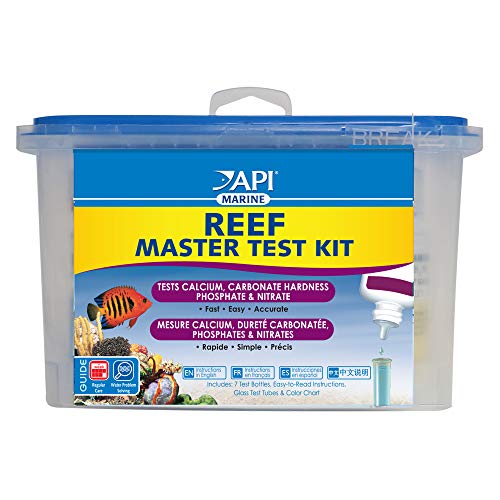
Monitors calcium, alkalinity, and nitrate levels so your arrow crab's water stays stable.

Accurate calcium readings help support strong molting and prevent soft-shell failure.

Precision testing for calcium demands of reef tanks with molting crabs.
Check discounted items inAquarium Test Kits
Molting every few months demands rock-solid calcium, 8–12 dKH hardness, and undisturbed hiding spots while the new shell hardens.
Hatchlings need rotifers, stable salinity, and their own rearing tank, or they’ll vanish into the usual suspects: ammonia spikes, bacterial blooms, hungry hydroids.
Feed well, test weekly, skip the cheap flakes, and this gangly cleaner might just stick around long enough to make the effort feel worthwhile.
At A Glance
- Diet: Nocturnal hunters eat bristleworms, mysis, fish bits, and algae; poor nutrition increases coral-nipping aggression.
- Tankmates: Compatible with tangs, clownfish, wrasses, and gobies; avoid small damsels, soft corals, and sleeping fish.
- Solitary nature: One crab per tank unless breeding; two males fight, and pairs create chaos even during reproduction.
- Breeding: Rare success requires pairing large with small crabs; female carries eggs ~1 month, then hatchlings need rotifers and stable salinity.
- Behavior: Semi-aggressive foragers naturally clean pests; well-fed individuals rarely damage corals compared to hungry or overcrowded crabs.
What Is an Arrow Crab?
One marine oddity among dozens of Caribbean crustaceans, the Arrow Crab (*Stenorhynchus seticornis*) stands out for proportions that seem almost drawn from whimsy rather than evolution.
A marine oddity whose whimsical proportions seem drawn from imagination rather than evolution.
Now, imagine this: a body barely two inches, triangular, almost embarrassed by what follows—legs stretching four to six inches, sometimes ten, like some underwater daddy longlegs that got ideas. The arrow crab prowls Atlantic reefs from North Carolina to Brazil, depths ranging ten to thirty feet, though who’s counting when you look this ridiculous.
Crab coloration runs cream to golden, those signature stripes—blue, black, brown—marking each individual like reef fingerprints. Crimson or yellow legs complete the wardrobe. This adaptation, well, it works: hiding by day, hunting by night, those spindly limbs reaching where stout crabs cannot.
Maintaining stable calcium and alkalinity levels through precise reef dosing helps support healthy arrow crab populations in captive environments.
Are Arrow Crabs Reef-Safe?
Arrow crabs occupy that irritating middle ground between model citizen and opportunistic nuisance. They earn their keep through symbiotic cleaning services, plucking pests and debris with those spindly legs like tiny, overqualified janitors.
But reef tank regulation demands vigilance. Soft corals, polyps, anything fleshy and tempting—fair game for a hungry crab at 2 a.m.
Keep them well-fed, choose sturdier corals, and they mostly behave. Mostly.
Hard corals raised out of reach help. So does accepting that “reef-safe” is a spectrum, not a promise.
For those building community tanks, they’re tolerable houseguests. Just hide the good china.
Adding appropriately sized acrylic slot baffles to your sump can help maintain stable water conditions that reduce stress-induced opportunistic feeding behaviors in arrow crabs.
Are Arrow Crabs Aggressive?
Temperament matters, especially when those legs span six inches and the claws come out after dark. Arrow crabs bring striking crab coloration—cream bodies striped blue‑black, crimson legs, those dark claws—to the reef, yet their disposition demands respect.
They’re semi‑aggressive, particularly males establishing territory. Nocturnal foraging suits them: patience by day, scavenger‑hunter by night when shrimp and bristleworms wander. Well‑fed individuals temper their impulses; hungry ones nip corals, harass small crustaceans.
Tank Compatibility
- One crab per tank typically
- Avoid pairing with conspecifics (unless breeding)
- House with tangs, clownfish, robust species
- Raise soft corals, watch for nipped polyps
Know your specimen. Observation beats assumption.
Aquarists maintaining stable water parameters may benefit from VPD monitoring to optimize their arrow crab’s environment, particularly when controlling nighttime temperature drops that influence nocturnal activity levels.
Can Arrow Crabs Live Together?
How Many Arrow Crabs Can Share a Tank?
Honestly, one. Maybe two, if you’re lucky, desperate, or both.
Compatible habitat compatibility falters fast with these leggy loners. They’re territorial, they’re dramatic, and they don’t do roommates well. Breeding challenges pile on—pairs work, certainly, but success demands space, patience, and a touch of aquarium wizardry.
| Setup | Outcome |
|---|---|
| Solo crab | Peace, prosperity, no midnight crab wrestling |
| Male + female pair | Possible breeding, possible chaos |
| Two males | Aggression guaranteed, entertainment costly |
| Multiple crabs | Territory wars, stress, heartbreak |
Join the community of keepers who learned this the wobbly way.
If attempting a pair in a display tank, Inland Seas black styrene sheets can create visual barriers and partial divisions that help establish separate territories without fully obstructing water flow.
What Tank Conditions Do Arrow Crabs Need?
Where exactly does a creature with legs for days settle down?
They need space—thirty gallons minimum, I mean, these guys stretch. Temperature hovers 72–79°F, pH steady at 8.1–8.4, and yes, test often since stability matters.
Now, substrate choice: sand or crushed coral, something that releases calcium, keeps things balanced. Décor means caves, ledges, rocks—places where that pale crab coloration, cream stripes and those dramatic dark legs, can vanish into shadow until nightfall.
Filters run reliable. Hideouts crucial. And if the parameters drift? They’ll let you know, usually by looming in corners, judgmental, spindly, patient. Most arrow crabs die from boredom, or bad water—often both.
For aquariums where RO/DI filtration delivers near-zero TDS water, remineralization becomes essential before adding arrow crabs to their tank.
What Do Arrow Crabs Eat?
Although most reef dwellers fuss over their meals, the arrow crab hunts with the patience of something that already knows the answer, scavenging by night and striking when the opportunity presents itself.
| Food Source | Benefit | Frequency |
|---|---|---|
| Bristleworms | Natural pest control | As available |
| Mysis shrimp | Protein-rich sustenance | Daily |
| Fish bits | Varied nutrition | 2-3x weekly |
| Nutcycled plankton | Microscopic diversity | Supplemental |
| Algae bloom impact | Opportunistic grazing | Environmental |
Now, these scavengers aren’t picky, I mean—they’ll take what the tank offers. But the wise keeper, the one who belongs to this hobby, understands that a fed crab rarely nips coral. So yeah, feed well, and they behave.
Just as with low-flow filtration systems used in betta tanks to protect delicate fins, arrow crabs thrive when water movement isn’t overpowering, allowing them to stalk prey without expending excess energy.
Do Arrow Crabs Need Calcium for Molting?
A well-fed arrow crab sheds its shell as readily as a dog sheds water, though the process demands more than just calories. Calcium sources prove critical here, people, and ignoring them invites disaster.
Now, molting frequency ties directly to calcium availability—too little, and your crab stalls, soft and vulnerable. I mean, nobody wants that.
- Crushed coral substrate leaches minerals slow and steady
- Cuttlebone offers an easy chew, if they’ll take it
- Old molted shells, weirdly, get eaten for recycling
- Targeted supplements fill gaps in prepared foods
- Water hardness, 8–12 dKH, frames the whole operation
It’s not rocket science, but it is crab science.
For tanks with live plants, maintaining chelated iron availability alongside calcium ensures both proper molting and healthy vegetation, as hard water conditions can bind essential minerals.
How Do Arrow Crabs Molt?
Commence the molt, and you’ll witness one of nature’s more awkward wardrobe changes—weeks of prep, minutes of actual shedding, then days of genuine vulnerability. Now, molt timing varies—roughly every few months in younger crabs, less frequent as they age—so watch for signals. They’ll go quiet, eat less, maybe burrow. I mean, the whole thing’s basically a gut renovation.
Molting: weeks of prep, minutes of shedding, days of vulnerability—nature’s most awkward wardrobe change.
Molt coloration shifts too: that normal cream-to-golden carapace turns dull, almost ashy, like old paint before the new coat goes on. Then it happens fast.
They crack the old shell at the back, shimmy out backwards, and boom—new soft body exposed. Respect the downtime. During this vulnerable period, maintaining optimal water circulation is critical to deliver oxygen and remove metabolic waste while the crab’s protective armor reforms.
What Fish Can Live With Arrow Crabs?
So you’ve got this spindly, nocturnal roommate with claws like router bits and an attitude that flairs up after dinner—what fish, exactly, won’t end up as a cautionary tale?
Your compatible selection matters, since arrow crabs play rough with slow movers and bite-sized tankmates. Coral compatibility gets tricky too—they’ll nip soft polyps when peckish.
Stock accordingly:
- Tangs, surgeonfish—fast, alert, typically ignored
- Clownfish, especially larger pairs—bold enough to hold ground
- Dottybacks, certain wrasses—quick reflexes, similar size
- Blennies, gobies that perch high—out of claw range
- Avoid small damsels, sleeping fish, anything that fits in those pincers
Feed the crab well, watch the night shift, and adjust your community if aggression surfaces. Maintaining stable water parameters through proper filtration, such as fluidized media reactors, helps reduce stress-induced aggression in sensitive invert communities.
How Big Do Arrow Crabs Get?
Just how much legroom does a spindly, triangle-bodied scavenger really need?
Not much, really. The arrow crab size remains modest where it counts: that triangular carapace spans roughly one to two inches, cream to golden with those dramatic stripes.
Modest where it counts: the arrow crab’s triangular carapace spans just one to two inches, cream to golden with dramatic stripes.
Now, the legs—those are another story. Stretching three times the body, they can reach four inches apiece, crimson or yellow spindles splaying outward.
Add it up, and maximum length hits four to six inches typically, though some giants push ten. I mean, it’s mostly leg.
Despite their modest size, arrow crabs benefit from clean water parameters maintained through proper mechanical filtration in their aquarium habitat.
How Do Arrow Crabs Breed?
Breeding arrow crabs is, put kindly, a bit of a headache for hobbyists—maybe one in ten attempts actually produces viable larvae, and that’s being optimistic.
When mating hits, the female hauls a modest clutch for weeks, her swollen abdomen giving it away. Success hinges, largely, on larval nutrition—get that wrong and the whole operation tanks.
To nudge those odds, here’s what actually matters:
- Pair a large crab with a small one—sexing’s tricky, so hedge your bets
- Wait out the female’s month-or-so gestation without panicking
- Move hatchlings pronto; they’ll vanish in the main tank
- Nail larval nutrition early—rotifers, enriched nauplii, nothing less
- Track salinity like your reputation depends on it; swings kill
Breeding remains stubbornly unreliable, yet the community keeps trying.
How Do You Set Up a Tank for Arrow Crab Larvae?
Larval Rearing Tank Setup
Setting up a larval rearing tank demands precision disguised as flexibility—think surgical theater meets improvisational jazz, if that jazz required hydrometers and a worrying amount of rotifer culture.
Now, your lararium setup starts small: ten to twenty gallons, maybe, though some swear by thirty. The point is control—stable salinity, temperature locked near 78°F, and gentle aeration that won’t blender the babies.
Water filtration? Tricky. You need pristine conditions without crushing flow. Sponge filters work, or a gentle recirculating system with micron socks. Change water carefully, match parameters exactly, and feed rotifers twice daily. Welcome to the club.
What Kills Arrow Crab Larvae in Home Aquariums?
Common Causes of Arrow Crab Larvae Mortality
Even the most meticulous lararium—salinity locked at 1.025, temperature hovering around 78°F, rotifers fat and plentiful—can turn into a watery graveyard. Larval arrow crabs, see, they’re fragile. Water quality slips, and suddenly you’re watching dollar signs dissolve.
- Ammonia spikes from decaying food
- Salinity swings of even 0.001
- Insufficient rotifer density at first feeding
- Bacterial blooms in stagnant lar water
- Predation from hydroids or copepods
Now, the thing about lar water—it’s not just seawater, it’s a universe. And water quality? Non-negotiable. I mean, these babies demand perfection. Most hobbyists fail here, quietly, between midnight checks.
What Mistakes Shorten Arrow Crab Lifespan?
Common Care Mistakes
Cut corners with an arrow crab, and you’ll watch those spindly legs go still.
Now, the usual suspects. First, water quality—skip those weekly tests, let ammonia creep up, and you’ll have a molting disaster on your hands.
Skip weekly water tests, let ammonia rise, and you’ll face a molting disaster with your arrow crab.
Second, overcrowding; these crabs need elbow room, or they’ll fight to the death over territory the size of a dinner plate.
Third, behaviors diet—feed cheap flakes alone, watch them turn aggressive and start nipping corals for protein.
And improper lighting? Yeah, they hide all day anyway, but wild fluctuations stress them out, weaken immunity, shorten years.
Simple stuff, really, but easy to forget when you’re busy.
Frequently Asked Questions
Do Arrow Crabs Change Color as They Age?
The documentation offers no evidence of age-related color coloration changes. These crabs emerge from eggs with established cream-to-golden bodies and crimson or yellow legs, and pigment shifts aren’t flagged as developmental milestones.
Now, molting renews the exoskeleton, so appearance stays relatively locked—though lighting, diet quality, and stress might dull or intensify hues. I mean, they’re not chameleons.
If color coloration faded with age, breeders would note it. They don’t.
Can Arrow Crabs Regenerate Lost Legs?
Yes, arrow crabs regenerate lost legs through successive molting cycles, regrowing limbs gradually with each shed.
Habitat preferences—rocky crevices, 10–30 feet deep—provide safe molting sites where vulnerability peaks.
Adequate feeding frequency, calcium-rich prey like mollusks, supports regeneration.
And yes, predator avoidance dictates they hide till new legs harden, since soft‑shelled crabs make easy meals.
Nature’s slow fix, but it works.
How Long Do Arrow Crabs Typically Live?
Arrow crabs typically live 3–5 years with proper care, though some reach 6–7. Lifelongevity depends on stable water quality, diet variety, and stress reduction.
Their habitat range spans from North Carolina to Brazil, so replicating those warm, shallow conditions matters.
Now, captive life often runs shorter than wild specimens—tank parameters drift, aggression flares, molting goes wrong. I mean, five years is a solid run. Not bad for a spindly nocturnal scavenger with legs for days.
Do Arrow Crabs Make Good Pets for Beginners?
Arrow crabs test beginners. They’re hardy, sure, but that nocturnal temperament and semi-aggressive streak demand attention most newcomers haven’t developed.
A proper hab tank setup means 30+ gallons, caves for hiding, and stable water chemistry—pH 8.1-8.4, temperature 72-79°F. Mess with salinity even slightly, and you’ve got problems.
So: manageable pet? Arguably. Good beginner choice? Probably not, unless someone’s committed to learning fast, monitoring parameters, and accepting that one crab means *one* crab—no tank mates of the same kind.
Veterans welcome the challenge. Fresh arrivals often regret the shortcut.
Are Arrow Crabs Sensitive to Light?
Arrow crabs aren’t sensitive to light, exactly, but their photosensitivity shapes everything. They’re nocturnal, see, so bright tanks stress them out.
- Day behavior: Hiding, stillness, cave-dwelling—their habitat preference writ small
- Night behavior: Hunting, foraging, actual living
So yeah, dim the tank. Give them ledges, shadows, places to vanish. They’re not fragile, just opinionated about when life happens.
Lighting matters less than timing.

Protein-rich mysis mimics natural prey, keeping arrow crabs full and less likely to nip corals.

Freeze-dried krill adds variety and dietary enrichment for carnivorous reef tank inhabitants.

Small plankton particles trigger the scavenging instinct and support natural foraging.
See today's best deals onSaltwater Fish Food