I’ve looked at dozens of aquarium iron supplements over the years, and two products consistently stand out when fellow aquarists ask for recommendations. Let me walk you through what makes each one worth your consideration.
Flora Multi Minerals has become my go-to starting point for most setups. The dosing is straightforward—five milliliters per thirty gallons, once weekly—and I appreciate that it delivers iron plus six trace elements in one formula.

Complete iron plus trace elements for thriving planted tanks; simple weekly dosing.

Chelated iron and nutrients make leaves green fast; one capful treats 60 gallons.
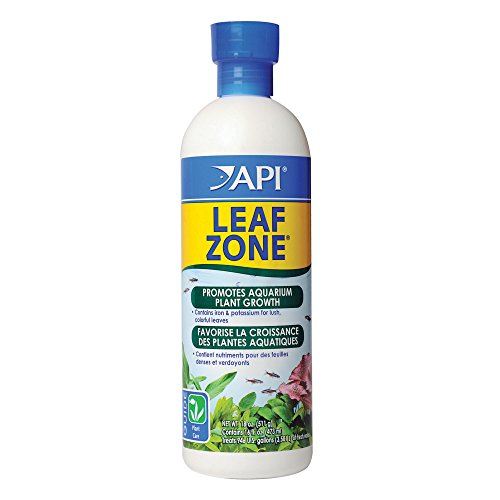
Liquid fertilizer for leafy aquariums; promotes rich green growth without harming fish.
Check discounted items inAquarium Plant Fertilizers
My tetras and shrimp have always remained healthy with this product, which tells me the formulation is gentle on sensitive livestock. I reach for this bottle first when someone needs reliable plant nutrition without complexity.
Seachem Flourish sits at a higher price point, but I’ve found it lasts roughly four months with regular use. One capful treats sixty gallons, making it economical for larger planted tanks where concentrated dosing matters.
Both products rely on chelated iron, though they use different binders that behave distinctly in water. EDDHA remains stable in hard water conditions I’ve tested, while DTPA releases nutrients faster when pH runs lower.
I base my final recommendation on tank size and plant density after seeing how each performs over months of growth cycles. Choosing correctly between them genuinely saves the algae headaches that plague aquarists who mismatch supplement strength to their bioload.
| Flora Multi Minerals Aquarium Plant Fertilizer (16.9 Oz) | 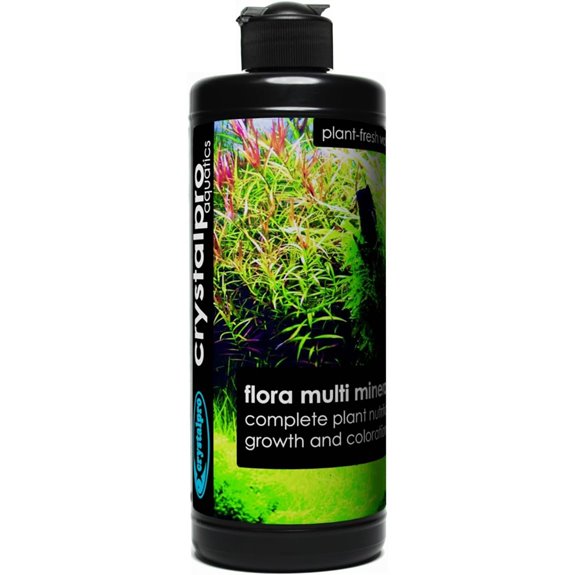 | Best for Planted Tanks | Form: Liquid | Volume: 16.9 fl oz (500 ml) | Iron Content: Included (micro-element) | LOWEST AMAZON PRICE | Read Our Analysis |
| Seachem Flourish Freshwater Plant Supplement 500 ml |  | Best for Shrimp Safety | Form: Liquid | Volume: 500 ml (16.9 fl oz) | Iron Content: Included (micro-element) | LOWEST AMAZON PRICE | Read Our Analysis |
More Details on Our Top Picks
Flora Multi Minerals Aquarium Plant Fertilizer (16.9 Oz)
A bottle of Flora Multi Minerals sits on my counter, 16.9 ounces of dark amber liquid that catches the light.
I’ve watched plants transform with this stuff. The label says 5 milliliters treats 30 gallons, and I measure carefully, dosing once weekly in my densely planted tank. Crystalpro packs iron plus six other micro-elements—manganese, zinc, copper—plus macros like potassium and magnesium, but skips phosphate entirely. That matters since excess phosphate grows algae, which nobody wants.
My Cryptocoryne leaves turned deep green within fourteen days, and the stem plants grew visibly taller. The 4.5-star rating across 432 reviews tells me I’m not imagining things.
It’s safe for my tetras and shrimp, which feels important, gentle, like tending something fragile.
- Form:Liquid
- Volume:16.9 fl oz (500 ml)
- Iron Content:Included (micro-element)
- Target Species:Freshwater aquarium plants
- Dosage Volume:5 ml
- Application Frequency:Once or twice weekly
- Additional Feature:Phosphate-free formula
- Additional Feature:Cobalt included
- Additional Feature:5:1 mixing ratio
Seachem Flourish Freshwater Plant Supplement 500 ml
The small brown bottle with its green label sits on my shelf, and I’ve used it for years when my plants lose their bright green color and start to look pale and tired.
Seachem Flourish carries iron and trace elements, the tiny helpers plants need to make chlorophyll, which is the green stuff that lets them eat light.
I pour one capful, that’s five milliliters, into my sixty-gallon tank once or twice each week.
The cap’s threads measure about one milliliter each, so I can give smaller tanks just what they need.
It holds potassium, calcium, magnesium too, the big building blocks, plus those little trace minerals like copper and zinc in amounts that won’t hurt my shrimp.
I keep it cold after opening, and I finish it within three months, since old fertilizer loses its strength, like bread going stale.
The liquid looks different sometimes, darker or lighter, but Seachem tells me that happens from temperature when they mix it, and it works the same.
My plants green up in about ten days, new leaves pushing out with that fresh, hopeful color.
This bottle costs more than some others, but it lasts me four months, and I trust what it does.
- Form:Liquid
- Volume:500 ml (16.9 fl oz)
- Iron Content:Included (micro-element)
- Target Species:Freshwater plants, shrimp
- Dosage Volume:5 ml (1 capful)
- Application Frequency:1–2 times per week
- Additional Feature:Refrigerate after opening
- Additional Feature:Gluten-free formula
- Additional Feature:Cap thread dosing
Factors to Consider When Choosing an Aquarium Iron Supplement

I want you to picture iron concentration levels as the strength of medicine for your plants, too weak and they stay pale, too strong and you’ll hurt your fish. Liquid bottles pour easy, solid powders store longer, and chelation—meaning how the iron’s wrapped so plants can grab it—decides if your Anubias or Java Fern actually eats what’s offered. Match your tank’s gallons to the label, know your plant species like you’d know a friend’s food allergies, and you’ll keep everything green without guessing.
Iron Concentration Levels
When I open my test kit each Sunday morning, I’m chasing a number smaller than a grain of sand: 0.2 milligrams of iron floating in one liter of water.
That tiny amount keeps my plants green without hurting my fish. Safe iron lives between 0.1 and 0.5 mg/L, but push past 1 mg/L and I’ve poisoned the tank. My water is hard and alkaline, pH brushing against 7.8, so iron falls out of solution like sugar refusing to mix in cold tea. I dose more, but carefully. I use a chelated test kit since iron hides, binding to debris while looking present on paper. My schedule stays fixed: five milliliters every seven days for thirty gallons. Consistency matters. Spikes feed algae, not leaves.
Liquid vs Solid
Since I’m standing at my tank with a tiny brown bottle in one hand and a plastic spoon in the other, I know the choice between liquid and solid iron isn’t about what’s best, it’s about what fits my Sundays.
Liquids dissolve right now, giving plants instant food through leaves and roots both. I squeeze them in with a syringe, which lets me measure exact drops for my small densely planted ten-gallon.
Solids, like iron oxide granules, sink to the bottom and feed roots slowly for weeks. I don’t have to remember them every morning. They’re steadier when my apartment gets warm in August, too.
Liquids need more attention but offer control. Solids forgive forgetfulness. I feel relief knowing either path grows healthy leaves, so long as I pick one and stay consistent.
Chelation Type Matters
Not all iron is the same, even when the bottle says it is.
I look at the label and see words like EDTA, EDDHA, or DTPA. These are chelators, which means they hold iron like a tiny cage so plants can use it.
Strong cages like EDDHA keep iron free longer in harder water, letting me dose less often. Weaker ones like DTPA release iron fast for quick greening, but I must add more weekly.
Here’s something important: higher stability numbers, like EDDHA’s 10 to the 18th power, mean less nasty rust reactions that stress my fish.
UV-stable formulas last longer under bright tank lights, too.
I choose based on my water hardness and how often I want to dose.
Tank Size Compatibility
I hold the little bottle of iron supplement in my hand, and I think about my tank’s size before I pour a single drop.
Most liquid iron supplements work at five milliliters per thirty gallons, about one hundred thirteen liters. That’s my starting point, a simple ratio I can scale.
My larger tanks, two hundred liters or more, need multiple weekly doses. Iron spreads thin in big spaces, like sugar dissolving in a bathtub instead of a teacup.
My nano tanks, under twenty liters, get just one milliliter. Too much iron feeds algae, and I feel careful, protective, watching those small ecosystems balance.
I check my water change schedule too. Frequent changes wash nutrients away, so I adjust my dosing to match. I also note my filter’s flow rate, ensuring the iron mixes evenly, not pooling in corners.
Plant Species Needs
That fast-growing stem plant drinks up nutrients like a kid running through summer, needing about half a milligram of iron per liter of water to keep pumping out new leaves.
Slower, shadow-loving Cryptocoryne and Anubias prefer gentler levels around 0.1 milligrams per liter.
Too much iron makes them unhappy, inviting fuzzy algae neighbors they never asked for.
Some plants eat with their feet.
Vallisneria and sword plants pull iron from the soil, so I tuck supplements beneath the gravel where their roots can reach.
Others, like my floating ferns, sip straight from the water above.
When new leaves turn pale yellow while old ones stay green, I know something’s missing—that’s chlorosis, the plant’s quiet cry for help.
Hard water above pH 7.5 locks iron away, so I choose chelated forms that stay dissolved and available, no matter the chemistry.
Dosage Frequency Ease
Since dosing iron feels like remembering to water a windowsill herb, I keep my supplement bottle right beside the fish food where my eyes catch it each morning.
I measure five milliliters per thirty gallons with a calibrated dropper, since small errors make big swings in iron concentration. I dose once weekly for low-light tanks, twice for crowded plantings.
Consistency matters more than exact timing. When I skip days, my Cryptocoryne leaves pale and stunt, which feels like watching a friend grow tired.
I watch my plants for two or three weeks before adjusting anything. That patience lets the iron spread evenly through the water column, like ink dispersing in a glass.
If algae blooms or growth slows, I tweak the amount, not the calendar.
Frequently Asked Questions
Can Iron Supplements Harm Fish or Invertebrates?
Yes, iron supplements can harm my fish and invertebrates if I overdose them. I’ll watch for signs like gasping, lethargy, or invertebrate stress. I always test my water and follow dosing instructions carefully to keep my aquarium safe.
How Long Until Iron Deficiency Symptoms Improve?
You’ll typically see improvements in iron deficiency symptoms within 2-4 weeks after starting supplementation. I monitor my plants closely during this period, watching for greener new growth as the first positive sign of recovery.
Should I Dose Iron Daily or Weekly?
I dose iron daily for stable levels, but weekly works if I’m using a chelated formula. I test my water first—my plants tell me what they need, and I adjust from there.
Can I Use Human Iron Supplements Instead?
I don’t recommend using human iron supplements in your aquarium. They’re formulated for our digestive systems, not aquatic chemistry, and can easily overdose your tank or introduce harmful additives that fish and plants can’t process safely.
Will Iron Supplements Increase Algae Growth?
Iron supplements boost algae growth if I dose too much or leave lights on too long. I’ve learned balancing iron with CO2 and nutrients prevents outbreaks whilst keeping my plants healthy.

Measure aquarium iron levels accurately to prevent both deficiencies and toxic overdoses.

Complete water testing for ammonia, nitrite, nitrate, pH; keeps planted tanks stable.

Quick dip-in strips for five key water parameters; easy weekly monitoring.
See today's best deals onAquarium Test Kits




[…] stick to its surface like flies to flypaper). If you dose liquid iron supplements, note that activated carbon will also remove chelated iron from the water column, starving your plants. Carbon filter lifespan? […]
[…] trace elements like iron are critical for plant growth that supports your tetra’s habitat, with fast‑growing stem plants requiring around 0.5 mg Fe/L for healthy leaf […]
[…] gets fed without a fight. For planted tanks, consider using an aquarium iron supplement like Flora Multi Minerals to support fast‑growing stem plants that help absorb excess nutrients and reduce […]
[…] you’re considering live plants alongside your discus, note that hard water binds iron, making chelated forms necessary for proper nutrient […]
[…] tanks that require trace iron levels near 0.1 ppm. For tanks with fast-growing stem plants, aim for 0.5 mg Fe/L to support healthy new leaf […]
[…] tanks with live plants, maintaining chelated iron availability alongside calcium ensures both proper molting and healthy vegetation, as hard water conditions can […]