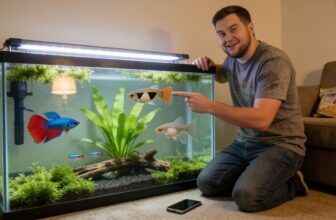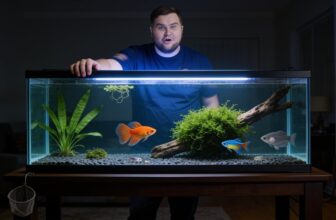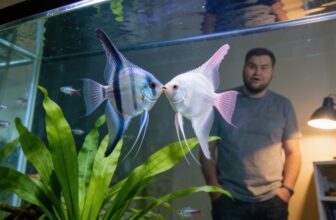
Why guppies die so easily in home aquariums usually comes down to one silent killer: water quality. Ammonia from waste and rotting food builds fast, poisoning your fish before you notice. Overfeeding creates toxic spikes; overcrowding starves oxygen fast. Aggressive tank mates stress guppies into illness, while temperature swings of just 2-3°F can shock them dead. Diseases like ich spread quickly, and new tank syndrome wipes out uncycled setups. Even age and genetics play their part. One wrong chemical—skip that Seachem Prime ($12)—and it’s over. Test your water, check your pH buffers ($8), and keep reading. These fixes stop the heartbreak before it starts.
At A Glance
- Poor water quality is the most common killer; use a test kit and water conditioner.
- Overfeeding spikes ammonia; feed only what guppies finish in two minutes.
- Overcrowding and overbreeding poison water and stress fish; keep single-sex tanks.
- Temperature shock kills; maintain stable 74–82°F with a quality heater.
- Diseases and new tank syndrome require cycling the tank for 5–6 weeks before adding fish.
Why Your Guppy Died Suddenly: Start With Water Quality
Most guppy deaths happen for a straightforward, frustrating reason: poor water quality. It’s like living in a smog-filled room—ammonia poisoning creeps in from waste and uneaten food.

Catch ammonia and nitrite spikes before they poison your guppies.

Instantly detoxifies ammonia and nitrite, giving fish a safety net during water changes.

Makes weekly water changes effortless, so you actually keep the tank clean.
Check discounted items inAquarium Water Care
A simple filter cycles the tank, but it’s not enough. Regular water changes, say 25% weekly, flush out toxins. Smaller tanks need them more often, like every few days.
Grab an API Master Test Kit ($35) to check levels. Ammonia spikes fast, so test after any death. A Fluval heater ($50) keeps temps stable between 74-82°F.
Bottom line: clean water isn’t optional—it’s the only way they survive. Regular testing with a API GHKH Lab-Accurate Certified Kit can also track carbonate and hardness levels that impact guppy health. For reliable readings, store strips cool and dark to preserve accuracy.
How Overfeeding Leads to Guppy Death
When you overfeed guppies, you’re fundamentally setting a slow trap. Those extra flakes sink, rot, and spike ammonia levels fast. Ammonia poisoning burns their gills, suffocating them quietly. A gravel cleaner with three‑stage filtration can prevent this by removing decaying matter efficiently. You might think you’re being kind, but guppies are gluttons—they’ll eat until they pop. Uneaten food is the real killer.
The fix? Feed only what they finish in two minutes, twice daily. Then, perform weekly water changes—25% for a ten-gallon tank—to flush out toxins. Using a product like Seachem Prime can bind ammonia for 48 hours, providing emergency detoxification while your biological cycle recovers.
A simple gravel vacuum costs $15. Skip it, and you’re just serving death on a platter.
Overcrowding and Overbreeding: Bipload Stress That Kills Guppies
Overcrowding is a slow, self‑inflicted wound. Guppies are livebearers, meaning one female can drop 20–120 fry monthly. That bioload stress crushes water quality and oxygen levels, shortening Guppy lifespan fast. Overbreeding damage additionally weakens females, each birth taking a massive toll. Larger tanks, such as a 20‑gallon starter kit, reduce the risk of bioload spikes by providing more stable water conditions.
Overcrowding is a slow, self‑inflicted wound that crushes water quality and guppy lifespan.
- Bioload spikes from too many fish, poisoning the water.
- Oxygen drops as fish compete for air, causing suffocation.
- Repeated pregnancies exhaust females, leading to early death.
- Fry overload quickly outgrows tanks, even 10‑gallon ones.
- Solution: keep a single‑sex tank or rehome extras to a local store.
Bottom line: less is more. Your guppies will thank you by living longer. Using FritzZyme 7 helps rapidly convert toxic ammonia and nitrite, reducing the bioload stress that overcrowding creates.
Tank Mate Aggression: Fin Nipping and Stress That Kills Guppies
Tank mate aggression turns guppies from lively swimmers into hiding, stressed-out targets. Fin nipping causes wounds, inviting infection, whereas constant predator stress weakens their immune system, often leading to death. Adding dense plants or decorations creates safe hiding spots, reducing hostility. For example, the Ameliade plastic plants and rock cave set provides easy-to-clean cover that discourages fin nipping in nano tanks. A magnetic mesh aquarium lid can also prevent guppies from jumping out when startled by aggressive tank mates.
| Aggressor Type | Effect on Guppies |
|---|---|
| Angelfish | Chases and bites fins |
| Gouramis | Harasses and stresses |
| Tiger Barbs | Nips fins relentlessly |
| Larger Cichlids | Predator stress, death |
The best fix? Move guppies to a separate tank. It’s simple, but it works—no fancy gadgets needed, just a peaceful home.
Temperature Extremes and Shock: A Rapid Killer of Guppies
A temperature swing of just 2–3°F in a few hours can stop a guppy cold. This rapid shift, called temperature shock, overwhelms their tiny bodies before they can adapt. Like jumping into an ice bath, it’s that sudden and lethal.
- A faulty heater is the culprit, often sticking on or off, causing dangerous swings.
- Gradual acclimation drip-acclimate new fish over 30 minutes—your guppies will thank you.
- Keep the tank between 74–82°F; a reliable heater plus a digital thermometer, like the $15 Fluval M Series, prevents surprises.
- Warm water holds less oxygen—at 85°F, guppies literally suffocate.
- Check the thermometer daily; a quick glance beats a tank full of floaters.
Bottom line: stable heat equals happy guppies. So invest in gear that works.
The Fluval M series features a ceramic heat sink that spreads heat evenly, avoiding dangerous hot spots in smaller tanks.
A model with overheat protection automatically shuts off before temperatures reach lethal levels, preventing cooker-like conditions.
Common Guppy Diseases and How to Spot Them
Diseases are basically the silent assassins of the guppy world, creeping in when conditions slip. Disease identification starts with spotting clamped fins, white spots (ich), or bloated scales (dropsy). These are your fish crying for help. For rapid treatment of external parasites like ich, you can use API Liquid Super Ick Cure which works within about one day.
Fin rot looks like ragged edges; velvet gives a gold dust sheen. Treatment options include aquarium salt baths, raising the temperature slowly, or meds like API Melafix. Maintaining proper biological filtration is essential for converting harmful ammonia, as beneficial bacteria colonize surfaces like bio-media.
But remember, prevention beats cure—clean water stops most outbreaks. You’re not alone here; every keeper faces this. Act fast, quarantine sick fish, and watch your guppy family thrive again. You’ve got this.
New Tank Syndrome: An Avoidable Cause of Guppy Death
New tank syndrome is a predictable killer, one that strikes when a tank is set up too fast. Your guppies don’t stand a chance without proper aquarium cycling.
Beneficial bacteria need weeks for bacterial colonization, converting toxic ammonia to safer nitrates. Skip the cycle, and your new pets swim in poison.
Don’t rush—it’s the most avoidable mistake.
- No beneficial bacteria exists to handle fish waste.
- Ammonia and nitrite spike, poisoning guppies quickly.
- Water tests show toxic levels; fish gasp at the surface.
- Prevention: cycle your tank 5–6 weeks before adding fish.
- Fix: daily partial water changes and an ammonia detoxifier.
Patience now saves heartbreak later. Use liquid reagents to achieve the ±5 % precision needed for early detection of toxic spikes during cycling.
A weekly pond monitoring routine with test strips can catch ammonia rises before they become lethal.
Poor Genetics and Old Age: When It’s Not Your Fault
Sometimes a guppy dies for reasons entirely out of your control. Poor genetics, common from profit-driven breeders, cause untimely death. If only stores offered genetic testing—they don’t. No remedy exists for weak stock. Future prevention means buying from trusted local fish stores instead of big chains. For tanks with healthy stock, regular water changes prevent nitrite spikes and support filter bacteria activity. Using a Laifoo Siphon Vacuum makes this task quick and easy with instant flow control.
Old age is another unavoidable factor. Guppies live 2–3 years, but a shop-bought fish might already be one. Lifespan extension isn’t possible naturally. You can’t reverse time. Accept that some deaths aren’t your fault. Focus on what you can control: water quality, diet, and tank mates. The rest? That’s just bad luck or biology.
Chemical Contaminants and pH Swings: Prevent Sudden Poisoning
Forgetting to add water conditioner is the fastest way to turn a happy tank into a chemical soup, and it’s a mistake that kills more guppies than most people realize.
Chemical contaminants like chlorine or airborne sprays poison instantly.
pH fluctuations stress fish, weakening them until they die.
You belong to a community that prevents this.
- Always use a water conditioner, like Seachem Prime ($12), when adding new water.
- Keep a tight lid on the tank to block airborne chemicals from deodorants or cleaners.
- Test pH before water changes; use a buffer like API pH Up/Down ($8) to match tank water.
- Avoid sudden pH swings—guppies adapt to stable pH, not wild fluctuations.
- Add chemical filter media, such as activated carbon, to remove any lingering contaminants.
Bottom line: condition every drop, stabilize pH, and your guppies stay safe.
A quality conditioner like Seachem Prime also detoxifies ammonia while preserving beneficial bacteria.
Installing a check valve on your air line prevents back-siphoning of contaminated water during a power outage.
Frequently Asked Questions
Can Guppies Die From Stress Alone Without Any Disease Present?
Yes, guppies can die from stress alone. A severe stress response—triggered by something like water quality shock—overwhelms their system, suppressing immunity and causing organ failure. No disease needed.
This is sudden, not gradual. Check ammonia and temperature first. A stable tank prevents this.
- A reliable heater ($25–$40) stops temperature shock.
- An API Master Kit ($35) catches ammonia spikes.
Bottom line: Keep conditions consistent, and they’ll handle the rest.
How Often Should I Clean My Filter to Prevent Guppy Deaths?
Cleaning a filter is like brushing teeth—skip it, and things get rotten.
For guppies, clean the sponge every 2–4 weeks, but only in old tank water, never tap.
A Nano filter needs gentle sponge cleaning to keep beneficial bacteria alive.
Rinse it until debris stops, but don’t scrub it raw.
Overcleaning kills good bacteria, spiking ammonia.
Undercleaning clogs flow.
Stick to monthly rinses, test water often, and your guppies stay safe.
Simple maintenance prevents most deaths.
Can I Use Tap Water for My Guppies if I Let It Sit Out?
No, letting tap water sit out is not a reliable fix. Tap water contains chlorine and chloramine, which require actual removal.
Sitting water only off-gasses chlorine slowly, but chloramine, a more common modern additive, stays. You need a proper water conditioner like Seachem Prime ($7 for 50 mL) for complete chlorine removal.
Guppies won’t thank you for chemical burns. Use conditioner with every water change—it’s the only safe way.
Do Guppies Need a Specific Type of Lighting to Stay Healthy?
Guppies don’t need fancy lighting, but they do need a consistent lighting spectrum and a proper photoperiod duration—that’s just how many hours the light’s on. Stick to a simple LED strip, around 8–10 hours daily. Too little light? Plants suffer. Too much? Algae throws a party.
A basic timer, say $15, keeps things stable. Bottom line: no special bulbs, just reliable cycles for calm fish.
What Is the Ideal Number of Hiding Spots for Guppies in a Tank?
A guppy without hiding spots is like a teen without a bedroom door—awkward and stressed. Ideal number? Aim for at least two to three per fish, spread around the tank.
Tank layout matters more than a magic number: combine caves, dense plants, and driftwood to break sightlines. This prevents aggression and gives each guppy a safe retreat.
Bottom line: prioritize structure over count; a well-planned layout beats a pile of decor.
Rounding Up
So, yes, your guppy’s tragic demise was probably your fault. But don’t panic; that just means you can fix it. Think of your tank as a ticking time bomb of ammonia, overfeeding, and bad temperature swings. The good news? You can defuse it with a $20 test kit and some self-control. Stop dumping in flakes like it’s a food truck, keep the water stable, and your guppies might actually live past a month. Simple stuff. Do it.
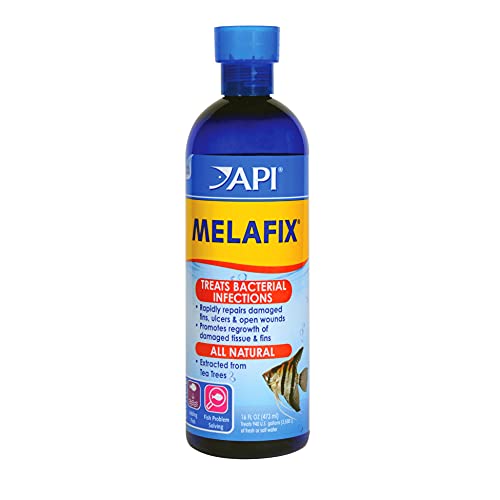
Heals damaged fins and wounds from fin-nipping tank mates quickly.

Treats ich and external parasites within about a day, saving stressed guppies.

Reduces stress and helps fish recover from disease and minor injuries.
Browse discountedAquarium Fish Medications