Candy cane coral is the reef hobby’s goldfish—hardy, cheap, and forgiving. You’ll place it on the sandbed under moderate PAR (100‑150), give it gentle indirect flow.
Feed mysis or brine at night, 2‑3 times per week. Fragging’s simple: snip at branch junctions with bone cutters, then drop the piece on sand to root.

Nutrient-packed frozen mysis for reliable nighttime feeding and fast coral growth.

Easy brine shrimp cubes to trigger feeding response and boost polyp health.

Precise snips at branch junctions make fragging your candy cane coral effortless.
See today's best deals onAquarium Supplies
Avoid torch or frogspawn neighbors—their sweepers sting yours overnight. Keep nitrates under 10 ppm, phosphate under 0.10.
If polyps retract, dim lights and test parameters. Want the full fragging photo guide and troubleshooting checklist? Stick around.
At A Glance
- Place on sandbed or low third of tank with 100-150 PAR.
- Target-feed mysis or brine shrimp 2-3 times weekly at night.
- Frag by snipping individual branches at junctions with bone cutters.
- Maintain 8-10 inch buffer from aggressive torch, frogspawn, and galaxea corals.
- Retracted polyps indicate excess light, high nutrients, or strong flow.
What Is a Candy Cane Coral? Origins, Looks & Growth
You’re getting a coral that’s pretty, but not a jerk. Candy cane corals come from the Indo‑Pacific—Australia, Fiji, those dream spots. They’re dome‑shaped or branching, maxing out at 6 inches across. Natural shades are greens, yellows, blues, but you’ll also find bred‑in neon that glows under moon lights. They’re fast growers, which means you’ll brag to your reef‑keeping buddies about how big yours got. No one’s judging—we’re all in this together. A stable foundation like CaribSea Life Rock supports their rapid growth and holds them securely in place. For fragging them, a tool like a heavy-duty Marino coral frag cutter ensures clean cuts on their tough skeletons with minimal tissue damage.
Bottom line: forgiving, flashy, and a perfect first LPS coral for your tribe.
Tank Size and Substrate for Candy Cane Corals
So, what tank size do you actually need? Honestly, any size works—they’re forgiving. Your candy cane coral only needs a 6‑inch patch to spread without tentacle crowding. Sand is its preferred substrate; the grainy texture won’t scratch its compact base. Here’s the quick scoop:
- Minimum footprint: 6 inches in diameter per colony.
- Tank volume: nano tanks to massive systems, all fine.
- Substrate choice: sand only—avoid crushed coral or bare glass.
Pat yourself on the back: you’ve got flexibility. Just give it that sandy spot and some breathing room from aggressive neighbors. That’s it—simple, no fuss, you’re in the club. For optimal clarity and viewing, consider a tank built with low‑iron glass, which provides high transparency and reduced color distortion. A sturdy stand with leveling feet prevents wobbling on uneven floors and protects the glass from stress.
Ideal Water Parameters for Candy Cane Coral
Keep temperature between 72‑78°F, pH at 8.1‑8.3, and specific gravity at 1.022‑1.025.
Calcium should sit at 350‑420 ppm, magnesium at 1200‑1350 ppm.
Nitrate under 10 ppm, phosphate under 0.10 ppm, and zero ammonia or nitrite.
Test weekly, adjust slowly, and you’ll avoid those retracted polyps that scream “help me.”
Get these numbers right, and your coral rewards you with fast growth. It’s not rocket science—just good habits.
Welcome to the club.
For stable pH at 8.3, consider a product like Brightwell Aquatics KH Buffer which provides a multi‑component carbonate buffer system designed for reef tanks.
Use a test kit like API GHKH Lab‑Accurate Certified Kit to reliably measure carbonate hardness and pH during water changes.
What Light Levels Do Candy Cane Corals Need?
Even though candy cane corals aren’t total divas about lighting, they do have a sweet spot—moderate PAR around 100‑150. PAR means photosynthetically active radiation, basically the usable light your coral turns into energy. Push too much light, and they’ll pout with retracted polyps. Too little, and their striped colors fade. Fixtures with efficient 90° lenses ensure even PAR distribution across the lower tank zones.
Here’s what you need to know:
- Stick to moderate intensity: 100‑150 PAR keeps them happy and growing fast.
- Place them on the sandbed or lower third—your tank’s “low‑light lounge.”
- Avoid high‑light zones; you’ll just stress them out.
You’ve got this—join the crew that nails moderate lighting and watches their candy canes thrive.
Consider using a non‑phosphate formula to prevent unwanted algae blooms that can compete with your coral for light and nutrients.
Flow Preferences: Moderate Current or Gentle Laps?
Light is important, but flow is where most new reefers get tripped up—too much, and your candy cane coral looks like it’s bracing against a hurricane; too little, and detritus cakes the polyps.
Flow is where most new reefers get tripped up—too much or too little causes trouble.
You want moderate, random, not direct blasting. Aim for gentle, swaying movement—think lazy waves, not a firehose.
If polyps retract or skeleton shows, dial it back.
Feeding less? Crank flow slightly to help mucus shed.
Feeding regularly? Keep it gentle.
You’ve got this.
- Moderate flow: 20–30x turnover, indirect.
- Too strong: polyps shrink, tissue recedes.
- Too weak: detritus settles, pests move in.
Your candy cane thrives when flow feels like a calm afternoon breeze—consistent, but never harsh. Get that right, and you’re in the club. Some hobbyists enhance their coral’s flow by using a filter like the Cascade 300 which creates a gentle waterfall for oxygenation. The pump must be sized to turn over your tank volume once per hour to prevent dead zones in the display.
Where Should You Place Candy Cane Coral in Your Tank?
Since your candy cane coral isn’t picky about real estate, you’ve got options—but a little strategy goes a long way.
Place it on the sandbed, where low light won’t bother it, or near the tank’s middle for moderate PAR.
Its short sweeper tentacles (2–3 inches) mean you won’nuke neighbors, but keep distance from aggressive LPS corals.
Three placement tips:
- Sandbed – mimics its natural tide-pool home.
- Mid-tank – balances 100–150 PAR without retraction.
- Low flow zones – avoids tentacle stress; adjust if feeding less.
You’re part of the savvy crowd that gives coral room to thrive.
Low flow and dim lighting reduce stress and encourage natural behavior in your tank.A magnetic mount helps hold equipment securely at the precise waterline for consistent skimmer performance in nano tanks.
Safe Tank Mates for Candy Cane Coral
Since your candy cane coral is basically the Labrador retriever of the reef—friendly, forgiving, and unlikely to pick a fight—you’ve got a solid list of tank mates that won’t cause drama.
Clownfish, gobies, and firefish are perfect neighbors; they’ll dart around without nibbling polyps.
For invertebrates, stick with peppermint shrimp, feather dusters, or trochus snails—they’ll scavenge debris, not coral flesh.
Even tangs, with their constant grazing, won’t bother this tough species.
These tank mates share your coral’s chill vibe, creating a peaceful community.
No need for constant vigilance—just set it and forget it, reef buddy.
A reliable digital pH meter ensures water parameters stay stable for sensitive tank mates like firefish.
To prevent these fish from jumping, consider using an anti-jump mesh cover that can be trimmed for any tank shape.
Which Aggressive Corals to Keep at a Distance
Your candy cane coral might be the reef’s peacekeeper, but that doesn’t mean every coral on the block plays nice. Sweeper tentacles, though short, pack a punch when provoked by bullies.
Keep these troublemakers at a safe distance:
- Torch corals – Their long, stinging sweepers reach 6+ inches, frying candy cane polyps overnight.
- Frogspawn corals – Similar reach, same aggression; they’ll turn your peaceful neighbor into bare skeleton.
- Galaxea corals – These perky puffballs launch glass-like stingers that shred flesh on contact.
Give each aggressor 8–10 inches of buffer zone. Your candy cane may forgive, but it won’t forget a chemically burned tentacle. Don’t test that patience. For a quieter, more stable system, pairing your sump with Ultum silencer and Maggie Muffler Mini can noticeably reduce overflow turbulence and micro-bubbles. Using aragonite reactor media in a calcium reactor provides a steady supply of calcium and carbonate alkalinity to help your coral recover from minor stings.
Feeding Candy Cane Coral: Foods, Tools, and Timing
Since your candy cane coral is a passive feeder, it doesn’t need a buffet every day—just a solid meal two or three times a week.
You’ll want to target-feed at night when its tentacles are out, using a turkey baster or Julian’s Thing to squirt food directly onto each polyp.
Offer mysis shrimp, brine shrimp, or copepods, letting it snag what it can.
Time it right: lights off for 20 minutes after feeding guarantees it eats before leftovers drift away.
Your coral will thank you with faster growth and neon stripes that pop.
For convenience, consider using an automatic feeder with precision portion control to schedule your coral’s feedings while you are away.
To ensure water quality supports healthy feeding, test ammonia levels at least twice weekly with a reliable test kit.
How to Stop Shrimp and Crabs From Stealing Coral Food
Except you’ve got a shrimp or crab that moonlights as a food thief—and many do—you’re probably noticing your coral’s meal vanishing before it even hits the tentacles.
Don’t worry, you’re not alone, and we can fix this together.
Here’s how to reclaim feeding time:
- Feed at lights-out with a turkey baster, targeting polyps directly—thieves struggle to see in the dark.
- Distract the bandits by dropping a pinch of frozen mysis at the opposite tank end; they’ll swarm that buffet instead.
- Use a feeding dome (like a cut water bottle) placed over your coral; shrimp and crabs can’t squeeze in, but tentacles push through easily.
A stable acrylic stand for your equipment can help reduce vibrations that scare scavengers away.
A Flipper Bucket Buddy can similarly clip onto your bucket to organize tools and reduce splash during water changes, keeping thieves at bay.
Stick with it—your coral will thank you with faster growth.
Fragging Candy Cane Coral: A Beginner’s Step-by-Step Guide
If you’ve ever stared at your candy cane coral and thought, “I’d like more of that,” fragging is the way to go—and it’s easier than you’d expect.
You’ll need sharp wire cutters or bone cutters—no Dremel required.
Look for individual branches on a long, brittle skeleton.
Snip cleanly at branch junctions, avoiding the fleshy polyps directly.
No frag plug needed; just let the cut piece rest on your sandbed.
It’ll root itself. Simple as that.
You’re cloning your own coral now, and that’s a pretty cool trick to have in your reef‑keeping toolbox.
Welcome to the club.
For stable recovery, maintain steady water parameters with consistent alkalinity and temperature.
Use a reliable water testing kit to monitor ammonia and nitrite levels during the healing process.
How to Tell If Your Candy Cane Coral Fragment Is Healthy
After you’ve snipped that branch and let it settle on the sand, you’ll want to know if your candy cane coral fragment is actually thriving—or just barely surviving. Look for these three signs, fellow reef geek:
- Polyps extend fully at night – healthy fragments push out fleshy, striped tentacles when lights go out.
- Tissue stays firm and plump – no peeling, gaping skeleton, or flat, deflated look.
- Base shows visible budding – tiny new polyps sprouting from the cut edge confirm it’s growing, not dying.
You’ll feel that reef-keeper’s pride when your tiny frag matches the mother colony’s glow. For a permanent bond that won’t stress your new coral, use a reef-safe cyanoacrylate gel with a high viscosity to prevent runoff during placement. Encouraging rapid growth also depends on providing plenty of bacterial colonization surface area nearby, such as a porous frag rack or rubble.
Why Your Candy Cane Coral Is Retracted (and How to Fix It)
Since polyps snapping shut is basically your coral’s way of flipping you off, let’s cut to the chase: retraction means something’s off.
Since polyps snapping shut is basically your coral’s way of flipping you off, retraction means something’s off.
You’re likely blasting too much light—keep PAR between 100-150.
Or your water’s dirty; check nitrate stays under 10 ppm and phosphate below 0.10 ppm.
Maybe a tank mate’s nipping—shrimp or crabs can be jerks.
Or flow’s too high, blasting those fleshy polyps.
Fix it fast. Dim the lights, test your parameters, relocate the coral to a calmer spot, and feed it mysis shrimp at night.
Within days, those tentacles should unfurl, welcoming you back into the club.
For a high-quality light with gradual sunrise simulation to reduce shock, consider models like the SEAOURA 12–18 in.
Cost, Color Options, and Why This Coral Suits Beginners
As prices vary by size and color, you’re typically looking at $30 to $60 for a standard specimen; rare colors and larger colonies can hit $150. That’s a steal for a coral that offers neon fluorescence under moonlights—green, blue, or yellow, depending on the morph. You get forgiving care, fast growth, and an instant conversation starter.
Here’s why it’s perfect for you:
- It tolerates common beginner mistakes like fluctuating parameters or low light.
- Fragging is idiot-proof—just snip a branch; no glue or plugs needed.
- You’ll see visible budding within weeks if you feed it twice weekly.
Bottom line: You belong with a candy cane. It’s the coral that says, “I might be simple, but I’m stunning.”
Frequently Asked Questions
Can Candy Cane Corals Tolerate Higher Than 78°F?
No, candy cane corals won’t tolerate higher than 78°F for long.
You’re pushing their limits—anything above that stresses them out, causing retracted polyps and color loss.
They’re forgiving beginners, certainly, but they’re not heat-loving pals.
Keep your tank between 72-78°F, ideally 75-77°F.
A spike to 80°F? Brief, maybe okay.
Sustained heat? You’ll see them sulk.
Stick to stable temps, and they’ll reward you with fast growth and that neon glow you want.
Bottom line: don’t cook your coral.
How Fast Do They Actually Grow in a Stable Tank?
You’re looking at a candy cane coral that can nearly double in size within 6‑12 months under stable water parameters—think 72‑78°F, 350‑450 ppm calcium, and moderate light.
They’re fast growers for LPS corals, so expect a 2‑inch frag to hit 4–5 inches if you feed 2–3 times weekly.
Watch for budding new polyps; that’s your sign it’s happy.
Keep space for those sweeper tentacles.
Do They Need Target Feeding if Fish Waste Is Present?
You don’t need to target-feed candy cane coral if fish waste is present—it’s fine but not ideal.
Fish poop alone won’t cut it for fast growth or vivid color.
For best results, feed 2-3 times weekly with mysis or enriched brine shrimp at night.
Think of waste as a snack, not a meal.
Your coral will grow slower and may lose that neon glow without direct feeding.
Can You Glue Fragments Directly to Live Rock?
You can absolutely glue fragments directly to live rock.
Just use gel superglue or epoxy putty—cyanoacrylate-based aquarium glue works best.
Make certain the fragment’s skeleton is completely dry before applying glue; saliva or tank water weakens the bond.
Press it firmly onto the rock for 30 seconds, then let it cure.
Avoid gluing over coral mouths.
Stick to low-flow areas for the first day.
Honestly, it’s almost too easy—like assembling budget furniture, but with less swearing.
Bottom line: glue away, just keep it clean.
What Causes the Stripes to Fade Despite Good Water Quality?
Even with perfect water, fading stripes usually mean your candy cane’s not getting enough light—those bright bands need moderate PAR, around 100‑150.
Move it up a few inches from the sand, but watch for retracted polyps.
Additionally, check your flow; too much can stress it, dulling colors.
Bottom line: adjust lighting first, then flow, and you’ll see those stripes pop again.
Rounding Up
So, you’re now ready to keep a candy cane coral alive—and maybe even brag about it. It’s forgiving, fast-growing, and won’t bully your other tank inhabitants. Stick with moderate light, gentle flow, and consistent water params (temp 76-80°F, alk 8-12 dKH, calcium 400-450 ppm). Feed it twice weekly with a turkey baster at night. Frag it with snips—easy win. Bottom line: this coral’s a beginner’s best bet. Just don’t neglect those water tests. Buy one; you’ll thank yourself.
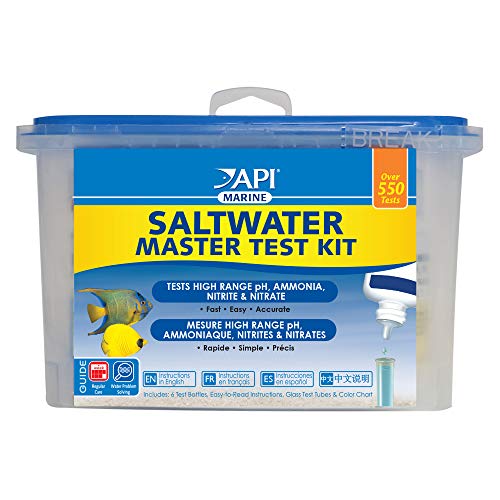
Monitors ammonia, nitrite, nitrate, and pH for weekly candy cane health checks.

Tracks calcium levels accurately to keep your candy cane skeleton growing fast.

Maintains magnesium in the ideal range for stable water chemistry.
Browse discountedAquarium Test Kitson Amazon