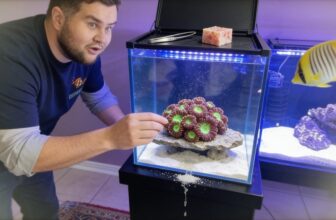
Forget guessing. Dropping pH‑down on a dry rock gives you an instant verdict: fizz means it’ll spike your pH and hardness (great for African cichlids, but a fast pass for soft‑water tetras).
Slate or lava rock are inert workhorses—no chemistry surprises. If you want structure, slate’s flat slabs stack without glue; lava rock’s pores hide beneficial bacteria.
Avoid mountain stone except you’re chasing alkaline water. Bottom line: test everything, pick inert for stable tanks, and save the calcium‑rich stuff for fish that crave it.
Stick around—there’s more on stacking and curing.
At A Glance
- Choose inert rocks like slate or lava rock to avoid altering pH and water hardness.
- Test rocks with pH-down; fizz indicates carbonates that raise pH and hardness.
- Use flat slate or shale for stable, stackable ledges without cement or glue.
- Porous lava rock promotes beneficial bacterial colonization and is lightweight.
- Decorative glass or plastic resin rocks offer bold colors but poor plant anchoring.
The Quick Test to Know If Any Rock Is Tank-Safe
Before you start stacking rocks in your aquarium and hoping for the best, you can do one quick home test to save yourself a chemistry headache.
Grab some non-buffer pH-down (diluted sulfuric acid) from your stash. Drip a few drops onto the rock. See bubbles? That’s carbonates fizzing away—your rock’s a chemistry time bomb for soft-water tanks.
No fizz? You’re golden. This test takes thirty seconds, costs nothing, and keeps your water stable.
Don’t skip it. You’ll thank yourself later when your tetras stay happy and your pH doesn’t spike. Belong to the cautious crew. For long-term stability, consider pairing your safe rocks with a high light transmission aquarium cover to support healthy plant growth.
When pH-Boosting Rocks Are a Good Thing (And When They’re Not)
| When It’s a Good Thing | When It’s Not |
|---|---|
| Cichlid tanks (Malawi, Tanganyika) | Soft-water community tanks (neons, tetras) |
| Brackish or reef systems | Planted tanks with CO₂ injection |
| Help stabilize pH in very soft tap water | Can cause deadly pH swings in already stable setup |
| Creates natural, buffered environment | Leaches carbonates, raising hardness too fast |
| Lasts years without replacement | Needs monitoring—test weekly or regret it |
Bottom line: love the fizz for rift‑lake dwellers, skip it for Amazon‑style communities. You’re not a lone wolf anymore—we’re all figuring this out together.
For reef and cichlid tanks in particular, ARC Reef Dry Base Rock buffers pH reliably and promotes rapid coralline algae growth.
Slate, Shale, and Mountain Stone: Which Freshwater Rocks Work Best
If you’re building a freshwater aquascape, slate and shale are your go‑to for stable, inert ledges that won’t mess with your water chemistry—they’re flat, stackable, and won’t cause pH swings, making them perfect for planted tanks or soft‑water communities.
Mountain stone? Totally different beast. It’s packed with calcium carbonate, so it’ll boost pH and hardness—awesome for African cichlids, terrible for your delicate tetras.
- Slate: Hard, durable slabs. Costs about $3–$5 per pound.
- Shale: Softer, easier to break. Slightly cheaper.
- Mountain Stone: Rise in pH? That’s your warning.
Bottom line: Stick with slate and shale except when you want hard‑water buddies. Your tank, your call.
To achieve a healthy planted tank with hardscape like slate, you can also precisely dose carbon dioxide using a dual‑stage regulator that maintains stable flow even as cylinder pressure declines.
Lava Rock, Petrified Wood, and Glass Rock: Inert Options for Any Setup
Lava rock, petrified wood, and glass rock all share one key trait: they’re inert, meaning they won’t mess with your pH or hardness—so you can toss them in any freshwater tank without a chemistry headache. You’ll get stable water, zero surprises, and a look that fits right in with your setup. For aquascaping, a fine substrate like Aqua Natural Iwagumi Sand pairs naturally with these inert rocks to anchor plants and create precise stone arrangements.
| Rock Type | What You Get |
|---|---|
| Lava Rock | Porous, black/red, lightweight—great for bacteria colonization. |
| Petrified Wood | Fossilized, grey/red, smooth texture—adds ancient vibes. |
| Glass Rock | Man-made, colorful, slick—makes a bold focal point. |
Bottom line? Grab one, and you’re part of the crew that keeps things simple. No fuss, just cool.
Rainbow Rocks, Quartzite, Plastic Resin: When to Choose Each
Since you’ve already locked down your inert basics—lava rock, petrified wood, glass rock—now it’s time to pick between rainbow rocks, quartzite, and plastic resin, each aimed at a different goal. You’re in the club now, so choose wisely.
- Rainbow rocks: Mexican sedimentary, inert, no chemistry change. Perfect for showstopping color, $2–4 per pound.
- Quartzite (onyx bamboo, glacier wave): Heated sandstone, safe for soft‑water planted tanks. Stays neutral, looks sleek.
- Plastic resin: Molded, super light, stackable kits around $15. No water impact, but lousy for plant attachment.
Bottom line: Want flashy? Rainbow rocks. Need pH‑safe elegance? Quartzite. Lazy stacking? Plastic resin. You belong here. However, for Sulawesi shrimp, always use inert rocks that won’t alter sensitive alkaline parameters.
Live Rock Guide for Saltwater Tanks
When you step into saltwater, live rock is your foundation—literally.
It’s the bustling heart of your reef, not just décor.
Think of it as biological filtration on steroids, hiding spots for shy fish, and a coral anchor all in one.
- Fiji rock is your lightweight, budget-friendly starter—expect weeks of soaking to flush its hitchhikers.
- Tonga Branch offers dense, antler-like shapes, often wearing purple coralline algae—perfect for dramatic, open aquascapes.
- Pukani rock boasts deep crevices for coral frags; buy it dry, then cure it yourself to dodge nutrient spikes.
You’re building a living community, so choose your stone like you’re picking neighbors.
Bottom line: start with Fiji for simplicity, graduate to Pukani for structure.
For advanced builds, consider shelf rock for tiered aquascaping that improves SPS coral lighting exposure.
Dry Rock vs. Aquacultured Rock: Which Saves You Time and Money?
If you’re torn between dry rock and aquacultured live rock, here’s the short answer: dry rock saves you money upfront but costs you in curing time, whereas aquacultured rock costs more but arrives ready to go. You want the shortcut, right? Fine—go aquacultured.
Dry Rock: $2–$4 per pound, but it’s dead. You’ll soak it for weeks, flushing ammonia as the old life decays. Patience required.
Aquacultured Rock: $6–$10 per pound, farmed sustainably in the ocean. It arrives with beneficial bacteria already working. No cure needed. Less hassle, faster cycling.
Bottom line: If you hate waiting, spend more and belong to the “instant reef” club. Your tank will thank you.
For a cost-effective alternative that still accelerates your cycle, consider products like concentrated nitrifying bacteria which can colonize surfaces in about seven days.
Reef Epoxy and Specialty Saltwater Rocks for Stable Aquascaping
Since reef epoxy isn’t just glue—it’s the unsung hero that keeps your rockwork from collapsing into a gravel pile. Specialty rocks like Life Rock give you instant purple color, no curing needed. Reef epoxy bonds wet surfaces in minutes, saving you from re-stacking disasters.
Reef epoxy isn’t just glue—it’s the unsung hero that saves your rockwork from collapse.
- Life Rock: Arrives pre-coated with coralline algae; skip curing, enjoy instant reef vibes.
- Tonga Branch: Dense, antler-like shapes—perfect for vertical caves without extra epoxy.
- Reef Epoxy: Sets underwater, holds heavy Pukani slabs, and won’t leach phosphates.
You’re building for permanence, not just looks—our underwater kingdom deserves real stability.
For additional biological filtration, consider adding ceramic bio filter media to a high-flow sump chamber to support nitrifying bacteria.
How to Clean and Prep Rocks for Your Tank
Before you dump that bag of rocks into your tank, scrubbing them under running tap water is step one—get rid of the dirt, algae, and stray biofilm that hitched a ride.
That’s you, being the cool, careful aquarist everyone trusts.
Next, check for carbonates. Drip some pH-down on a dry spot. If it fizzes, those rocks will raise your pH and hardness—great for cichlids, lousy for soft-water setups.
Skip it if you’re keeping tetras.
For stubborn organic gunk, a quick dilute bleach soak works wonders. Just rinse like crazy afterward, then sun-dry until no bleach smell remains.
Your tank’s future self will thank you.
After placing the rocks, use a three‑stage filtration system to keep the water clear and healthy.
Soaking and Curing Live Rock Without Killing Your Cycle
Soaking and curing live rock isn’t glamorous—it’s more like babysitting a sponge with a grudge.
You’re flushing out decaying organisms before they nuke your tank. Do it right, and your cycle stays intact.
- Use a brute trash can—it’s cheap, holds 32 gallons, and won’t leak. Submerge rock in saltwater at 78°F.
- Swap water weekly—replace 50% with pre-mixed saltwater. Watch ammonia spike; that’s death rotting off.
- Add a powerhead—keeps water moving, prevents dead spots. Odor fades when it’s done.
Stick with it. Three weeks, maybe four. Your patience earns you stable, thriving rock. You’re not just curing stone—you’re building a reef. For advanced water clarity during this process, consider pairing the setup with an ozone generator to help oxidize organic waste and control bacterial blooms.
Can Aquarium Rocks Be Acid-Treated to Lower pH?
Acid-treating rocks to lower pH doesn’t really work the way you might hope. You’re not creating a permanent shift—just stripping surface carbonates temporarily.
That bubbling you see? That’s the acid neutralizing carbonates, releasing CO₂, not lowering your tank’s pH long‑term.
- Mountain stone or Texas holey rock? They’ll keep leaching minerals after treatment.
- Dilute muriatic acid prep removes some carbonates, but the rock’s core stays reactive.
Bottom line: skip acid treatment. You’re better off choosing inert rocks like slate or quartzite.
Want soft water? Use driftwood or RO water instead. That’s the real shortcut, no chemistry trick needed.
Instead, consider using a digital temperature controller to maintain stable water conditions without relying on chemical adjustments.
Stacking and Anchoring: How to Build Rock Structures That Stay Put
Three things—slate, lava rock, and reef epoxy—are your best bets for building rock structures that actually stay put. You’ll stack slate’s flat slabs like Legos, letting friction do the heavy lifting. Lava rock’s porous texture grips each other; just wedge pieces tight. Then, reef epoxy bonds those weak points underwater, curing rock‑solid in 15 minutes. One popular option, the Dual‑Pack 4‑oz Aquarium Aquascaping Epoxy Putty, sets in 15 minutes and fully cures in 45 minutes for a durable hold.
- Slate ($2–$5/lb): Wide, flat surfaces prevent tipping—no cement needed.
- Lava rock ($1–$3/lb): Lightweight, grippy; stack larger stones below.
- Reef epoxy ($8–$15/tube): Paste forms waterproof, invisible welds.
This combo respects your tank’s floor, keeping your masterpiece stable. You’re not just building—you’re engineering safety, together.
Which Aquarium Rocks Raise pH and Hardness (And When That Helps)
Now, about those rocks that mess with your water chemistry—not all of them play nice with your pH and hardness.
Mountain stone and Texas holey rock are the troublemakers; they leach calcium carbonate, steadily raising both pH and hardness.
That’s actually perfect if you’re keeping African cichlids or brackish fish, which thrive in alkaline, hard water.
For your soft-water community tank, though, they’re a disaster—stick with inert options like slate or quartzite.
You’ll test carbonate content by dribbling pH-down on a rock; if it fizzes, you’ve got a chemistry-changer.
Bottom line: use these rocks when your fish demand that hard, high-pH life.
Sustainable Rock Choices That Protect Reefs and Your Budget
Since you can’t exactly buy a guilt‑free patch of ocean, aquacultured live rock is the closest you’ll get—sustainable, legal, and shockingly affordable. You’re not ripping up a reef; you’re buying farmed rock, left in the ocean for years, then harvested. No guilt, just gorgeous habitat.
- Price: $3–$5 per pound, often half the cost of wild‑harvested rock.
- Eco‑bonus: It doesn’t damage natural reefs (your fish thank you).
- Setup tip: Arrive fresh, cure it like standard live rock (watch ammonia for a few weeks).
Bottom line: aquacultured rock saves reefs and your wallet. You’re not just buying stone; you’re joining a smarter crowd. Use fine nylon mesh nets to gently transfer fish without damaging delicate fins during tank setup.
Frequently Asked Questions
Can I Use Rocks I Found Outside?
You can, but you shouldn’t just toss them in.
Random outdoor rocks often contain carbonates, which will spike your pH and hardness, wrecking soft-water setups.
Slate or quartzite from a clean stream works, if you test them first with a few drops of pH Down—no fizzing means they’re inert.
Even then, scrub them thoroughly to remove hitchhikers.
Stick with store-bought inert rock for peace of mind; it’s safer, easier, and won’t crash your tank.
Will Plastic Resin Rocks Harm My Fish?
No, plastic resin rocks won’t harm your fish. They’re completely inert, meaning they don’t change your water’s pH or hardness—a safe bet for any tank.
They’re light, stackable, and easy to clean, though they’re less ideal for plant attachment (good luck getting Java moss to stick). You’ll trade natural texture for zero risk.
Bottom line: they’re a solid, worry-free choice for decoration if you’re not chasing a planted aquascape.
How Do I Attach Plants to Smooth Rocks?
Attach plants to smooth rocks using super glue gel, particularly cyanoacrylate—it’s safe underwater.
Dab a small dot, press your java moss or Anubias rhizome onto it, hold for ten seconds, done.
You’re not a surgeon; a little glue won’t hurt the plant or your tank.
Avoid using cotton thread—it loosens over time.
For heavier plants, wrap fishing line around the rock until it roots naturally.
This works for slate, glass rock, even plastic resin.
No fuss, no failure.
What Rocks Are Best for a High-Flow Tank?
For high-flow tanks, you’ll want dense, stable rocks that won’t shift or leach.
Slate and quartzite are your best bets—they’re heavy, inert, and stack securely, so no pH drama.
Lava rock works too, thanks to its porous surface catching debris flow.
Avoid lightweight or brittle shale; it’ll crumble under pressure.
Secure everything with aquarium epoxy to prevent tumbling.
Bottom line: stick with slate, quartzite, or lava rock for a rock-solid setup.
Can I Mix Fresh and Saltwater Rocks?
You can’t just toss fresh and saltwater rocks together—it’s a chemistry gamble.
Saltwater rocks like live rock leach carbonates, spiking pH and hardness, which stresses soft‑water fish.
Inert freshwater rocks (slate, quartzite) stay neutral, but mixing them with limestone‑rich types (mountain stone) wrecks havoc on your water’s balance.
Except you’re running a hard‑water or brackish tank, stick to one group’s geology. Your fish will appreciate you not turning their home into a chemical experiment.
Rounding Up
So you’ve picked your rocks—congrats, you basically just became an underwater architect. Don’t overthink it. Test everything with vinegar first (if it fizzes, it’s raising your pH). Stick with inert stones like lava rock or slate for planted tanks, and save the limestone for African cichlids who crave hard water. Cost-wise, you’re looking at $2–$5 per pound. Your fish don’t care about aesthetics, but they do care about stability. Bottom line: choose safe, stack smart, skip the stress. Your tank will thank you.