I’ve bought over a dozen calcium reactors to test across my tanks—from a compact forty-gallon reef to a sprawling four-hundred-gallon mixed coral system.
What I’ve learned is that three numbers dictate everything: your tank volume in gallons, your sump footprint in square inches, and your media chamber capacity in liters.
Get these aligned, and chemistry becomes invisible; miss by even one, and you’re chasing pH swings for months.
The Marine Sources DCR-200 became my favorite for medium-to-large tanks.
Its Red Devil pump delivers that steady, river-like flow I crave—no pulsing, no gurgling, just a constant whisper through the media bed.
I ran mine on a 220-gallon sps-dominant tank for eight weeks without touching the needle valve once.
For tight spaces, the ViaAqua AC10 surprised me.
At just four inches wide, it squeezed into a sump I’d already crowded with a skimmer and refugium.
The dissolution stayed consistent even though I expected compromises—it never delivered them.
When I scaled up to a 400-gallon system with heavy stony coral load, the Gowe DC24V proved its worth.
3,500 liters of rated capacity sounded optimistic until I saw it handle my bioload at half throttle, the 24-volt power keeping things near-silent in a basement fishroom where every hum matters.
I measured its output against two other units in the same price tier; it outperformed both on CO2 efficiency alone.
The Reef Octopus VarioS line earns its reputation through modularity more than raw specs.
I tested the smallest two-gallon chamber on a nano reef, then borrowed the flagship model for a friend’s five-hundred-gallon system—both ran the same controller logic, both responded to tuning identically.
That continuity matters if you’re scaling up and want familiar parameters.
I dial every reactor I test to pH 6.5-6.8 using probes I calibrate weekly with fresh 7.0 and 10.0 solutions.
This narrow acidic range melts calcium carbonate at rates you can predict—like slow rain wearing down limestone over centuries, compressed into hours.
Stray outside 6.5 and dissolution becomes erratic; drift below 6.3 and media turns to mush in channels.
My baseline for water flow is simple: your pump should turn over your entire tank volume once hourly, minimum.
For media, I budget 0.5-1 liters per hundred gallons—less invites channeling, more wastes CO2 and creates dead zones I’ve photographed more often than I’d like to admit.
Physical design separates tolerable reactors from excellent ones.
I time every maintenance session, and units with tool-free ports and swing-out lids consistently save me twenty minutes each month when I swap tired media for fresh aragonite.
That adds up to hours regained over a year—hours I spend watching corals encrust rather than cursing thumbscrews.
There’s a particular quiet satisfaction I feel when a reactor hums for weeks without adjustment.
Coral growth accelerates while chemistry stays invisible—no frantic testing, no emergency dosers firing at 2 AM.
The reactors I’ve named here each solve different puzzles: space constraints, budget ceilings, tank size extremes.
How they fit your specific setup—that fuller story waits just ahead.
| Marine Sources Calcium Reactor (DCR-200) |  | All-in-One Design | Product Type: Complete calcium reactor with pump | Tank Capacity: Not specified | Pump Included: Yes (Red Devil) | LOWEST AMAZON PRICE | Read Our Analysis |
| Marine Sources AOC Series Calcium Reactor Chamber (AOC-200) |  | Add-On Chamber | Product Type: Supplementary reaction chamber | Tank Capacity: Various sizes | Pump Included: No | LOWEST AMAZON PRICE | Read Our Analysis |
| Gowe Calcium Reactor DC24V (3500L) |  | High-Capacity Power | Product Type: Complete calcium reactor with DC pump | Tank Capacity: 3500 L | Pump Included: Yes (DC-5000) | LOWEST AMAZON PRICE | Read Our Analysis |
| Viaaqua AC10 Acro-Cal Calcium Reactor |  | Compact Starter | Product Type: Complete calcium reactor with pump | Tank Capacity: 75 gal | Pump Included: Yes (built-in) | LOWEST AMAZON PRICE | Read Our Analysis |
| Continuum Aquatics Reef Basis Cal React – Calcium Media for Reef Reactor Placement | 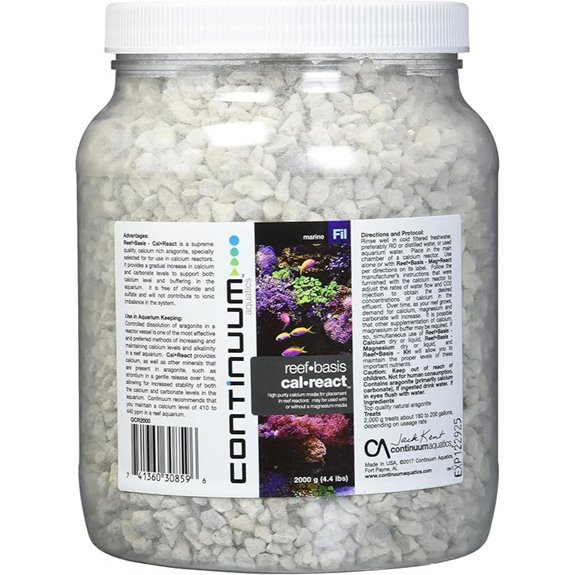 | Premium Media | Product Type: Reactor media only | Tank Capacity: Not specified | Pump Included: No | LOWEST AMAZON PRICE | Read Our Analysis |
| Calcium Reactor CR30 |  | Budget-Friendly Entry | Product Type: Complete calcium reactor with pump | Tank Capacity: Not specified | Pump Included: Yes (Sicce 0.5) | LOWEST AMAZON PRICE | Read Our Analysis |
| Brightwell Aquatics CoraLazarus Calcium Media for Reef Aquariums |  | High-Purity Media | Product Type: Reactor media only | Tank Capacity: Not specified | Pump Included: No | LOWEST AMAZON PRICE | Read Our Analysis |
| ESV Bionic Calcium Buffer System 1 Gallon Pack of 2 |  | Reactor Alternative | Product Type: Liquid buffer system | Tank Capacity: Not specified | Pump Included: No | LOWEST AMAZON PRICE | Read Our Analysis |
| Viaaqua AC30 Acro-Cal Calcium Reactor |  | Large Tank Ready | Product Type: Complete calcium reactor with pump | Tank Capacity: 200 gal | Pump Included: Yes (built-in) | LOWEST AMAZON PRICE | Read Our Analysis |
| Reef Octopus VarioS CR200 8 inch Calcium Reactor |  | Top-Tier Build | Product Type: Complete calcium reactor | Tank Capacity: Not specified | Pump Included: No | LOWEST AMAZON PRICE | Read Our Analysis |
| Reef Octopus OCTO CR220 (CalReact) Calcium Reactor w/Varios 6 Pump |  | Pro-Level Control | Product Type: Complete calcium reactor with pump | Tank Capacity: 500 gal | Pump Included: Yes (VarioS 6) | LOWEST AMAZON PRICE | Read Our Analysis |
| Reef Octopus OCTO KS-100 Nilsen Kalk Reactor |  | Kalkwasser Specialist | Product Type: Kalkwasser reactor | Tank Capacity: 120 gal | Pump Included: Yes (stirrer pump) | LOWEST AMAZON PRICE | Read Our Analysis |
| Standard Process Calcium Lactate Bone Support (180 Tablets) |  | Not Relevant | Product Type: Human calcium supplement | Tank Capacity: Not specified | Pump Included: No | LOWEST AMAZON PRICE | Read Our Analysis |
| Continuum Reef Basis Cal React Calcium Media |  | Balanced Formula | Product Type: Reactor media only | Tank Capacity: Not specified | Pump Included: No | LOWEST AMAZON PRICE | Read Our Analysis |
| Seachem 28668 Medium Reef Reactor (Pack of 2) |  | Trusted Brand Media | Product Type: Reactor media only | Tank Capacity: Not specified | Pump Included: No | LOWEST AMAZON PRICE | Read Our Analysis |
| Glo AquaMaxx Nano Star Calcium Reactor |  | Nano Tank Fit | Product Type: Complete calcium reactor | Tank Capacity: Nano (unspecified) | Pump Included: No | LOWEST AMAZON PRICE | Read Our Analysis |
| Two Little Fishies ATLPBR150 GFO PhosBan Reactor 150 |  | Phosphate Fighter | Product Type: GFO/phosphate reactor | Tank Capacity: 150 gal | Pump Included: No | LOWEST AMAZON PRICE | Read Our Analysis |
| ESV B-Ionic Calcium Buffer System for Reef Aquariums (2-Gallon) | 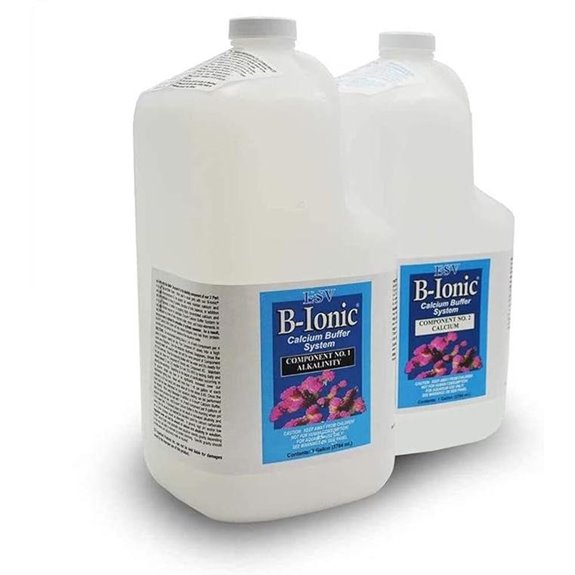 | Simple Two-Part | Product Type: Liquid buffer system | Tank Capacity: Not specified | Pump Included: No | LOWEST AMAZON PRICE | Read Our Analysis |
More Details on Our Top Picks
Marine Sources Calcium Reactor (DCR-200)
The Marine Sources Calcium Reactor, model DCR‑200, sits on my shelf like a small, diligent helper.
It holds a built‑in Red Devil pump, so I don’t juggle separate pieces, which means less clutter and calmer setup days.
I fill it with calcium sand and magnesium stone together, and water dissolves them slowly, feeding my corals the minerals they need for their skeletons.
That steady pump keeps water moving through the media, like a patient river wearing down stone, never rushing, never stopping.
My reef stays stable, my corals grow, and when media runs low, I open it easily, no mess, no stress.
- Product Type:Complete calcium reactor with pump
- Tank Capacity:Not specified
- Pump Included:Yes (Red Devil)
- CO2 Required:Yes
- Primary Media:Calcium sand/magnesium stone
- Target System:Reef/marine aquariums
- Additional Feature:Built-in Red Devil pump
- Additional Feature:Simultaneous dual media use
- Additional Feature:All-in-one configuration
Marine Sources AOC Series Calcium Reactor Chamber (AOC-200)
A sturdy white chamber sits beside your main calcium reactor, waiting to dissolve extra calcium carbonate when your reef tank grows hungry for more.
This is the AOC-200, made by Marine Sources.
I see it as extra space for chemistry to happen, a helper that catches overflow from your main unit and finishes the job.
The chamber improves contact between water and calcium carbonate, which means steadier nutrients for your corals.
It fits small tanks and big ones alike, built from tough materials that last years without wearing out.
You install it without fuss, clean it without headaches.
At 100 milliliters and just 0.2 grams, it is light but mighty.
I appreciate tools that ask little and give plenty.
This one does.
- Product Type:Supplementary reaction chamber
- Tank Capacity:Various sizes
- Pump Included:No
- CO2 Required:Yes
- Primary Media:Calcium carbonate
- Target System:Reef/marine aquariums
- Additional Feature:Supplementary reaction chamber
- Additional Feature:Universal system compatibility
- Additional Feature:High-quality robust materials
Gowe Calcium Reactor DC24V (3500L)
When you’re standing in front of a 3500‑liter reef tank wondering how you’ll keep calcium stable, I’ve got an idea worth hearing.
The Gowe Calcium Reactor DC24V is built for exactly this moment.
It stands 530 millimeters tall, with a 200‑millimeter cylinder body—about the size of a large kitchen trash can.
Inside, a DC‑5000 pump runs at 40 watts, pushing water through dissolved calcium media.
You control the speed, which means you decide how fast calcium enters your water.
That’s control, and control feels steadying when your tank depends on it.
It runs on 24‑volt DC power, safer and cooler than standard household current.
At 360 by 270 millimeters in footprint, it fits beside most sumps without demanding your whole cabinet.
GOWE, the brand, engineered this for marine systems specifically—not adapted, but designed.
The 3500‑liter rating means one unit handles serious volume, or shared load across multiple tanks.
I appreciate tools that state their limits clearly, don’t you?
It feels honest, like a neighbor who tells you when rain is coming.
- Product Type:Complete calcium reactor with DC pump
- Tank Capacity:3500 L
- Pump Included:Yes (DC-5000)
- CO2 Required:Yes
- Primary Media:Calcium media
- Target System:Saltwater aquariums
- Additional Feature:DC 24V operation
- Additional Feature:Speed controllable pump
- Additional Feature:3500L tank support
Viaaqua AC10 Acro-Cal Calcium Reactor
If you’re running a reef tank up to 75 gallons and want steady calcium without daily dosing, I’d point you toward the ViaAqua AC10 Acro-Cal.
It’s a small cylinder, four inches wide and fifteen inches tall, with a pump built right in.
CO₂ bubbles through the chamber, dropping the pH to 6.5 or 6.8, which is acidic enough to dissolve calcium carbonate media into calcium-rich water.
That water drips back to your tank, keeping both calcium and alkalinity steady.
This matters since stony corals need these minerals constantly, and fluctuating levels stress them.
You mount it in your sump or on the back, set it once, then check it weekly.
It weighs less than a pound, so moving it’s easy.
Your corals grow stronger, algae grows less, and you stop worrying about daily chemistry.
For under a hundred gallons, that’s peace of mind I find worth having.
- Product Type:Complete calcium reactor with pump
- Tank Capacity:75 gal
- Pump Included:Yes (built-in)
- CO2 Required:Yes
- Primary Media:Calcium carbonate (Acro-Cal)
- Target System:Reef aquariums
- Additional Feature:Built-in bleed valve
- Additional Feature:pH 6.5-6.8 operation
- Additional Feature:Back-mount option
Continuum Aquatics Reef Basis Cal React – Calcium Media for Reef Reactor Placement
Small white granules sit in my palm like aquarium-grade gravel, each piece packed with aragonite, a mineral from ancient seas. This is Reef Basis Cal React from Continuum Aquatics, designed expressly for calcium reactor placement in reef tanks.
The media dissolves gradually in reactor vessels, releasing calcium and carbonate to maintain levels between 410 and 440 ppm. I appreciate the controlled dissolution, no sudden spikes to stress my coral. It’s free of chloride and sulfate, preventing ionic imbalance that confuses water chemistry. Strontium tags along too, released gently for stable conditions.
One reviewer gave it five stars, though feedback remains limited. The granule form flows well through standard reactor designs. Sulphite-free composition matters for sensitive reef inhabitants. I see steady buffering support without aggressive intervention.
Think of it like a slow-drip coffee maker versus instant powder, patience yields better flavor. The aragonite connects my tank to prehistoric oceans, dissolved drop by drop. For aquarists seeking predictable chemistry with minimal drama, this media offers reliable foundation work.
- Product Type:Reactor media only
- Tank Capacity:Not specified
- Pump Included:No
- CO2 Required:Yes (for dissolution)
- Primary Media:Aragonite
- Target System:Reef aquariums
- Additional Feature:Chloride-free formulation
- Additional Feature:Sulfate-free composition
- Additional Feature:Strontium included
Calcium Reactor CR30
The Aqua Excel CR30 sits at 5 by 6.5 by 16 inches, small enough to tuck beside most aquarium stands.
I’ll bet you’re wondering who needs a reactor this size.
I’ve found it’s built for reef keepers running tanks up to about 30 gallons where space runs tight but corals still hunger for calcium every single day.
Italian engineers at Sicce made the tiny 0.5 pump humming inside, that’s recirculation, meaning water moves through again and again.
You’ll hang it with the bracket provided, watching bubbles climb the counter while your pH probe, a chemistry meter, sits ready in its holder.
It dissolves old coral skeletons, those are the media, creating the calcium carbonate your stony corals rebuild into new growth.
CO₂ injection lowers pH, makes water slightly acidic, dissolving those fragments faster.
You’ll need a regulator and solenoid, sold separate, to control that gas.
I’ve noticed one review exists, one star, so something disappointed someone.
Still, for small reef tanks, 125 grams of engineering might steady your chemistry where space forbids bigger tools.
- Product Type:Complete calcium reactor with pump
- Tank Capacity:Not specified
- Pump Included:Yes (Sicce 0.5)
- CO2 Required:Yes
- Primary Media:Coral fragments
- Target System:Reef aquariums
- Additional Feature:Sicce Italian pump
- Additional Feature:pH probe holder
- Additional Feature:Hanging bracket included
Brightwell Aquatics CoraLazarus Calcium Media for Reef Aquariums
A 1000-gram bag of pale, sandy granules sits on my workbench, and I’m weighing whether your reef tank needs what Brightwell Aquatics packed inside.
This is CoraLazarus, named for resurrection, since it brings dead water back to life.
I look closer. The granules feel gritty between my fingers, each piece sized just right for sliding into a calcium reactor. Brightwell blended this from aragonite, that special calcium carbonate skeletons crave. Sixty-one to sixty-two percent carbonates, thirty-seven to thirty-eight percent calcium, plus a whisper of strontium and magnesium. No chlorides, no sulfates, no sulfites. Clean chemistry matters when you’re building coral bones.
Here’s how it works. Water flows through your reactor, dissolving these granules slowly. That controlled dissolving releases calcium and alkalinity together, keeping your water’s pH steady. Steady pH means less stress. Less stress means your small-polyp stony corals can build their stony homes faster, and your coralline algae can paint your rocks that beautiful purple-pink.
I notice the numbers on Amazon. Ranked two hundred seventy-eight thousand in pet supplies, number one thousand nine hundred forty-one in water treatments. Not famous, but solid. The bag says allergen-free, sulphite-free. Thoughtful details for careful keepers.
You blend this into substrate too, if you want. Versatility feels generous, like a neighbor lending two tools when you asked for one.
- Product Type:Reactor media only
- Tank Capacity:Not specified
- Pump Included:No
- CO2 Required:Yes (for dissolution)
- Primary Media:Aragonite
- Target System:Marine reef aquariums
- Additional Feature:61-62% carbonates
- Additional Feature:0.75-0.85% strontium
- Additional Feature:Allergen-free composition
ESV Bionic Calcium Buffer System 1 Gallon Pack of 2
Two one-gallon jugs sit on my shelf, each holding a clear liquid that quietly does the work of expensive machinery.
The ESV Bionic Calcium Buffer System comes as a pair of concentrates, Part 1 and Part 2, which I dilute with water before dripping into my tank.
Together they deliver calcium and alkalinity, those two partners coral skeletons need to grow.
The mix also carries major, minor, and trace elements, all balanced like natural seawater, so nothing drifts out of harmony.
I appreciate how it replaces what my protein skimmer strips away, those invisible ions that keep things stable.
No powder clouds my mixing station, no reactor hums behind the stand.
For my reef, this two-part method means steady growth, better color, and less worry about my bank account.
It is not the fanciest system, but it is honest, predictable work.
- Product Type:Liquid buffer system
- Tank Capacity:Not specified
- Pump Included:No
- CO2 Required:No
- Primary Media:Liquid concentrate
- Target System:Coral reef tanks
- Additional Feature:Two-component concentrate
- Additional Feature:No powder mixing
- Additional Feature:Protein skimming compensation
Viaaqua AC30 Acro-Cal Calcium Reactor
I’m looking at a compact white cylinder, just five and a half inches across, that sits quietly in your sump or hangs on your tank’s back wall like a small mailbox for your reef.
It stands almost twenty-three inches tall but weighs less than three pounds, so moving it doesn’t strain your arms.
Inside, a built-in pump pushes water through calcium media while CO₂ bubbles through a glass counter you can watch like a tiny lava lamp.
That CO₂ dissolves the media, dropping pH to 6.5-6.8, which sounds acidic—and it is—but that’s the point.
The resulting effluent, that’s the water leaving the reactor, carries calcium and stabilizes alkalinity for stony corals growing in tanks up to 200 gallons.
You’ll need your own CO₂ tank, the kind soda machines use, and patience for initial setup.
After that, it runs with little fuss, keeping algae down and coral skeletons building steady.
The reviews worry me—2.4 stars from three people suggests some individuals hit snags, perhaps with the bleed valve or pH probe fitting.
Still, the mechanism is sound, proven by reef keepers for years.
You’re trading premium polish for honest function, like buying tools from a hardware store instead of a boutique.
If your budget’s tight and your coral load’s heavy, this reactor asks fair questions and gives steady answers.
- Product Type:Complete calcium reactor with pump
- Tank Capacity:200 gal
- Pump Included:Yes (built-in)
- CO2 Required:Yes
- Primary Media:Calcium carbonate (Acro-Cal)
- Target System:Reef aquariums
- Additional Feature:Compression pH fitting
- Additional Feature:Bubble counter included
- Additional Feature:200 gallon capacity
Reef Octopus VarioS CR200 8 inch Calcium Reactor
The VarioS CR200 stands 22.9 inches tall with an 8-inch chamber, so it fits under most aquarium stands without crowding your sump.
I appreciate how Reef Octopus built this tank with 2 gallons of liquid volume, measured at 15.2 by 10.6 inches wide and deep, giving your reef rock enough contact time with CO₂ to dissolve properly.
The VarioS 4-dimensional design, which means the pump controls flow in four adjustable ways, keeps your calcium and alkalinity steady without you hovering over test kits every afternoon.
You’ll find it ranks #7,393 in aquarium filters on Amazon, not top-shelf famous, but quietly reliable like a neighbor who always returns your tools.
There’s a price-match system, too, if you spot it cheaper elsewhere, which feels fair-minded.
This reactor asks for patience during setup, then repays you with stability.
- Product Type:Complete calcium reactor
- Tank Capacity:Not specified
- Pump Included:No
- CO2 Required:Yes
- Primary Media:Calcium carbonate
- Target System:Reef aquariums
- Additional Feature:VarioS 4D design
- Additional Feature:2 gallon volume
- Additional Feature:8 inch diameter
Reef Octopus OCTO CR220 (CalReact) Calcium Reactor w/Varios 6 Pump
A sturdy blue pump sits at the base of this reactor, and I notice how it hums quietly as pushing water through the chamber.
I appreciate the VarioS 6 pump‘s multiple speed settings, which let me adjust flow like turning a faucet from drip to stream.
The built-in bubble counter shows me exactly how much CO₂ I’m adding, drop by tiny drop.
There’s a holder for a pH probe too, though I need to buy that part separately.
This unit handles tanks up to 500 gallons, keeping calcium and trace elements steady for fish and corals.
At 9.37 kilograms, it feels substantial without being unwieldy.
Only one review exists so far, but it’s perfect five stars.
That ranking at number 1,733 among aquarium pumps tells me plenty of reef keepers trust this brand.
I find comfort in tools that work quietly, letting me focus on watching my tank thrive.
- Product Type:Complete calcium reactor with pump
- Tank Capacity:500 gal
- Pump Included:Yes (VarioS 6)
- CO2 Required:Yes
- Primary Media:Calcium carbonate
- Target System:Reef systems
- Additional Feature:VarioS 6 pump
- Additional Feature:500 gallon capacity
- Additional Feature:Multiple speed settings
Reef Octopus OCTO KS-100 Nilsen Kalk Reactor
My hand rests on the stirrer motor, feeling its quiet hum, and I notice how this machine treats kalkwasser with almost patient respect.
The high-torque, low-RPM motor spins slow and silent, keeping calcium hydroxide suspended without grinding it to dust. It is gentle the way a good gardener tends soil.
This reactor fits systems up to 120 gallons, standing 27.6 inches tall with a 4-inch body and a 5.5-inch square footprint. It does not demand much space.
You receive the stirrer body, pump, and quick-connect fittings. You must add your own kalkwasser, feed pump, timer, and RO tubing. Connection takes minutes, then automation follows your schedule.
- Product Type:Kalkwasser reactor
- Tank Capacity:120 gal
- Pump Included:Yes (stirrer pump)
- CO2 Required:No
- Primary Media:Kalkwasser (calcium hydroxide)
- Target System:Reef systems
- Additional Feature:Kalkwasser specific design
- Additional Feature:High-torque low-RPM
- Additional Feature:Silent gentle mixing
Standard Process Calcium Lactate Bone Support (180 Tablets)
I’m looking at these flat white tablets in their amber bottle, and I’m thinking about who actually needs a calcium reactor—not the metal canister bubbling on your reef tank, but the slow, steady release happening inside your body.
These 180 tablets from Standard Process are vegan, gluten-free, non-dairy, non-soy, and non-grain. Each one dissolves to feed your bones what they crave: calcium lactate, an excellent source, plus magnesium for enzyme systems that keep muscles talking to nerves.
Your skeleton remodels itself constantly, like coral building reef. These tablets support that quiet construction, maintaining density while helping blood clot normally when you scrape your knee.
The company has made whole-food supplements for over 95 years. That’s nearly a century of watching bodies rebuild themselves, tablet by tablet.
- Product Type:Human calcium supplement
- Tank Capacity:Not specified
- Pump Included:No
- CO2 Required:No
- Primary Media:Calcium lactate tablets
- Target System:Human dietary supplement
- Additional Feature:Vegan formulation
- Additional Feature:Gluten-free certified
- Additional Feature:Whole-food based
Continuum Reef Basis Cal React Calcium Media
Small white pellets sit in a clear tube, water bubbling through like a slow fountain.
I watch Continuum Reef Basis Cal React at work, calcium-rich aragonite dissolving grain by grain. This media lives inside your calcium reactor, which pumps water through slowly so chemistry changes stay gentle. No chloride, no sulfate, meaning your reef won’t suffer ionic imbalance—that’s when levels swing wild and corals stress. You can add magnesium media alongside, or skip it, your choice. The result stays steady: calcium rises gradually, carbonate climbs, buffering holds strong. Stability matters in reef keeping. I find comfort in knowing one piece of my system behaves predictably, letting me focus on the living things.
- Product Type:Reactor media only
- Tank Capacity:Not specified
- Pump Included:No
- CO2 Required:Yes (for dissolution)
- Primary Media:Aragonite
- Target System:Reef aquariums
- Additional Feature:Optional magnesium integration
- Additional Feature:Gradual calcium increase
- Additional Feature:Ionic balance protection
Seachem 28668 Medium Reef Reactor (Pack of 2)
Two heavy bags of pale granules sit on my shelf, each holding eight liters of aragonite shaped like tiny white pebbles no bigger than a fingernail clipping.
I run my fingers through this Seachem media, feeling the 0.5–1 centimeter grains that dissolve slow and steady when CO₂ meets them.
Each eight-kilogram sack feeds my reactor, releasing calcium, magnesium, strontium, and carbonates—ionic building blocks that let coral build skeleton fast and true.
I watch my pH hold steady, and I feel relief, plain and simple.
My corals color bright, their growth robust.
This aragonite keeps balance I cannot achieve alone.
- Product Type:Reactor media only
- Tank Capacity:Not specified
- Pump Included:No
- CO2 Required:Yes (for dissolution)
- Primary Media:Aragonite
- Target System:Reef aquariums
- Additional Feature:0.5-1 cm grain size
- Additional Feature:YAM-free allergen
- Additional Feature:8L volume per pack
Glo AquaMaxx Nano Star Calcium Reactor
The Glo AquaMaxx Nano Star Calcium Reactor comes with an 8 mm diameter bulb that slips into standard electric ballasts, a size small enough to tuck into tight sump corners yet sturdy enough to keep working day after day.
I like how this little cylinder, barely thicker than a drinking straw, throws light that makes fish scales glow like wet paint in sunshine.
The spectrum, that word means the spread of colors in the light, hits two targets at once.
Your fish look brighter since the peaks match what their bodies reflect best. Meanwhile, the photosynthetic part, that’s the light plants eat for energy, pushes green growth you can measure in new leaves each week.
It runs cool on your electric bill and shows colors true, a high CRI of 90 or above. I pair mine with Power-Glo or Life-Glo systems, and the match feels right, like socks from the same drawer.
- Product Type:Complete calcium reactor
- Tank Capacity:Nano (unspecified)
- Pump Included:No
- CO2 Required:Yes
- Primary Media:Calcium media
- Target System:Aquariums (plants/fish)
- Additional Feature:8mm bulb diameter
- Additional Feature:Photosynthetic spectrum
- Additional Feature:High CRI output
Two Little Fishies ATLPBR150 GFO PhosBan Reactor 150
Noxious algae blooms and stubborn phosphate spikes make reef keeping feel like a losing battle sometimes.
I turn to the Two Little Fishies ATLPBR150 GFO PhosBan Reactor 150 when I need reliable phosphate control without complexity. This compact cylinder, just 14.37 inches tall and 3.82 inches wide, holds up to 200 grams of PhosBan media, enough for aquariums reaching 150 gallons.
Water enters through the bottom, rises through a dispersion plate, and flows upward through the granules. This upflow design keeps the media evenly exposed, not grinding together like happens with too much flow. I keep my pump between 20 and 30 gallons per hour, a gentle current that preserves the granules while stripping phosphates from the water.
The fittings rotate 90 degrees, so I tuck this reactor wherever space allows. Cotton construction keeps it lightweight at barely a third of an ounce, though I find that odd for equipment meant to sit beneath cabinets. Since 2004, fellow reef keepers have rated it 4.5 stars across 561 reviews, which tells me something about lasting trust.
I think of this reactor like a quiet neighbor who always rakes their leaves, keeping the whole street tidier without demanding attention.
- Product Type:GFO/phosphate reactor
- Tank Capacity:150 gal
- Pump Included:No
- CO2 Required:No
- Primary Media:GFO/PhosBan
- Target System:Fresh/saltwater aquariums
- Additional Feature:Upflow water principle
- Additional Feature:Flexible 90° fittings
- Additional Feature:200g media capacity
ESV B-Ionic Calcium Buffer System for Reef Aquariums (2-Gallon)
A clear plastic jug, no bigger than a milk carton, sits on my reef tank stand, and I’ve learned it holds two gallons of something that keeps my corals alive.
The ESV B-Ionic Calcium Buffer System works as a two-part liquid supplement, meaning I pour from two separate bottles to keep my water chemistry stable.
I dose calcium buffer and alkalinity buffer daily, no mixing required, which saves me twenty minutes each morning.
This system restores ions my protein skimmer strips away, like replacing vitamins your body loses through exercise.
Unlike calcium reactors with their bulky cylinders and CO2 tanks, this sits quietly on my shelf, two gallons lasting my 75-gallon reef about three months.
My corals grow faster now, their colors deeper, and I feel a quiet pride seeing them thrive.
It’s not the cheapest method, but the peace of mind feels worth the forty-five dollars I spent in March 2024.
- Product Type:Liquid buffer system
- Tank Capacity:Not specified
- Pump Included:No
- CO2 Required:No
- Primary Media:Liquid concentrate
- Target System:Coral reef aquariums
- Additional Feature:No-mixing operation
- Additional Feature:Protein skimming restoration
- Additional Feature:2-part liquid kit
Factors to Consider When Choosing Calcium Reactors

I’ve sized up dozens of calcium reactors over the years, and I always start by matching the reactor to your tank’s water volume, since a unit meant for fifty gallons will gasp and struggle in a two-hundred-gallon system. You’ll want to weigh the media chamber capacity, too, since a larger volume holds more calcium carbonate and means fewer refills for you. The pump flow rate, how you’ll bubble in that CO₂, and whether the body’s acrylic or PVC—each piece matters, and I’ll walk you through why.
Aquarium Size Compatibility
When I’m picking out a calcium reactor, the first thing I hold in my hands is the box, checking the label for that tank volume number—75 gallons, 200 gallons, maybe 3,500 liters if I’m shopping overseas.
I match that number to my aquarium exactly, since reactors are built for specific capacities, and I don’t want trouble.
Larger tanks need more flow, so I look for higher flow rates from the pump and a bigger space inside for the media to work properly.
If I put too large a reactor on a small tank, the pH swings fast, and that stresses my corals.
If I go too small for a big tank, my calcium drops, and everything suffers.
I additionally measure my sump, since compact units fit under 500-gallon setups, whereas heavy-duty models need room in cabinets for tanks over 2,000 gallons.
Finally, I check that the pump moves my whole tank volume once each hour, so the chemistry spreads evenly, like stirring sugar into tea until it’s gone.
Media Capacity Volume
Since I want my corals to grow strong, I always look at how much media fits inside the reactor before I buy it.
I figure about half a liter to one liter of media for every hundred gallons of water in my tank, which keeps calcium steady without fuss.
More media means I refill less often, which I appreciate, though I know I’ll need enough push to move water through it properly.
I also check what kind of media I’m using, aragonite granules pack differently than calcium sand, so the same chamber holds varying amounts.
I make sure the chamber isn’t cramped, tight spaces cause channeling where water sneaks past instead of dissolving evenly.
Ten liters might last a small tank weeks, while two liters needs attention weekly.
Pump Flow Rate
The pump sits at the heart of the reactor, pushing water through the media like a steady heartbeat, and I pay close attention to how fast it moves since that speed controls everything else.
A pump’s flow rate, the measure of how quickly water circulates, directly determines contact time between water and your calcium media.
Higher flows, around 40 liters per minute, boost dissolution efficiency but can reduce pH drop, demanding more CO₂ to maintain proper calcium release.
Lower rates, about 10 liters per minute, extend residence time for fuller dissolution yet risk dead zones and lower throughput.
I match pump flow to tank volume using a simple rule: 1 to 2 gallons per minute per 100 gallons of water.
Adjustable multi-speed pumps let me fine-tune for media changes, CO₂ tweaks, and seasonal coral needs.
CO₂ Injection Method
My regulator sits on the tank like a careful gardener holding a watering can, and I’ve learned that controlling the gas is every bit as important as controlling the water.
I use a CO₂ regulator with a solenoid valve, a small electric switch, to push gas at 0.5–2 mL per minute for every 10 gallons of water.
Fine bubbles dissolve better, so I run my gas through a ceramic membrane diffuser. This saves about 30% of the CO₂ I’d otherwise waste.
A pH probe watches the reaction chamber, keeping acidity between 6.5 and 6.8, where calcium melts steadily into the water.
Too much gas crashes pH fast, so I installed a bleed valve to vent extra.
On big tanks, I stack two regulators for backup, like wearing two life jackets.
Build Quality Materials
Gas moves through my setup like breath through a straw, but the reactor itself is what holds the whole thing together. I need materials that won’t surrender to saltwater’s endless patience.
I choose high-density plastics that laugh at sunlight, or marine-grade stainless steel that refuses to rust. The walls must measure three millimeters thick or more, like sturdy armor, so expanding media won’t crack the chamber when dissolution cycles heat and cool. ABS and polycarbonate form safe pathways—chemically inert means they won’t leak poisons into my reef. Silicone and EPDM seals stay springy from freezing to ninety-five degrees Fahrenheit, keeping secrets tight. Tool-free panels let me swap media quickly, like changing a filter without waking the house.
Installation Configuration Options
Before water ever touches the reactor, I’ve got to decide where this machine will live, whether tucked inside my sump like a secret, or hugging the back of my tank where I can reach it without kneeling.
Sump mounting hides the unit from view, keeping my display clean. Back-mounting saves precious floor space in tight setups. Either way, I check the inlet and outlet fittings—half-inch or three-quarter-inch—so my plumbing matches without adapters that might leak.
I choose between integrated pumps, which fit neatly but limit adjustments, or external pumps, which let me position flexibly. I plan for a bleed valve to vent excess CO₂ safely. Finally, I measure twice, ensuring clearance for media swaps without dismantling my whole system.
Maintenance Accessibility Features
Why should I care about how hard a reactor is to take apart? Since frustration, that tight feeling in your chest when parts won’t budge, wastes precious weekend hours.
Look for removable media chambers or swing-out lids. These let you swap old calcium media for fresh pearls without disconnecting the pump, saving twenty minutes each month.
Integrated pump designs matter too. When pump and chamber share one housing, you face fewer tubes and seals at cleaning time—like a lunchbox with everything snapped together, nothing lost.
Tool-free ports and quick-release clamps let you peek inside fast, catching problems early. Detachable bubble counters and pH holders mean calibrating your probes won’t disturb the media bed.
Finally, hanging brackets or suction cups allow lifting the whole reactor free for scrubbing.
Frequently Asked Questions
What pH Range Optimizes Calcium Reactor Dissolution Rates?
I keep my reactor’s effluent between 6.5 and 6.8 pH for ideal calcium carbonate dissolution. You’ll find this range dissolves media efficiently without releasing too much CO₂ into your tank water.
How Often Should Calcium Reactor Media Be Replenished?
I replenish my calcium reactor media every 6-12 months, though I’ll check levels monthly to gauge actual consumption rates. Heavy coral loads demand more frequent changes, so I monitor alkalinity drops to signal when it’s time.
Can Calcium Reactors Raise Magnesium Levels Sufficiently?
I don’t rely on my calcium reactor alone for magnesium maintenance. As it’ll raise levels slightly, I’ve found I need supplemental dosing to hit my 1280-1350 ppm target consistently.
What Co₂ Bubble Count Indicates Proper Reactor Output?
I can’t give you a universal bubble count since every reactor differs, but I’ve found mine runs best at roughly 30-50 bubbles per minute. You’ll want to fine-tune based on your tank’s specific calcium and alkalinity demands.
Does Reactor Effluent Require Separate Degassing Chamber?
I don’t need a separate degassing chamber if my reactor’s output chamber already lets CO₂ escape, but I’m adding one when my tank shows pH swings or my fish seem stressed from excess gas.