
A thirty-gallon glass box, filled with salt water kept at 75 degrees, holds a fish no bigger than your thumb. The royal gramma darts into purple shadows, its yellow tail flashing like a warning light. This little creature needs caves—twelve inches each, stacked like apartment floors—to feel safe enough to show its face. Many keepers lose them to open lids, or stress, or wrong tank mates, and that’s a quiet sadness, like forgetting to latch a gate. But when the water’s right and the rocks are placed just so, this fish lives half a decade, sometimes ten years, which feels like a small miracle. The real question isn’t whether you can keep one alive—it’s whether you’ll notice what it’s trying to tell you.
At A Glance
- One royal gramma needs 30 gallons; pairs require 50–60 gallons with 20 gallons per additional fish.
- Tank requires stacked caves, vertical crevices, and tight-fitting lids to prevent jumping deaths.
- Compatible with clownfish, chromis, and gobies; avoid lionfish, groupers, and similar cave-dwelling species.
- Feed high-quality pellets and frozen mysis shrimp; lifespan reaches 5–6 years, up to 10 with optimal care.
- Quarantine new fish in 10-gallon tanks; monitor for ich, stress signs, and maintain weekly water testing.
Royal Gramma Tank Setup: Size, Water Parameters, and Essential Equipment
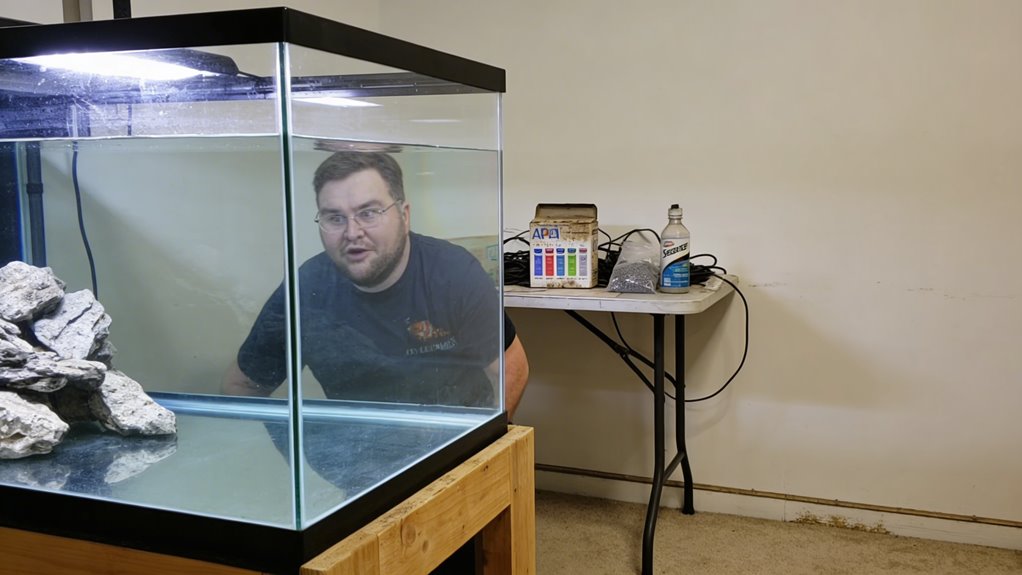
A small glass box filled with saltwater becomes a home only when every piece fits just right, like building a fort where the walls keep you safe and the windows let in light.
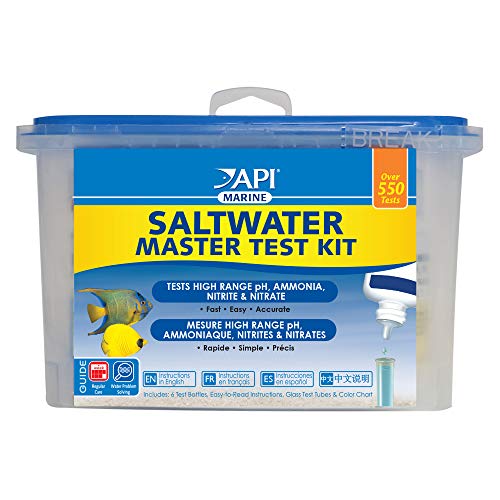
Monitor pH, ammonia, nitrite, and nitrate weekly to keep water stable.
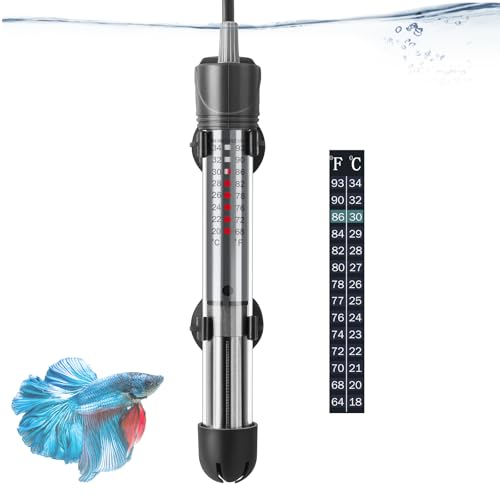
Holds 72–80°F steady for a stress-free royal gramma.

Snug lid seals out escape routes and stops jump deaths.
Check discounted items inAquarium Equipment
Tank size matters since these fish need room to breathe. One royal gramma wants thirty gallons, a pair needs fifty or sixty, and each extra fish adds twenty more.
Water must stay steady: seventy‑two to eighty degrees, pH 8.1‑8.4, hardness eight to twelve dKH, saltiness 1.020‑1.025. Test weekly so nothing drifts wrong.
Substrate choice shapes the bottom world, sand or crushed coral both welcome them home. Lighting spectrum cues their day and night, bright enough to see, dim enough to rest.
Rockwork, Caves, and Territory: Building Your Gramma’s Secure Home
Since royal grammas spend most of their lives pressed close to rocky surfaces, the arrangement of stone and shadow matters more than open water.
Smart rockwork placement means building caves where your fish can feel hidden, watched over, and safe.
Consider this when planning your aquarium:
| Zone | Rockwork Type | Purpose |
|---|---|---|
| Lower third | Stacked flat stones | Creates horizontal caves for sleeping |
| Middle third | Vertical crevices with 3-inch openings | Allows upside-down swimming, which feels natural |
| Upper third | Small overhangs | Offers quick escape routes during territory mapping |
| Back wall | Solid cave cluster | Gives shy fish a place to observe without being seen |
Each gramma needs roughly 12 inches of cave-lined territory to call its own.
When space runs short, you’ll notice fins flaring, colors dulling, and fish chasing—that’s their way of saying they feel crowded, anxious, not at home.
Your careful territory mapping prevents this sorrow.
Why Your Royal Gramma Needs a Tight-Fitting Lid (And Other Jump Prevention)
Tank lids sit heavy on glass rims for quiet reasons, not decoration.
A lid’s weight is measured in lives saved, not grams.
A royal gramma‘s body, built for darting between rocks, doesn’t stop at tank walls. When startled—by a shadow, a sudden light, or nothing you notice—they launch upward with surprising force. Lid sealing means no gaps wider than a pencil eraser, since a frightened fish finds spaces you’d swear were impossible.
Jump deterrents include full glass tops, not mesh alone, and weighted strips sealing every edge. Many aquarists learn this lesson through loss, finding their purple-and-yellow companion dried on the floor.
Your careful fitting today keeps your community whole tomorrow.
Royal Gramma Temperament: What That Shy, Darting Behavior Really Means
Watching a royal gramma hide, then dash, then hide again feels like catching a secret you’re not supposed to see.
Color psychology explains their bold purple and yellow patterning, which signals health and essential to their own kind in dim reef crevices. This isn’t vanity, it’s survival communication.
Their shy temperament reflects a strict territorial hierarchy. Each fish commands a small kingdom of rockwork, roughly 12-18 inches square, depending on tank size. They dart to inspect intruders, then retreat to assess from safety.
This peek-a-boo nature creates quiet anxiety for observers, but it’s normal, healthy behavior. Patience rewards you with rare full-view moments.
Best Tank Mates for Royal Grammas and Aggressive Species to Avoid
A royal gramma’s world depends on who shares its water, so choosing companions carefully matters more than decoration.
This small, purple-and-yellow fish thrives among gentle neighbors who respect its hiding spots. Keep the peace with these guidelines:
- Select peaceful reef fish like clownfish, blue-green chromis, small gobies, and angelfish
- Provide at least 30 gallons per royal gramma to reduce territorial disputes
- Avoid predators like lionfish, groupers, eels, and snappers that see them as snacks
- Skip similar cave-dwelling species competing for the same rocky real estate
Successful coral breeding tanks demonstrate what’s possible when every creature has its place. Thoughtful stocking creates belonging—for fish and keepers alike.
Can You Keep Multiple Royal Grammas Together? Pair and Group Guidelines
Since royal grammas stake small claims to rocky crevices, keeping more than one takes planning.
Territorial by nature, royal grammas need carefully planned space when kept together.
A single fish needs thirty gallons. For a pair, fifty to sixty gallons works, and each extra fish needs twenty more gallons. This space lets them set boundaries without constant fighting.
Males clash more than females. Two males in a small tank attack each other, stressed and exhausted. A male-female pair, or one male with several females, keeps peace.
Group dynamics matter. Watch who hides, who eats, who chases. Stable groups feel safer, like friends at a crowded party who’ve claimed their corner.
Breeding starts when pairs bond. The male builds a nest from algae and rocks in one or two days, then guards the eggs for a week until they hatch. Success needs calm waters and plenty of hiding spots for the fry.
Patience rewardskeepers. Start with one, add others slowly, and give each fish its own rock to call home.
What to Feed Your Royal Gramma for Color, Health, and Longevity
How does a small fish keep its purple crown so bright? The answer lives in every meal you choose.
Color enrichment and Vitamin supplementation form the foundation of a thriving Royal Gramma. A balanced diet mimics the wild plankton they crave, building resilience from the inside out.
Consider these pillars of nourishment:
- High-quality pellets with marine proteins
- Frozen Mysis shrimp, rich in carotenoids
- Vitamin supplementation twice weekly
- Small, frequent meals they can finish in two minutes
Feeding becomes ritual, a shared rhythm between keeper and fish. You’re not just maintaining life; you’re honoring a small creature’s place in your world.
Royal Gramma Lifespan: 5–6 Years, 10 If You’re Lucky-Here’s How
When the purple fades from a royal gramma’s crown, it often tells a story the water parameters cannot.
Most royal grammas live five to six years in home aquariums. Some reach ten, but that’s rare, like finding a four-leaf clover in your yard.
Most royal grammas live five to six years. A decade? Rare as a four-leaf clover in your yard.
Genetic variability plays a role—fish from different reef populations carry different strengths, like how some families have taller members.
Genidelity maintenance matters too. This means keeping generations healthy through careful selection, not breeding relatives too closely. It’s like avoiding the same small gene pool that makes purebred dogs sick.
Stable water, good food, and low stress extend their years. The lucky decade belongs to those who pay attention daily.
Royal Gramma Breeding: How to Get Your Pair to Spawn at Home
A flat rock, no bigger than a dinner plate, becomes the stage where two fish write their future.
The male selects this surface, then sweeps it clean with his fins for one to two days. He builds a nest from algae and tiny rubble, working with quiet patience. Breeding triggers include stable water, abundant live food, and lengthened daylight hours mimicking spring. The female arrives, deposits her eggs, and departs. The male stays, guarding with fierce devotion. Egg care demands constant fanning with his fins, keeping water moving so fungus cannot grow. He does not eat during this week.
Four truths emerge from watching them:
- Preparation builds trust
- Shared space requires negotiation
- Protection means sacrifice
- New life needs patience, not rushing
The fry hatch tiny and transparent, drifting upward like slow bubbles. Feed them rotifers, then baby brine shrimp, watching them gain color day by day. Success belongs to those who wait without forcing.
Disease, Stress, and Aggression: Royal Gramma Troubleshooting Guide
Even the brightest fish can dim when trouble finds them, and royal grammas are no exception.
A quarantine tank, 10 gallons with gentle flow, lets you watch for white spots or torn fins before the main display.
Disease monitoring means testing water weekly, watching for rapid breathing, and acting fast—marine ich spreads in days, not weeks.
Stress shows when a gramma hides too long or loses its purple shine. Check ammonia, give more caves, slow the current.
Aggression mitigation demands space: 30 gallons minimum, visual breaks in rockwork, and never two males in small quarters. Peace returns with room.
What Is a Royal Gramma? Species Overview for New Reef Keepers
Why do certain fish catch the eye so quickly? The Royal Gramma does it with colorama history dripping from every scale. This small fish, *Gramma loreto*, wears purple like a front-facing crown, yellow like Caribbean sunlight on its back.
For anyone building a reef community, this fish brings quiet belonging. It doesn’t demand center stage, yet reef photography enthusiasts chase its image through coral shadows.
Let’s look closer at what makes this fish worth knowing:
- Size matters — three to four inches fits most tanks
- Origin shapes needs — Atlantic reefs, warm and steady
- Colors signal health — dull fish hide trouble
- Behavior reveals comfort — peaceful swimmers settle in
Frequently Asked Questions
Do Royal Grammas Change Color When Stressed?
Yes, royal grammas display a stress response through coloration shift. When frightened, their bright purple-front and yellow-back fade to dull gray-brown, like a dimmed light bulb. This happens within minutes during sudden movements, loud noises, or aggressive tankmates. The fish’s dark eye-line may also lighten. Stable water parameters and hiding spots help them regain lively colors quickly, usually within an hour of feeling safe again.
Can Royal Grammas Recognize Their Owners?
Royal grammas don’t show true owner recognition like dogs do. They’ll learn feeding routines and may swim forward when they see a familiar shape near the glass, but they’re reacting to patterns, not faces. Temperamental shifts can happen during this learning, like hiding less over weeks. It’s habit, not friendship, and that’s okay—their small trust still feels like belonging in a shared space.
Why Does My Gramma Swim Upside-Down?
Upside-down swimming is completely normal for a royal gramma. These fish have a unique dorsal fin shape that lets them cling to rocks and cave ceilings, grazing as they go. In the wild, they’re used to habward swimming—moving with their belly toward the surface—while they pick plankton from coral undersides. It isn’t stress or sickness, just their clever way of maneuvering tight spaces. Think of it like a bat hanging comfortably, not struggling at all. They feel safe when they do this.
Are Royal Grammas Sensitive to Copper Medications?
Yes, royal grammas show clear copper sensitivity. Their medication reactions can be severe, even at low doses. Copper treatments, common for parasites, damage their delicate gills and nervous system. Aquarists notice labored breathing immediately. They’ll need alternative therapies, like hypo-salinity or formalin-based options, keeping these fish safe. Monitoring water chemistry during any treatment prevents unnecessary stress. Quick observation saves lives when chemical exposure threatens.
Do Males and Females Look Different?
Sexual dimorphism exists, but it’s subtle. Gender specific traits include a dark line running from mouth through eye, which varies by individual and sex. Males typically display bolder, thicker markings than females. Otherwise, both share the iconic purple-yellow split. You’ll need close observation to notice differences, and that’s okay—taking time builds understanding. These variations remind us that nature’s smallest details reward patient attention.
Rounding Up
A thirty-gallon tank, steady hands on the thermometer, and a lid that snaps tight—these simple tools build a home where royal grammas flash purple and yellow for years. Patience matters more than perfection. Watch the fish, test the water, and let curiosity guide you. A calm keeper makes a calm reef. Start small, learn daily, and trust that care, given steadily, outlasts any luck.

Protein-rich marine pellets support color, energy, and daily health.

Carotenoid-rich mysis brings out that brilliant purple and yellow.

Twice-weekly vitamins boost immunity and help grammas live longer.
See today's best deals onFish Food



[…] that while sand or crushed coral works for some species, corydoras and bettas require exclusively smooth […]
[…] torn edges like a helicopter parent. A tight-fitting lid is recommended for Black Orchid Bettas as a crucial safeguard against […]
[…] in case your betta’s a jerk. To reduce potential disputes, ensure the tank size is at least 30 gallons to provide enough space and territory […]
[…] isn’t confused. He’s just optimistically single. To support this nesting urge, provide stable water and a low-stress environment, as these conditions trigger spawning […]
[…] less than space, though, so plan accordingly. Unlike the royal gramma, bettas do not require a minimum 30 gal tank due to their smaller body size and different swimming […]
[…] stable water conditions throughout the process, as maintaining consistent temperature and alkalinity reduces stress on your […]
[…] line? Cherry barbs bring color without chaos. They’re tough, peaceful, and fit right in. A brine shrimp diet supports their health and vibrancy. Add them to your tank, and you’ve got a match made in […]