To stabilize your tank’s pH naturally, you’ve gotta fix the real culprit—low alkalinity (KH), which is your water’s buffer against swings.
In soft water, a leftover pinch of food can crash pH a full point, suffocating fish and stalling your filter.
Use driftwood or peat moss to gently lower pH, or crushed coral in a mesh bag ($10–$15 per 5‑lb bag) to raise it slowly, testing every three days to avoid shocking your community.
Consistent 20–25% weekly water changes lock in stability, no panic needed.
Stick around for the finer points on acclimation and gear.
At A Glance
- Peat moss in filter gently lowers pH by releasing tannins and binding carbonates.
- Driftwood slowly leaches acids for long-term softening and pH stabilization.
- Catappa leaves release tannins gradually; use one leaf per 10 gallons.
- Limestone, crushed coral, or shells dissolve slowly to raise pH and buffer.
- Select décor based on desired pH effect to maintain stable water chemistry.
What Makes pH So Important in a Freshwater Aquarium?
At its core, pH is the chemical thermostat for your aquarium, and ignoring it’s like driving with your eyes closed—sure, you might get away with it for a while, but eventually you’ll crash.
You’re part of a community that knows better.
See, pH dictates how your fish breathe, how waste breaks down, and even how medications work.
A stable pH keeps your tank’s biological filter humming efficiently, whereas wild swings stress your fish, lowering their immunity.
It’s not about hitting 7.0 exactly; aim for a consistent target range, like 6.8‑7.2, and you’ll avoid those nasty, deadly crashes. Simple.
Using a digital pH meter with auto-calibration can reduce manual steps and improve reliability.
Why Soft Water and Low Buffering Destabilize pH
Since soft water lacks the mineral buffers that keep pH steady, even a small addition of fish waste or decayed food can send your tank’s pH into a chaotic nose plunge. You’re not alone; we’ve all seen it happen. Here’s how the lack of buffers hits you:
| Trigger | pH Change | Your Tank’s Reaction |
|---|---|---|
| Overfeeding | Drops 0.5–1.0 | Fish gasp at surface |
| Dead plant matter | Drops 0.3–0.7 | Sudden algae bloom |
| New fish waste | Drops 0.2–0.6 | Stress colors appear |
Without those mineral guards, your pH becomes a drama queen. You’ll need to test more often, maybe twice weekly. It’s not your fault—just the reality of soft water. Keep extra buffer on hand, or accept the rollercoaster. Consider topping your tank with a cut‑to‑size mesh to prevent fish from jumping during pH swings.
How pH, Hardness, and Biological Filtration Interact
Alright, so soft water’s pH swings are a headache, but they tie directly into how your tank’s biological filter does its job.
Your filter breaks down fish waste into less toxic stuff, a process that actually consumes alkalinity (KH). In soft, low-buffer water, that consumption crashes your pH fast.
A crash stalls the filter, letting ammonia spike—a nasty feedback loop.
Hard water, with its lush buffers, holds pH steady through this process, keeping your cycle humming.
You’re not just managing numbers; you’re protecting your colony.
Bottom line: soft water demands more testing, hard water forgives more. Choose your pain.
Ammonia measured in ppm becomes unsafe for freshwater above 0.25 ppm, making regular monitoring critical.
Set a Target Range: Not a Single Number
You don’t need an exact pH number—chasing 7.0 will drive you nuts and kill fish. Instead, aim for a range, like 6.8–7.2. This gives your tank wiggle room without panic. Weekly testing using a reliable kit helps ensure your chosen range stays stable.
| Goal | Why It Works |
|---|---|
| Reduce stress | Fish handle slow shifts within a range, not perfect numbers. |
| Easy maintenance | Small pH swings won’t trigger emergency water changes. |
| Fewer mistakes | You won’t overcorrect with chemicals, crashing your cycle. |
Pick a range your tap water naturally hits. Test weekly, aim for ±0.5. You’re part of the crew who keeps it simple—stable and sane. That’s the real win.
Pick Fish That Already Match Your Tap Water
Why fight your tap water when you can just pick fish that already love it? You’ll dodge endless pH battles, and that’s a win for everyone in your tank.
Research species that thrive in your local water’s pH—say, 7.4. You’ve got tons of options: livebearers like guppies and mollies, rainbowfish, or convict cichlids. They’re hardy, colorful, and won’t stress you out with chemistry. No chemicals, no guesswork. Just fish that belong from day one. For example, Harlequin Rasboras naturally prefer softer water around pH 6.5, making them a perfect match for tap water that is already soft and acidic.
Bottom line: match your fish to your water, not the other way around. It’s the low-effort, high‑reward move that makes you look like a pro.
Use Décor That Works With Your pH Goals
Every piece of décor in your tank is either working for your pH goals or against them—no neutral ground here. Choose wisely, and you’ll belong to a stable, thriving community.
| Décor Item | pH Effect | Best For |
|---|---|---|
| Limestone rock | Raises pH | African cichlids |
| Coral sand | Raises pH | Saltwater setups |
| Bogwood | Lowers pH | Amazon biotopes |
| Slate | Neutral | Any community tank |
Rocky stuff like limestone slowly dissolves, pushing pH up—great for hard-water lovers. Wood, on the other hand, leaches tannins that gently soften things. Slate, a safe bet, won’t budge your pH at all. Pick what matches your target, and you’ll avoid nasty surprises. For species like twig catfish, multiple driftwood pieces provide essential biofilm grazing and help maintain softer, stable water conditions.
Lower pH Naturally With Peat Moss and Driftwood
If your tap water runs hard and alkaline, lowering pH naturally with peat moss and driftwood is a solid, low-tech solution. You’re part of the “don’t mess with chemicals” crew now—welcome.
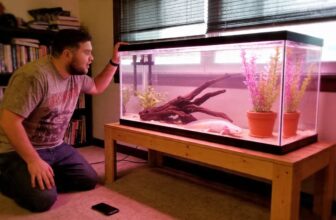
Peat moss goes in your filter, releasing tannins that bind carbonates (those buffering minerals), softening water over weeks. A $8 bag lasts months. Driftwood like bogwood leaches similar acids, slower but steady. Both tint water tea-brown—some love it, some don’t. You can also use eco-friendly PLA materials for habitat structures that won’t leach unwanted chemicals into your softened water.
- Soak new driftwood in boiling water first to sterilize and reduce initial leaching.
- Replace peat every 4‑6 weeks as tannins fade.
Bottom line: it’s gentle, fish-friendly, and screams “I know what I’m doing.” You’ve got this.
Use Catappa Leaves and Bogwood for Gentle Acidification
Catappa leaves and bogwood are your next move for gentle acidification—think of them as the slow‑cooker approach to pH control. They release tannins gradually, softening your water without shocking your fish.
A pack of leaves runs you about $5, and a nice piece of bogwood costs $10–$20. Toss one leaf in per 10 gallons; replace it every two weeks. Bogwood works for months.
Your tank gets that amber tint, and your shrimp or bettas feel right at home. Just soak new bogwood first to tame the initial color burst. For similar steady control in a refugium, consider full‑spectrum lighting to support healthy macroalgae growth. No rush, no fuss, just calm, steady results.
Raise pH Safely With Limestone, Coral Sand, and Shells
So you want to nudge your pH upward without turning your aquarium into a chemistry lab. Grab some crushed coral or limestone—they slowly dissolve, releasing carbonates that buffer pH toward 7.6‑8.2. You’re not alone; many cichlid keepers swear by this.
So you want to nudge your pH upward without turning your aquarium into a chemistry lab. Grab some crushed coral or limestone.
- Limestone rock: safe for hard‑water setups, costs ~$3‑5/lb.
- Coral sand: ideal for African cichlids, about $10‑15 per 5-lb bag.
- Oyster shells: cheap, add calcium too, just rinse first.
Trust the gradual release—these materials won’t spike pH overnight. Start with a small mesh bag in your filter. Your fish will thank you, and you’ll feel like one of the cool, steady‑pH crew.
Avoid Overcorrection and Other Common pH Mistakes
Using crushed coral or limestone is a solid way to raise pH, but here’s where the trouble starts: you get eager, throw in too much, and suddenly your pH rockets past your target.
You’re not alone; we’ve all been there. Overcorrection stresses fish more than a steady, slightly-off pH.
Instead, add a small handful of coral sand, wait three days, test, then add more if needed.
Your tank’s a community, not a chemistry lab experiment. Slow wins the race, keeps everyone happy, and saves you from panic water changes. Trust the process, not your impatience. For a passive biological approach, consider that plant-based nitrate management indirectly stabilizes water chemistry by reducing nitrogen waste that can affect pH.
Use Water Changes to Lock In Stable pH
Why do your pH swings look like a heart monitor reading after a triple espresso? You’re not changing enough water, friend.
Regular water changes—20-25% weekly—dilute built-up acids and replenish carbonate buffers, locking your pH into a steady, predictable range.
Consistency’s your secret handshake here; use dechlorinated tap water that matches your tank’s chemistry exactly. No guesswork, no sudden crashes.
Your fish crave that stability, and you’ll finally feel part of the “steady-as-she-goes” club. Stop chasing pH; just change water. That’s your ticket to belonging.
For guidance, consistent logging in a notebook each morning reveals trends and prevents issues with pH stability.
Document Changes and Refine Your Strategy
Since you’re not writing this stuff down, you’re basically flying blind. Grab a notebook or a spreadsheet—seriously, even a napkin works. Log your pH test results, water changes, and any decor or peat you add.
When those KH readings drop ****(that’s your buffer, keeping pH steady), you’ll spot trouble early.
See a pattern? Great. That’s your roadmap. Maybe you need more driftwood to counter hard tap water. Or fewer water changes if pH keeps swinging.
Track it, tweak it, and suddenly you’re not guessing—you’re part of the crew who actually controls their tank. Write it down. Belong to the stable pH club.
Accurate logging also helps you decide if tablet‑format salts provide the steady mineral release your setup needs.
Advanced Option: Reverse Osmosis for Precise pH Control
Right, you’ve been logging pH shifts like a dedicated detective, so let’s kick it up a notch. A reverse osmosis (RO) unit strips your tap water down to almost pure H₂O—zero buffers, zero guesswork. You’re now in total control.
This isn’t for the faint of heart, but for those who crave precision. An under‑sink RO system (around $150‑$300) removes 90‑99% of dissolved solids. You then re‑add specific minerals using a commercial remineralizer to hit your exact pH target, say 6.8. It’s stable, predictable, and your fish will thank you. Bottom line: if you’re a control freak who values consistency, RO is your new best friend. The pure water produced also allows for precise, low‑voltage safety when integrating any submersible lighting for the aquarium.
Acclimate New Fish Slowly to Avoid pH Shock
Since you’ve dialed in your pH with an RO unit, don’t mess it up by rushing fish into your tank.
pH shock kills quickly, so you’ll want to match the pH from the store’s bag to your aquarium water over an hour or so.
Drip acclimate—float the bag, then slowly drip tank water in.
That gradual shift lets your fish adjust without freaking out.
A simple airline valve dripper costs under $5, and it’s the best insurance against sudden death.
You’re part of a community that cares about stable chemistry, so take this slow step.
Patience now means healthy, thriving fish later—worth every second.
Use stable water conditions throughout the process, as maintaining consistent temperature and alkalinity reduces stress on your fish.
Frequently Asked Questions
Can I Use Distilled Water Instead of Tap Water for My Aquarium?
You can use distilled water, but don’t do it straight.
It’s fundamentally pure H₂O—no minerals, zero buffer.
That means your pH will crash wildly the moment a fish breathes.
You’re better off mixing it with tap water or a remineralizer, or you’ll stress your fish for no good reason.
Honestly, it’s like serving someone a saltless burger—technically edible, but nobody’s happy with it.
Stick to treated tap water or RO for consistency.
How Often Should I Replace Peat Moss in My Filter?
You’ll want to replace peat moss in your filter every four to six weeks, once it stops releasing tannins.
Those tannins are what soften your water and lower pH naturally, so when they fade, so does the effect.
Don’t wait too long—stale peat just sits there, doing nothing.
Swap it out during a water change, and you’ll keep that gentle acidity steady.
Think of it like a coffee filter: fresh brew, better results.
Does Boiling Driftwood Remove All Its Tannins Permanently?
No, boiling doesn’t remove all tannins permanently. Boiling speeds up tannin release but leaves plenty of acidity inside.
You’ll see new tea-colored water after a few days.
For less tannin, soak the wood for weeks or use activated carbon in your filter.
That clear water? It’s a trade-off, since less tannin means less pH-lowering effect.
Bottom line: boiled driftwood still lowers pH gradually, just with a head start.
Will Baking Soda Safely Raise pH in a Freshwater Tank?
Yes, baking soda can safely raise pH, but you’ve got to be careful. It’s sodium bicarbonate, and it spikes alkalinity fast—think of it like a quick fix, not a long-term plan.
For a 10-gallon tank, start with just 1 teaspoon dissolved in water, then add slowly.
- Pro: It’s cheap ($2 a box) and works immediately.
- Con: Overdo it, and you’ll swing pH too hard, stressing your fish.
Bottom line: use it for emergency boosts, but stick to limestone or crushed coral for stable, natural control.
Can I Combine Limestone and Driftwood to Balance pH?
Can you combine limestone and driftwood to balance pH? Yes, but it’s tricky.
Limestone raises pH by slowly releasing carbonates; driftwood lowers it by leaching tannins. They don’t cancel out neatly.
You’ll end up with unstable pH swings without you test weekly, aiming for a target range like 6.7–7.2.
Use a liquid test kit—$20 at fish stores—to monitor.
Start with small amounts of each.
It’s like making tea with too many bags; you’ll just get murky water.
Bottom line: pick one method for predictability.
Rounding Up
So, you’ve got the tools—driftwood, limestone, a test kit, and a solid plan. Don’t overthink it. Your goal isn’t perfection, it’s stability. That’s the secret most expensive gadgets leave out. Track your water changes, watch your fish, and adjust slowly—like adding one teaspoon of crushed coral at a time. You’ll mess up once (I certainly did), but your tank forgives you. Stick with natural methods, test weekly, and keep it simple. Your fish don’t need a chemist, just a steady home.