You want a halfmoon betta? Good choice, but skip the tiny bowl nonsense.
You’ll need a 5-gallon tank minimum ($200–$350 setup), heater at 78°F, and water kept at zero ammonia with weekly changes.
Feed high-protein pellets twice daily, fast one day weekly, and maybe add a snail or Corydoras roommate—never another male, except you enjoy fish gladiators.
Their 180° tails look stunning until velvet or fin rot hits, so test your water and keep a digital pen handy.
Get these basics right and you’ve got 3–5 years of dramatic, bubble-nesting entertainment ahead—plus a few surprises if you stick around.
At A Glance
- Halfmoon bettas need at least 5 gallons, 76–82°F water, and gentle filtration to protect their flowing fins.
- Feed high-protein pellets twice daily with weekly live treats, fasting one day weekly to prevent digestive issues.
- House with peaceful bottom-dwellers like Corydoras or snails; avoid fin-nipping species and other male bettas entirely.
- Maintain pristine water with 0 ppm ammonia/nitrite, stable neutral pH, and regular changes to prevent fin rot and disease.
- Selective breeding produces the signature 180° tail spread; males display fuller fins and brighter colors than females.
What Is a Halfmoon Betta? Appearance, Colors, and Lifespan
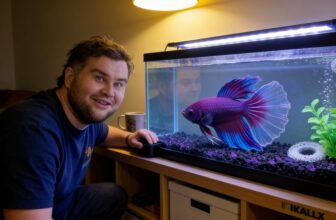
What’s the big deal with Halfmoon bettas? You’re looking at fish with tails that flare into perfect 180-degree semicircles, spanning over three inches of pure drama.
Breeding these beauties isn’t for the faint-hearted. Genetics play hardball here—that signature halfmoon shape requires careful genetic pairing, or you’re stuck with deltas and super deltas instead. It’s math with fins, fundamentally.
Breeding halfmoon bettas: genetics play hardball, and it’s math with fins, fundamentally.
Males flash brighter colors and longer fins, whereas females keep it subtle, shorter, more practical. Your color options? Everything from Mustard Gas metallics to iridescent Samurai blues, layered like nature’s own paint job.
They’re territorial little athletes, so you’ll need that lid—unless you enjoy midnight carpet fishing. Lifespan hits 3-5 years, but only if you’re committed: protein-rich diet, clean water, low stress, solid genetics from the start. Choosing captive‑bred fish supports conservation and avoids depleting wild populations, similar to responsible Danio sourcing.
Skip corners, and you’re mourning by year two. Do it right, and you’ve got a living centerpiece that judges your tank maintenance with every flare.
How Big Do Halfmoon Bettas Get? Male vs. Female Size Differences
How big do halfmoon bettas get? Where you might expect a fish named “Halfmoon” to tip the scales, you’re looking at a compact package—roughly 2.5 to 3 inches of body, tail not included.
Add that dramatic 180° bettail genetics, and you’re pushing 5–6 inches total—basically a feathery dinner plate with attitude.
Males bulk larger and flashier, thanks to selective breeding techniques favoring longer, heftier fins.
Females stay sleeker, subtler, maybe half the finnage—think sporty coupe versus tricked-out sedan.
Both sexes pack serious personality into that small frame.
Size matters less than space, though, so plan accordingly. Unlike the royal gramma, bettas do not require a minimum 30 gal tank due to their smaller body size and different swimming habits.
Why 5 Gallons Is the Minimum Halfmoon Betta Tank Size
For a halfmoon betta, a 5-gallon tank is the minimum recommended size to provide adequate swimming space and stable water conditions, though 3-gallon tanks can still support small fish like bettas, shrimp, or snails with careful maintenance.
Halfmoon Betta Water Parameters: Temperature, pH, and Filtration Essentials
Your halfmoon needs 78°F (25.5°C), with a comfort zone stretching from 76–82°F (24–28°C). You’ll want a reliable heater with a built-in thermostat. Stable pH near neutral can be reliably monitored with digital pen testers that offer a precision of 0.01.
| Parameter | Ideal Range | Why It Matters |
|---|---|---|
| Temperature | 76–82°F (24–28°C) | Cold bettas get sluggish, sick |
| pH | 6.5–7.0 | Stable beats perfect every time |
| Ammonia/Nitrite | 0 ppm | Toxic at any level, seriously |
| Nitrates | <20 ppm | Water changes handle this |
Keep pH near neutral; bettas adapt, but swings kill.
For filtration, skip bubble filtration. Those air-driven sponges? Fine for fry, lousy for your adult’s long fins. They get sucked in, torn up, it’s ugly.
Use a gentle hang-on-back or sponge filter with adjustable flow. Your halfmoon’s fins are delicate equipment—treat them that way.
How to Set Up a Halfmoon Betta Tank: Step-by-Step Guide
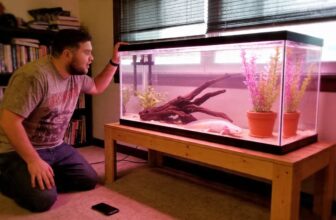
Setting up a halfmoon tank isn’t rocket science, though you’ll probably overthink it anyway—most people do. You need five gallons minimum, heater at 78°F, and a gentle sponge filter. For your betta tank setup, pick soft, smooth gravel—nobody likes torn fins—and add caves or driftwood for hideouts. Lighting options matter more than you’d think. Use dim LED with timer, eight hours max, since nobody wants algae taking over. Choose a heavy-duty steel stand rated for at least 460 pounds to safely support a fully decorated 55-gallon tank.
- Secure lid (they jump)
- Live plants for bubble nests
- Water conditioner
Cycle for a month, test the water, then introduce your swimmer. Done right, you’ll feel like part of the club.
What to Feed Your New Halfmoon Betta: First-Week Diet Plan
If there’s one thing that’ll keep your halfmoon betta from giving you the cold fin, it’s getting the food right from day one—you’ve got about seven days to establish good habits before your fish either thrives or just, well, survives.
Skip the fancy stuff initially. Stick to high-quality betta pellets, 1-2 tiny pieces twice daily. Your betta’s breeding genetics and bre history mean they’re built for protein, not flakes loaded with fillers—think of it like giving a Ferrari regular gas, just don’t. For a protein-rich alternative, consider Fluval Bug Bites which use insect protein to support immune health and natural color.
Fast on day three. Seriously, no food. It prevents constipation, a common newbie trap.
Watch how fast they eat. Three minutes, tops. Remove leftovers with a turkey baster—you know, the one from your junk drawer.
Best Halfmoon Betta Foods: Pellets, Live Foods, and Nutritional Balance
| Food Type | Examples | Purpose |
|---|---|---|
| Pellets | Betta-specific, 35%+ protein | Daily staple |
| Live Foods | Daphnia, black worms, mosquito larvae | Hunting stimulation |
| Frozen Options | Bloodworms, brine shrimp | Convenient backup |
| Rotation Plan | Two brands + weekly live treat | Full amino acid coverage |
Avoid plant-based fillers—your betta’s short digestive tract can’t handle them. Mix it up, watch those fins flare. A proper diet should be paired with low-flow filtration to avoid stressing your betta’s delicate fins during feeding and rest.
How Much and How Often to Feed Your Halfmoon Betta
Feeding a Halfmoon betta is less art than arithmetic, once you realize their stomach is roughly the size of their eye—yes, really, that tiny pearl sitting on each side of their head is your measuring cup, not a suggestion.
Feeding a Halfmoon betta is arithmetic, not art—stomach the size of their eye, your measuring cup, not suggestion.
Your optimal portion size: one to two mini-pellets, twice daily. That’s it. No “one for good luck.” They’ll eat until they explode, literally.
Stick to this brie feeding schedule—morning and evening, like clockwork, because bettas thrive on routine, not surprises.
Remove uneaten food after three to five minutes. Leftovers rot, foul the water, and nobody wants a fish with swim bladder disease and a guilty conscience.
Skip a day weekly. Fasting prevents constipation—think of it as their cheat day, except they’re not cheating, you’re being responsible.
Live or frozen treats? Weekly, not daily. Moderation keeps your halfmoon glorious, and stable water parameters prevent stress-related pallor.
Is Your Halfmoon Betta Healthy? Seven Signs to Check Daily
Since a sick betta won’t tap you on the shoulder and ask for a sick day, you’ll need to become a daily detective—no magnifying glass required, just two minutes of actual looking.
- Vivid color (no fading, no spots)
- Active swimming (not hovering listlessly)
- Strong appetite (attacks food like it owes money)
- Intact fins (no tears, no clamping)
- Smooth scales (flat, not pineconing)
- Clear eyes (no cloudiness, no bulging)
- Breeding readiness (bubble nests, flaring at reflections)
Using a bubble counter aids in monitoring CO₂ levels for plant health in a planted betta tank. Watch for brief mood swings—sudden lethargy or aggression shifts signal trouble. Spot these seven signs daily, you’ll catch problems before they become tank disasters.
How to Spot, Prevent, and Treat Halfmoon Betta Diseases
Even the most pampered halfmoon can turn into a tiny disaster zone overnight, and you’ll be the one holding the net when it happens.
Even the most pampered halfmoon can turn into a tiny disaster zone overnight, and you’ll be the one holding the net when it happens.
Disease prevention starts with zero ammonia, weekly water changes, and quarantining newcomers—think of it as a fishy background check. Spot trouble early: clamped fins, white spots, or that dreaded pinecone look (dropsy, where scales stick out like a pinecone—bad news).
Treatment options depend on the culprit. Ich? Crank heat to 86°F, add salt. Velvet? Dim lights, medicate fast. Fin rot? Clean water, sometimes antibiotics; early signs often include a cloudy edging on fin tips. Dropsy? Isolate, salt bath, cross your fingers.
Bottom line: prevention’s cheaper than cure, and your halfmoon’s counting on you.
Can Halfmoon Bettas Live With Other Fish? Compatible Tank Mates
So you want to turn your halfmoon’s solo apartment into a shared house? You absolutely can, but you’re playing matchmaker with a fish that’d rather rule his own kingdom.
- Corydoras catfish – bottom-dwelling peacekeepers who won’t steal his spotlight
- Snails or shrimp – tiny tank-mates for busywork, not drama
- Small tetras or rasboras – schooling fish that keep to themselves, no fin-nipping
Breeding? Forget it—unless you enjoy aquatic warfare.
Your tank décor saves everything: caves, plants, driftwood create invisible boundaries so everyone’s got somewhere to sulk.
Ten gallons minimum, or you’re just cramming grumpy roommates together.
Tank Mates to Avoid With Halfmoon Bettas
Knowing who gets an invite is only half the battle—you’ve also got to figure out who gets left off the guest list. Some fish just aren’t worth the drama.
| Fish to Skip | Why Your Betta Won’t Approve |
|---|---|
| Male guppies | Flashy tails trigger relentless chasing, even under soft aquarium lighting design |
| Goldfish | Cold water, messy habits—they’re basically bad roommates |
| Other male bettas | You’ll witness breeding behavior tantrums minus the romance |
Skip fin-nippers like tiger barbs too; they’ll shred those Halfmoon tails like confetti. Your betta’s tank belongs to him—choose wisely, and everyone’s scales stay smoother.
Why Halfmoon Bettas Fight: and How to Stop Tank Aggression
When you catch your Halfmoon betta flaring like he’s auditioning for a kung‑fu flick, you’re witnessing millions of years of territorial hardwiring in action. Genetic selection bred these fish for aggression—your male sees every colorful fish, mirror reflection, and even your phone screen as a rival trespassing his turf.
- Add visual barriers—tall plants, caves, and floating cover break sightlines before fights erupt.
- Upgrade to 10+ gallons—crowding amplifies aggression; space lets everyone claim a corner.
- Never house two males together—seriously, don’t try it, we’ve all thought we could beat genetics.
Manage aggression through smart tank design, not wishful thinking.
What Does a Halfmoon Betta Really Cost? Full Setup Budget Breakdown
Before you impulse-buy that iridescent blue Halfmoon fluttering his fins at the pet store, let’s talk numbers—because keeping this fish alive and thriving costs more than the $5 sticker suggests.
That budget price? A siren song. Your “cheap” betta needs a 5-gallon minimum tank, heater, filter, lid (they jump—ask me how I know), plants, test kit, and water conditioner. You’re looking at $200–$350 upfront, plus $80–$110 yearly for food, electricity, and supplies.
Skip the tiny bowl. You’re building a home here, not a prison.
Breeding basics? Don’t. Just… don’t. If you’ve got space, time, and deep pockets, leave spawning to pros who know their genetics.
Bottom line: budget $300, or stay in the cheap seats.
Frequently Asked Questions
Do Halfmoon Bettas Recognize Their Owners?
Yes, you’ll find your halfmoon betta recognizes you through owner bonding and visual cues.
They’ll swim to the glass when you approach, ignoring strangers—fishy favoritism at its finest.
Your consistent presence, feeding routine, and even your silhouette become familiar signals.
It’s not love, exactly; you’re the food dispenser.
But hey, take the win.
A 5-gallon tank, $15 fish, and you’ve got a tiny fan. Not bad.
Can Halfmoon Bettas Change Color Over Time?
Yes, your halfmoon betta can shift shades like autumn leaves surrendering summer’s fire—gen transition happens, especially in young fish or stressed ones.
You’ll notice fading intensity when they’re unhappy, aging, or adjusting to new water.
Stress stripes appear, then vivid blues or reds return once they’re comfy.
It’s their mood ring, basically.
Keep parameters stable, feed well, and you’ll watch their colors bloom, dip, and surprise you again.
How Often Should I Change My Halfmoon Betta’s Water?
You should change 25-30% of your halfmoon betta’s water weekly, or 50% if you’re running a smaller tank without solid filter maintenance.
Your filter needs monthly rinsing in old tank water—never tap, that chlorine’s a jerk—to keep beneficial bacteria alive.
Skip the water change and you’re basically asking ammonia to crash the party.
Test weekly, stay consistent, and your fish won’t plot revenge.
Do Halfmoon Bettas Need Complete Darkness at Night?
No, you don’t need to plunge your halfmoon into pitch-black darkness. They’re not vampires.
Your betta needs a consistent day-night cycle, so you’ll want to turn off that LED light at night—think 8-10 hours of habitat lighting daily, then let nature (or your light timer) handle the rest. Complete darkness isn’t required; ambient room light won’t stress them.
Skip nocturnal feeding; bettas hunt by sight, not smell. Feed during “daylight” hours when they’re active, or you’re basically tossing food into the void.
Bottom line: timer on, lights off, sleep tight—your fish will figure out the rest.
Why Is My Halfmoon Betta Building Bubble Nests Alone?
Your betta’s bubble nest is a love letter to no one—he’s just hardwired for romance, even without a mate.
Bubble nest causes include healthy hormones, good water quality, and that territorial instinct kicking in.
It’s usually a win, not a stress indicator. Watch for clamped fins or hiding—that’s when you worry.
Otherwise, let the little architect work. He thinks he’s Casanova; you’re just the landlord.
Rounding Up
Bottom Line: With 250,000 bettas imported to the U.S. weekly, most die in bowls within months. Don’t join that statistic. Give your halfmoon space, heat, and clean water, and you’ll witness a fish that flares, moves, and remembers your face. Worth it? Absolutely.