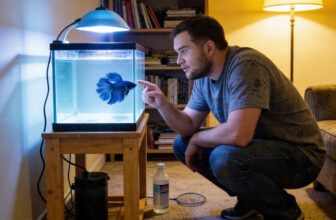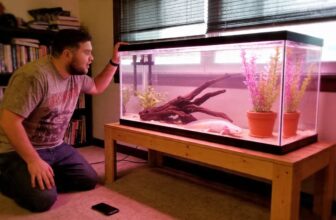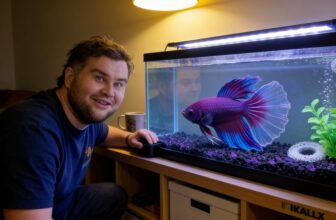
You’re looking at a $50 fish that’ll critique your choices for 3–5 years, so commit to a 10–20 gallon tank—5 gallons is survival, 20 is paradise.
Keep water at 76–82°F, pH 6.0–7.5, zero ammonia, gentle sponge filter, no fin‑ripping currents.
Feed high‑protein pellets, frozen bloodworms twice weekly (thawed, always), skip unsoaked freeze‑dried unless you enjoy fish bloat drama.
Plant heavily—floating Frogbit for bubble nests, Java Fern for hiding.
That’s your foundation, and there’s more worth knowing if you want this velvet drama queen to thrive.
At A Glance
- Provide a minimum ten-gallon heavily planted tank with gentle filtration to showcase dark velvet bodies and prevent fin tearing.
- Maintain stable water at 75-82°F, pH 6.5-7.5, and zero ammonia to preserve iridescent highlights and minimize stress.
- Feed high-protein pellets without wheat or soy fillers, supplemented with frozen bloodworms or brine shrimp twice weekly.
- House males alone with tight-fitting lids to prevent jumping and protect elaborate flowing fins from damage or aggression.
- Include floating plants like Amazon Frogbit to encourage natural bubble nest building and provide security for these solitary fish.
Black Orchid Betta Varieties: Colors, Fins & Types
Once you lay eyes on a Black Orchid Betta, you’ll get why these fish punch above their weight, looks-wise. Their tail orchid genetics create a dark, velvety body—think midnight velvet with iridescent blue or purple highlights that shift like oil on water.
Your fin morphology options run three ways: Halfmoons spread into dramatic fans (classic showstopper), Crowntails wear fringed, crown-like edges (slightly extra, in a good way), and Plakats keep it short and practical (low-drag, low-drama).
Size stays compact—2.5-3 inches without the fin extensions—so you’re not tanking up a whole room. Pick the fin type that matches your maintenance tolerance and aesthetic. Halfmoons? Beautiful, but you’ll chase torn edges like a helicopter parent. A tight-fitting lid is recommended for Black Orchid Bettas as a crucial safeguard against jumping.
Male vs. Female Black Orchid Bettas: How to Choose
Pick a male if you want the full gothic aquarium centerpiece, grab a female if you’d rather have a living pet than a tank diva.
Betta visual differences matter here. Males flaunt those dramatic, flowing fins—Halfmoons, Crowntails, the works—plus richer iridescence. Females keep it practical: shorter fins, subtler highlights, sort of like comparing a tuxedo to business casual.
Male bettas bring the drama with flowing fins and iridescent flash; females keep it practical with shorter fins and subtle style.
Behavior diverges too. Males build bubble nests, flare at their reflection, demand solo tanks. Females form sororities, show vertical stripes when ready—male vs. female mating signals you can’t miss.
Both hit 2.5–3 inches, but males look bigger thanks to fin drama. Your call: living art, or art that actually lets you sleep at night.
When setting up a tank, ensure dim lighting and multiple driftwood pieces to replicate their natural habitat.
5, 10, or 20 Gallons? Picking the Right Tank Size
| Tank Size | What You Gain |
|---|---|
| 5 gallons | Bare minimum, tight on swimming room, limited plant types |
| 10 gallons | Sweet spot for single males, manageable lighting, room for décor |
| 20 gallons | Betta palace, stable water, community options, lush plant scaping |
Your call. Just don’t pretend 5 gallons is *generous*—it’s survival, not thriving. A 20-gallon setup becomes a true Betta palace when paired with cross-braced steel frames and engineered wood stands that safely hold over 400 pounds of water and décor.
Step-by-Step: Setting Up Your Betta’s First Tank
Before you even think about bringing that dramatic little fish home, you’ve got to build him a proper stage—because tossing a Black Orchid Betta into an unprepared tank is like checking into a hotel room that hasn’t been cleaned since 2019.
Your dramatic little fish deserves a proper stage, not a hotel room untouched since 2019.
Start with a 5-gallon minimum, 10 if you’re feeling generous (your wallet won’t hate you—basic kits run $40-60). Rinse your substrate, add a gentle sponge filter, and dial your heater to 78°F. For convenience, many kits include a sponge filter already built in.
Here’s where it gets personal: your male’s gonna build a bubble-nest, that floating cluster of spit-bubbles where he’ll guard eggs if he ever gets lucky. Create a bubble-nest setup by adding floating plants like Amazon Frogbit—they break surface tension, making nest-building easier, plus he feels less exposed.
Skip the plastic plants with sharp edges; silk or live only. Let your tank cycle for 2-4 weeks before move-in day. Test your water—0 ammonia, 0 nitrite, pH 6.5-7.5. Your Betta’s counting on you to get this right.
Best Plants for Black Orchid Bettas: Floating, Rooted & Moss
You need live plants, not since they look fancy, but since your Black Orchid Betta’s mental health depends on having somewhere to sulk when he’s mad at you.
Floating plants—Water Lettuce and Amazon Frogbit—cut light, build thickets for bubble nests, and run $5-8 per bunch. Your betta lounges underneath like he’s at a spa.
Rooted picks: Java Fern and Anubias attach to terr, ace, wood, never need substrate, and forgive your plant propagation, failures. Cryptocoryne works too, though it melts first, then bounces back—dramatic, really.
Moss? Java Moss and Christmas moss cost $8-12, snag debris, and breed baby shrimp snacks.
Bottom line: mix all three types, keep it lush, watch him thrive. For optimal oxygenation in the tank, choose an air stone that produces 300‑500 µm bubbles to enhance water oxygen levels without overworking the pump.
Filtration & Water Flow: Gentle Currents for Happy Bettas
Black Orchid Bettas weren’t built for rapids—their wild homes are rice paddies and stagnant swamps where water barely twitches, so your fancy canister filter churning like a jacuzzi is basically torture. You’re drowning your fish in anxiety, not love.
Sponge filters win here. They’re cheap ($8–$15), run on gentle air pumps, and that bubble design? Perfect for male bettas hunting nest-building sites. Aim your outflow toward the glass, add a pre-filter sponge, or DIY a plastic bottle baffle—whatever chops that water flow to a lazy drift.
Your betta isn’t training for the Olympics. He just wants to glide, flare, and judge you in peace. Slow it down, buddy.
For even gentler currents, consider a compact HOB filter with adjustable flow control to dial down the stream for your betta’s comfort.
Water Temperature & Parameters That Keep Bettas Healthy
If you’ve ever shivered through a lukewarm shower, you’ll understand why your Black Orchid Betta looks miserable at room temperature—these fish are tropical divas, and anything below 75°F is basically an ice bath they didn’t sign up for.
You’ll want to lock that thermometer at 75-82°F with a reliable adjustable heater, since your Betta’s metabolism, immune system, and general will-to-swim all depend on it.
Now, about pH chemistry: aim for 6.0-7.5, slightly acidic to neutral, as swings make them stress-sulk. Water hardness matters too—5-15 dGH keeps their fins fluid without chemistry-class drama. Test weekly, adjust gradually, and you’re in. A quality filter like the Tetra Whisper Internal provides low-noise, 3-stage filtration that keeps the water crystal clear for your Betta.
Safe Tank Mates for Black Orchid Bettas (And Who to Avoid)
Temperature’s locked in, chemistry’s stable—now comes the part where you decide whether your Black Orchid Betta lives alone like a moody artist or shares their studio apartment.
You can create community, but you’ll need smart tank décor—thick Java moss, caves, sight breaks—to carve out territories and reduce drama.
Safe companions: mystery snails, amano shrimp, neon tetras (fast swimmers, $3-5 each), pygmy corydoras. Avoid fin nippers like tiger barbs, other bettas—especially males—and anything flashy that triggers that territorial rage. Breeding pairs? Only if you’re prepared for bubble nests and heartbreak.
Females sometimes tolerate sororities in 15+ gallons, heavily planted.
Bottom line: one betta, five peaceful tankmates max, or adopt the solitary life—no shame in being picky.
For reliable water checks, a digital pH meter ensures chemistry stays stable without guesswork.
What Black Orchid Bettas Eat: Diet Basics
Since your Black Orchid Betta didn’t evolve to graze on algae like some lazy bottom-feeder, you’re basically running a micro-carnivore restaurant—one that gets cranky when the menu’s boring.
Stock high-protein pellets (fish meal, shrimp, krill) as your staple, skip wheat and soy fillers, they’re basically fish junk food. Rotate in frozen bloodworms, brine shrimp, or daphnia twice weekly—thaw first, nobody likes a fish-sicle. Live foods 1-2 times weekly? That’s your breeding prep and mental enrichment, keep them stimulated. Pre-soak freeze-dried treats occasionally.
Your water chemistry tanks when you overfeed, so resist those begging eyes. Think quality over quantity, your micro-carnivore’s counting on it. Clean, stable water promotes best coloration and reduces the risk of ammonia or nitrite spikes that trigger retreat behavior.
Feeding Schedule: How Much & How Often
Feed your Black Orchid Betta once or twice daily, and don’t let those dramatic begging eyes fool you—they’re professional manipulators, not actually starving. You’re building trust here, not a buffet.
Your feeding frequency depends on your schedule, but consistency matters more than perfection. Most keepers thrive on a twice-daily bre schedule: morning and evening, about 8-12 hours apart. Skip one day weekly—fasting prevents bloating, and your fish won’t hold a grudge (probably).
Consistency beats perfection—feed twice daily, 8-12 hours apart, and skip one day weekly to keep your Betta healthy and bloat-free.
Portion size? Three to four high-protein pellets, or what disappears in two to three minutes. Less is more; uneaten food rots, ruining water quality.
Treats—frozen bloodworms, brine shrimp—twice weekly max. Think of them as dessert, not dinner. Your Betta’s waistline, and your tank’s bacteria colony, will thank you.
Bottom line: feed small, feed often-ish, and resist the puppy eyes. You’re the responsible adult here, even when they make you feel like a monster.
Using a digital thermometer ensures ±1 °C standard accuracy for monitoring water temperature during feeding times, preventing stress from sudden shifts.
5 Foods That Harm Your Betta
What exactly are you dumping in that tank when nobody’s looking? We all sneak the occasional “treat,” but some foods turn your gorgeous Black Orchid into a sluggish shadow.
Avoid these five:
- Generic flakes ‑ low‑protein diet filler that bloats without nourishing, like feeding salad to a wolf.
- Bread and crackers ‑ expand in that tiny stomach, causing overfeeding disasters and constipation you’ll regret.
- Freeze‑dried without soaking ‑ overxic foods that absorb water, swelling dangerously inside.
- Human snacks ‑ sugary treats and fatty meats, basically fish junk food.
- Expired pellets ‑ vitamins degrade into toxins.
Stick to high‑quality pellets, frozen bloodworms, and modest portions. Your Betta’s velvet sheen depends on it.
Betta Lifespan: How Long With Good Care?
If you’re dropping cash on a fancy Black Orchid, you’re probably wondering how long you’ll have the little drama king around—three years if you wing it, five if you don’t cut corners. Your fish’s clock starts ticking before you even meet him, thanks to bregenetic factors and the breeding techniques used by whoever raised the little guy. Poor breeding? Short life, no matter how fancy your滤water filter.
Here’s what stretches that timer:
| What Helps | What Hurts |
|---|---|
| Clean, warm water | Skipping water changes |
| Varied, high-protein diet | Overfeeding, cheap pellets |
| Low-stress environment | Tiny tanks, aggressive tankmates |
| Gentle filtration | Strong currents, sharp decor |
| Quarantine new fish | Dumping newcomers straight in |
Bottom line: buy from ethical breeders, test your water weekly, and don’t cheap out on the heater. Your midnight-colored prima donna deserves better than a three-year burnout.
Color Fading & Clamped Fins: What Stress Looks Like
You’ve probably noticed your Black Orchid looking more charcoal than coal, or maybe those gorgeous fins he’s normally flaring at his own reflection are suddenly stuck tight to his sides like a nervous kid in a new school—yeah, that’s stress, and he’s not being dramatic for fun.
Common stress triggers hit these guys hard: temperature swings above 82°F or below 75°F, ammonia sneaking past 0 ppm, or that filter blasting him like a jet engine. Your water parameters matter—test weekly, keep pH 6.0–7.5, and grab a $15 adjustable heater for stability. Fin health suffers fast in bad conditions.
A steady 75–82°F, zero ammonia, and a gentle filter current—these three things separate a thriving Black Orchid from a stressed, faded fish.
- Clamped fins = distress signal, poor water or bullying
- Color fading = usually reversible with quick fixes
- Solution: 25% water change, check your heater, add floating plants for cover
He’ll bounce back—Black Orchids are tougher than they look, but only if you catch it early.
Appetite Loss & Constipation: Quick Fixes
A betta who’s ignoring food isn’t staging some aquatic hunger strike, he’s probably backed up, bored, or both.
First, check your water—ammonia spikes cause stress loss fast, and nobody wants dinner in a toxic diner.
For constipation prevention, skip the pea-internet-myth; offer a thawed, fiber-rich daphnia instead, about $4 per frozen cube. It’s like Metamucil, but fishy.
Rotate proteins—bloodworms, brine shrimp—to keep gut health humming; monotony kills appetite.
Feed small, once daily, no buffet mentality.
Finally, feeding adjustments matter: fast him 24 hours if bloated, then resume lightly.
Bottom line: varied diet, clean water, patience. Your midnight orchid’ll thank you.
Frequently Asked Questions
Do Black Orchid Bettas Change Color With Age?
Yes, you’ll notice a color shift as yours ages.
Color genetics lock in that velvety black base, but age progression brings subtle changes—youngsters show sharper iridescence, whereas older fish (approaching their 3-5 year lifespan) may dull slightly or develop bronze edging.
Stress, not years, usually causes dramatic fading. Keep water pristine, and yours stays dark and stunning, like a well-worn leather jacket that somehow looks better with time.
Can I Use Tap Water Conditioner for My Betta?
Yes, you’ll use tap conditioning. It’s indispensable.
Tap water contains chlorine and chloramines that’ll kill your betta fast. A basic conditioner like Seachem Prime ($5-8) neutralizes these instantly. Check your water hardness too—Black Orchids prefer 5-15 dGH, meaning soft-to-medium mineral content. Most tap runs harder, so test it. Too hard? Mix with distilled, or grab Indian almond leaves.
- Prime: 2 drops per gallon, lasts ages
- Hardness test strips: $10, worth owning
Don’t skip this step. Your fish depends on it.
How Often Should I Clean the Sponge Filter?
A sponge filter is like a coffee filter that never gets replaced—gross, right?
You should squeeze out your filter sponge in old tank water every 2–4 weeks. That’s your filtration schedule, plain and simple. Don’t use tap water, you’ll kill the good bacteria.
Filter sponge maintenance isn’t glamorous, it’s basic hygiene. Your betta’s tiny apartment needs this. Skip it and you’re brewing trouble.
Do it monthly, stay consistent, keep that water clear.
Is Moonlight Lighting Safe for Nighttime Viewing?
Yes. Moonlight safety isn’t an issue for nocturnal viewing, your betta needs darkness to rest properly.
You’ll want dim blue/white LEDs, 0.5-1 watts, $8-15 online. Think gentle glow, not nightclub.
- Pros: lets you peek without startling him, mimics natural lunar cycles
- Cons: more than 1-2 hours stresses his sleep cycle, you’ll feel guilty watching him yawn
Skip the fancy timer, just unplug it. He’s a fish, not a night owl. Total darkness 6-8 hours keeps colors vivid and aggression in check.
Bottom line: moonlight’s fine in moderation, but your betta doesn’t need a nightlife.
Why Does My Betta Stare at Its Reflection?
Your betta stares at its reflection since it’s fighting a fish it thinks is trespassing.
That reflection behavior triggers his territorial instincts—he flares, he puffs, he charges. It’s exhausting, honestly.
Check your tank decoration: glossy backgrounds, clear glass, or overhead lights create mirror effects. Matte backgrounds cost $8‑12, and floating plants break up the glare.
You’re not a bad fish parent—glass is sneaky.
Bottom line: dim the lights, add cover, and let your fish rest.
Rounding Up
Black Orchid Bettas bring bold beauty to tanks ten bucks to forty, depending on fin fancy. You’ve learned the lineup: lush plants, steady parameters, protein-packed plates. Skip the shortcuts—stress slays these stunners faster than you’d believe. Whether you’re wrangling one territorial male or managing a mini sorority, patience pays. Your reward? Years of glimmering companionship. So grab that five-gallon minimum, test your water weekly, and watch your dark darling thrive.