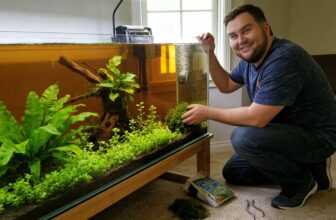
For most tanks, skip the regular super glue—it turns into toxic jelly underwater.
You want cyanoacrylate gel (think thick, clear glue that cures instantly in water). Best picks? Seachem Flourish Glue ($8) for attaching plants to wood—it’s non‑toxic and dries transparent.
For coral frags, Seachem Reef Glue ($8) bonds without clouding your tank. Heavy rock builds? Use Instant Ocean Epoxy (dry assembly only; $12, cures 24 hours).
Each serves a specific mess—stick with these and avoid scraping goo later. Want the full breakdown on which glue matches your project? That’s next.
At A Glance
- Seachem Flourish Glue safely attaches freshwater plants like Java moss and Anubias.
- Seachem Reef Glue cures instantly underwater, ideal for coral frags.
- Instant Ocean Epoxy bonds heavy dry rocks permanently before tank submersion.
- Cyanoacrylate gel prevents runoff and works on vertical aquarium surfaces.
- Two Little Fishies Coraffix is foam-free and clear for delicate plant work.
Why Most Aquarium Glues Fail Underwater
Since most adhesives are designed to live out their lives in a dry, boring toolbox, they turn into a sad, useless jelly the second you drop them underwater.
That’s because they soften or dissolve—water’s their kryptonite.
That’s because they soften or dissolve—water’s their kryptonite.
You’re left with a goopy mess, not a bond.
And that jelly? It’s toxic to your fish and plants.
You deserve gear that works, not stuff that fails the moment it gets wet.
So, skip the hardware-store glue.
It’s not built for your world.
Stick with formulas made for submersion, and you’ll build something that lasts—without the slime.
Unlike general-purpose adhesives, 100% silicone sealants are solvent‑free and non‑toxic when cured, making them a safe choice for freshwater and saltwater aquariums.
For coral and plant bonding, high-viscosity cyanoacrylate gel formulas prevent runoff and cure in seconds underwater.
What Makes an Aquarium Glue Safe for Your Tank?
Since your fish tank is basically a tiny, watery world you’re trying to keep alive—not a chemistry experiment—a safe aquarium glue has to nail three things: it must cure fully underwater, not leach toxins, and stay flexible once set.
You don’t want a glue that turns into a jelly‑like mess or poisons your prized shrimp. That’s why you stick with tested formulas, like cyanoacrylate gels (super glues that cure in seconds when wet) or silicone sealants. They bond securely without releasing harmful chemicals. No water‑based craft glues here, please—they just dissolve. For maximum clarity in planted tanks, polypropylene plastic mesh is a high light transmission material that won’t interfere with coral growth.
Bottom line: a safe glue stays inert after curing, keeps your aquascape intact, and never makes your fish regret living with you. For hardware like sump plumbing, a heavy-wall PVC bulkhead fitting kit delivers a leak-free seal that rivals bonded joints.
The 3 Adhesive Types Every Aquarist Needs to Know
If you enjoy watching your hardscape slowly disintegrate into a soupy mess—and trust me, your fish don’t—you’ll want to know the three adhesives that actually work underwater.
First, cyanoacrylate super glue cures instantly when wet, making it perfect for attaching plants or coral frags. Go for gel forms; they’re thick and won’t run everywhere. For freshwater tanks, you can also use a particle binding clarifier to keep the water clear during setup.
Second, two-part epoxy creates rock-hard bonds, ideal for building sturdy rock structures. It’s best used dry outside the tank. Some models reach 1300 psi lap shear strength and are NSF certified for potable-water safety.
Third, silicone sealant forms flexible, waterproof seals, great for glass repairs or securing equipment, but requires a full day cure time.
You’re now one of us—an aquarist who knows the right tool for the job.
Silicone vs. Super Glue vs. Epoxy: Which Is Best?
Why settle for one adhesive when the real answer depends entirely on what you’re building? Silicone’s your flexible, long‑cure buddy for sealing seams—but it’s weak for rockwork. For attaching plants, tools like the Jeimier aquascaping kit with stainless-steel tweezers can help place them precisely while glue cures. A dual‑stage regulator maintains steady CO₂ flow even as cylinder pressure declines, which is critical for planted tank stability.
Super glue (cyanoacrylate) cures faster underwater, making it perfect for attaching moss or coral frags. Epoxy forms rock‑hard bonds, ideal for aquascaping dry rock. Concrete specs? Silicone costs about $8 per tube, super glue around $6 per bottle, epoxy about $10 per stick.
Your choice: fast and wet? Go super glue. Permanent and dry? Epoxy wins. Want flexibility? Silicone’s your guy. Pick based on your tank’s needs, not hype.
Seachem Flourish Glue: Best for Freshwater Plants and Moss
How do you get moss to stay put on driftwood without losing your mind? You grab Seachem Flourish Glue—it’s a thick cyanoacrylate gel that cures instantly underwater. No more floating clumps or daily reattaching.
- Super-fast bond: Press moss onto wood, dab glue, and it holds in seconds.
- Clear and natural: Dries transparent, so your aquascape looks seamless, not messy.
- Safe for everything: Won’t harm fish, shrimp, or plants—just wait for it to cure.
- Versatile: Works on rocks, wood, and even between plant stems.
For fellow plant nerds wanting a clean, low-hassle attachment, this is your go-to. Bottom line: Stop wrestling with moss and grab this glue.
For those keeping small desktop tanks, the included filter’s gentle flow is also perfect for delicate moss setups. The Seachem Reef Glue variant cures in 5 minutes underwater for coral attachment as well.
Instant Ocean Epoxy: The Go-To for Dry Rock Aquascapes
Seachem Flourish Glue wins for moss, but if you’re wrestling with a pile of dry rock, you want something tougher. Instant Ocean Epoxy steps up—a two-part putty that hardens like concrete. Mix equal portions, sculpt your cave or wall outside the tank, and let it cure fully dry. It’s messy, certainly, but rock-solid. This putty works well for constructing structures that rely on bottom feeder hiding spots. For large builds, you can incorporate high surface‑area porous design ceramic media directly into the epoxy to boost biological filtration.
| Feature | Detail | Why It Matters |
|---|---|---|
| Strength | Rock-hard bond | Holds heavy basalt |
| Cure Time | 15–20 minutes | Fast enough for snacks |
| Dry Use Only | Fails underwater | Skimmer foam? Nope |
| Price | ~$10 per stick | Cheap for that castle |
| Best For | Dry rock walls | Your aquascape throne |
Bottom line: for permanent structures, don’t cheat—use it dry.
Seachem Reef Glue: Instant Underwater Bonds for Coral
If you’ve ever tried gluing a coral frag underwater, you know the drill—paste turns to slime, fish laugh at you, and your rock stays empty. Seachem Reef Glue ends that comedy. It’s a cyanoacrylate gel that cures instantly underwater, no skimmer foam, no mess. You just dab, place, and walk away. This thick gel is compatible with setups featuring titanium heat exchangers, ensuring durability in saltwater systems.
Here’s why it earns a spot in your toolkit:
- Instant cure – Bonds in seconds, even fully submerged.
- No foam – Won’t foul your skimmer or water column.
- Thick gel – Stays put, doesn’t run off the frag plug.
- Aquarium-safe – Non-toxic to fish, corals, and inverts.
It pairs especially well with Seachem Reef Buffer for maintaining stable pH in marine systems.
Bottom line: if you frag corals, grab this. It’s like cheating, but legal.
Two Little Fishies Coraffix: Clear, Foam-Free Cyanoacrylate
You’ve dealt with foaming glues that turn your tank into a bubble machine, so let’s talk about Coraffix. This ethyl cyanoacrylate dries crystal clear, no foam, no mess. It’s your go-to for reef-safe coral fragging or plant attachment, curing fast even underwater. For long-term water stability, consider pairing it with a plant-based approach like Seachem Flourish Nitrogen. Plus, it plays nice with epoxy—think of it as the wingman your aquascape needs. Its fast cure supports healthy oxygenation features like those in cascade-style filters.
At about $10 for a 20g tube, it’s a steal for a glue that doesn’t betray you with residue.
Bottom line: if you want a clean bond that won’t cloud your water, Coraffix earns its spot in your toolkit.
Bob Smith IC-GEL: Thick Paste for Coral and Plastic Repairs
Although most cyanoacrylate glues run like water, IC‑GEL comes out of the tube like toothpaste, thick and unapologetic.
> Most cyanoacrylate glues run like water; IC‑GEL comes out thick and unapologetic.
You’ll love it for coral fragging and fixing plastic decor because it stays put, even on vertical surfaces.
Here’s why you’ll want this in your toolbox:
- Ultra-thick paste – Won’t drip, so you control exactly where it goes.
- 3‑year shelf life – Unopened, it outlasts your impulse buys.
- Works underwater – Cure it directly on frags or plastics.
- Coral-safe – No toxins; your tank won’t freak out.
It’s the glue that hangs on, just like you do to your aquascaping vision.
Bottom line: grab IC‑GEL for precision, patience-free repairs.
You can even use it to attach frags directly to a dual‑purpose acrylic frag rack stand that doubles as a skimmer stand.
For measuring your tank’s water parameters, a seawater salinity refractometer offers automatic temperature compensation and dual-scale readings of ppt and specific gravity.
How to Apply and Cure Each Glue Without Clouding Your Tank
Since you’re now armed with a tube of super glue or a stick of epoxy, the next trick is applying it without turning your tank into a milky mess.
That cloudiness comes from uncured glue dissolving in water.
So, here’s the deal: always apply glue to dry surfaces—rocks, plants, or coral plugs—outside the tank. Let it cure for 30–60 seconds.
For cyanoacrylate gels like Seachem Flourish, dip the glued piece in a cup of tank water for a quick rinse; this locks the bond and prevents milkiness.
Epoxy? Knead it until warm, press firmly, and wait a full 24 hours before submerging. No shortcuts. Your tank’s clarity depends on it.
To maintain stable water chemistry for your glue’s bond, you can monitor pH levels continuously using a Wi‑Fi 8‑in‑1 Smart Monitor that sends real-time alerts to your phone.
For initial curing, using a tool like a passive surface skimmer can also clear any residual film from the bonding process.
Building Rock Aquascapes: Test-Fit, Dry, and Glue in Stages
Every rock aquascape starts with a dry run—literally. You’ll test‑fit your rocks outside the tank, marking each spot with a pencil. This prevents heartbreak later. For large structures, consider using heat‑shapable styrene sheets to create stable rock bridge foundations.
Every rock aquascape starts with a dry run—test-fitting rocks outside the tank prevents heartbreak later.
- Wash and dry every rock completely—no dust, no dampness, or your glue won’t hold.
- Test‑fit the entire layout on a towel, trimming uneven bases with a chisel if needed.
- Apply a gel cyanoacrylate (like IC‑GEL) to contact points, press firmly for 30 seconds.
- Let it cure 24 hours fully dry; then repeat stages for multi‑rock arches or caves.
Working in stages lets you join smaller pieces, ensuring they fit your tank’s dimensions and allow easy algae scraping later. Use curved, wave‑shaped scissors to trim moss or stems that grow around joined rocks without bruising delicate plant tissue. You’re building a stable foundation for your underwater community.
Attaching Plants to Driftwood and Rocks (Freshwater Tanks)
Once you’ve got your rock structure cured and stable (no wobbles, no regrets), it’s time for the fun part—gluing plants to driftwood and rocks. Here’s the short, sweet truth: you want a gel cyanoacrylate super glue (that’s just fancy talk for “instant glue that’s not watery”). A smooth setup requires dim lighting and a soft substrate to reduce fish stress and support natural biofilm growth.
| Plant Type | Best Glue Choice |
|---|---|
| Java moss | Seachem Flourish Glue |
| Anubias | Bob Smith IC‑GEL |
| Java fern | Any thick gel super glue |
| Bucephalandra | Seachem Reef Glue |
| Cryptocoryne | Two‑part epoxy (dry first) |
Bottom line: grab Seachem Flourish Glue. It’s thick, bonds in seconds underwater (yes, you can glue it wet), and won’t stress your fish. $10–12 at most pet stores. Stick (get it?) with gel, not liquid, or you’ll make a mess. Your tank will look like a pro aquascaper’s hub, and you’ll fit right in. For a no-glue alternative, consider anchor base plants that push directly into gravel without any adhesive needed.
Fragging Coral Underwater: Fast-Set Gels That Won’t Cloud Water
Since nothing ruins a good coral fragging session like a cloud of milky skimmer foam or a glue that refuses to set when wet, you need a gel that behaves underwater. These cyanoacrylate pastes cure instantly in saltwater, forming clear bonds without messing with your tank’s chemistry.
> Nothing sinks a fragging session faster than milky foam and wet-set glue.
- Seachem Reef Glue ($8/oz) – Cures crystal clear, zero foam, perfect for small frags.
- Two Little Fishies Coraffix ($10/oz) – Ethyl cyanoacrylate, dries clear, no skimmer chaos.
- Bob Smith IC-GEL ($7/oz) – Thick toothpaste consistency, great for larger colonies, three-year shelf life.
- Instant Ocean Epoxy ($12) – Two-part, best for heavy rockwork but cure outside tank first.
Your reef buddies will appreciate zero cloudiness, and you’ll feel like a fragging pro.
For long-term nutrient control, pair with PHA biopellets to reduce nitrates and phosphates through bacterial conversion.
Which Aquarium Glue Should You Buy First? Quick Decision Guide
Your first glue buy depends entirely on whether you’re bonding plants, rocks, or coral frags—get that wrong, and you’ll be scraping jelly off your glass.
For freshwater plants, grab Seachem Flourish Glue ($8). It’s a thick gel that sets in seconds on wet wood; your moss won’t float away.
Building rock structures? Use Instant Ocean Epoxy ($12). It cures rock-hard outside the tank—no foamy mess. Assemble dry, then drop in.
Fraging coral? Go Seachem Reef Glue ($10). It bonds underwater instantly, no clouding. You’ll feel like a pro, not a jelly-scraper.
Bottom line: stick to cyanoacrylate gels for most jobs. That’s your passport to the club.
Frequently Asked Questions
Can I Use Regular Super Glue in My Aquarium?
You can’t just use any regular super glue. Most formulations dissolve or leach toxins into your tank, harming fish and plants.
Stick with cyanoacrylate—that’s the clear, quick-drying gel—and check it’s labeled “aquarium-safe.”
Brands like Seachem Flourish Glue ($8) or IC-GEL work reliably.
Don’t be that person who kills their betta over a cheap tube.
Grab the right stuff, cure it fully, and your aquascape stays alive.
Bottom line: specific super glues only.
How Do I Remove Cured Aquarium Glue From Glass?
Removing cured aquarium glue from glass isn’t fun, but you can do it.
First, scrape gently with a razor blade at a 45-degree angle—it’ll lift cyanoacrylate (super glue) or silicone without scratching.
For stubborn spots, apply a little white vinegar or rubbing alcohol; let it soak a minute. Then, scrape again.
Epoxy needs more elbow grease or a plastic scraper.
You’re not alone in this—every aquarist faces it.
Just take your time, and the glass will be pristine again.
Will Silicone Sealant Harm My Shrimp or Snails?
You’re fine—fully cured silicone won’t harm your shrimp or snails. It’s non-toxic once set, so no worries there.
Just let it cure a full 24 hours, then rinse well before adding critters.
The main risk? Uncured silicone bleeds toxins, so patience pays off.
Stick with aquarium-safe brands—like those from Aqueon—to avoid mystery chemicals. Your shrimp’ll thank you, I promise.
Can I Glue Wet Rocks Together Underwater?
You can glue wet rocks underwater, but it’s tricky. Super glue gels, like Seachem Flourish Glue or IC‑GEL, cure faster in water than silicone or epoxy. Apply the gel directly to the damp rock, press it against another, and hold for 30 seconds.
- Expect a weaker bond than on dry rock—think “good enough for aquascaping, not for shaking.”
- Two‑part epoxy, like Instant Ocean, works better if you let it cure outside first, then add water.
Bottom line: stick with cyanoacrylate gel for wet jobs. It’s your shortcut to a stable reef.
What Glue Is Safe for Repairing a Cracked Aquarium?
You can’t just superglue a cracked aquarium—that’s a temporary fix at best.
For a permanent repair, you need aquarium-safe silicone sealant, especially 100% silicone without mold inhibitors. It’s flexible, bonds to glass, and cures underwater-safe in 24 hours.
Anything else, like epoxy or cyanoacrylate, won’t handle the pressure or water long-term.
Rounding Up
Why? Gel glues cure underwater without clouding, but epoxies handle stress cracks on coral skeletons or driftwood joints. Both are non-toxic after 30 seconds of curing—test it yourself, I’ve glued my fingers enough times to know.
Bottom line: skip the hardware-store super glue. Spend $10–15 on an aquarium-specific formula, and you’ll avoid a tank-wide disaster. Your fish will thank you—though my shrimp still judge me for that one leaky epoxy incident.