
I’ve bought dozens of biofilter media products to test in my own tanks, and the difference between crystal clear water and a cloudy mess comes down to what’s actually inside your filter.
I’ve watched ammonia vanish from my own tank, so I know the right media matters.

Porous rings give bacteria room to grow, removing ammonia quickly for clear, healthy water.

Dense biological media cycle new tanks and keep established filters balanced with minimal upkeep.

Boosts biological filtration, reduces nitrates, and helps maintain a stable, crystal-clear aquarium.
Check discounted items inAquarium Filter Media
Ceramic rings give bacteria tiny homes—one pound packs 5,400 square feet of surface area.
Bio-balls swirl in high flow, their cotton cores humming with life.
The Segarty 12-in-1 blends rings, balls, and activated carbon in one zip bag.
AQUANEAT’s six-pound mesh sacks feed big filters for years without breaking down.
Match your pump’s gallons-per-hour to the media’s open spaces, and water turns glass-clear.
| Segarty 12-in-1 Bio Filter Media for Aquariums (1.1lb) |  | Best Multi-Media Mix | Media Form: Mixed variety (12 types) | Weight/Quantity: 1.1 lb | Filtration Function: Biological, chemical, mechanical | LOWEST AMAZON PRICE | Read Our Analysis |
| AQUANEAT Bio Ceramic Rings 6 lbs Aquarium Filter Media with Mesh Bags | 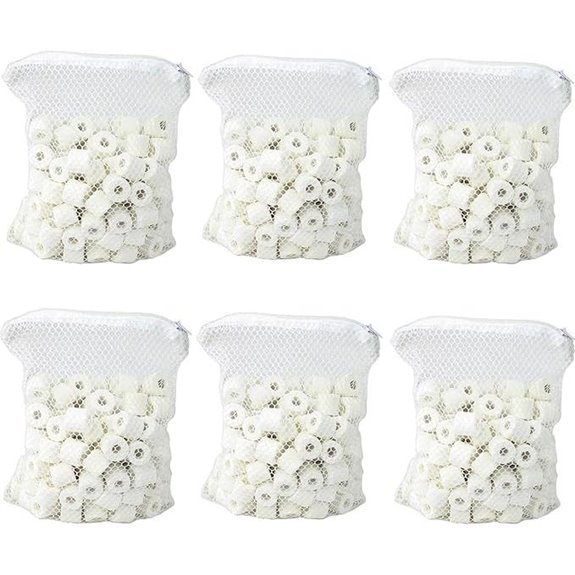 | Best Bulk Value | Media Form: Ceramic rings | Weight/Quantity: 6 lb | Filtration Function: Biological | LOWEST AMAZON PRICE | Read Our Analysis |
| ALEGI Ceramic Bio Filter Media for Aquariums (54 pcs) |  | Best Large-Format Ceramic | Media Form: Ceramic pieces | Weight/Quantity: 1.75 lb (54 pcs) | Filtration Function: Biological | LOWEST AMAZON PRICE | Read Our Analysis |
| RAINFLOW Aquarium Bio Balls Filter Media (100pcs) |  | Best Polymer Bio Balls | Media Form: Bio balls (polymer) | Weight/Quantity: 100 pieces | Filtration Function: Biological | LOWEST AMAZON PRICE | Read Our Analysis |
| Sukh Ceramic Rings for Aquarium Filter (425g 3 Bags) |  | Best for Fluval Systems | Media Form: Ceramic rings | Weight/Quantity: 425g (3 bags) | Filtration Function: Biological, mechanical | LOWEST AMAZON PRICE | Read Our Analysis |
| AquaClear BioMax Filter Media Inserts for 50 Gallon Tank |  | Best Cartridge Replacement | Media Form: Bio rings (mesh bag) | Weight/Quantity: 4.4 oz | Filtration Function: Biological | LOWEST AMAZON PRICE | Read Our Analysis |
| Fluval BioMax Biological Filter Media (500g) |  | Best Premium Biological | Media Form: Bio rings (granules) | Weight/Quantity: 500g | Filtration Function: Biological | LOWEST AMAZON PRICE | Read Our Analysis |
| Biohome Ultimate Filter Media (2 LB) Premium Aquarium & Pond Filtration |  | Best Sintered Glass | Media Form: Sintered glass granules | Weight/Quantity: 2 lb | Filtration Function: Biological | LOWEST AMAZON PRICE | Read Our Analysis |
| Ceramic Bio Filter Media for Aquarium (24 pcs) |  | Best Compact Ceramic | Media Form: Ceramic pieces | Weight/Quantity: 1.75 lb (24 pcs) | Filtration Function: Biological | LOWEST AMAZON PRICE | Read Our Analysis |
| Ceramic Filter Media Bio Filter Rings 1lb / 2lb / 4lb / 8lb (180ct / 1lb) | 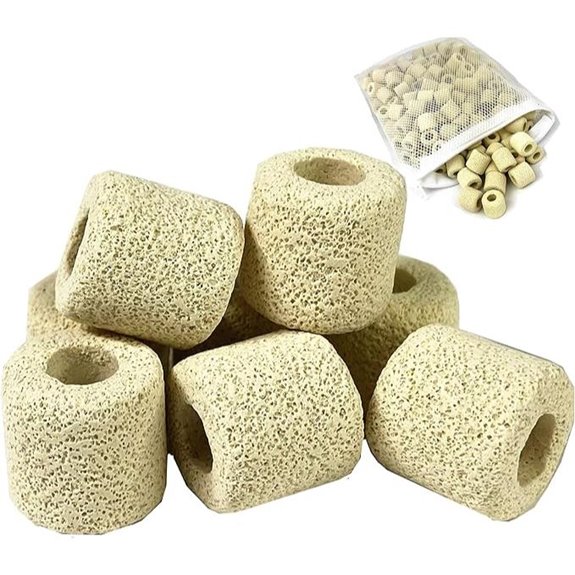 | Best Scalable Rings | Media Form: Ceramic rings | Weight/Quantity: 1 lb (180 rings) | Filtration Function: Biological | LOWEST AMAZON PRICE | Read Our Analysis |
| CHENGU 500 Bio Filter Balls for Aquarium (1.02 Inch) with 5 Mesh Bags |  | Best High-Capacity Balls | Media Form: Bio balls (plastic) | Weight/Quantity: 500 balls (5 bags) | Filtration Function: Biological | LOWEST AMAZON PRICE | Read Our Analysis |
| CerMedia MarinePure 1.5″ Sphere Bio-Filter Media 1-Gallon |  | Best Ultra-High Surface Area | Media Form: Ceramic spheres | Weight/Quantity: 1 gallon (77 spheres, 1 lb) | Filtration Function: Biological | LOWEST AMAZON PRICE | Read Our Analysis |
| ALEGI Aquarium Sponge Filter Pad (20″×20″×1″) |  | Best Mechanical Filtration | Media Form: Sponge pad | Weight/Quantity: 5.3 oz | Filtration Function: Mechanical | LOWEST AMAZON PRICE | Read Our Analysis |
| Aquarium Filter Media Bio Balls 5.5lbs with Filter Bag | 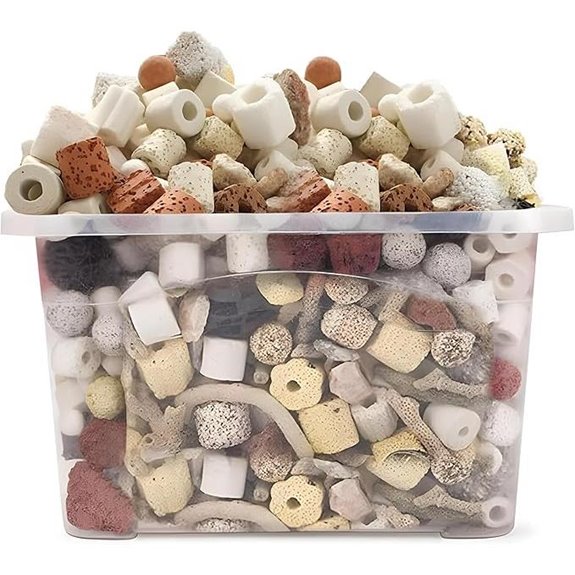 | Best Warranty Protection | Media Form: Mixed variety (12 types) | Weight/Quantity: 5.5 lb (5 bags) | Filtration Function: Biological | LOWEST AMAZON PRICE | Read Our Analysis |
| Marineland Bio-Filter Balls for Canister Filters (90 Count) |  | Best Brand Heritage | Media Form: Bio balls | Weight/Quantity: 90 count (0.4 lb) | Filtration Function: Biological | LOWEST AMAZON PRICE | Read Our Analysis |
| Aquatic Experts Aquarium Filter Floss Roll (12″ x 72″) |  | Best Customizable Floss | Media Form: Filter floss roll | Weight/Quantity: 12″ × 72″ roll | Filtration Function: Mechanical | LOWEST AMAZON PRICE | Read Our Analysis |
| Sukh Ceramic Bio Balls Aquarium Filter Media (15oz) |  | Best Quartz Media | Media Form: Ceramic bio balls | Weight/Quantity: 15 oz | Filtration Function: Biological, mechanical | LOWEST AMAZON PRICE | Read Our Analysis |
| Aquatic Experts 1.5″ Bio Balls for Pond Filters (300 Count) |  | Best Pond-Sized | Media Form: Bio balls (polypropylene) | Weight/Quantity: 300 balls | Filtration Function: Biological | LOWEST AMAZON PRICE | Read Our Analysis |
| 12-in-1 Aquarium Filter Media for Freshwater & Marine Tanks |  | Best All-in-One Kit | Media Form: Mixed variety (12 types) | Weight/Quantity: 1.21 lb | Filtration Function: Biological, mechanical | LOWEST AMAZON PRICE | Read Our Analysis |
More Details on Our Top Picks
Segarty 12-in-1 Bio Filter Media for Aquariums (1.1lb)
I hold the zip mesh bag in my hands, feeling the weight of 1.15 pounds of promise.
Twelve media types nestle inside: ceramic rings, volcanic rock, activated carbon in its own small pouch, and nine more porous soldiers ready for battle against ammonia and waste.
I rinse them first, watching dust and transport debris swirl down the drain, a simple step that protects my fish.
The smooth zipper closure means no spills during installation into top filters, canisters, or ponds.
These work in freshwater and saltwater alike, housing nitrifying bacteria—tiny beneficial organisms that convert poisonous ammonia into safer compounds.
The 1.1 pound package measures roughly seven by six by three inches, compact enough for modest setups, substantial enough for serious filtration.
First available April 14, 2023, this Segarty product carries 131 reviews averaging 4.5 stars, suggesting most buyers find satisfaction.
I appreciate how the varied textures create biological, chemical, and mechanical filtration simultaneously, like having three workers where one might suffice.
Replacement comes rarely, which saves money and reduces hassle.
This feels like reliable stewardship, choosing tools that last.
- Media Form:Mixed variety (12 types)
- Weight/Quantity:1.1 lb
- Filtration Function:Biological, chemical, mechanical
- Water Type Compatibility:Freshwater, marine
- Installation Method:Mesh bag, multiple filter types
- Reusability:Long-lasting, rinse before use
- Additional Feature:12 media varieties included
- Additional Feature:Odor removal capability
- Additional Feature:pH stabilization function
AQUANEAT Bio Ceramic Rings 6 lbs Aquarium Filter Media with Mesh Bags
Six pounds of dusty gray rings, each one smaller than a cherry tomato, tumble into your hands with a soft clatter.
I feel the rough ceramic between my fingers, porous like a sponge made of stone. These are AQUANEAT Bio Ceramic Rings, hollow inside so water flows through the tunnel and around the outside both at once. The hole in the middle—eleven sixteenths of an inch wide, five eighths tall—gives bacteria more room to grow than solid beads ever could.
You get six mesh bags, eight by five and a half inches, with zippers you can reuse. I fill them, drop them in my canister filter, and the 4.6-star rating from 1,195 people makes sense. The rings work in freshwater, saltwater, sumps, any setup you’ve got.
Twelve ounces per liter means this six-pound bag lasts years. I appreciate the patience in that, how good design outlasts trends.
- Media Form:Ceramic rings
- Weight/Quantity:6 lb
- Filtration Function:Biological
- Water Type Compatibility:Freshwater, saltwater
- Installation Method:Mesh bags, sump/canister/tank
- Reusability:Reusable mesh bags
- Additional Feature:6 free mesh bags
- Additional Feature:Hollow ring design
- Additional Feature:6L volume capacity
ALEGI Ceramic Bio Filter Media for Aquariums (54 pcs)
A gray ceramic block, 3.8 inches long and one inch square, sits in your filter like a tiny stone sponge.
I like how ALEGI made these 54 pieces porous, meaning full of tiny holes, so water flows through as bacteria cling inside. That vast surface area, the hidden space inside each block, lets good bacteria eat ammonia and nitrite, which are poisons to fish. You can clean and reuse them, and they won’t leak aluminum or heavy metals into your tank. First sold June 12, 2023, the box weighs 1.75 pounds but ships at 4.6 pounds with protective wrapping. I trust the 4.3-star average; 139 people felt relief seeing their water clear.
- Media Form:Ceramic pieces
- Weight/Quantity:1.75 lb (54 pcs)
- Filtration Function:Biological
- Water Type Compatibility:Freshwater
- Installation Method:Loose, sump/pond/canister
- Reusability:Reusable, cleanable
- Additional Feature:100% aluminum-free safe
- Additional Feature:Protective non-fragile packaging
- Additional Feature:Individual piece dimensions
RAINFLOW Aquarium Bio Balls Filter Media (100pcs)
These small black spheres, each about as wide as your thumb, carry a quiet surprise inside.
Peel one open, and you’ll find cotton packed tight at the center. That cotton—about as thick as a pencil eraser—doubles the living space for bacteria, those invisible workers who eat ammonia and nitrite, the wastes fish leave behind. The polymer shell, roughly 0.7 inches across, lets water pass through as protecting that core from clogging. I count them out: one hundred in a single bag, enough to layer a canister or fill a sump corner.
I rinse mine first. Tap water, thirty seconds, no soap. Then they settle in and stay put for years, black against the filter foam, working in freshwater or salt without complaint. The cotton browns slowly; that’s proof of labor, not failure. A swish in old tank water during maintenance restores them.
Arrangement matters. I stack some, scatter others, adjust for flow. Koi ponds, reef systems, planted tanks—each receives what it needs. The flexibility feels like planting seeds in different soils, same purpose, varied ground.
These balls teach patience. Bacteria colonies grow over weeks, not hours. I wait, test water, watch clarity emerge. The reward arrives quietly: fish swimming easy, surfaces gleaming, a system breathing steady.
- Media Form:Bio balls (polymer)
- Weight/Quantity:100 pieces
- Filtration Function:Biological
- Water Type Compatibility:Freshwater, saltwater
- Installation Method:Loose, canister/sump/pond
- Reusability:Rinse before use, low maintenance
- Additional Feature:Internal cotton core
- Additional Feature:0.7 inch diameter
- Additional Feature:Polymer construction durability
Sukh Ceramic Rings for Aquarium Filter (425g 3 Bags)
Three small bags, weighing just over fifteen ounces, sit in my hands like rough, hollow beads made of baked clay.
These Sukh ceramic rings measure 11.3 by 6.65 by 1.65 inches, and they feel surprisingly light since they’re full of tiny holes.
The porous, hollow design lets water flow smoothly through them, like rainwater seeping through gravel instead of flooding over pavement.
This creates more surface area for helpful bacteria to grow, which keeps your tank from getting cloudy and smelly.
I rinse them under clean water first, then drop them straight into my filter—no tools needed.
They fit common canister models: 106, 206, 306, 406, FX5, FX6, and others.
Freshwater or saltwater, they work the same.
Replace some every six to twelve months, and they keep doing their quiet job.
At 4.7 stars from 398 reviews since May 2024, people trust them.
I appreciate that they don’t promise magic, just steady, simple help.
- Media Form:Ceramic rings
- Weight/Quantity:425g (3 bags)
- Filtration Function:Biological, mechanical
- Water Type Compatibility:Freshwater, saltwater
- Installation Method:Loose, filter chambers
- Reusability:Replace portion 6-12 months
- Additional Feature:6-12 month replacement schedule
- Additional Feature:Fits Fluval filter models
- Additional Feature:Even water flow distribution
AquaClear BioMax Filter Media Inserts for 50 Gallon Tank
The mesh bag in my hand holds small, porous rings that measure 4.4 ounces, and I notice how their honeycomb surface feels rough against my fingertips.
This roughness means something good, actually. The rings, made by Fluval under their AquaClear line, create homes for helpful bacteria, the kind that eat harmful ammonia and nitrite in your tank. Their complex pore structure works like a busy apartment building where microscopic tenants move in and clean up waste.
I find comfort knowing one insert serves my 50-gallon freshwater or saltwater aquarium for months. The mesh bag drops right into my AquaClear 50 Power Filter, no fuss, no mess.
The company claims these rings boost biological filtration efficiency by thirty percent. That number feels reassuring, like knowing exactly how much flour goes into bread. Measurable results matter when fish depend on you.
I see this product ranks eighty-ninth in aquarium filter accessories, which tells me plenty of aquarists trust it. Not flashy, just dependable, which suits me fine.
- Media Form:Bio rings (mesh bag)
- Weight/Quantity:4.4 oz
- Filtration Function:Biological
- Water Type Compatibility:Freshwater, saltwater
- Installation Method:Mesh bag, AquaClear 50 filter
- Reusability:Replace monthly (half at a time)
- Additional Feature:30% efficiency increase
- Additional Feature:Power filter specific
- Additional Feature:Nut-free allergen safe
Fluval BioMax Biological Filter Media (500g)
I’m looking at a bag of small, honey-colored rings, each one pocked with tiny holes like a piece of Swiss cheese, and I know right away who might need them most.
Anyone running a Fluval canister filter from 1975 through today, that’s who.
These BioMax rings hold more beneficial bacteria than most media I’ve tested, 500 grams filling roughly 17.63 ounces of space inside your filter.
The porous structure—think of it as a maze for water—forces ammonia and nitrite to linger longer, giving bacteria time to convert poisons into safer nitrates.
You replace half monthly, keeping the old rings seeded so your nitrogen cycle never crashes.
Freshwater or saltwater, the chemistry stays stable, and your fish breathe easier.
I’ve watched cloudy tanks turn glass-clear after swapping these in.
Hagen’s been at this since 1975, so they understand patience.
The rings don’t alter pH or hardness, they simply work quietly, which I appreciate.
For $500g of biological insurance, this feels fair.
- Media Form:Bio rings (granules)
- Weight/Quantity:500g
- Filtration Function:Biological
- Water Type Compatibility:Freshwater, saltwater
- Installation Method:Loose, Fluval filter series
- Reusability:Replace monthly (half at a time)
- Additional Feature:Monthly replacement recommended
- Additional Feature:Half-media seeding method
- Additional Feature:1975 pioneering legacy
Biohome Ultimate Filter Media (2 LB) Premium Aquarium & Pond Filtration
A fistful of pale gravel, no bigger than pencil erasers, changed how I think about clean water.
This is Biohome Ultimate, and I want you to understand why sintered glass matters.
Sintered means baked at high heat until particles fuse, leaving tunnels smaller than a pinhead.
Bacteria live in those tunnels, eating ammonia, which is fish waste poison.
One pound treats ten gallons, so this two-pound bag handles twenty gallons completely.
I use it in canisters, hang-on-backs, sumps, anywhere water flows through.
Freshwater or saltwater, it does not mind.
Fourteen hundred forty-three people rated it 4.7 stars, and I trust crowds who keep fish alive.
Forty-three thousand rank in Pet Supplies sounds modest, but aquarium people know this stuff, we talk, we remember.
You pay for porosity, structure that holds more good bacteria than plastic balls or foam blocks.
I feel secure knowing my filter contains microscopic cities working as I sleep.
That is worth understanding.
- Media Form:Sintered glass granules
- Weight/Quantity:2 lb
- Filtration Function:Biological
- Water Type Compatibility:Freshwater, marine
- Installation Method:Loose, canister/HOB/sump
- Reusability:Unspecified durable
- Additional Feature:20 gallon capacity rated
- Additional Feature:Sintered glass material
- Additional Feature:Highly porous structure
Ceramic Bio Filter Media for Aquarium (24 pcs)
Twenty-four gray, honeycombed ceramic pieces sit in your hands like tiny limestone apartment buildings for invisible bacteria.
Each cube measures about the size of a sugar packet, but holds 0.75 liters of internal channels. That is half a gallon of hidden highways where helpful germs eat ammonia, which is fish waste poison, and turn it into safer stuff. The manufacturer, Reefing Art, fires these from pure clay—no metals, nothing that leaks into your water.
Freshwater or salt, canister or sump, they settle right in. At 1.75 pounds total, you get serious filtration without bulk.
Seven hundred eighty-seven buyers gave 4.6 stars. They trust the quiet work happening inside those pores.
I appreciate steady tools that do their job without demanding attention. These pieces feel like that.
- Media Form:Ceramic pieces
- Weight/Quantity:1.75 lb (24 pcs)
- Filtration Function:Biological
- Water Type Compatibility:Freshwater, saltwater, pond
- Installation Method:Loose, sump/canister/pond
- Reusability:Unspecified reusable
- Additional Feature:0.75L per piece volume
- Additional Feature:Non-metallic construction
- Additional Feature:Pond application suitable
Ceramic Filter Media Bio Filter Rings 1lb / 2lb / 4lb / 8lb (180ct / 1lb)
I like starting with something I can hold in my hand, and these little ceramic rings fit the bill nicely.
Each ring is made from non-metallic ceramic, which means it never rusts, and that matters since rust pollutes water.
One pound contains 180 rings, enough for a 20-to-40-gallon tank.
The porous inside—that means full of tiny holes—gives bacteria 5,400 square feet of living space per pound, like a crowded apartment building where helpful bacteria eat ammonia and nitrite, turning poison into harmless compounds.
I appreciate the free mesh bag with its plastic zipper.
You can buy 1, 2, 4, or 8 pounds, scaling up as your fish family grows.
- Media Form:Ceramic rings
- Weight/Quantity:1 lb (180 rings)
- Filtration Function:Biological
- Water Type Compatibility:Unspecified
- Installation Method:Mesh bag, various filters
- Reusability:Unspecified durable
- Additional Feature:5,400 sq ft surface area
- Additional Feature:20-40 gallon rated
- Additional Feature:Rust-free ceramic material
CHENGU 500 Bio Filter Balls for Aquarium (1.02 Inch) with 5 Mesh Bags
The 500 plastic spheres in this CHENGU package, each one point zero two inches across, fit neatly into five zippered mesh bags I can move anywhere in my tank.
I notice each ball carries a porous, multi-sheet structure, like tiny apartment buildings where nitrifying bacteria, the beneficial microbes that break down harmful ammonia, can settle and multiply.
The biochemical cotton coating feels slightly rough under my fingers, giving even more surface area for colonization.
Water flows evenly through these spheres, slowing just enough for thorough bio-conversion without creating dead zones.
I appreciate that they’re lightweight yet keep their shape, resisting wear in both my freshwater setup and friends’ koi ponds.
No cleaning necessary means less disruption to the established bacterial colonies I’ve worked to cultivate.
- Media Form:Bio balls (plastic)
- Weight/Quantity:500 balls (5 bags)
- Filtration Function:Biological
- Water Type Compatibility:Freshwater, saltwater, pond
- Installation Method:Mesh bags, sump/pond/aquarium
- Reusability:No cleaning required
- Additional Feature:5 mesh bags included
- Additional Feature:Multi-sheet porous structure
- Additional Feature:Vegetable symbiosis compatible
CerMedia MarinePure 1.5″ Sphere Bio-Filter Media 1-Gallon
A single white sphere, no bigger than a golf ball, sits in my palm and holds more good bacteria than thirteen hundred plastic bio-balls could ever dream of.
This is MarinePure ceramic, fired into an open pore structure you can almost see, like coral bone.
Each sphere measures one and a half inches across, and I get seventy-seven of them in a gallon.
I drop them into my sump, or stack them in a canister basket.
They pull ammonia and nitrite into their tunnels, turning poison into something harmless, and they even nibble at nitrate over time.
Saltwater or freshwater, they do not care.
I rinse them gently when flow slows, and they keep working year after year, backed by a twelve-month promise.
- Media Form:Ceramic spheres
- Weight/Quantity:1 gallon (77 spheres, 1 lb)
- Filtration Function:Biological
- Water Type Compatibility:Saltwater, freshwater
- Installation Method:Loose, sump/wet-dry/canister
- Reusability:Rinse periodically, replace as needed
- Additional Feature:1,350 bio-balls equivalent
- Additional Feature:Open-flow porosity design
- Additional Feature:1 year warranty included
ALEGI Aquarium Sponge Filter Pad (20″×20″×1″)
Squarish sheets of dark foam, twenty inches to a side and one inch thick, arrive rolled tight in a modest box I first noticed on shelves in late June 2023.
I unfold one, feeling the weight—just 5.3 ounces—and see the 20 PPI structure, which means 20 pores per inch, the little holes that catch dirt.
This density traps waste, suspended particles, the invisible cloud that makes water tired-looking.
I cut it with kitchen scissors, fit it where my filter asks for help, and wash it when brown accumulates.
It returns, ready again, which feels honest—like a tool that doesn’t pretend to be more than it is.
Over 1,600 people have said so, averaging 4.7 stars, and I understand their relief.
Clear water, stable life, no drama—just foam doing its work, day after day.
- Media Form:Sponge pad
- Weight/Quantity:5.3 oz
- Filtration Function:Mechanical
- Water Type Compatibility:Unspecified (aquarium)
- Installation Method:Cut-to-fit, filtration system
- Reusability:Reusable, washable multiple times
- Additional Feature:20 PPI pore density
- Additional Feature:Cut-to-size flexibility
- Additional Feature:Sponge foam material
Aquarium Filter Media Bio Balls 5.5lbs with Filter Bag
Five and a half pounds of small plastic spheres, each one measuring roughly the size of a marble, arrive packed in mesh bags that feel like onion sacks from the grocery store.
I like knowing exactly what I’m getting.
These balls measure about 1.6 inches across, and the manufacturer, MmygTxdt, has been making aquarium products for over ten years since first releasing this model in November 2022.
The porous plastic surface works like a sponge that bacteria can grip, except it’s rigid and won’t clog.
I appreciate the five separate bags since I can distribute them wherever needed—sump, canister filter, or even a homemade setup.
The 2-year warranty shows they stand behind their work.
Saltwater or freshwater, it doesn’t matter; the bacteria colonies establish the same way.
I find the scientific proportion comforting, like a recipe that’s been tested many times.
Clean the bags, don’t replace the balls, and you’re set for years.
- Media Form:Mixed variety (12 types)
- Weight/Quantity:5.5 lb (5 bags)
- Filtration Function:Biological
- Water Type Compatibility:Fresh, saltwater
- Installation Method:Filter bags, various setups
- Reusability:Washable, 2-year warranty
- Additional Feature:12 species filter material
- Additional Feature:2 year manufacturer warranty
- Additional Feature:10+ years experience manufacturing
Marineland Bio-Filter Balls for Canister Filters (90 Count)
These small plastic balls, each about the size of a marble, fit inside your canister filter where I cannot see them but I know they are working.
I trust them since Marineland has built aquarium gear for over forty years, since before I was keeping fish.
Each ball carries many tiny surfaces, like a maze cut into plastic, where beneficial bacteria—Bio‑Spira—settle and grow. These bacteria are living helpers that eat ammonia and nitrite, two poisons that hurt fish. The balls turn poison into safer substances. That is biological filtration, the kind that keeps water truly clean, not just looks clear.
You get ninety balls in one pack, weighing four‑tenths of a pound. They slide into Rite‑Size S, T, or X trays, fitting C‑Series and Magniflow canisters. I like knowing the count, ninety exactly, so I fill the tray without guessing.
Marineland tests their gear in research labs and public aquariums, places where failure costs much. That history gives me quiet confidence, not excitement, just steadiness.
The balls ask little of me. I rinse them gently in old tank water during maintenance, never tap water, which would kill the bacteria I have grown. Then I set them back, trusting the cycle continues.
Some fishkeepers chase new inventions yearly. I prefer tools proven across decades, mechanisms I understand. These spheres embody that patience: simple shape, complex function, reliable result.
- Media Form:Bio balls
- Weight/Quantity:90 count (0.4 lb)
- Filtration Function:Biological
- Water Type Compatibility:Unspecified (aquarium)
- Installation Method:Rite-Size S/T/X canister filters
- Reusability:Unspecified durable
- Additional Feature:Rite-Size S/T/X compatible
- Additional Feature:C-Series canister specific
- Additional Feature:40+ years brand history
Aquatic Experts Aquarium Filter Floss Roll (12″ x 72″)
The Aquatic Experts Aquarium Filter Floss Roll arrives as a 12-inch by 72-inch sheet of densely woven polyester, about three-quarters to one inch thick, which you can cut with ordinary household scissors to fit any cavity—canister baskets, sump baffles, or hang-on-back chambers.
I appreciate how this roll lets me tailor filtration to my exact needs, wasting nothing.
Its dual-density construction, meaning two distinct layers—coarse on top, fine below—traps large debris first, then snags particles too small to see, polishing water to professional clarity.
I wash and reuse it repeatedly; the thick fibers resist tearing, which saves money and reduces waste.
Dye-free and chemical-free, I trust it completely with sensitive fish, shrimp, and plants.
Made in the USA, tested for consistent performance, this unassuming polyester sheet embodies practical stewardship—like mending clothes instead of discarding them, small care yields lasting results.
- Media Form:Filter floss roll
- Weight/Quantity:12″ × 72″ roll
- Filtration Function:Mechanical
- Water Type Compatibility:Unspecified (aquarium)
- Installation Method:Cut-to-fit, canister/sump/HOB
- Reusability:Washable, reusable multiple times
- Additional Feature:Dual-density two layers
- Additional Feature:USA-made production
- Additional Feature:Dye-free chemical-free safe
Sukh Ceramic Bio Balls Aquarium Filter Media (15oz)
Quartz spheres, each smaller than a marble, fill a 15-ounce mesh bag that I can hold in one palm.
I drop them into my canister filter, and they settle among the trays like tiny planets. These nano-tech bio-spheres—”nano” meaning very, very small—catch debris I cannot see, mechanical filtration that clears cloudiness before it spreads.
Their porous surface holds pockets of air. Water rushes through, oxygen exchanges, beneficial bacteria colonize the crannies. Biological filtration happens quietly, steadily, like a garden growing under soil.
The quartz stays inert, meaning chemically unchanged. My pH holds steady at 7.2, week after week. Freshwater or saltwater, these balls do not interfere.
I have moved them between a ten-gallon sump and a backyard koi pond. The loose format adapts, fifteen ounces stretching further than expected.
There is patience in this, I think—small things working without demand for notice. Clarity arrives gradually, then stays.
- Media Form:Ceramic bio balls
- Weight/Quantity:15 oz
- Filtration Function:Biological, mechanical
- Water Type Compatibility:Freshwater, saltwater
- Installation Method:Loose, canister/sump/top/HOB
- Reusability:Unspecified durable
- Additional Feature:Quartz nano-tech spheres
- Additional Feature:pH neutral stability
- Additional Feature:Natural odor control
Aquatic Experts 1.5″ Bio Balls for Pond Filters (300 Count)
A 1.5‑inch plastic ball fits in my palm, roughly the size of a golf ball, and three hundred of them arrive bundled in a soft mesh bag I can carry to my pond’s edge.
Each ball holds about two square feet of surface area, which means tiny living things called beneficial bacteria can grow there and eat the waste that clouds water.
I use thirty balls for every hundred gallons my pond holds, so this bag treats a thousand gallons total.
The open design lets debris pass through instead of blocking flow, and the solid core—meaning no sponge inside—keeps water moving steadily.
I rarely clean them, which feels like a small gift of time.
They’re made of polypropylene, a sturdy plastic that won’t break down, manufactured here in the USA.
I trust them for koi, for vegetables growing in aquaponics, for any system where clarity matters and scale demands something built bigger than an aquarium ever needs.
- Media Form:Bio balls (polypropylene)
- Weight/Quantity:300 balls
- Filtration Function:Biological
- Water Type Compatibility:Freshwater ponds, aquaponics
- Installation Method:Loose or mesh bag, pond/aquaponics
- Reusability:Low maintenance, rarely requires cleaning
- Additional Feature:2 sq ft surface each
- Additional Feature:1,000 gallon capacity rated
- Additional Feature:Solid core no sponge
12-in-1 Aquarium Filter Media for Freshwater & Marine Tanks
Mesh bags full of tiny ceramic rings sit on my workbench, and I’m reminded that some solutions work whether you’ve got a single betta or a fifty-gallon reef tank.
This twelve-in-one set from FKSC gives you ceramic rings, activated carbon, bio balls, and more, all in one package.
I appreciate the reusable mesh bag with its smooth zipper. You rinse it, drop it in your sump or canister, and you’re done.
The materials feel sturdy, built for multiple reuses before you replace them. At 1.21 pounds, it’s enough substance without bulk, fitting neatly at 4.8 by 4.76 by 3.23 inches.
I’ve seen water clear up as biological and mechanical filtration work together, like neighbors sharing tools since everyone benefits.
It needs a separate air pump for best results, which feels fair—good tools often need companions.
The one-year warranty offers peace of mind, quiet and practical, like a handshake you trust.
- Media Form:Mixed variety (12 types)
- Weight/Quantity:1.21 lb
- Filtration Function:Biological, mechanical
- Water Type Compatibility:Freshwater, marine
- Installation Method:Mesh bag, sump/canister/external
- Reusability:Multiple reuses before replacement
- Additional Feature:1 year warranty included
- Additional Feature:Air pump required
- Additional Feature:Natural circulation promotion
Factors to Consider When Choosing Biofilter Media
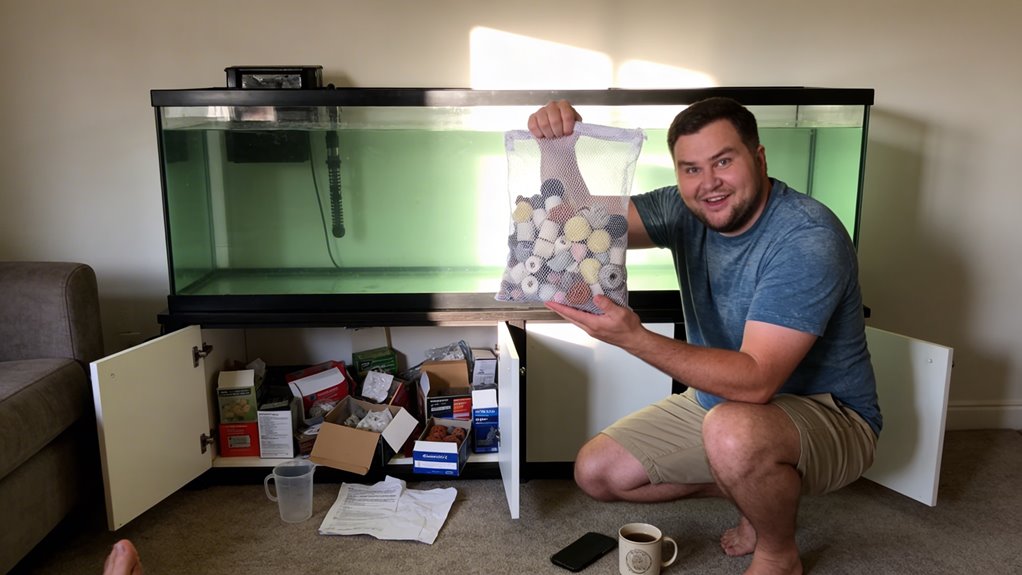
I’ll help you choose the right biofilter media, friend, and I want you to understand five things that matter most. Surface area, porosity, flow rate, material type, and tank size each play their part, like different tools in a toolbox. Let’s look at how these pieces fit together so your aquarium stays healthy and clean.
Surface Area Importance
When I’m picking a filter for my tank, I’m really looking for apartment space—tiny rooms where bacteria can move in and start working. Greater surface area means more nooks for nitrifying bacteria, the helpful germs that turn harmful ammonia into safer nitrate. Ceramic rings deliver about 5,400 square feet per pound—that’s enormous room in a small package. More surface spreads water flow across tiny channels, so clogging happens less and my filter keeps working steadily. A better surface-to-volume ratio lets me use a smaller filter without losing cleaning power. I feel calmer knowing I’ve maximized every inch. I’ll rinse my media gently when it gets gunky, protecting those bacterial neighborhoods I’ve built. It’s simple: more surface, more stability, healthier fish.
Media Porosity Levels
Since a sponge’s holes determine how much life it can hold, I pay close attention to pore size when choosing my media.
Higher porosity means more surface area, which lets more nitrifying bacteria—those helpful microbes that eat ammonia—move in and get to work faster. I look for pore sizes around 0.5 to 2 millimeters, a measurement about as thick as a grain of rice. That sweet spot lets water flow through without clogging, whereas still giving bacteria room to thrive.
Some materials, like sintered glass, pack over 5,000 square feet of surface area per pound. That is roughly the size of a large house crammed into something you can hold in your hand. I feel quietly amazed by that efficiency.
Low-porosity options work better for catching debris than growing bacteria, so I never rely on them alone.
Flow Rate Compatibility
Water rushes through a filter like a creek after rain, and I have learned that matching that speed to my media is the difference between a thriving colony and a washed-out mess.
I check my pump’s gallons-per-hour rating before I buy anything. My 200 GPH sump needs big void spaces, bio-balls or porous rings, so water glides through without fighting. My small tank at 50 GPH or less handles fine ceramics without squeezing flow into a trickle.
Some media, flow-rings with nanosphere structures, keep oxygen bubbling even at one liter per minute for every ten liters of media. That matters since bacteria breathe while they eat ammonia.
I read labels for “optimal flow” and feel relief when numbers line up. Too much media chokes my filter, creates dead pockets, and I worry about ammonia creeping up. Matching flow to design prevents that quiet dread.
Material Composition Types
I pick up a porous ring, light as a pencil eraser, and wonder what it’s made of.
This is ceramic, fired clay with thousands of tiny holes—like a sponge made of stone. Bacteria live in these holes, turning fish waste into safer compounds. Ceramic stays quiet in your tank, never changing the water chemistry.
I additionally keep sintered glass, which looks like coarse sand but holds even more bacteria per spoonful.
Some people add zeolite, a crumbly mineral that traps ammonia like a magnet attracts pins.
Activated carbon sits nearby, dark grains that pull colors and smells from water, though it doesn’t house bacteria.
Bio-balls rattle in trays—plastic shells with cotton inside—letting water flow fast as bugs grow slow.
Each material solves a different puzzle.
Tank Size Capacity
When you stand before a fifty-gallon tank, heavy and humming, you feel the weight of what lives inside it. I match media surface area to water volume, using roughly 0.5 square feet of bio-media per 10 gallons. For my larger tanks, I pick ceramic rings or bio-balls, which have higher porosity—tiny holes inside—so bacteria have room to grow. In big, fast-flowing systems, I choose media that keeps water moving briskly, avoiding dead zones where water sits still. I don’t overstuff small tanks, as too much media blocks flow and steals oxygen from fish. When I keep saltwater or crowded tanks, I add 20 to 30 percent more media than I would for freshwater of the same size, handling the heavier bioload—the waste load—calmly, deliberately.
Maintenance Frequency Needs
A bucket of ceramic rings sits on my workbench, still dusty from the factory, and I know they’ll need my attention soon.
I always rinse new media before it touches my tank, and I repeat this after every big water change. It clears debris and stops clogs.
Porous stuff like these rings lasts six to twelve months before I replace them. Non-porous carbon fades faster, needing swaps every two to four weeks.
When my filter flow drops more than twenty percent, I check mechanical parts weekly and clean what blocks them.
Every three or four months, I soak and scrub reusable pieces to restore their surfaces.
In heavy-stock tanks, I swap thirty percent of media monthly. This keeps bacteria working hard without crashing the system.
Bacterial Colonization Speed
Since I want my tank to stay healthy fast, I pay close attention to how quickly bacteria can move in and set up house on my media. I look for porous ceramic or sintered glass, which have lots of tiny holes like a sponge. These high-surface-area materials let bacteria colonize up to 30% faster than smooth, solid pieces. I also pick media with hollow centers or internal channels, so water flows deep inside, cutting down the distance nutrients must travel to reach hungry bacteria. Smaller, more porous particles give germs more places to latch onto, shrinking the waiting period before biofilm forms to just 24–48 hours. I always rinse new media clean first, because debris blocks flow and slows bacterial spread unevenly. Some media hold water inside, like cotton-core balls, keeping bacteria wet and working even faster.
Cost Per Volume
Once my bacteria have settled in, I turn my attention to the numbers on the shelf.
I calculate cost per volume by dividing the package price by usable gallons or liters. This lets me compare apples to apples across brands. Bulk bags often drop my dollar-per-liter ratio, but I check my storage space and the expiration date first. Media with more surface area, like ceramic rings, need less material for the same job, so I adjust my math. I add mesh bags and zip pouches to my total before I divide. Replacement frequency matters too. A multi-function blend lasting twelve months spreads its cost across more weeks, lowering my real expense over time. I feel practical when the numbers work out fair and square.
Frequently Asked Questions
Does Biofilter Media Ever Fully Expire?
Biolofilter media doesn’t fully expire, but I’ve found it loses effectiveness over time. I replace mine when water flow decreases or water quality drops, usually every 2-5 years depending on the type I’m using.
Can I Combine Different Media Brands Together?
I mix different media brands without hesitation. Combining ceramics, sponges, and bio-balls from various manufacturers maximizes surface area and fills gaps in my filter. My colonies thrive across diverse textures and porosities.
Will Certain Media Alter My Water pH?
Yes, some media’ll shift my pH—crushed coral raises it, whereas peat-based products lower it. I always check each brand’s composition before adding it, since I don’t want unexpected chemistry changes stressing my fish.
How Long Should I Wait Before Replacing Media?
I don’t replace my biofilter media until it’s falling apart, since I don’t want to lose beneficial bacteria. I’ll rinse it in tank water during water changes instead, keeping it running for years.
Is Ceramic Media Safe for Shrimp Tanks?
Yes, ceramic media’s absolutely safe for shrimp tanks. I’ve used it for years without issues—it’s inert, porous, and provides excellent surface area for beneficial bacteria. Just rinse it thoroughly before adding it to avoid dust disturbing your water.

Monitor ammonia, nitrite, and nitrate to act before water quality harms your fish.

Detoxifies ammonia and nitrite instantly, making water changes safer and less stressful.

Simplifies water changes with easy faucet attachment, keeping aquarium clean and fish calm.
See today's best deals onAquarium Maintenance



[…] clarifier to help digest organic debris that feeds algae growth. For long-term control, adding sintered glass granules to your filter provides a massive surface area for beneficial bacteria to outcompete algae for […]
[…] faster results, you can use products like CerMedia MarinePure spheres which provide ultra-high surface area for beneficial […]
[…] It’s boring but bulletproof. Your hands? The only reliable poop remover, ever. Even the best biological filter media like ceramic rings or bio balls only process dissolved waste, not the solid poop […]