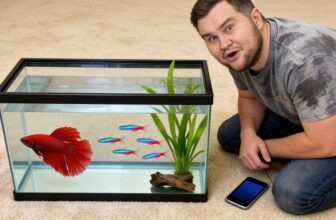
Puffer tankmates aren’t friends—they’re roommates that survive a tiny predator. You need the right setup first: a cycled tank with hiding spots, dim lighting, and soft acidic water.
Start with bottom-dwellers like bumble bee gobies or corydoras, plus fast-breeding snails, before adding your puffer. Match salinity to your puffer species—brackish types need ~1 Tbsp marine salt per 10L.
Keep schools of 6-8 neon tetras that dart away quickly. Your best bet? Build a snail colony early; it trims their beak.
Stick around and you’ll nail the full setup order.
At A Glance
- Cycle tank 4-6 weeks before adding puffer, then introduce tankmates first for gradual acclimation.
- Choose fast swimmers like neon tetras or bottom-dwellers like gobies to avoid puffer aggression.
- Maintain brackish specific gravity 1.002-1.006 and soft acidic water at 75-85°F.
- Provide hiding spots with caves, driftwood, and dim lighting to reduce stress.
- Avoid slow fish like guppies or aggressive species like tiger barbs as tankmates.
Why Pufferfish Tankmates Need Extra Planning
Since you’re basically adding roommates to a fish that treats everything like a chew toy, planning for pufferfish tankmates isn’t optional—it’s survival.
Adding roommates to a fish that treats everything like a chew toy isn’t optional—it’s survival.
You’re not just decorating; you’re negotiating a peace treaty with a tiny, toothy psychopath.
Puffers don’t share well. They’re slow, fragile, and stress-prone. Fast fish bully them; big fish eat them. Snails? Those aren’t pets—they’re self-replenishing snacks.
Start with a bare tank, cycle it fully, then add tankmates *before* the puffer. This lets everyone acclimate gradually, reducing chaos.
Bottom line: skip the “friendship” fantasy. Plan for separation, not social hour. Your puffer’s calm equals your success. Consider adding a mesh lid with high light transmission to prevent jumpers while maintaining plant health.
What Kind of Pufferfish Do You Have? Freshwater vs. Brackish First
Before you start picking out friends for your puffer, you need to know what you’re working with. Freshwater puffers, like dwarf puffers, thrive in soft, low‑salt tanks. Brackish puffers, like figure‑eights, need salt—roughly 1 tablespoon per 10 liters. Mix them up, and you’re asking for trouble.
| Water Type | Example Species | Salt Requirement |
|---|---|---|
| Freshwater | Dwarf Puffer | None |
| Brackish | Figure‑Eight | ~1 tbsp/10L |
| True Marine | Porcupine Puffer | Full saltwater |
Get this right first—your puffer’s life depends on it. Wrong water kills fast. Check your species, test your water, and join the club of people who don’t rush things. Remember that adequate filtration is critical for any puffer setup, just as it is for goldfish.
Start With the Right Tank Setup Before Adding Any Fish
Once you’ve nailed down your puffer’s water type, it’s time to set up the tank.
Start empty—no fish yet.
You’re creating a puffer paradise, not a zoo.
These guys are territorial, so give them hiding spots with caves, driftwood, or PVC pipes.
Leave open swimming room too; they’re clumsy hunters, not sprinters.
Set décor to break sightlines, reducing stress.
You’re building a fortress for a grumpy little torpedo.
Get the filter and heater dialed in for stable temps and flow.
For community tanks, larger tanks reduce stress and require less frequent water changes.
Patience now saves heartache later.
Trust me—your puffer’s future tankmates will thank you.
Cycle Your Tank and Build a Snail Colony for Future Tankmates
Your tank’s empty, hiding spots are in place, and the filter’s running—now it’s time for the boring but non‑negotiable part: cycling. You’re growing good bacteria to eat fish waste; grab a test kit (like API Master, $30) and dose ammonia daily for 4–6 weeks. Once nitrites hit zero, you’re ready. Right then, add ramshorn snails—they breed fast, crash‑proof your cycle, and become puffer snacks. Here’s the timeline:
| Week | Tank Action | Snail Colony |
|---|---|---|
| 1 | Dose ammonia to 2 ppm | No snails yet |
| 2 | Watch nitrite spike | Add 10–15 ramshorns |
| 3 | Nitrates appear | Snails start laying eggs |
| 4 | Cycle completes, nitrates under 20 ppm | Colony at 50+ snails |
Bottom line: don’t skip steps. Patience now means you’re in the club with a self‑sustaining food source. To ensure strong shells and healthy reproduction, maintain water hardness between 5–15 dKH.
Best Bottom-Dwellers: Bumble Bee Gobies, Clown Plecos, and Corydoras
As puffers claim the midwater, you need a cleanup crew that won’t become a chew toy—enter the bottom‑dwellers. These tough, low‑profile species keep your tank tidy without triggering puffer panic.
- Bumble Bee Goby: Tiny (1.5″) and brackish‑born, they’ll patrol the sandbed in groups, rarely conflicting with puffers. Cost: ~$6 each.
- Clown Pleco: A 5″ driftwood‑munching bulldozer that tolerates slow salt creep. It’s more “I’ll ignore you” than “let’s fight.”
- Corydoras: Hardy, 3″ catfish that clean leftovers without fuss. They’re walking vacuums, not opponents.
Pick one to anchor your cleanup crew—they’re the quiet teammates your puffers never knew they wanted. For isolation, consider using a Fluval Multi-Chamber Breeding Box to separate sick or injured bottom-dwellers from aggressive puffers.
How Bottom-Dwellers Reduce Puffer Aggression
Since puffers spend most of their time hovering mid-tank, bottom-dwellers essential live in a different zip code—one that naturally defuses most aggression. You see, puffers are territorial, not malicious. They guard mid-water space, leaving the bottom zone wide open.
| Bottom-Dweller | Aggression Reduction |
|---|---|
| Bumble Bee Goby | Stays on substrate, avoids puffer’s mid-water turf. |
| Clown Pleco | Hides under driftwood, out of puffer’s line of sight. |
| Corydoras | Busy snuffling sand, too slow to trigger chases. |
| Bottom Zone Effect | Creates spatial buffer, puffer ignores lower 30% of tank. |
These guys aren’t threats; they’re furniture. Pick one, and you’ll belong to the peaceful-puffer club. Seriously, it works. For puffers in brackish setups, the Bumblebee Gobies require a specific gravity of 1.005-1.010 and are small enough to remain unseen.
Top Snack Species: Pond Snails and Ramshorn Snails
Why would you spend money on fancy feeder fish when snails breed themselves into a sustainable, self-replenishing snack buffet? Pond and ramshorn snails are your puffer’s dream—they’re cheap, prolific, and require zero effort from you.
- Zero cost after setup: A starter batch costs under $5, and they’ll multiply faster than your puffer can eat them.
- Hardy to a fault: They thrive in brackish or freshwater, so they survive alongside puffers without special care.
- Crunchy, healthy treats: Their shells naturally wear down puffer beaks, preventing overgrowth and keeping teeth trim.
You’ll never need to buy live food again—just let them breed in a spare tank or corner. Unlike many fish that require specific soft vegetables and algae to prevent bloat, snails offer a natural trimming solution for puffer teeth without dietary risks. Your puffer gets a constant buffet, and you get easy peace of mind.
Quick Swimmers That Outrun Puffers: Neon Tetras and Harlequin Rasboras
What’s faster than a puffer’s curiosity? You’ve guessed it: neon tetras and harlequin rasboras. These little speedsters dart away before your puffer even blinks, keeping the peace without a nip.
| Species | Max Size | Salinity Tolerance |
|---|---|---|
| Neon Tetra | 1.5 in | Low (0–1.005) |
| Harlequin Rasbora | 2 in | Low (0–1.002) |
| Price per fish | $1.50–$3.00 | Cheap, replaceable |
| Activity Level | High | Constant motion |
| Schooling Need | 6+ | Keeps them brave |
You’ll see them zip around, never slowing down. They’re not snack-sized threats—they’re just too fast. Stick with tight schools of 6–8, and you’re golden. Maintain soft acidic water at 75–85 °F and dim lighting to keep neon tetras vibrant and stress-free.
Mollies as Tankmates: Hardy, Peaceful, and Brackish-Adaptable
- Size matters: Mollies reach 4.5 inches, big enough to avoid being a snack.
- Group up: Keep 5+ mollies—they’re social, and a school calms everyone.
- Salt tolerance: They handle gradual salinity shifts, perfect for your brackish setup.
You’ll fit right in with this crew, no drama. Mollies give you a stable, low‑stress tank vibe—your puffer stays chill, you stay sane. For a similarly robust setup, Fritz Aquatics offers a liquid nitrifying bacteria that accelerates cycling in 10 days for a 55‑gallon tank.
Which Fish to Avoid (And Why They’re Trouble)
Mollies are great, but not every fish can hang with a puffer.
Steer clear of slow, fin‑nipped species like fancy guppies or bettas—they’re basically moving targets.
Active, aggressive fish like tiger barbs? They’ll bully your puffer, causing stress and nipped fins.
Bottom line: avoid anything that’s too slow, too fast, or too fin‑nippy.
Stick with calm, hardy tankmates that share the same brackish zone, and you’ll build a peaceful school.
For a calmer setup, consider adding Ember tetras or similar peaceful species from soft, acidic water conditions.
Your puffer’s a predator, not a peacekeeper—so don’t set it up for failure.
Introduce Future Tankmates Before the Puffer
Why wait to add tankmates until after your puffer has claimed the whole tank as its personal kingdom? You’re setting yourself up for a fin-nipped disaster.
Why wait until your puffer claims the whole kingdom, inviting a fin-nipped disaster?
Instead, introduce your future tankmates first—let them settle in, claim their own nooks, and acclimate before the puffer ever arrives.
- Start with the bottom-dwellers: Bumble Bee Gobies (15 mm, $5‑8 each) are shy, peaceful, and thrive in groups of three or more.
- Add a fast-breeding snail colony (ramshorns or pond snails) to establish a constant, live food source they can outpace.
- Let them hang out for two weeks; this gives them confidence and a safe territory before the puffer enters as the newcomer.
- Maintain stable specific gravity 1.002–1.006 using marine salt and dechlorinated water to support goby health and reduce stress.
This way, your puffer arrives as a guest, not a conqueror.
How to Raise Salinity for Brackish Puffer Tankmates
Use marine salt mix, not table salt. Add just 1 tablespoon per 10 liters of tank water, then wait a week.
Repeat that weekly, giving everyone time to adjust. You’re aiming for a specific gravity of 1.005 to 1.010—use a hydrometer to check.
Go slow, test often, and your crew will thrive. Rushing it? That’s not belonging; that’s a disaster. Steady wins the brackish game.
A gentle bubble flow from a dense foam sponge filter supports oxygen levels during these gradual salinity adjustments.
Early Signs of Stressed Tankmates
How do you know when a tankmate is about to crack under the pressure of living with a puffer? They’ll show it—loud and clear—before you lose them.
How do you know when a tankmate is about to crack under the pressure of living with a puffer? They’ll show it—loud and clear—before you lose them.
- Hiding constantly: Your goby or pleco caves in, never leaves its hideout, even for dinner. That’s not shyness; it’s survival mode.
- Fin clamping & torn edges: Fins stay glued to the body, or you see fresh nicks. Your puffer’s practicing nibbling, not playing.
- Refusing food: A normally hungry molly or cory ignores flakes. Stress kills appetite first—a dead giveaway something’s wrong.
Mixed species with differing needs, such as a pH range of 7.0–8.0, can increase tension if the puffer’s preferences clash with a tankmate’s comfort zone.
Spot these early, and you’ve got time to rearrange hiding spots or separate the bully. Ignore them, and you’re planning a funeral.
Feeding Strategies to Prevent Competition Without Overfeeding
That earlier checklist of stressed tankmates is your early warning system, but even though nobody’s hiding or clamped up yet, the real fight happens at feeding time.
You’re not running a buffet—you’re running a stingy snack bar. So, target-feed your puffer with tongs—one snail or shrimp chunk at a time—while your bottom‑dwellers get sinking pellets at the opposite end. That’s it. No competition, no overfeeding.
Here’s your cheat sheet:
- Use feeding tongs ($8‑15) for precise puffer delivery.
- Drop algae wafers for corys and plecos first.
- Time it: puffers eat fast, so they finish before others arrive.
Bottom line: separate zones, separate food, zero leftovers.
Always maintain low nitrite levels by sticking to recommended weekly water changes of about 30% to support filter bacteria activity and reduce ammonia buildup.
Frequently Asked Questions
Can Puffers Live With Shrimp or Crayfish?
No, you can’t keep puffers with shrimp or crayfish. These crustaceans become expensive snacks. Puffers crush shells with their beak‑like teeth—it’s what they’re built for.
- Shrimp vanish within hours.
- Crayfish get relentlessly nipped until dead.
Your puffer doesn’t need tankmates that look like food. Stick to snails as a live buffet. Save shrimp for a separate tank. Bottom line? Save your money—those critters won’t last a day.
How Do You Quarantine New Tankmates for Puffers?
You’ll set up a separate quarantine tank—just a simple 10‑gallon works—and run it for 4–6 weeks before adding newcomers.
Watch for clamped fins, white spots, or erratic swimming, common signs of stress or illness.
Puffers are fragile drama queens, so skip the medicine except you’re certain.
Want to keep your puffer safe? Quarantine is non‑negotiable.
It’s boring, but so is losing your fish.
Bottom line: a spare tank now saves you heartbreak later.
Do Pufferfish Need a Varied Diet Besides Snails?
Do puffers need variety? Absolutely—snails alone won’t cut it for long.
You’ll want a rotation of crunchy foods like shrimp, clams, or frozen krill to keep their teeth trimmed and boredom at bay.
Think of it as their dental plan, minus the jokes. A shell‑crushing diet prevents beak overgrowth and keeps them feisty.
Give them different textures every few days. Your puffer will thank you with its personality.
Bottom line: mix it up, or watch your snail buffet get rejected.
What Tank Size Is Minimum for Puffer Communities?
You’re looking at a minimum 30‑gallon tank for puffer communities—anything smaller, and you’re asking for nipped fins and constant stress. Puffers are territorial and need space to claim their own corners.
A 40‑gallon breeder works best: it’s wider, giving bottom‑dwellers like Corydoras room to roam as you stack snail‑providing rocks.
Stinginess on gallons means a war zone, not a community. Trust me, you’ll regret cramming them in—start big, save yourself the hassle.
Bottom line: 30 gallons minimum, 40 for peace.
How Often Should You Replace Snail Colonies in the Tank?
You don’t need to replace snail colonies at a fixed interval—they’re self-sustaining. Just keep them fed and they’ll breed nonstop, giving your puffers a constant buffet.
Add a few new snails every month or two to prevent inbreeding, but honestly? Overfeeding is a bigger risk than replacement. Your tank’s balance matters more than a strict schedule.
Bottom line: let nature handle it, with a light hand from you.
Rounding Up
You’ve got the blueprint now—so don’t blow it. Plan first, buy second. Start species-only, then add bottom-dwellers like bumble bee gobies or corydoras that dodge your puffer’s grumpy path. Fast-breeding ramshorn snails? They’re your secret weapon against hunger-driven chaos. Cycle the tank, raise salt slowly for brackish setups, and introduce tankmates before the puffer. Watch for stressed fish clamping fins or hiding. Bottom line: patient setup beats a quick, bloody disaster. You’ll build a tank that actually works.