Popeye goldfish disease shows up as one or both eyes bulging from the socket, and while it looks dramatic, it doesn’t have to spell disaster for your fish. Most aquarists panic at the sight, but understanding whether you’re dealing with water quality issues, physical trauma, or bacterial infection makes all the difference in treatment. Clean water is your foundation – grab a $12 liquid test kit and commit to 25% weekly changes before anything else. Aquarium salt works wonders for injury-related cases at 1 teaspoon per gallon, yet using salt during bacterial infections can actually accelerate damage. Medicated foods in a quarantine tank become your go-to when pathogens are involved, with most cases resolving within two weeks of consistent care. Wondering which scenarios turn bulging eyes into ruptured disasters, or why that salt remedy sometimes backfires? Let’s break down exactly what separates a quick recovery from a tank-wide nightmare.
At A Glance
- Popeye is a bulging eye symptom often caused by injury, poor water quality, or bacterial infection.
- Early signs include a slight, cloudy eye bulge; progression can lead to rupture or eye loss.
- Test water for ammonia and nitrites first; cloudy eyes suggest bacterial infection, not injury.
- Treatment varies: clean water and aquarium salt for injury; antibiotics in quarantine for infection.
- Clean water with weekly 25% changes prevents most cases and can reduce swelling within days.
What Exactly Is Popeye in Goldfish?
Popeye in goldfish is fundamentally a swollen, bulging eyeball – technically called exophthalmia – and it’s not a disease itself, just a symptom that something else went wrong.

Detoxifies ammonia and nitrite instantly, making tap water safe during every water change.

Promotes healing and reduces fluid pressure on injured eyes, aiding recovery from popeye.
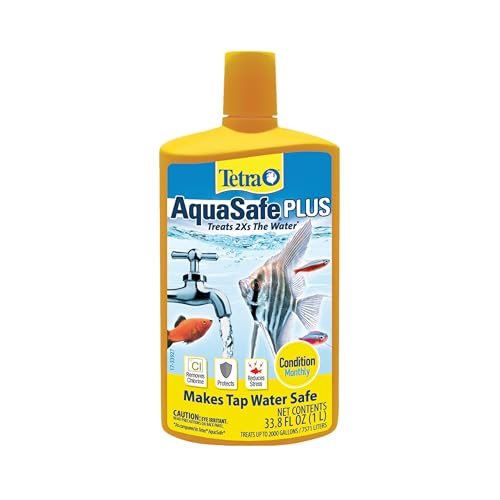
Instantly neutralizes harmful chemicals and adds protective slime coat to reduce stress.
See today's best deals onWater Treatments
So when you spot a fish with that bug-eyed look, you’re not diagnosing a specific sickness; you’re seeing a clue.
The eye prognosis depends entirely on catching the real culprit early.
Luckily, contagious symptoms? Rare.
This condition itself won’t spread to your other fish, but the infection causing it just might.
That means you’re part of a club that checks water, quarantines, and watches closely – because a quick recovery is the best kind of belonging.
Proper tank maintenance with regular water changes helps reduce the stress that can trigger underlying infections.
Using ammonia test strips to monitor water quality can help detect dangerous spikes before they cause health issues.
The Main Causes of Popeye in Goldfish
| Cause Category | Common Triggers |
|---|---|
| Injury | Fights, sharp decorations |
| Water Quality | Ammonia spikes, nitrates |
| Infection | Bacteria, parasites |
| Internal Issues | Kidney failure, genetic factors |
Understanding these helps you belong to the group of owners who know what’s really going on. For example, water quality issues like ammonia spikes can be temporarily neutralized with liquid conditioners such as Seachem Prime or API AMMO-LOCK while you work on fixing the root cause. For sustained improvement, products like Tetra AquaSafe Plus provide instant action crucial for goldfish in distress during emergency rescues.
How to Spot the Early Signs of Popeye
In the earliest stages, spotting popeye means looking closer than usual – a slight bulge on one or both eyes that might just look like a quirk of lighting or a full belly. You’ll notice the eye seems a bit larger, maybe a little cloudy, like a tiny marble pushing forward. That subtle shift is your cue. Catch it now, and you dodge the nightmare of early rupture or eye loss. Establishing consistent testing of ammonia levels using a reliable test kit is crucial, as poor water quality directly triggers eye infections. Check your goldfish daily, especially after feeding. A quick glance saves heartache. Trust that gut feeling – if something looks off, it probably is.
When Popeye Turns Severe: Rupture and Eye Loss
The eye, once just a little puffy, can turn into a full-blown crisis. Untreated fluid pressure builds, forcing rupture. Eye rupture is a terrifying sight, but it’s not always the end. Isolating the goldfish in a breeding box can provide a controlled environment for treatment.
A ruptured eye can heal, though it will stay blind. Worse is total eye loss, where the eye pops clean out. That eye is gone forever, and the fish may die from weakness.
Your quick action prevents this. Catching early swelling, improving water quality, and using aquarium salt give your goldfish a fighting chance. Using a dedicated quarantine tank ensures your fish can recover in a clean, controlled environment. Don’t wait until it’s a lost cause. Your fish counts on you.
Is Popeye Contagious to Other Fish?
| Cause of Popeye | Contagious? |
|---|---|
| Physical injury | No |
| Bacterial infection | Yes, to other fish |
| Dirty water / poor diet | Not directly, but risk to all |
Quarantine any fish showing symptoms, pronto. Your tank’s harmony depends on it. Always remove activated carbon from your filter before medicating to preserve treatment potency. For repairing any tank damage during quarantine, use a 100% silicone sealant that is non‑toxic and fish‑safe.
How to Diagnose Popeye’s Cause Without a Vet
Since you already know that popeye itself doesn’t spread but its underlying bugs can, the next step is playing detective at home.
Start with water quality – test ammonia and nitrites. To get accurate readings, use a kit that claims 99% accuracy and tests both parameters in under a minute. Cloudy, bloodstained eyes suggest bacterial infection, not injury. Watch for parasitic hitchhikers like white spots. If both eyes bulge with slow progression, think metabolism or internal trouble, which often means vet time. To support recovery, consider adding a 254 nm UV‑C sterilizer to eliminate floating bacteria or parasites.
But here’s the blunt truth: severe cases with eye rupture may demand eye removal, a surgical treatment you absolutely cannot do solo. So, diagnose honestly, but know your limits.
How to Treat Popeye Caused by Physical Injury
Treating popeye from a physical injury is often the easiest scenario, since the fix is mostly about playing nurse, not detective. You’re just keeping the wound clean and the water pristine.
First, do a 50% water change and add aquarium salt – one tablespoon per five gallons – it reduces fluid pressure on the eye. Skip the antibiotic alternatives here; they’re overkill for a scratch.
Spend extra time observing your visual tank each day, looking for redness or cloudiness. For efficient water changes, consider a siphon vacuum with a hose that resists kinking in tight stands. Manual models often use a press-pump to initiate flow without needing electricity.
Feed high-quality pellets to boost healing.
With calm, consistent care, most goldfish bounce back fully within a week or two.
How to Treat Popeye From Bacterial or Parasitic Infections
When a physical injury isn’t the culprit, and you’re looking at a bacterial or parasitic infection, the treatment game changes completely.
First, move the fish to a quarantine tank – think of it as their own little hospital room.
First, move the fish to a quarantine tank – their own little hospital room.
Then, medicate using antibiotic food; it’s far more effective than dumping antibiotics into the water, trust me.
Clean water is your best friend here.
Do daily partial water changes, testing parameters like pH and nitrates.
You’re part of a crew that cares.
A liquid product containing live nitrifying bacteria can help convert toxic ammonia and nitrite in the quarantine tank, supporting biological filtration during treatment.
To further support healing, supplement the water column with chelated iron and potassium from a leaf-feed formula to boost plant health and reduce stress on the goldfish.
This combo gives your goldfish its best shot at bouncing back, eyes clear and swimming strong.
How to Treat Popeye Caused by Internal Disease
| Support Care | Why It Matters |
|---|---|
| Test water daily | Catches hidden toxins |
| Partial water changes | Reduces stress on organs |
| High-quality food | Boosts weak immune systems |
| Vet consultation | Only way to treat internal issues |
No quick fix exists here, so be patient with your fish.
Feeding immune-boosting food can support recovery by providing essential vitamins and probiotics.
Supplying a full-spectrum, bioavailable vitamin supplement may further enhance recovery, as it mimics the natural diet of filter-feeders and promotes color enhancement in fish.
When Aquarium Salt Helps (and When It Hurts)
Although the internal disease route leaves few hands-on options beyond water changes and vet visits, aquarium salt offers a more active tool for other popeye cases – but it is not a cure-all.
Salt helps maintain osmotic balance, reducing fluid buildup behind the eye from physical injuries. It’s cheap, easy, and safe at 1 teaspoon per gallon.
Salt helps maintain osmotic balance, reducing fluid buildup behind the eye from physical injuries.
But when popeye stems from bacterial infections or internal problems, salt can backfire. It raises stress, risks salt toxicity, and interferes with antibiotics. For example, using a substrate like Carib Sea Moonlight Sand can provide a soft, gentle bottom that reduces injury risk in goldfish tanks.
Think of salt as a gentle nudge, not a magic bullet. Use it only for mild, injury-based cases – otherwise, stick to clean water and proper meds. Fish tank water chemistry designed for goldfish often pairs with Gold Buffer to stabilize pH without phosphates.
Your fish will thank you.
Why Clean Water Heals Popeye Faster Than Medicine
While antibiotics get all the glory, but clean water does the heavy lifting. Dirty water inflames popeye faster than any bug.
You see, pristine water chemistry keeps swelling down, letting the eye heal naturally. Tank hygiene removes the bacteria before they even attack.
Medicine fights infection, indeed, but clean water treats the root cause: stress.
A 25% weekly change, with a dechlorinator costing $5, beats most antibiotic doses. Get a $12 test kit. Check ammonia, nitrite, nitrate. Lower them, and your fish’s eye starts shrinking within days.
For precise monitoring of temperature drift and heater failures, an Inkbird ITC‑308 provides phone alerts alongside standard temperature control.
That’s the real cure – simple, cheap, and it works.
For precise monitoring, consider a digital 10-in-1 kit that eliminates color-chart guesswork through your phone.
Best Prevention Strategy: Nutrition and Water Quality
Clean water heals, but the real trick is keeping popeye from showing up at all. Prevention hinges on nutrition delivery and waste dilution. Good food, like Omega One Goldfish Pellets ($8 for 4 oz), delivers balanced vitamins and protein straight to their system, boosting immunity so bacteria can’t take hold. Combined with weekly 25% water changes, you dilute waste that fuels pathogens. Adding API Pond Salt at ½ cup per 100 gallons seasonally improves gill oxygen uptake and reduces fungal infections, further supporting fish health. For extra protection, use a heater with overheat shutdown at 97°F to maintain stable water temperature and reduce stress on your fish.
| Factor | How It Works |
|---|---|
| Nutrition delivery | High-quality flakes or pellets feed the immune system. |
| Waste dilution | Regular water changes flush out harmful ammonia and nitrates. |
| Test frequency | A $15 API Master Kit lets you tweak parameters weekly. |
The bottom line? Stick to this duo, and you’ll rarely see a bulging eye.
How Daily Observation Can Spot Popeye Early
Most goldfish owners don’t notice popeye until the eye looks like a tiny, glossy marble about to launch free. Daily vigilance, a few minutes each morning, catches subtle shifts.
You’re checking for behavioral cues like rubbing against gravel or reduced appetite. A slight haze or uneven bulge means trouble. This isn’t paranoia; it’s belonging to the club that keeps fish healthy.
Notice one cloudy cornea? Act fast – early detection means simple water changes. Ignore it, and you’re facing ruptures or death.
Your tank’s quiet language speaks; daily observation translates it. Prevention starts with watching, not waiting.
If your tank lacks adequate filtration, ammonia spikes can worsen eye health rapidly. A quiet 3-in-1 pump provides consistent filtration, oxygenation, and water movement to help prevent such spikes.
3 Popeye Recovery Myths That Could Kill Your Fish
Desperate owners, in their urgency to save a bulging fish, often fall for three popeye recovery myths that – despite sounding helpful – actually push goldfish closer to organ failure or death.
Myth | The Sad Truth
— | —
Leave the eye alone | Untreated fluid builds pressure, bursts the eye.
Dump in extra salt | Messes with antibiotics, stresses kidneys – pop.
Starve the fish | Weakens immune system; recovery tank is dry.
Myth busting – and sticking to a real recovery timeline – keeps your buddy swimming. A clear, gentle treatment plan, not guesswork, saves the day. You’re part of the smart tank crowd now. Don’t let myths sink your goldfish; fresh water and patience are your real friends. Using a tool like an ORP monitor can help you track water quality and prevent the bacterial issues that cause popeye. A 8‑in‑1 Water Test Kit allows you to detect early ammonia spikes that often trigger popeye infections.
Frequently Asked Questions
Can a Goldfish Survive With Only One Eye?
Yes, a goldfish can survive with one eye, though vision acuity is reduced and eye symmetry is lost. The fish adapts by relying more on other senses and its lateral line.
Survival depends on the cause; if from injury, recovery is likely with clean water. If from infection, the underlying issue must be treated – think antibiotics or vet care.
A one-eyed goldfish still lives a full life, just may miss food on its blind side. You’ll need to adjust feeding and tank layout.
Does Popeye Always Cause Permanent Blindness?
Popeye does not always cause permanent blindness. Vision recovery hinges on two severity factors: how early treatment starts and the underlying cause.
Caught fast, with good water and meds, a goldfish often sees fine again – think of it like a bruise healing. But let it fester, and the eye may rupture, ending in blindness.
The takeaway: act quick, and you’re part of a community that saves visual function.
Can Popeye Be Cured Without Any Medication?
Can popeye be cured without any medication? Yes, sometimes – think of it as fixing a minor leak before it floods the house.
If the cause is a physical injury or mild water quality issues, natural remedies like improving water quality with regular changes and adding aquarium salt (not table salt) often work.
But if bacteria or parasites are the culprit, medication is usually unavoidable.
Recovery depends on catching it early, so test the water, feed quality flakes, and watch for signs.
If the eye is already bloodstained or ruptured, professional help is needed.
How Long Does It Take for Popeye to Heal?
Healing timeline for popeye varies wildly, typically one to three weeks.
Recovery speed depends entirely on the underlying cause and how quickly treatment starts.
Caught early with clean water? You’re looking at a week, maybe ten days.
Advanced cases? That timeline stretches, sometimes past a month.
Pro tip: don’t rely on magic.
If the eye ruptures, healing takes longer, and the fish likely loses vision.
Bottom line: act fast, keep water pristine, and hope for the best.
Should I Euthanize a Goldfish With a Ruptured Eye?
A ruptured eye is like a popped balloon – it’s done. Euthanasia ethics lean toward ending suffering when the eye is lost; prognosis is zero recovery.
Humane methods, like clove oil (around $10) or a sharp blow, are kindest. It’s not a failure to choose this. You’re the fish’s last advocate.
Clean water won’t regrow an eye. So, yes, let it go gently. It’s the fish-equivalent of mercy.
Rounding Up
Popeye isn’t a mystery, it’s a water quality report card your goldfish is failing. Clean water – specifically zero ammonia, zero nitrites – fixes more cases than any fancy bottle. Check parameters daily, not weekly. Skip the snake oil, skip the salt baths for minor bulges, and skip the myth that cloudy eyes mean blindness. A five-dollar test kit saves a fifty-dollar goldfish. Your filter does the heavy lifting, you just keep the water pristine, and popeye usually backpedals faster than a politician at election time.

Accurately monitors ammonia, nitrite, and pH to catch water quality issues before they cause popeye.

Quickly checks five key water parameters in under a minute for routine prevention.

Continuously displays free ammonia levels, giving you a constant early warning.
Check discounted items inTest Kits