Guppy parasites and diseases can strike even the most seasoned aquarist’s tank, turning vibrant swimmers into lethargic shadows overnight. Most outbreaks trace back to three familiar suspects: dirty water, temperature swings, and stress. Parasites like Ich burrow under scales, causing those dreaded white spots; protozoan infections leave colors dull and swimming wobbly. Bacterial columnaris masquerades as mouth fungus but demands targeted treatments like Formalin or Maracyn. Ammonia poisoning surfaces as unsettling red blood spots – your immediate lifeline is a 50% water change. Fungal rot escalates fast and often needs vet-grade medication. Viral Hemorrhagic Septicemia remains incurable, making prevention through stable 72–82°F water and strict three-week quarantine non-negotiable. The specifics below keep your finned friends thriving.
At A Glance
- Isolate sick guppies immediately to protect the community tank.
- Maintain stable water parameters: 0 ppm ammonia and 72–82°F.
- Test for ammonia/nitrite toxicity causing red blood spots; cure with clean water.
- Treat bacterial infections like Columnaris with Maracyn or aquarium salt.
- Prevent disease with proper feeding: adults 1-2 mins, fry 3-5 times daily.
Stress and Overcrowding: The Hidden Cause of Most Guppy Illnesses
Most guppy illnesses trace back to two related culprits: stress and overcrowding. Think of a cramped elevator, but with fins.

Treats ich fast, restoring your guppy's color and appetite.

Fights bacterial infections like columnaris and fin rot effectively.

Reduces stress and helps parasites detach while supporting gill function.
See today's best deals onAquarium Medications
Most guppy illnesses trace back to two related culprits: stress and overcrowding.
A proper tank size gives your fish room to breathe – the general guideline is about ten guppies in a 20-gallon tank. Without adequate hiding spaces, they never feel safe.
This constant anxiety trashes their immune system, making sickness inevitable.
Provide caves, plants, or decorations so each fish can retreat. It is cheap insurance.
No secret hidey-hole means constant alarm, and stressed guppies get sick faster than you can say “Ich.” Do your fish a solid, give them space to chill. Adding features like natural driftwood or resin caves creates the hiding spots necessary to reduce stress and support their immune system. For a durable option, consider dense Mopani wood that offers sturdy hiding places.
How Dirty Water Triggers Parasites and Bacteria in Guppy Tanks
Dirty water turns a guppy tank into a parasite and bacteria party – you just weren’t invited.
Parasite breeding explodes in murky tanks, where leftover food and waste pile up.
Bacterial growth follows fast, attacking stressed fish.
Dirty water directly weakens Guppy immunity, leaving them defenseless against infections like fin rot or columnaris.
That ammonia spike from skipped water changes? It’s an open invitation for illness.
Change 30-50% of the water weekly, or you’re basically renting out tank space to pathogens.
Keep it clean, keep them healthy – simple math, really.
Investing in a bucket-free water changer simplifies this routine and reduces the risk of dirty water buildup.
For scheduled water changes, a collapsible 5‑gallon bucket makes carrying clean water easier while taking up minimal storage space.
Why New Guppies Need a 3-Week Quarantine Period
Since even a healthy-looking guppy can carry hidden parasites, a three-week quarantine isn’t optional – it’s a non-negotiable insurance policy for your main tank.
The quarantine duration gives you time to spot trouble before it spreads. New fish stress, from shipping or handling, weakens immunity and lets dormant illnesses flare up. A low-flow filter like the one in the Fluval SPEC 5‑Gallon Kit prevents stress on weakened fins during the recovery period.
Waiting isn’t cruel; it’s caring. You’re giving them a calm, safe space to recover, as protecting your established community.
Your whole tank thanks you for those three weeks of patience. For a quarantine setup, consider a crystal‑clear plastic tank with a compact footprint for easy observation and treatment, like the Exo Terra Small Reptile Terrarium.
The 72–82°F Rule: Water Temperature for Healthy Guppies
Here’s how skipping this rule harms your fish:
- Their immune system crashes, making illness a certain thing.
- Parasites like Ich thrive, spreading fast in warm chaos.
- Stress spikes, turning them lifeless and pale.
- You lose the peaceful community you worked to build.
Stay within 72–82°F. A stable heater and daily checks keep everything calm. That’s it. Using a heater with automatic shut‑off prevents dangerous temperature spikes that stress guppies. Models with digital display thermostats allow precise monitoring of both current and set temperatures for consistent care.
Feeding Mistakes That Weaken Your Guppy’s Immune System
Feeding your guppy isn’t just about dropping flakes in the tank – it’s a balancing act where mistakes quietly wreck their immune system. Overfeeding adults leaves uneaten food rotting, spiking ammonia and weakening defenses. Underfeeding fry stunts growth, leaving them too frail to fight off parasites. Get the portions right.
| Life Stage | Feeding Rule |
|---|---|
| Adults | 1–2 times daily, finish in 1–2 minutes |
| Fry | 3–5 times daily, finish in 1 minute |
| Overfed adults | Risk bloating and dirty water |
| Underfed fry | Risk stunted growth and weak immunity |
Stick to these rhythms, and your guppies stay strong. A consistent feeding schedule is your shield against disease. You can boost their resilience even further by choosing foods with immune-boosting blends that contain omega‑3 and Vitamin C for disease resistance. To support overall tank health, consider adding copper‑free gel formula fertilizers that are safe for invertebrates and won’t stress your guppies.
White Spot Disease (Ich): How to Spot and Treat It Fast
If your guppy starts rubbing against rocks like a cat on furniture, it’s probably Ich – also called White Spot or Ick – and it’s as common as it is deadly. You’ll see tiny salt-like grains on its body, clamped fins, and lost appetite. Act fast:
- Move the sick fish to a quarantine tank immediately.
- Slowly raise tank temp to 80°F over a couple days.
- Add 1 teaspoon aquarium salt per gallon of water.
- Use copper treatment for stubborn cases; keep lights low.
Treat the main tank too, since Ich rides the water. For effective medication, use a broad-spectrum treatment like API Liquid Super Ick Cure dosed daily for five days. Change 70% water after a week. You’ve got this – everyone in the hobby fights Ich. A stable buffer capacity in the water is crucial for reducing stress on your guppy’s immune system during Ich recovery.
Velvet Disease in Guppies: Signs You Can’t Afford to Miss
Velvet’s deceptive nature makes it a guppy keeper’s sneakiest foe. Those tiny, golden dust specks are easy to miss until disease progression is well underway. Your fish might seem fine, then suddenly they’re rubbing against rocks, fins clamped, breathing heavy.
Copper medication is your best shot at treatment efficacy, combined with slowly raising the tank to 80°F and dimming the lights. That combo kills the parasite. But here’s the kicker: those meds additionally kill your shrimp and snails. So plan ahead.
Catch it early, treat aggressively, and you’ll save your school.
Fin Rot or Tail Rot: Is It Fungal or Bacterial?
When a guppy’s fin looks more like a tattered rag than a graceful fan, it’s time to ask: is it fungus or bacteria causing the rot?
Tail rot diagnosis starts with a close look – if fins appear stuck together, fungus is likely.
With no noticeable damage but ongoing decay, bacteria are the culprit.
For proper fin rot treatment, remember these emotional truths:
For proper fin rot treatment, remember these emotional truths: your fish trusts you to notice early.
- Your fish trusts you to notice early.
- A dirty tank invites this misery.
- Fungal rot needs vet-prescribed meds.
- Bacterial rot responds to Maracyn or Tetracycline.
Always use fish‑safe, non‑toxic sealants like 100% silicone when repairing leaks during tank cleaning to avoid recontamination.
Quarantine the sick fish immediately.
Clean the main tank to protect the rest.
You belong to a community that saves guppies, not loses them – so act fast.
While treating, use Seachem Prime to bind ammonia during water changes, keeping the water safe for healing fish.
Columnaris: Stop Mouth Fungus Before It Spreads
Columnaris looks like a fuzzy white splotch on a guppy’s mouth or midsection, but don’t let the “mouth fungus” nickname fool you – this is bacterial, not fungal, and it spreads fast.
You’ll notice your guppy stops swimming, loses appetite, and becomes paralyzed. To identify underlying causes, use ammonia test strips to quickly measure nitrogen levels.
Treat the whole tank immediately, since asymptomatic fish can carry it.
For Columnaris treatment, use Formalin or Maracyn.
Otherwise, change 50% water, then add one teaspoon aquarium salt per gallon for three days.
Another option: a 30-minute potassium permanganate bath at 10mg per liter.
After success, change 70% water.
Catch it early, and your guppies will thank you.
For precise monitoring of water conditions during recovery, consider using a kit with ±5 % lab‑grade precision to track ammonia and nitrate levels.
Protozoan Guppy Disease: When Parasites Attack From Inside
Unlike columnaris, which attacks from the outside, Protozoan Guppy Disease is a nasty bunch of parasites that burrow straight into the bloodstream. You’ll see your guppy’s colors dull, swimming get wobbly, and appetite vanish.
- Advanced symptoms – like abdominal swelling or stringy white poop – mean the infection is deep.
- Treatment failure often happens as you started too late, or water quality remained poor.
- Formalin or Malachite Green works early; copper medication is needed later.
- After treatment, change 50-70% of water, or they’ll just get reinfected.
You want them to pull through? Catch it fast, keep the water clean, and follow through. Ammonia above 0.25 ppm can weaken your guppy’s immune system, making protozoan infections harder to fight. Using a reliable water conditioner like Seachem Prime can also help detoxify ammonia while preserving beneficial bacteria during treatment.
Dropsy in Guppies: Why It’s Usually Untreatable
Dropsy is the guppy equivalent of a house that’s flooding from the inside out – and once you see the pinecone scales, the damage is usually done.
That bloated look, those scales sticking out like a tiny pinecone? That’s fluid retention, a bacterial infection wrecking the liver and kidneys.
That bloated look, those scales sticking out like a tiny pinecone? That’s a bacterial infection wrecking the liver and kidneys.
You want to belong to the group that catches it early? Too late. By the time symptoms show, internal organs are failing.
Separate the fish for comfort, give an Epsom salt bath (two tablespoons per gallon, 30–45 minutes), but be real: treatment rarely works.
Supporting the fish’s environment with live beneficial bacteria can help maintain water quality and prevent the bacterial overload that triggers dropsy. Regular use of 8‑in‑1 water test kits helps detect early water chemistry imbalances that contribute to bacterial infections.
Prevention – clean water, good diet – is the only way to avoid this heartbreak.
Red Blood Spot: How to Fix Ammonia Poisoning Fast
If Dropsy is the slow, internal flood, Red Blood Spot is the flashing “check engine” light for ammonia poisoning. You’re not alone; every keeper faces this. Fix it fast with these steps:
- Test water immediately – ammonia or nitrite toxicity spikes demand action. Consider using a live nitrifying bacteria product to accelerate biological filtration and break down toxins.
- Change 50% of tank water right now; use dechlorinator, match temperature.
- Stop feeding for 2-3 days – less waste means less ammonia buildup.
- Add live plants (like hornwort) to absorb toxins naturally.
No medication cures Red Blood Spot, only clean water will. Your guppy’s counting on you. Stick with these steps, and watch those red spots fade. To support recovery, consider using a 5‑stage RO system to ensure your replacement water is free of harmful contaminants.
Swollen Gills and Gasping: Ammonia or Carbonate Poisoning?
Since ammonia poisoning already got a whole section, Swollen Gills and Gasping deserve their own spotlight – because watching a guppy struggle at the surface, gills flaring like tiny bellows, is a keeper’s second worst nightmare.
The main swollen gill causes are ammonia from rotting food or fish waste, and carbonate poisoning from certain rocks or substrate leaching minerals.
For gasping treatment, immediately change at least 50% of the water, then test ammonia for three to five days.
Skip feeding for a couple of days – adults can go up to ten, fry only three.
Adding API Nitrifying Bacteria helps speed recovery.
Bottom line: fast water changes and testing are your best friends here.
Use a high-capacity test strip to monitor ammonia and carbonate levels during recovery.
A kit with a 4.3‑star average rating from thousands of buyers ensures reliable readings during this critical period.
Viral Hemorrhagic Septicemia (VHS): Symptoms and Prevention
Moving from gasping guppies to Viral Hemorrhagic Septicemia, or VHS, feels like switching from a bad cold to a flu with complications. This virus causes bleeding inside the fish, showing up as red sores or bulging eyes, a grim sign you’re part of the unlucky club. A digital floating thermometer provides clear readings to help prevent temperature-induced stress.
VHS symptoms progress fast, leading to lethargy and sudden death; no cure exists once it hits.
Your only defense is rock‑solid prevention:
Your only defense is rock‑solid prevention – no cure exists once VHS hits.
- Quarantine every new guppy for four weeks, no shortcuts.
- Keep water pristine with weekly 50% changes, testing ammonia at zero.
- Maintain stable temperature between 72–82°F to avoid stress.
- Remove sick fish immediately to protect your whole community.
VHS prevention demands vigilance, but your tank’s survival depends on it.
Using a digital thermometer with alarm helps you maintain that stable temperature range and alerts you to dangerous swings that could stress your fish.
How to Treat Sick Guppies: A Step-by-Step General Plan
By the time anyone notices a guppy is sick, it has likely already been battling the illness for some time. First, isolate the fish immediately.
Diagnosis uncertainty is common, so take a clear photo or video to compare with known symptoms. If you’re stumped, don’t guess – an emergency vet visit can save your fish’s life.
Next, check water parameters: ammonia should be 0 ppm, temperature between 72–82°F. For precise temperature management, use a BN-LINK Digital Temperature Controller to prevent stress during treatment. A controller with dual independent outlets allows you to manage both a heater and cooler simultaneously for stable conditions. For certain diagnoses, use targeted meds like Maracyn or copper treatments.
Finally, clean the main tank thoroughly. Remember, prevention beats cure every time – you’ve got this.
Frequently Asked Questions
Can Guppies Recover From Dropsy if Caught Early?
No, the prognosis is bleak even with early detection. Dropsy is an internal bacterial infection causing fluid buildup, and disease progression is typically too advanced by the time symptoms – like pinecone-like scales – appear.
Treatment prognosis is poor; there is no cure once swelling begins. An Epsom salt bath (two tablespoons per gallon for 30 minutes) may ease discomfort, but recovery is extremely rare.
Prevention – clean water, low stress, and good diet – matters more than intervention here.
How Long Does It Take for Ich to Disappear After Treatment?
Ich treatment usually clears those white spots in four to seven days, if done right. The key is temperature raising – slowly bumping it one degree per day up to 80°F helps speed the parasite’s lifecycle.
Then, add one teaspoon of aquarium salt per gallon. Keep that up for at least four days straight.
After spots vanish, lower temp back to 76°F and do a 70% water change. Works like a charm, just don’t rush it.
Can I Use Aquarium Salt Instead of Medication for Velvet?
Aquarium salt alone won’t cure velvet – it’s a band-aid, not a fix.
Salt baths can soothe symptoms by easing stress and killing off some free‑swimming parasites, but they don’t stop the velvet lifecycle, which burrows deep into the gills.
You’ll need copper medication to actually break that cycle.
Think of salt as a sidekick, not the hero.
Use it for comfort – 1 teaspoon per gallon – but rely on meds to finish the job.
What Causes Guppy Fry to Die Suddenly in a Clean Tank?
The fix? Match new water precisely to tank water. Use a thermometer and drip acclimate.
Keep water changes small, 10-20% weekly.
Bottom line: stable, matched water beats clean but fluctuating water every time.
Is It Safe to Treat the Whole Tank for One Sick Guppy?
Treating the whole tank for one sick guppy is like using a flamethrower to light a candle – it usually backfires.
The best move is using quarantine tanks for the sick fish, which cuts stress reduction for others.
Medications stress healthy fish, potentially weakening their immune systems.
A separate setup avoids this risk.
So, no – treat the sick one alone.
It’s safer, simpler, and keeps your whole tank community happier.
Rounding Up
Your guppy tank is a tiny kingdom, and you are its forgetful ruler.
Letting stress sneak in is like leaving the castle gate unbarred.
That single sick fish is the first scout of an invasion.
Early quarantine isn’t paranoia; it’s good strategy.
Keep the water clean, the temperature steady at 78°F, and skip the overfeeding.
Do that, and your fish will owe you their lives.
Bottom line: treat the water, not just the symptom.

Maintains stable 72–82°F water to prevent parasite outbreaks and stress.

Adjustable temperature control prevents dangerous spikes that weaken guppies.
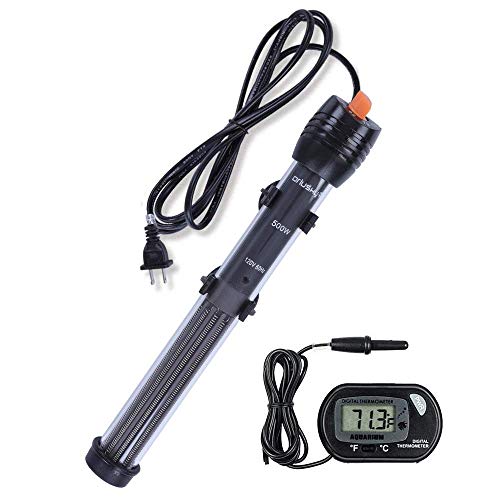
Digital display lets you monitor and set exact temperature for consistent care.
Browse discountedAquarium Heaterson Amazon