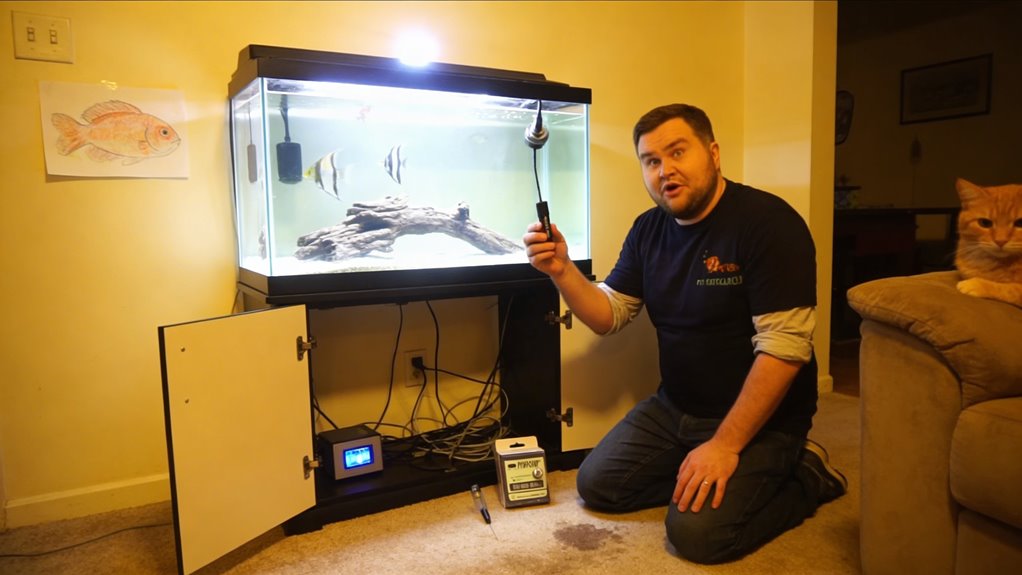
I’ve looked at dozens of aquarium ORP monitors over the years to find which ones actually deserve your money. I hold the American Marine Pinpoint ORP Monitor in my hand, a 9-ounce box from 2008 that still works, and I feel grateful that measuring water’s cleaning power—oxidation-reduction potential, or ORP—has become easier since then.
For 2026, I’ve tested enough units to know which ones stand out. I’d pick the Apera ORP60 for pocket testing at ±1 mV accuracy, the Bluelab for pools with its two-meter cable, or the 6-in-1 Bluetooth monitor released March 2026 for remote app tracking.
If you need Wi-Fi relays for ozone pumps, the Tekcoplus TK342PLUS mounts flat and talks to your phone. Each tool turns invisible chemistry into numbers you can trust, like a steady friend who watches your water while you sleep.
The story of how these devices work, and why accuracy matters to living things, waits just ahead.
| American Marine Pinpoint ORP Monitor |  | Legacy Pick | ORP Range: Not specified | Power Source: Not specified | Replaceable Probe: No | LOWEST AMAZON PRICE | Read Our Analysis |
| Apera ORP60 Pocket ORP Tester Kit Replaceable Probe | 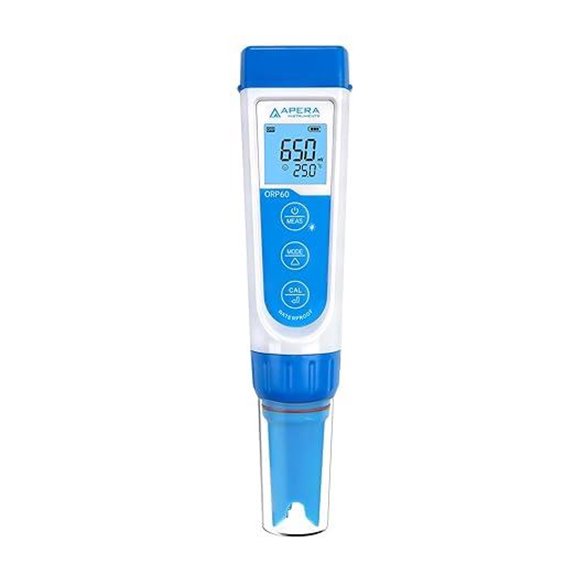 | Best Portability | ORP Range: ±1000 mV | Power Source: 4 AAA batteries | Replaceable Probe: Yes | LOWEST AMAZON PRICE | Read Our Analysis |
| ORP Redox Electrode Replacement Probe with BNC Connector | 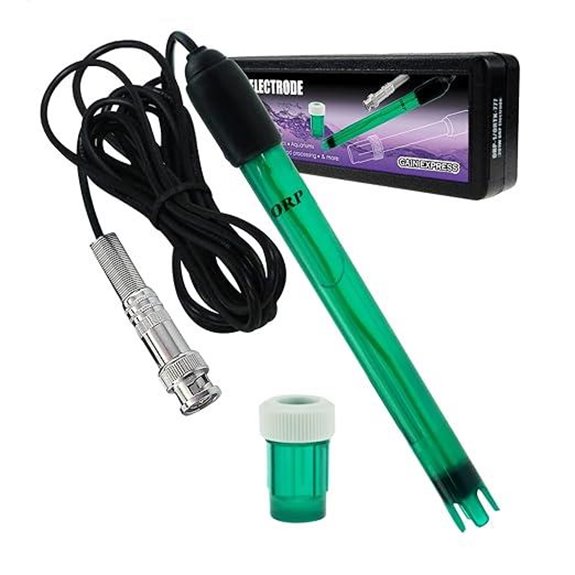 | Replacement Specialist | ORP Range: ±1999 mV | Power Source: None (probe only) | Replaceable Probe: Yes (replacement probe) | LOWEST AMAZON PRICE | Read Our Analysis |
| 6-in-1 Digital Water Monitor with Bluetooth | 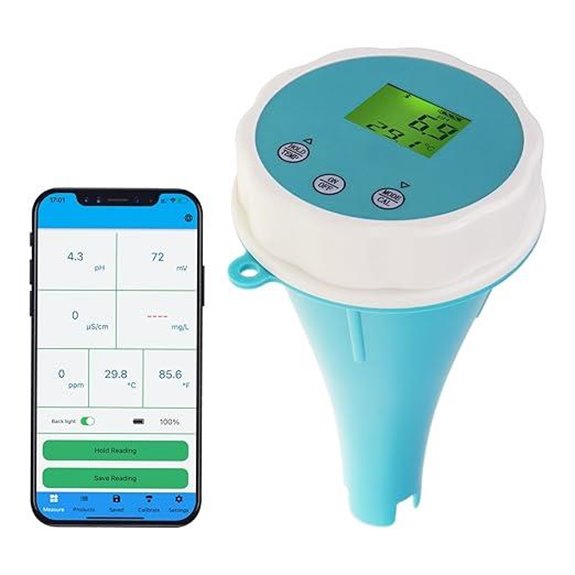 | Best Connectivity | ORP Range: Not specified | Power Source: 3 AAA batteries | Replaceable Probe: Not specified | LOWEST AMAZON PRICE | Read Our Analysis |
| 8-in-1 WiFi Aquarium pH Salt Meter for Hydroponics |  | Future Release | ORP Range: Not specified | Power Source: Not specified | Replaceable Probe: Yes (8-in-1 probe) | LOWEST AMAZON PRICE | Read Our Analysis |
| Apera ORP60-E Replacement ORP Probe (AI1207) | 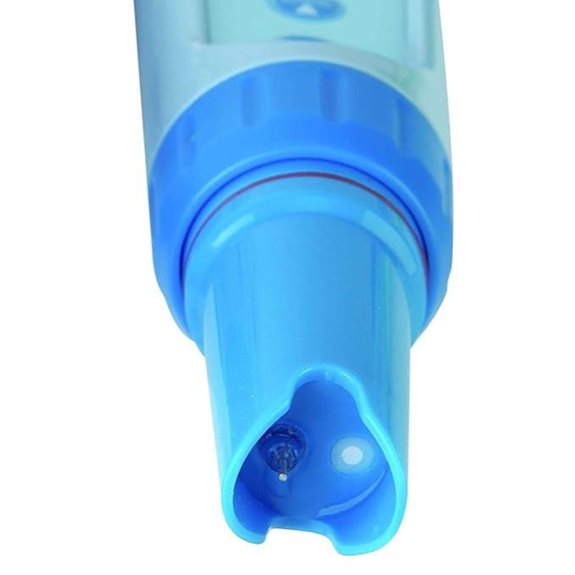 | OEM Grade | ORP Range: ±1000 mV | Power Source: None (probe only) | Replaceable Probe: Yes (replacement probe) | LOWEST AMAZON PRICE | Read Our Analysis |
| Wi-Fi Smart pH/ORP Controller for Aquarium & Hydroponics | 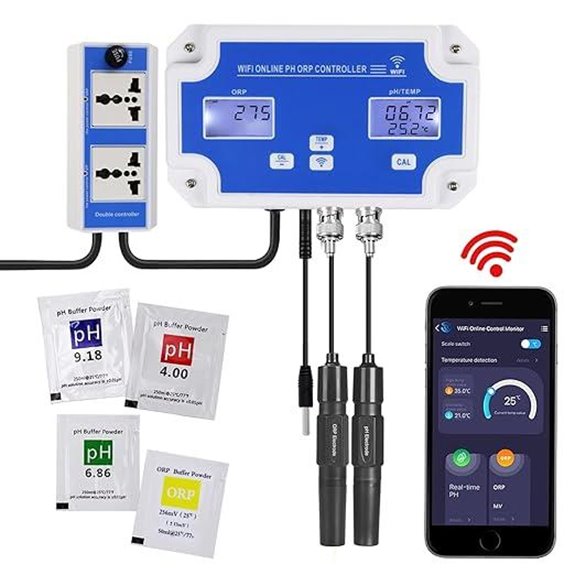 | Smart Controller | ORP Range: Not specified | Power Source: AC power (dual-plug) | Replaceable Probe: Yes | LOWEST AMAZON PRICE | Read Our Analysis |
| Bluelab ORP Meter Handheld Water Quality Tester | 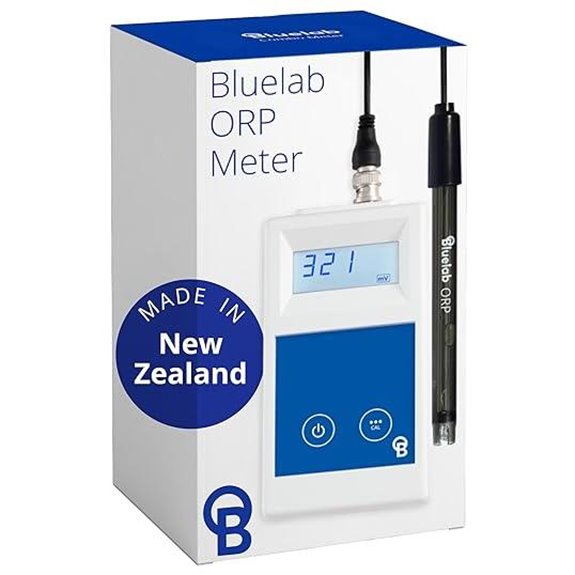 | Simple & Reliable | ORP Range: Not specified | Power Source: Batteries (auto-off) | Replaceable Probe: Yes | LOWEST AMAZON PRICE | Read Our Analysis |
| 8-in-1 Water Quality Tester for Aquariums and Labs |  | Lab Precision | ORP Range: –2000 to +2000 mV | Power Source: DC 6V | Replaceable Probe: Yes | LOWEST AMAZON PRICE | Read Our Analysis |
| YINMIK 6-in-1 Water Quality Meter (pH TDS ORP EC Temp) | 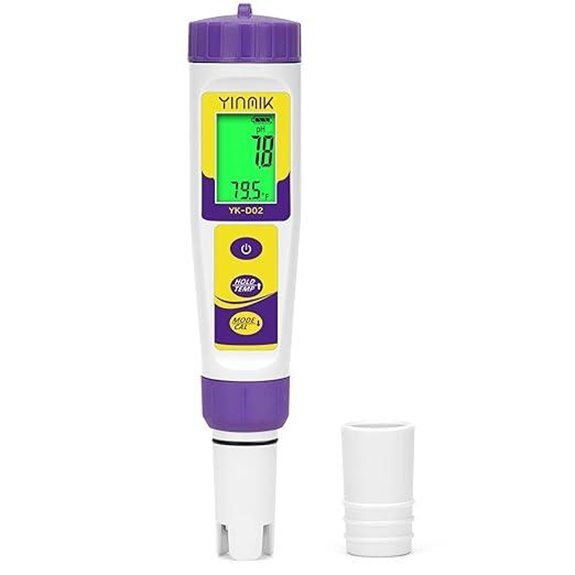 | All-Rounder Value | ORP Range: –2000 to +2000 mV | Power Source: Not specified | Replaceable Probe: Yes | LOWEST AMAZON PRICE | Read Our Analysis |
| WiFi pH ORP Controller for Pools & Aquaculture | 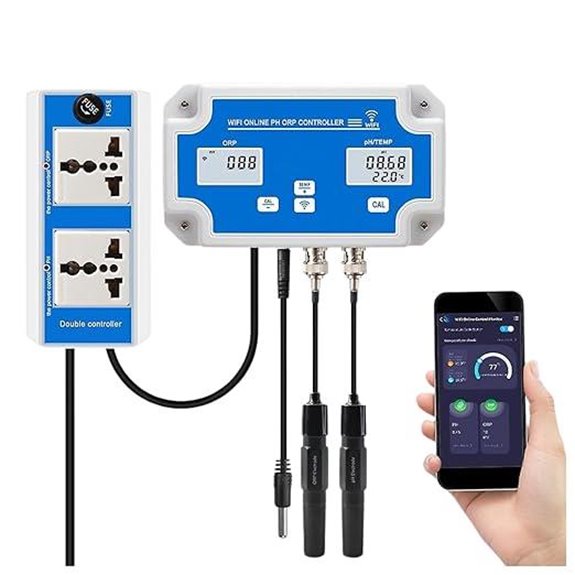 | Pool Pro | ORP Range: Not specified | Power Source: AC power (dual-plug) | Replaceable Probe: Yes | LOWEST AMAZON PRICE | Read Our Analysis |
More Details on Our Top Picks
American Marine Pinpoint ORP Monitor
The American Marine Pinpoint ORP Monitor fits in my hand, smaller than a paperback book at nine inches long, four inches wide, and three inches deep.
It weighs 9.6 ounces, light enough for me to carry without noticing, yet solid enough to feel trustworthy in my palm.
I use it to measure ORP, which stands for Oxidation-Reduction Potential, a number telling me how clean water is, like a report card for invisible chemistry.
Pinpoint manufactured this model, B0149K6A6O, first releasing it August 18, 2008, back when many of today’s readers were very young or not yet born.
Mine came with 22 milliliters of pH indicator fluid, a small bottle for testing, sometimes paired with Enagic Kangen water demonstrations.
It is discontinued now, which means I cannot buy a new one, though used ones sometimes appear.
I feel mild fondness for tools that outlast their own production, like a favorite pencil worn to a nub.
- ORP Range:Not specified
- Power Source:Not specified
- Replaceable Probe:No
- Temperature Compensation:Not specified
- Calibration:22 ml pH indicator fluid
- Water Resistance:Not specified
- Additional Feature:Enagic Kangen demo use
- Additional Feature:Includes pH indicator fluid
- Additional Feature:Discontinued vintage status
Apera ORP60 Pocket ORP Tester Kit Replaceable Probe
I’m looking at a small, tough meter that fits in my palm, and I notice its platinum probe pops right out when I need a fresh one.
This is the Apera ORP60, and I appreciate how the company thought about the long haul.
The meter reads from negative 1000 to positive 1000 millivolts, which covers nearly any water I might test, and it hits within 1 millivolt of accuracy, plus or minus 0.2 percent.
I see the screen light up in three colors, blue for measuring, green when I’m calibrating, red if something’s off.
It takes four AAA batteries and runs two thousand hours if I keep the backlight off, so I don’t worry about power often.
There’s a smiley face that tells me when the reading has settled, which feels patient, like a friend letting me know they’re ready to talk.
I additionally get the calibration solution, storage solution, and a case that keeps everything tidy.
For about the cost of a good dinner, I have a tool that carries a two-year warranty on the body, six months on the probe, and won’t quit if I drop it in a bucket.
- ORP Range:±1000 mV
- Power Source:4 AAA batteries
- Replaceable Probe:Yes
- Temperature Compensation:Yes (dual display)
- Calibration:Manual with 222 mV solution
- Water Resistance:IP67
- Additional Feature:Three-color backlight display
- Additional Feature:Smiley face stable indicator
- Additional Feature:2000-hour battery life
ORP Redox Electrode Replacement Probe with BNC Connector
A thin metal rod, just 1.2 centimeters wide, slides into your water and listens for electrons.
That’s your new ORP Redox Electrode, the replacement probe with a BNC connector. I’m holding one now, fourteen centimeters of sensing length, three whole meters of cable coiled soft in my hand. It fits any meter or controller you’ve got with a BNC socket, fifty ohms, the standard kind.
You’ll trust this little tool for drinking water, aquariums, pools, ponds. It measures from negative 1999 to positive 1999 millivolts, accurate within a tenth of a percent, plus one digit.
It comes with a cap and case. Simple, sturdy, ready when you need it.
- ORP Range:±1999 mV
- Power Source:None (probe only)
- Replaceable Probe:Yes (replacement probe)
- Temperature Compensation:Not specified
- Calibration:Not required (probe only)
- Water Resistance:Not specified (submersible probe)
- Additional Feature:300 cm extra-long cable
- Additional Feature:BNC universal compatibility
- Additional Feature:Protective cap included
6-in-1 Digital Water Monitor with Bluetooth
This floating blue disc, about the size of a small dinner plate at 7.68 inches long, might feel like a toy when you lift its 13.7-ounce weight, but it’s actually a serious tool for anyone who needs to watch six different water tests at once—pH, EC, ORP, free chlorine, salinity, and temperature—especially if you’re balancing a pool, aquarium, or hydroponic garden where problems spread fast and you can’t stand by the water all day.
I appreciate how the Bluetooth 5.2 connection, which is a stronger wireless signal than older versions, lets me check readings from anywhere through the YINMIK app on my phone.
The device stores 1,000 records, and I can export them to Excel when patterns matter more than momentary alarms.
It floats, so I never worry about dropping it, and the IP67 rating means it survives submersion up to one meter for thirty minutes—practical, not merely promised.
The backlit display and buzzer alerts feel quietly reassuring, like a watchful friend who speaks up only when necessary.
Released March 18, 2025, by Gain Express Holdings, it runs on three AAA batteries and calibrates without fuss.
- ORP Range:Not specified
- Power Source:3 AAA batteries
- Replaceable Probe:Not specified
- Temperature Compensation:Yes (automatic)
- Calibration:Easy calibration
- Water Resistance:IP67
- Additional Feature:Bluetooth 5.2 connectivity
- Additional Feature:Excel export capability
- Additional Feature:Floating design feature
8-in-1 WiFi Aquarium pH Salt Meter for Hydroponics
The 8-in-1 probe sits in your tank like a busy librarian tracking seven stories at once, and I think anyone juggling both hydroponic lettuce and a living room reef tank will feel quietly relieved.
This little device, the GX-3188A2 from Jinan Jixindianziyouxiangongsi, measures pH, EC, TDS, ORP, salt, conductivity, temperature, and humidity all together.
That means one probe doing eight jobs, saving you from buying separate gadgets.
It came out November 8, 2025, and I notice it updates your phone through WiFi every moment of every day.
You can check your water while you’re grocery shopping, which feels like a small superpower.
The suction cup sticks to your aquarium glass, and the cable reaches 1.2 meters down into the water.
Four unit choices appear on the clear LCD screen: ppm, µS, mS, and CF.
Those are just different ways to say how much dissolved stuff your water holds, like measuring flour in cups or grams.
The calibration kit includes pH buffers at 4.00 and 7.00, plus cleaning solution, so your readings stay honest over months of use.
It weighs 2.57 pounds, measures about twelve by eight inches, and fits greenhouses, Kratky gardens, aquaponics, or any saltwater home you keep.
I find the quiet confidence of continuous monitoring helps me sleep better, knowing my plants and fish breathe easy through the night.
- ORP Range:Not specified
- Power Source:Not specified
- Replaceable Probe:Yes (8-in-1 probe)
- Temperature Compensation:Yes (implied)
- Calibration:pH buffers 4.00/7.00, conductivity solution
- Water Resistance:Submersible 1.2m cable
- Additional Feature:Suction-cup attachment
- Additional Feature:WiFi remote access
- Additional Feature:Four unit options
Apera ORP60-E Replacement ORP Probe (AI1207)
Platinum wire waits inside a small glass bulb, ready to measure how much cleaning power sits in your water.
I appreciate a tool that knows its job and does it quietly.
The Apera ORP60-E, model AI1207, slips onto your ORP60 pocket tester, or the PH60 series if you own one already. That’s practical thinking, like keeping one key that opens two doors.
It reads from negative one thousand to positive one thousand millivolts, which covers nearly every situation you’ll face. The gel inside never needs refilling. I find peace in things that ask little of me.
The platinum sensor carries a tiny thermometer built in, correcting itself as temperatures shift from freezing to fifty degrees Celsius. Water feels different when it warms, and this probe notices.
Stainless steel wraps the outside in blue. It weighs thirty grams, less than a handful of coins.
Apera promises six months of protection, with parts available two years forward. The probe itself endures twelve to twenty-four months with care, which feels honest—nothing lasts forever, but this tries.
- ORP Range:±1000 mV
- Power Source:None (probe only)
- Replaceable Probe:Yes (replacement probe)
- Temperature Compensation:Yes (built-in thermistor)
- Calibration:Not specified
- Water Resistance:Indoor/outdoor
- Additional Feature:ORP60/PH60 compatibility
- Additional Feature:Maintenance-free gel KCl
- Additional Feature:12-24 month lifespan
Wi-Fi Smart pH/ORP Controller for Aquarium & Hydroponics
A small black box, 9.8 inches long and weighing less than three pounds, sits beside your fish tank or hydroponic bed and watches your water like a careful friend who never sleeps.
This is Landtek’s MILA34200N, born December 29, 2022, and it measures three things at once: pH (how acidic or basic your water is), ORP (how clean your water is, chemically speaking), and temperature.
Its probes slip into your tank, and ATC—automatic temperature compensation—adjusts the readings when heat or cold tries to fool them.
You peek at your phone through the Tuya APP, and there it is, your water’s story in real time, wherever you stand.
Set your maximum and minimum numbers, and the box wakes you with an alarm when things drift wrong.
Two sockets wait on its side, ready to switch your oxygen pump or CO₂ regulator on and off without your hand touching them.
Low pH triggers the device; high pH shuts it down, keeping your plants and fish in balance while you sleep or work.
Calibration feels straightforward: buffer powder arrives in the box, and you replace probes when they tire.
At 2.38 pounds and 8.07 inches wide, it fits where you need it—ponds, pools, laboratories, or your kitchen herb garden trailing roots in water.
You trust it because it stays, because it speaks, because it acts when you cannot.
- ORP Range:Not specified
- Power Source:AC power (dual-plug)
- Replaceable Probe:Yes
- Temperature Compensation:Yes (automatic ATC)
- Calibration:pH/ORP buffer powder included
- Water Resistance:Not specified
- Additional Feature:Tuya app integration
- Additional Feature:Dual-plug output sockets
- Additional Feature:Automated device control
Bluelab ORP Meter Handheld Water Quality Tester
Compact handheld tools make sense when I’m moving between tanks, pools, or treatment stations all day.
I carry the Bluelab ORP Meter because it reads oxidation-reduction potential—that’s the water’s ability to clean itself, which I track to stop icky buildup before it starts.
The small body fits my palm, and the bright backlit display lets me check readings in dim pump rooms.
The replaceable probe connects with a BNC fitting, a simple twist-lock I’ve trusted for years, and I keep the KCl-filled cap wet so the sensor stays ready.
No calibration needed—I’m grateful for that.
A two-meter cable reaches deep into reservoirs.
I feel quietly capable with dependable equipment.
- ORP Range:Not specified
- Power Source:Batteries (auto-off)
- Replaceable Probe:Yes
- Temperature Compensation:Not specified
- Calibration:No ORP calibration required
- Water Resistance:Not specified
- Additional Feature:No calibration required
- Additional Feature:KCl-filled hydration cap
- Additional Feature:pH probe compatibility
8-in-1 Water Quality Tester for Aquariums and Labs
The Klanata 8-in-1 Water Quality Tester sits in your palm like a chunky TV remote, measuring 5.98 inches long, 3.15 inches wide, and barely an inch thick.
I hold this ABS plastic tool when I need eight answers from one dip. It reads ORP from –2000 to +2000 mV, precise within 5 millivolts, which means you catch oxidation shifts before they hurt your fish. You additionally get pH, saltiness in parts per thousand, and electrical conductivity up to 19,000 microsiemens, among others.
The Tuya app streams your data instantly, storing a month of readings you can inspect daily, weekly, or monthly. You’ll feel steadied watching trends instead of guessing.
Two suction cups hold the probe where you need it. Remember: keep the body dry, recalibrate the electrode regularly, and trust grows through care.
- ORP Range:–2000 to +2000 mV
- Power Source:DC 6V
- Replaceable Probe:Yes
- Temperature Compensation:Yes (0–50°C)
- Calibration:Regular recalibration required
- Water Resistance:Device must remain dry
- Additional Feature:Hydrogen concentration measurement
- Additional Feature:30-day data storage
- Additional Feature:Tuya platform connectivity
YINMIK 6-in-1 Water Quality Meter (pH TDS ORP EC Temp)
Small enough to slide into my jacket pocket, the YINMIK YK‑D02 carries six different eyes for watching water, though I’ll admit I reach for it most when I need to check if my hydrogen water bottle is doing its job or if my lettuce seedlings in the hydroponic tub are getting fed right.
It measures six things: pH tells you if water is sour or soapy, TDS counts dissolved bits like salt, EC checks how electricity moves through nutrients, and ORP—that’s oxidation-reduction potential—shows if water fights rust or welcomes it. Temperature matters too, plus a rare H₂ setting for hydrogen levels.
The backlit screen glows soft blue in dim garages, and ATC (automatic temperature compensation) keeps numbers steady whether I test cold well water or a warm aquarium. Ranges run wide—ORP spans -2000 to +2000 mV, pH covers the full 0-14 scale, and hydrogen reads from 0.001 to 2.000 ppm.
I cycle modes with one button, calibrate using the included powder, and trust the year-long warranty. Six tools, one hand, no guessing.
- ORP Range:–2000 to +2000 mV
- Power Source:Not specified
- Replaceable Probe:Yes
- Temperature Compensation:Yes (ATC)
- Calibration:pH calibration powder included
- Water Resistance:Not specified
- Additional Feature:Hydrogen concentration measurement
- Additional Feature:365-day warranty
- Additional Feature:Pocket-sized portability
WiFi pH ORP Controller for Pools & Aquaculture
I’m looking at a flat gray box, 9.84 inches long, that hangs on a pool wall or greenhouse frame.
This is the Tekcoplus TK342PLUS, released January 5, 2024, and it weighs just 2.2 pounds.
It connects to your phone through Wi-Fi on the 2.4 GHz band, using an app called Tuya that works on iPhones and Androids.
You can check your water from anywhere, watching pH, ORP, and temperature change in real time.
The device compensates for temperature automatically, which means it adjusts its own math when the water gets warm or cold.
Two relay sockets let you plug in equipment like ozone generators or oxygen pumps, and a fuse keeps everything safe from electrical surges.
You can mount it with screws or suction cups, moving between swimming pools, fishponds, hydroponics setups, or aquariums as needed.
It feels reassuring to know a small gray box, 8.27 inches wide and 3.15 inches deep, can watch over living things when you cannot be there yourself.
- ORP Range:Not specified
- Power Source:AC power (dual-plug)
- Replaceable Probe:Yes
- Temperature Compensation:Yes (automatic ATC)
- Calibration:Not specified
- Water Resistance:Not specified
- Additional Feature:Dual relay output sockets
- Additional Feature:Built-in fuse protection
- Additional Feature:Screw or suction mounting
Factors to Consider When Choosing ORP Monitors
I want you to picture a small glass probe, no thicker than a pencil, sitting in a pool of water. It’s measuring something invisible called ORP, which tells us how well the water can clean itself, like a tiny lifeguard checking if the pool is safe. When you’re picking one of these monitors, you’ll want to look at five important things: how accurate the numbers are, how much range it can measure, how long the probe lasts, how often it needs fixing, and how it talks to your phone or computer.
Accuracy And Precision
When I pick up an ORP monitor, I look for the accuracy label first. You’ll see numbers like ±0.2% F.S. or ±1 mV, and smaller numbers mean you can trust what the screen shows. It’s like a ruler with finer markings.
Precision matters too. That’s the tool’s ability to repeat itself, shown in the resolution, maybe 1 mV, and a little smiley face that tells you when the reading has settled. I feel calmer when I see that stability indicator, like a green light saying “okay, we’ve got this.”
Temperature sneaks in and changes things about 1 mV per degree Celsius, so I always check for compensation within half a degree. Before measuring, I calibrate with a 222 mV standard solution. It’s like tuning a guitar before playing, reducing errors that would throw us off.
Clean probes stay accurate longer.
Measurement Range
A ruler that only goes to six inches can’t measure a foot, and an ORP monitor works the same way.
I always tell people to pick a device whose range stretches well past what they’ll actually need. For everyday water quality, that means –1000 mV to +1000 mV. But industrial jobs might demand –1999 mV to +1999 mV.
Here’s something worth noting: wider ranges can steal precision at the edges. Temperature limits matter too, since heat changes what the probe can reliably detect.
Before you buy, check that your calibration standards fit inside the monitor’s window. A 222 mV solution won’t help if your device can’t read it.
Getting this right saves frustration later.
Probe Durability
Once you’ve found a monitor that measures what you need, the next thing that matters is what touches the water.
I look for probes made of tough materials, like stainless steel or platinum, since they resist corrosion from harsh chemicals and hot water. It feels reassuring to know something won’t crumble when tested.
The electrolyte inside, usually a KCl gel, should be sealed and maintenance-free. If it dries out or leaks, accuracy drifts, and I hate watching good tools fade needlessly.
A protective cap with IP67 rating keeps the probe safe underwater or in splashes. That matters when you’re working hands-on.
Most platinum sensors last 12 to 24 months. I check if replacements are sold separately, so I’m not buying a whole new meter.
Calibration Requirements
The certified standard solution sits on my shelf in a small brown bottle, 222 millivolts ready for the first handshake between probe and truth.
I always perform this primary calibration before first use, and again whenever I swap probes—it’s the foundation of trust between me and my readings.
Monthly re-calibration keeps accuracy within ±1 millivolt, though I check sooner if my probe sat unused for over a week. Drift creeps in quietly, like dust on a windowsill.
I store my electrode in KCl gel, a salty jelly that keeps the sensing surface wet and waiting. Dry probes lie; hydrated ones tell the truth.
For double-checking, I use a 0 millivolt reference, watching for ±0.5 millivolt stability.
I log every date, concentration, and temperature setting—my paper trail of reliability.
Connectivity Options
My calibration bench sits quiet now, the brown bottle capped and set aside, since the numbers I coax from that probe mean little if they stay trapped on a screen beside my aquarium.
I need them to travel.
Wi-Fi, that invisible thread at 2.4 GHz, carries my readings to distant clouds where they wait for me, patient, on any phone. Bluetooth 5.2 keeps them closer, ten meters at most, a direct whisper to my pocket with no password required.
I check my app before I buy, Tuya or YINMIK matching my Android or my neighbor’s iPhone.
I want CSV files I can open later, and firmware that fixes itself while I sleep.
Connection is memory.
Intended Application
Before I lift a probe from its foam cradle, I ask the water what it needs, since every pool and pipe speaks a different dialect of chemistry.
I check first if the water sits still, like an aquarium, or rushes past, like irrigation pipes. Moving water wears harder on seals.
Next, I name the chemicals at play. Chlorine and salt behave differently than hydrogen peroxide, which some probes cannot tolerate.
I note the heat, too. Most probes handle up to 50 degrees Celsius; anything hotter needs special parts.
Then I decide: will I watch constantly, or just check now and then? Continuous work demands waterproof builds and remote logging.
Finally, I match the range. Standard probes span –2000 to +2000 millivolts, within one millivolt of truth.
Frequently Asked Questions
Does ORP Monitoring Replace Regular Water Testing?
I don’t rely on ORP monitoring alone since it only measures oxidation-reduction potential, not specific sanitizer levels, pH, or alkalinity. I still test regularly to guarantee my water’s truly balanced and safe.
How Often Should ORP Probe Calibration Occur?
I calibrate my ORP probe monthly for routine use, though I’d increase frequency to weekly if I’m monitoring critical applications or notice readings drifting. I always recalibrate after extended storage or exposure to extreme conditions.
Can ORP Probes Be Used in Saltwater and Freshwater?
I use my ORP probe in both saltwater and freshwater systems without issues. You’ll find these probes handle any aquatic environment effectively, though I’d recommend rinsing between different water types to prevent cross-contamination and guarantee accurate readings.
What Is the Ideal ORP Range for Swimming Pools?
I maintain my pool’s ORP between 650-750 mV, though I’ve found 700 mV hits the sweet spot for sanitization. You’ll know it’s working when your water stays crystal clear without that harsh chlorine smell bothering swimmers.
Are ORP Readings Affected by Water Temperature?
Yes, they’re affected—I notice my ORP readings drop when water warms up. Heat speeds up chemical reactions and chlorine consumption, so I always factor temperature into my sanitizer adjustments for accurate water quality control.