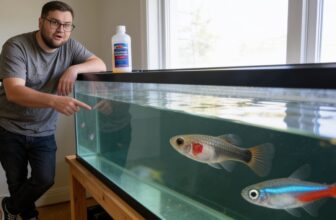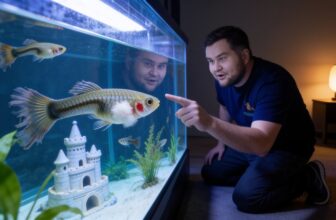
Velvet disease in guppies is more common than most hobbyists realize, and that golden shimmer on your fish is never a good sign. This parasitic infection spreads fast through tanks, often arriving on new stock or thriving in poor water conditions with weak lighting.
Spotting the gold-dust coating early matters – before it damages gills and kills fish. Quarantine protocols and proper tank maintenance keep it from taking hold, but once symptoms appear, you need to act fast.

Copper treatment that targets velvet parasites in quarantine tanks.

Supports gill function and reduces osmotic stress while your guppy recovers.

Protects slime coat and lowers stress during velvet treatment.
Check discounted items inAquarium Water Treatments
Treatment combines controlled darkness, aquarium salt, and elevated temperatures around 84°F. Copper meds work as a last resort, though many keepers avoid them. Regular water changes and gravel cleaning prevent reinfection, because velvet spores linger everywhere. Understanding this parasite protects your whole community.
At A Glance
- Velvet disease is caused by Oödinium parasites, often introduced from new fish or plants.
- Gold-dust coating on fins and body is the key early symptom for detection.
- Quarantine infected guppies immediately and treat with darkness and raised temperature.
- Use aquarium salt (1 tbsp per 5 gallons) and avoid copper overdose to prevent toxicity.
- Prevent outbreaks by quarantining new additions and maintaining bright, consistent lighting.
What Velvet Disease Does to Your Guppy
This battle taxes energy, causing lethargy and appetite loss. It’s a draining war, not a simple scratch.
You’ll spot twitching or rubbing as they try to dislodge the irritants. Catching this early? That’s your best bet for belonging to the successful guppy-keeping club.
To support your guppy’s stress and immune response, consider adding a slime coat enhancer like Seachem StressGuard.
Products such as API Stress Coat also contain aloe vera for fin healing, which can be beneficial during recovery.
How Guppies Actually Catch Velvet
So that gold-dust coating you saw in the last section? It’s not just a look – it’s a sign your guppy’s already infected.
Guppies catch velvet when Oödinium parasites, often from new fish or plants, enter the tank. Poor water quality or a weak diet lowers immunity, making infection easy. Stress from bad tank lighting or sudden changes seals the deal. For nano tanks up to ten gallons, a piezoelectric pump ensures silent, vibration-free airflow during treatment.
The parasite thrives in dim conditions, so bright, consistent lighting helps prevent outbreaks. If velvet strikes, copper treatment is your go-to fix – but only after quarantining the sick fish. To maintain healthy oxygenation during treatment, ensure your air stone is matched to the right pump power range.
Keep your crew strong, and they’ll stay gold-dust free.
Spot the Gold Dust Sign First
The gold-dust coating is the one sign you cannot miss, and it is your guppy’s desperate, scaly SOS.
Catching these early signs means you join the ranks of vigilant aquarists who save fish.
A common mistake? Mistaking the shimmer for healthy iridescence.
Look closer. That powdery, rust-like layer on the fins and body is not sparkle – it’s parasite armor.
Inspect daily under good light. Spotting it first buys you treatment time, a small price for belonging to the savvy fish-keeping crowd.
Don’t squint and shrug; act fast, friend.
Routinely cleaning the tank with a magnetic algae cleaner prevents stress that weakens guppy immunity. Use a full‑kit cleaning set to efficiently maintain a pristine environment.
3 More Symptoms: Rubbing, Gasping, and Lethargy
Gold dust isn’t the only clue your guppy is in trouble. Watch for rubbing – fish scraping against objects, desperate to dislodge the microscopic Oödinium during its parasite lifecycle.
Then gasping; rapid, labored gill movement signals oxygen deprivation.
Finally, lethargy: hiding, reduced swimming, less energy. These behaviors scream that the fish immunity is overwhelmed, the parasites multiplying faster than defenses can respond.
Together, these symptoms confirm velvet’s grip – a frustrating, contagious invasion. You’ll notice them during daily checks, a straightforward sign your tank mate needs help, fast. To treat this, removing activated carbon before dosing any medication is essential to prevent absorption and maintain treatment potency. For accurate monitoring during treatment, test strips can quickly verify water parameters are stable.
Why Early Detection Makes Velvet Recoverable
Those symptoms – rubbing, gasping, lethargy – add up to a clear picture, but they’re not a death sentence.
An early prognosis, catching that gold dust before it thickens, dramatically improves survival odds.
You’re not doomed; you’re just early.
The parasite hasn’t overwhelmed the gills yet, so breathing stays easier.
Your guppy’s immune system still has fight left, meaning treatment works faster, with less stress.
Think of it like catching a cold on day one versus week three.
Daily checks – thirty seconds per fish – are your best insurance.
Spot it early, act fast, and velvet becomes a minor setback, not a tragedy.
For the best chance of recovery, isolate your guppy in a dedicated quarantine tank to prevent reinfection and allow focused care. Using a breeding box for isolation ensures water flow and easy monitoring, keeping the captive fish safe and oxygenated.
Step 1: Quarantine Your Sick Guppy Immediately
Since velvet is a highly contagious parasite that spreads through water and contact, the first move is to isolate the infected guppy immediately. A proper quarantine procedure protects the whole tank. Set up a dedicated isolation tank – a simple 5-gallon setup works, costing around $20. For the best visibility and safety, choose a tank with ultra-clear low-iron glass.
- Use a separate, bare-bottom tank with only a sponge filter.
- Add 50% water from the main tank to reduce shock.
- Keep the water temperature stable at 78°F.
- Never use equipment from isolation tank elsewhere – parasites linger.
You’re not being dramatic; you’re being smart. Skipping this step invites heartbreak for everyone. A tank like this typically provides 91 % light transmittance for excellent observation of the guppy’s condition.
Step 2: Set Up the Right Water for Treatment
The water in the quarantine tank is the next battlefield. Start with dechlorinated water, using a quality water conditioner to neutralize chlorine and heavy metals – cheap insurance for stressed fish.
Substrate choice matters: bare bottom is best. Gravel hides parasites and makes cleaning a chore. You want a clean, easy-to-vacuum floor.
Add 50% water from the main tank to ease the shift. This isn’t fancy, but it’s smart. Your guppy needs stable, safe water to fight.
No decorations, no plants. Just a sterile, calm space. You’re giving it a fighting chance.
Step 3: Raise Temperature to 84°F Slowly
Water alone won’t kill velvet, but heat will speed up its life cycle and make the next steps work faster. This temperature control gives the parasite a metabolic boost, forcing it to mature quickly so medication can finish it off. Raise the tank from its normal 72–78°F to 84°F over 24 hours – no faster, or you’ll shock your guppies.
- Use a reliable heater with a thermostat, like the Eheim Jäger (around $30).
- Increase by 1–2°F every few hours, checking with a separate thermometer.
- Keep the water well-oxygenated; warm water holds less oxygen.
- Never leave the tank at 84°F after treatment – it’s temporary, not a permanent home.
Slow heat is your friend here.
For a stable, safe increase, choose a heater with automatic shut‑off and over‑heat protection found in many adjustable models. Models with dry‑burn prevention also stop heating if water levels drop too low during the process.
Step 4: Turn Off Lights to Starve the Parasite
Step 4 is where you turn off the lights and let darkness do some of the dirty work. Velvet’s parasite, Oödinium, has a photosynthesis dependence – it contains chlorophyll and needs light to thrive.
By reducing light intensity to zero, you actively starve the excess parasites clinging to your guppy and the tank surfaces. No need for complicated equipment; just flip the switch and keep the room dim for several days. Many aquarium lights, like the SEAOURA 12‑18 in, feature built-in timers that can be set to zero light output during this treatment period. Using an IP68 waterproof design ensures the light is safe when submerged, even if you later need it for short observation.
This step is simple, effective, and costs nothing. Your fish will rest easier without bright glare, and the parasite will weaken.
Bottom line: darkness kills velvet’s energy source. Stick with it.
Step 5: Add Aquarium Salt the Right Way
With the lights off and the parasite weakened, it is time to give your guppy a fighting chance with aquarium salt.
This gentle remedy helps rebuild their slime coat and gill function, but precision matters. A reliable digital temperature controller can help monitor water conditions during treatment.
Follow these steps to get the salt concentration right:
- Calculate the correct aquarium dosage: Use 1 tablespoon of pure aquarium salt per 5 gallons of water – no table salt.
- Pre-dissolve the salt: Mix it in a separate cup of tank water until fully dissolved; never dump crystals directly.
- Add slowly: Pour the solution into the filter outflow for even distribution.
- Never double-dose: Perform a 25% water change before adding more salt to avoid dangerous spikes.
For mixing, use a Leaktite 1‑Gallon pail to pre-dissolve the salt with tank water and ensure complete dissolution.
Your guppies will thank you – probably with less twitching.
When Copper Sulfate Is Your Last Resort
Failing all gentler methods, copper sulfate becomes the nuclear option for velvet disease. This heavy hitter shortens the parasite lifecycle, but it’s ruthless – remove chemical filtration, invertebrates, and plants first.
Those plants won’t survive, and the parasite’s chlorophyll dependency makes darkness a key ally even here.
You’re in the velvet club now, fighting with heavy artillery. Dose Sea-chem Cupramine Copper per bottle instructions, typically over ten days. It’s harsh but effective, like using a sledgehammer on a gnat.
Your move: Commit fully or risk resistance. Bottom line: last resort means last resort – no shortcuts.
Remember that during treatment, using a sponge filter ensures safe biological filtration without chemical interference.
During this harsh treatment, ensure your filter operates at a quiet 30 dB to avoid stressing already weakened fish.
Don’t Make These 3 Velvet Treatment Mistakes
Copper sulfate is the heavy artillery, but even the best weapon misfires if you fumble the basics.
The parasite lifecycle speeds up with heat, so skip the lights during treatment – Oödinium feeds on light, and you want them starving, not thriving.
Avoid these slip-ups:
- Overdosing Copper: More isn’t better; stick to bottle directions to avoid copper toxicity that nukes your fish.
- Skipping Water Changes: Daily 25% changes before re-dosing salt or copper keeps levels stable.
- Ignoring Temperature: Raise to 84°F slowly over 24 hours; sudden jumps shock guppies, helping the parasite.
- Forgetting Salt Balance: Dissolve aquarium salt first – 1 tbsp per 5 gallons – or risk burning gills.
Consistent water parameter testing with a high-precision liquid kit ensures copper levels stay in the safe zone during treatment. Temperature drift above 82°F can skew accuracy, so store the kit in a cool, dark place to preserve reliability.
Stop Velvet From Ever Coming Back
Once you’ve kicked velvet out the door, you don’t want it sneaking back through a window. A solid Post treatment protocol is your shield – disinfect nets, siphons, and buckets with a mild bleach soak (one part bleach to nine parts water, rinse well).
A proper Tank reset guide means discarding any porous decorations and boiling rocks. Replace chemical filtration media to avoid hidden parasites.
Raise the guppies’ temperature to 84°F for 48 hours post-recovery, then gradually lower it. You’re not being paranoid; you’re being prepared. This calm, deliberate cleanup creates a fortress velvet cannot breach. For extra protection, maintain water chemistry with a KH buffer supplement to stabilize pH and support aragonite formation in the tank.
Using a non‑phosphate formula prevents algae blooms that can stress recovering guppies.
4 Long-Term Habits for a Velvet-Free Tank
Preventive discipline – consistent tank maintenance – is the unsung hero of fishkeeping. For a velvet-free tank, adopt these four long-term habits. They’re your best defense against that gold-dust menace.
- Quarantine everything new – fish, plants, even snails – for four weeks. Skipping this is like inviting a stranger with a cold to dinner.
- Perform weekly 25% water changes and vacuum gravel. Clean water disrupts parasite life cycles better than any medication.
- Focus on disease resistance breeding – select robust guppies. Weak genetics invite trouble faster than dirty filters.
- Practice daily water temperature monitoring with a reliable digital thermometer. Keep it stable at 78–80°F; fluctuations stress fish, making them velvet bait. A thermometer with ±0.1 °C high precision ensures you catch even minor temperature shifts before they harm your guppies. Models like the DaToo provide ±1 °C accuracy that matches lab-grade thermometers for reliable monitoring.
These habits build a fortress, not a fix.
Frequently Asked Questions
Can Velvet Disease Spread to Other Fish Species Besides Guppies?
Yes, velvet disease spreads readily to other fish species. This Oödinium parasite performs cross species transmission without preference. Guppies are not unique hosts; any tropical fish can contract it.
Tank isolation of infected specimens is vital to prevent a full-blown outbreak. Quarantine new fish for two to four weeks.
Without prompt action, the entire community tank may develop that shimmering, but unwelcome, golden coating.
How Long Can Oödinium Parasites Survive Without a Fish Host?
Oödinium parasites can survive weeks in a dormant state without a fish host, with studies showing a dormancy duration of up to 30 days under ideal conditions.
Their desiccation resistance is low, though – they quickly die if dried out. For example, a hobbyist once reintroduced velvet to a tank two weeks after removal since cysts lingered on plants. That’s why quarantine is strict.
Think of them as sneaky freeloaders, not immortal. The takeaway? Patience protects your fish.
Can Guppies Build Immunity to Velvet After Recovering?
Can guppies build lasting immunity to velvet? Not exactly. Recovery doesn’t mean future protection. Their immune memory is weak, so a new stress response triggers – like poor water or sudden changes – can reactivate vulnerability.
Worse, cross species transmission from asymptomatic carriers (new fish or plants) reinfects easily. Think of it like a cold: once sick doesn’t mean immune.
Best bet? Keep water pristine, quarantine everything new, and feed high-quality diet. Prevention beats hoping for immunity every time.
Is It Safe to Use Aquarium Salt With Live Plants in the Tank?
No, it is not safe to use aquarium salt with live plants in the tank. Aquarium salt is sodium chloride, not a plant-friendly fertilizer. Dosage effects on plants include leaf burn and root damage.
Even small amounts can stress or kill sensitive species like java moss. For planted tanks, stick to plant‑safe treatments or remove plants first.
Those seeking a harmonious tank must prioritize plant health over salt use. A simple rule: salt treats fish, not foliage.
What Does Velvet Look Like Under a Microscope?
Under a microscope, velvet’s gold dust appearance becomes clear – tiny, round parasite structures covering the fish.
Each Oödinium cell has flagella, little whips for swimming, and contains chlorophyll, making it partially plant-like. So, you’re basically looking at microscopic, swimming dust specks that photosynthesize.
That’s why turning off lights during treatment starves them. It’s weirdly fascinating, but mostly just a reminder to quarantine new fish.
Rounding Up
Velvet disease isn’t a death sentence if you spot that dusty, gold shimmer early and act fast. Quarantine, crank the heat, dim the lights, and add salt – it’s boring but effective and costs under ten bucks. Skip that, and copper sulfate is your last resort, but it’s harsh on plants and inverts. Honestly, most fish die from lazy prevention, not the parasite itself. Quarantine new arrivals for two weeks, test your water weekly, and keep stress low. That’s the real secret. Do that, and you’ll rarely see that rusty glow again.

Keeps quarantine water at the stable 84°F velvet treatment needs.

Monitors temperature accurately so you avoid shocking your guppy.
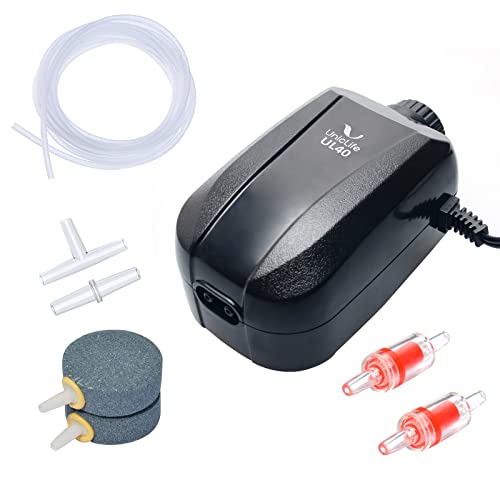
Maintains oxygen levels in warm water, easing gill strain.
See today's best deals onAquarium Equipment