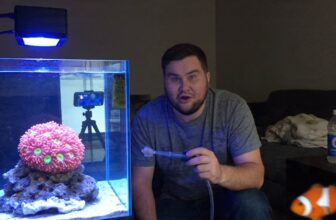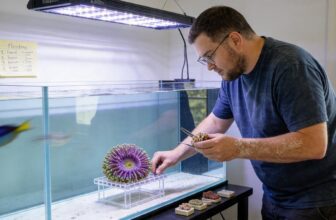
Sun corals, those non-photosynthetic oddballs, demand darkness – like, *zero* lumens for *T. tagusensis* – plus moderate flow at 20-40× turnover and three to five feedings weekly with mysis or brine shrimp. I mean, you’re basically running a cave, not a reef.
Cut frags when polyps plump past half an inch, wrap cuts in mesh, and quarantine two to three weeks. Now, placement matters: two inches from aggressive neighbors, flat rocks, dim twilight.
Water? 77-80°F, pH 8.1-8.4, phosphates below 0.03 ppm. Troubleshooting retracted polyps? Dim lights, feed more, test nitrates. There’s more where that came from.
At A Glance
- Match pump output to species‑specific flow needs – 20‑40× turnover suits most sun corals.
- Feed 3‑5 times weekly at night with brine shrimp, mysis, or fine seafood.
- Frag when polyps are fully open and corallites reach ~0.5 inch, cutting cleanly.
- Mount fresh frags in bridal‑veil mesh, placing them in low‑flow crevices.
- Maintain zero ammonia, <0.03 ppm phosphates, and dim twilight lighting.
Why Sun Corals Die: The Non-Photosynthetic Reality
Three truths, really, and the first one stings: Sun Corals starve in plain sight, gorgeous orange polyps withering under perfect water parameters as their keeper wonders what went wrong.
Sun Corals don’t die from bad water – they die from empty stomachs, withering in plain sight while keepers blame the light.
Now, here’s the thing – these corals don’t photosynthesize. None. Zero. So lightic stress? Actually not the killer you’d expect. Too much light, certainly, they’ll recoil, but they’ll die thanking you for that spotlight.
Real murderers:
- Nutrient limitations – think of it as running a diner nobody visits
- Starvation from missed feedings, three to five times weekly minimum
They need heavy groceries, not sunshine.
Unlike photosynthetic plants that thrive on N‑P‑K fertilizers and trace elements, Sun Corals depend entirely on captured prey for their nutritional needs.
Pick the Right Sun Coral Species for Your Tank
The genus offers five main contenders, each with its own temperament regarding space, flow, and how much you’re willing to rearrange your aquascape. *T. faulkneri*, the classic Orange Sun Coral, wants what most beginners expect: moderate current, a cozy cave, and regular meals.
Now, *T. micranthus* demands stronger flow and vertical real estate – it blooms dark, almost black, and grows like it’s got something to prove. *T. tagusensis*? Zero lighting needed, totally non-photosynthetic, just tubes and tentacles doing their thing.
For species selection, consider your tank’s genetics – some lineages are hardier – and whether you want that explosive sunset bloom or something subtler.
Just as betta enthusiasts select tanks with gentle filtration flow to protect delicate fins, sun coral keepers must match pump output to species-specific tolerance.
Design Your Low-Light Rockwork and Placement
And surely, you could just wedge the colony somewhere dark and call it a day, but these are animals that appreciate intentionality, so a little architecture goes a long way.
Rockwork aesthetics matter here – think caves, ledges, overhangs, the kind of shadowed real estate that says “you belong in this biome.” Consider how gentle water spread from a properly positioned return line can prevent turbulence from disturbing these delicate low-flow zones.
Now, your lighting strategy must accommodate their non-photosynthetic nature, which means dim zones, not blackness. Think twilight, not midnight.
Place them two inches from aggressive neighbors, raised if sand lurks below. Flat rocks beat substrate.
The colony rewards this care with polyps that open like they trust you.
Dial In the Flow Rate Sun Corals Actually Need
Flow, in the end, is where Sun Corals either thrive or slowly surrender, and getting it right means understanding that these animals aren’t asking for a hurricane – just enough movement to bring dinner to their door and sweep away the leftovers.
Flow is where Sun Corals thrive or slowly surrender – not a hurricane, just enough movement to bring dinner and sweep away leftovers.
Now, aim for moderate flow, roughly 20–40× turnover per hour, which for a modest 10-gallon setup lands somewhere between 200 and 400 GPH. I mean, precision matters, but your mileage may vary.
- Flowal aeration keeps polyps oxygenated without blasting tissue
- Nutrient cycling prevents waste buildup between feedings
Tweak, observe, repeat – every reef whispers different secrets.
For reference, many aquarists running adjustable flow HOB filters sized 5–40 gallons find their 200–400 GPH sweet spot matches what these moderate-flow corals demand, with top-knob adjustments letting you dial down during feeding to mimic natural current lulls.
Set These Exact Water Parameters
Once flow is sorted, water chemistry steps up as the next puzzle piece – since Sun Corals don’t photosynthesize, they’ve got no backup plan when parameters drift. Stable tank water keeps coral coloration vivid, not washed-out and sad. For orthophosphate and total phosphate monitoring, use a kit with reef-specific calibration to catch levels before they climb past tolerance.
| Parameter | Target |
|---|---|
| Temperature | 77-80°F |
| pH | 8.1-8.4 |
| Calcium | 425 ppm |
| Phosphates | <0.03 ppm |
Filtration must run tight – zero ammonia, zero nitrite, since these guys won’t forgive sloppy habits. I mean, your skimmer and water changes? Non-negotiable. Now, test weekly, adjust slowly, and join the club of keepers who don’t gamble with precision.
Feed Your Sun Corals for Maximum Growth
Spin up the pumps, dim the lights, and grab your turkey baster – feeding time is where Sun Corals either thrive or sulk into oblivion.
Now, these non-photosynthetic beauties demand commitment: three to five feedings weekly, targeting each polyp with brine shrimp, mysis, or whatever seafood you’ve chopped fine.
For maximum growth, hobbyists swear by coral nutrient solutions and strategic micro-algae supplementation alongside whole foods.
Maintaining proper carbonate buffer system stability in your reef tank supports the aragonite formation that underpins healthy coral skeletal development.
It’s overkill, maybe, but Sun Corals reward the faithful.
Skip feeding and watch them retract, sulk, slowly starve.
Feed well, and colonies expand – one point one eight inches yearly, sometimes more. Worth it.
Master Night Feeding: Timing and Tools
Why night feedings matter for Sun Corals isn’t exactly rocket science, though it might feel like it at 10 p.m. with a turkey baster in hand. These non-photosynthetic creatures extend their polyps after dark, hunting – so the dedicated keeper joins them, part of a club that accepts bleary eyes as membership dues.
Night feedings for Sun Corals aren’t rocket science – just bleary-eyed dedication with a turkey baster at 10 p.m.
Now, about that night feeding schedule: 3–5 sessions weekly, ideally when tank lights die, around 9–11 p.m., though your corals will whisper their preferred hours soon enough.
Target feeding tools matter here – turkey baster, long pipette, or commercial doodad – precision beats flooding the tank. Aim, release, watch. Maintaining ≤35 dB operation in your feeding area preserves the calm atmosphere these sessions deserve.
Choose Compatible Non-Photosynthetic Tank Mates
The bleary-eyed ritual of midnight turkey basters eventually leads to bigger questions – namely, who else gets invited to this perpetual shadow party. Sun corals demand companions who respect their darkness, not competitors for alternative light lighting.
Suitable tank mates include:
- Ball Sponges
- Chili Coral
- Sea Fans
- Tree Coral
These non-photosynthetic species share feeding schedules and shadow-dwelling habits, creating a community that actually understands the assignment. Algae control proves simpler here, too – limited light means limited algae, and similar flow requirements keep everybody happy.
Avoid mixing with photosynthetic corals; their lighting needs clash dramatically, and somebody always loses. Space colonies at least two inches apart for growth.
When handling these delicate tank mates during transfers or maintenance, consider using fine nylon mesh nets designed for gentle protection, as they prevent fin and tissue damage common with coarser materials.
Avoid These Corals and Invertebrates Completely
Now, aggression in coral keeping isn’t personal; it’s evolutionary business.
Sun Corals demand low, cave-dwelling shade whilst photosynthetic corals chase tank lighting like teenagers after WiFi. Pair them together and somebody starves – or somebody burns, and suddenly you’re managing lighting algae bloom instead of a reef.
Skip these tank mates entirely:
- Galaxea – stinging sweeper tentacles, territorial nonsense
- Green Star Polyps – chemical warfare specialists
- Long Tentacle Plate – agreement pending, but mostly no
- Finger Leather – toxins, slime, general bad attitude
Space colonies two inches minimum. Peace through distance, really.
Regular water parameter testing helps prevent the toxic buildup that can escalate aggression in mixed coral tanks, with nitrate targets ideally kept below 20 ppm for sensitive species.
Spot When Your Sun Coral Is Ready to Frag
Aggression managed, space granted – next comes multiplication.
Your coral calls you now, and you listen. Frag maturity signs are the language, so learn them.
Listen when your coral speaks – frag maturity signs are a language worth learning.
- Polyps open fully, hungry, confident – this is the baseline.
- Corallites reach 0.5 inches wide, and I mean properly plump, not hopeful.
- New growth sprouts between established heads, crowding politely.
Optimal polyp size means waiting, patient, watching. Too small and they sulk. Too late and they tangle.
Now check: does your colony fill its space, extend nightly, seem restless? Good. That’s the green light. The cut comes later.
Unlike aquatic plant propagation where Java Fern simply produces plantlets on mature fronds, coral fragging demands precise timing and visual cues.
Frag Your Sun Coral: The Complete Cutting Guide
Fragging Sun Coral: A Cutting Guide
Cor fragging demands precision, not panic. Select a healthy branch, brace the colony against vibration, and cut clean – accept the polyp goo, it’s normal. Now, resist overthinking.
Lighting optimization matters here: dim works, bright fries. Keep frags shaded, mimicking their cave-dwelling ancestors.
Use a tile saw or craft knife, whatever feels less like a felony. Wrap fresh cuts in mesh, secure them low, and wait. Growth follows patience, not perfection.
Secure and Recover Your Fresh Fragments
Sun Coral Frag Mounting and Recovery
Securing a Sun Coral frag demands patience, low cunning, and a willingness to accept that your first attempt will look ridiculous. Wrap fresh cuts in bridal veil mesh – tight enough to hold, loose enough to breathe – and wedge them into low-flow crevices where they belong.
Fragging sun coral: embrace the absurd mesh, trust the crevice, accept your first attempt will look ridiculous.
- Frag resilience improves in stable, dim quarters away from curious fish
- Fragment quarantine lasts two weeks minimum, maybe three if you’re paranoid
- Target-feed nightly with mysis, watching polyps extend like slow applause
- Resist moving them; they sulk, then settle, then suddenly thrive
And yes, that mesh looks absurd. Everyone’s first frag does.
How Long Until Your Frag Forms a New Colony?
Patience in Coral Frag Growth
Patience, that sneaky virtue every reefer claims to have until they’re staring at a single polyp for the eighty-seventh morning, really matters here.
Frag growth timing runs slower than most hobbyists prefer – think weeks, not days, for that first tentative bud to appear.
Colony establishment typically demands three to six months before your lonely fragment resembles anything like the dense, blooming cluster you envied at the store.
Now, feeding matters, obviously, but so does accepting that sun corals operate on their own schedule. I mean, you can’t rush heterotrophic metabolism. The reef doesn’t care about your impatience.
Fix Common Problems: Why Your Sun Coral Won’t Open?
Sun Coral Won’t Open
So you’ve waited your three to six months, finally built that dense colony you wanted, and now your sun coral has decided to go full hermit. Polyp retraction happens, and yeah, it’s frustrating.
Now, Light avoidance is baked into their cave-dwelling DNA – too much brightness and they slam shut like teenagers avoiding chores. But starvation, bad flow, or rowdy tank mates trigger withdrawal too. Check your parameters, maybe, or don’t, but do check something.
- Dim the lights or move the colony deeper, into shadow
- Target-feed more often, they’re hungry, not moody
- Test water, since nitrate spikes lie
- Give them space from aggressive neighbors
Frequently Asked Questions
Can Sun Corals Recover From Complete Polyp Retraction?
Yes, they can.
Complete retraction rarely spells doom – these corals possess notable stress tolerance, even though they look like tiny, grumpy raisins for days.
Polyp regeneration follows once conditions stabilize: water hits that 77–80°F sweet spot, flow stays moderate (think 20–40× turnover, whatever that means for your tank), and feeding resumes.
Patience, now, is key. Recovery takes weeks, not hours, but the polyps do return, stubby tentacles and all.
Do Sun Corals Benefit From Phytoplankton Dosing?
Phytoplankton dosing offers limited benefit to Sun Corals. These non-photosynthetic hunters prefer meatier prey – brine shrimp, mysis, chopped seafood – captured by tentacles, not filtered from water.
Now, phytoplankton dosing does support nutrient cycles, feeding pods and bacteria that tidy the tank, but Sun Corals won’t directly consume it. I mean, they’ll ignore it, honestly.
Target-feeding remains crucial. Phytoplankton won’t harm them, yet it won’t replace what they actually need: big, chunky meals, delivered precisely, several times weekly.
How Many Polyps Can a Single Colony Support Long-Term?
A mature colony typically supports 50–150 polyps, though colony genetics and nutrient cycling push that range wider – some hit 200, others stall at 30.
Now, growth isn’t infinite; space and food set the ceiling. I mean, these corals expand until they’re basically elbowing themselves for shrimp.
Regular feeding, clean water, and room to branch keep the count climbing. And honestly? Watching them fill a rock feels like winning a very slow race.
Will Sun Corals Attach Directly to Glass Surfaces?
No, glass adhesion isn’t happening – these corals need something to grip.
Now, substrate preference leans hard toward rockwork: caves, ledges, overhangs, basically any surface with texture their tissue can encrust onto.
Glass stays too slick, too smooth, zero purchase for their base.
If someone tries it anyway, they’ll watch the colony slide, drift, eventually tumble – so really, don’t.
Use flat rock, secure it well, call it done.
Can Sun Corals Survive Temporary Power Outages?
Sun corals survive temporary power outages, yes – being non-photosynthetic, they don’t crash from a light flicker or circulation stall the way photosynthetic corals might.
They’ll sulk a bit, metabolisms slowing, but brief darkness? That’s Tuesday.
Now, oxygen depletion matters more than you think, so outages beyond four to six hours get dicey.
I mean, they’re cave-dwellers, not miracle workers.
Battery backups, smart reef keeper, battery backups.