
You’ll place your hammer coral where PAR hits 50–150 (80–120 is the sweet spot) and flow is gentle, not a wave—think a ripple, not a storm.
Feed 2–3 times weekly at night, using mysis or brine shrimp, one or two per polyp.

Protein-rich mysis your hammer coral will readily accept; easy to portion for nightly feedings.

Long nozzle targets individual polyps without disturbing the sandbed or water flow.

Convenient cubes provide protein-packed brine shrimp for targeted coral feeding.
See today's best deals onAquarium Supplies
Skip feeding if nitrate tops 10 ppm.
Keep 12 inches from other corals and dodge triggerfish, puffers, peppermint shrimp.
Put it on the sandbed if debris stays clear, else mid-tank rock.
Dial light down fast if tissue pales, or you’ll bleach it silly.
Stick around—there’s more on fragging and distress signs ahead.
At A Glance
- Feed hammer corals 2-3 times weekly with mysis or brine shrimp at night.
- Place coral on sandbed if debris stays clear; otherwise mid-tank on rock.
- Maintain PAR between 50-150, with optimal range of 80-120 for color and growth.
- Position coral 12 inches from non-Euphyllia corals to prevent aggression.
- Use moderate, gentle flow; reduce if polyps retract or fray.
Ideal Water Parameters for a Thriving Hammer Coral
Let’s cut straight to it: nailing the water parameters is the single best thing you can do for your hammer coral.
You’re keeping it between 72‑78°F—easy enough, right? pH must sit at 8.1‑8.3, and hardness at 8‑11 dH.
Keep that hammer happy: 72–78°F, pH 8.1–8.3, hardness 8–11 dH.
Nitrate? Keep it under 10 ppm; above 30‑40 ppm, you’ll see tissue loss. I’ve been there, it’s no fun.
Moderate flow supports those tentacles, but start low—don’t tear them.
And lighting? 50‑150 PAR does the trick. Too much light bleaches them; just right makes them thrive.
Stick to these specs, and you’re in the club.
Using a biological media like bio‑balls can boost the beneficial bacteria that help keep your nitrates low and your water stable.
Using a digital pH meter with auto‑calibration up to 3 points can help maintain that precise pH target for your coral’s health.
How to Choose the Perfect Tank Location
Where should you drop a coral that can reach out and touch someone—literally—with six‑inch sweeper tentacles? Not next to your prized torch coral, that’s for certain. You want your hammer to feel like it belongs, not like it’s in a turf war. Corals kept in soft, acidic water with stable parameters will show the best color and health, much like neon tetras. To ensure optimal light penetration for color, consider a clear mesh aquarium lid for your setup.
To nail the location, follow these four rules:
- Give it a 12‑inch (30 cm) buffer from non‑Euphyllia corals—sweepers don’t discriminate.
- Place it on the sandbed if debris stays clear; otherwise, mid‑tank on a rock.
- Keep PAR between 50‑150; too bright bleaches it, too dim dulls it.
- Avoid aggressive tank mates like triggerfish or peppermint shrimp—they’ll nip.
Nail this, and your hammer’s home.
Set the Right Water Flow for Polyp Health
Water flow is where most hammer coral owners get it wrong—either blasting it like a torch or leaving it in a dead zone.
You want moderate, gentle flow, so those fleshy tentacles sway, not tear.
Start low, then nudge it up over weeks.
Start low, then nudge it up over weeks.
Your hammer’s polyps will tell you: if they retract or look frayed, you’ve gone too far.
Aim for a ripple, not a wave.
Set the pump 18 inches away, or use a diffuser.
For precise control, consider a pump with magnetic mounting like the Hygger Cross-Flow Pump for easy adjustment.
That sweet spot keeps them open, feeding, and happy.
Nail this, and you’re part of the crew that gets it right.
Using a spray bar on your return line can further soften the flow and protect your coral’s delicate tissues.
Lighting Requirements: PAR, Color, and Bleaching Risks
Since you’re already getting flow right, let’s dial in lighting—where many hammer corals start looking sickly in spite of the water’s fine. You want that neon glow, not a bleach-white skeleton. Here’s your PAR cheat code:
- Target 50–150 PAR – that’s moderate, like a cloudy reef day; your hammer’s zooxanthellae (its internal solar panels) thrive here. This range aligns with standard reef light performance that delivers 60‑130 µmol/m²/s at working depths for healthy coral growth.
- Dim light = longer polyps, but too dim means slow growth; aim for 80–120 PAR for best color and health.
- Excessive light causes bleaching – you’ll see tissue go pale and slimy; drop intensity fast if that happens.
- Moonlight’s safe for a cool glow; just keep it low, like a nightlight for your coral’s bedtime.
Stick to mid-tank placement, and you’re golden. A fixture with built‑in programmable timer helps maintain a consistent photoperiod to prevent light stress.
Can You Place Hammer Coral on the Sand Bed? (Yes: Avoid Particle Buildup)
Sure—you can absolutely place a hammer coral on the sand bed, but if you do, you’ll need to babysit it like a toddler around a mud puddle. Sand particles settle on its polyps, smothering them if you slack. You’ve got to blast them off weekly with a turkey baster—yes, the same one you use for feeding. Use a digital hygrometer to monitor humidity shifts that affect evaporation and water quality in your tank. For accurate water parameter tracking, test at least twice weekly with reliable equipment.
| Sand-Bed Perk | The Catch |
|---|---|
| Easy access for fragging | Particles collect on polyps |
| Looks natural, like a reef | You’ll clean ’em manually |
| Low flow helps tentacles | Detritus builds fast |
Bottom line: it works, but you’re signing up for weekly polyp dusting. No shortcuts, fellow reef nerds—we’re in this together.
Give Those 6-Inch Sweeper Tentacles Enough Space
Before you even think about where to plop that hammer coral, you’ve got to respect the six‑inch death zone—its sweeper tentacles. These stingers extend at night, zapping any neighbor who gets too close. You don’t want to come home to a bleached skeleton.
To nail this, follow these rules:
- Measure 6 inches (15 cm) of clear water around your coral.
- Keep non‑Euphyllia corals—torches are even meaner—at least 8 inches away.
- Place on sand or rock, but guarantee flow won’t push tentacles into a rock.
- Check nightly; tentacles retract during the day, so you’ll miss them if you’re not careful.
Bottom line? Spacing saves your tank’s peace—and your wallet.
Adjusting your protein skimmer to maintain pristine water quality will also help reduce stress on the coral and prevent tissue recession from poor conditions.
Ensuring your filtration includes a bio‑plate for beneficial bacteria will support the nitrogen cycle and keep water parameters stable for your hammer coral.
Why Your Hammer Coral Needs Supplemental Feeding
Your hammer coral might look like it’s just lounging around, glowing like a neon sign, but don’t let that fool you—it’s a hungry predator in disguise. Certainly, its zooxanthellae (tiny algae living inside) supply most meals, but they’re like a cheap snack. Supplemental feeding gives it real protein. For best results, maintain a consistent dosing schedule to keep buffering capacity stable and support coral health.
| Food Type | Why It Matters |
|---|---|
| Mysis shrimp | High in protein, easy to digest |
| Brine shrimp | Enriched for nutrients |
| Copepods | Tiny, natural prey |
| Finely chopped fish | Meaty, but must be small |
Skip feeding, and your coral’s health fades. We’re all in this tank together—feed it right, and it’ll glow for you. If water quality issues arise from leftover food, using PolyGuard can help treat any secondary bacterial or parasitic infections that threaten your coral’s recovery.
How Often to Feed a Hammer Coral for Best Growth
Feeding a hammer coral isn’t a daily chore—you’ll only need to offer it meaty morsels two to three times per week, and even once a week can keep it happy if your tank’s lighting is solid. Overfeeding just fouls your water, spiking nitrates and stressing your colony. Stick to this rhythm and you’ll see new polyps bud within months:
- Target feed at night when its tentacles are fully extended.
- Let each polyp grab its piece; don’t blast the whole colony.
- Skip feeding if your nitrate reading climbs above 10 ppm.
- Wait 48 hours between sessions to let your system catch up.
For precise placement of morsels, use long curved tweezers to access deep tank zones without disturbing the coral’s base.
To maintain water clarity during this routine, an undergravel filter provides steady biological and mechanical filtration that supports your coral’s health.
You’ll nail it—we’re all learning together.
The Best Meaty Foods for Euphyllia Feedings
What’s the point of target feeding your hammer coral if you’re just tossing in junk? You want meaty morsels that hit like a gourmet meal, not fast food. Stick to these winners to keep your Euphyllia thriving.
| Food | Why It Works |
|---|---|
| Mysis shrimp | High protein, easy to grab; your polyps won’t miss a beat. |
| Brine shrimp (enriched) | Fatty boost, but soak it in vitamins first. |
| Copepods | Tiny, natural, and they trigger feeding response. |
| Reef-roids | Powdered mix, great for colonies; stir well. |
| Cyclops | Small but mighty; perfect for shy feeders. |
Skip the flakes—they’re just filler. Your coral’s part of the club now, so feed it like it belongs. Always remove uneaten food promptly to prevent water fouling, just as you would for a Snowball Pleco. Maintaining stable water conditions prevents stress and supports healthy feeding responses in all tank inhabitants.
Step-by-Step Target Feeding Guide (Prevent Fouling)
So you’ve picked your mysis and brine shrimp. Now, target feed without fouling the tank.
So you’ve picked your mysis and brine shrimp. Now, target feed without fouling the tank.
- Turn off flow – Let pumps stop for five minutes, so food lands on polyps, not your sand.
- Use a turkey baster – Squirt one or two mysis near each mouth; don’t dump a blob.
- Wait 10 minutes – Give them time to grab food; if uneaten bits float, remove them with a net.
- Check water next day – Test nitrate; if it’s above 10 ppm, skip next feeding.
Foods like Aqueon Shrimp Pellets can also be used for bottom‑dwelling fish in the same tank. Using a dual optical sensor auto top-off system helps maintain stable salinity when evaporation occurs. You’ll keep the tank clean, your coral happy, and avoid that “whoops, I overfed” guilt. Stick with this rhythm—you’re part of the smart reef crew.
Aggressive Tank Mates to Avoid at All Costs
You’d think a coral tank is a peaceful kingdom, but some fish are more like tiny, toothy warlords. Angelfish, butterflyfish, and pufferfish will nip your hammer’s fleshy polyps until it’s a bare skeleton.
Triggerfish and parrotfish? They’ll crunch the entire branch for a snack.
Hermit crabs and peppermint shrimp also pick at stressed tissue, especially at night.
Don’t invite these troublemakers. You’ve built a safe haven, not a buffet.
Stick with reef-safe species that respect your coral’s space.
Your hammer’s survival depends on smart roommates, not regret.
Keep it simple, keep it safe.
Ammonia must be 0 ppm to prevent the immune stress that makes coral tissue vulnerable to such attacks.A proper tank ratio with more females than males reduces aggression and chasing stress in the tank.
Safe Tank Mates: Fish and Corals That Won’t Sting
You’ve booted the bullies, so now let’s fill your reef with allies that won’t leave your hammer coral looking like a chewed-up gummy worm. These fish and corals play nice, letting your Euphyllia stretch its sweeper tentacles without a beef. Here’s your crew:
- Clownfish – They host in hammers like it’s their anemone, yet never sting.
- Gobies – Sand-sifting pals that ignore polyps entirely.
- Cardinalfish – Calm, slow-moving, they won’t fin-nudge your coral.
- SPS corals (Acropora, Montipora) – Different stingers; keep 6 inches apart, though.
You belong here, with a peaceful, drama-free reef. Adjustable outflow eliminates dead spots where cyanobacteria colonize, improving tank cleanliness for coral safety. For temporary isolation of a new or sick fish before adding to your reef, use a Multi‑Chamber Large Isolation Box to prevent disease introduction without disturbing your main display.
How to Frag Hammer Corals (Branching vs. Wall)
If you’ve got a branching hammer, your first frag will feel like a victory lap—cut, snap, glue, done.
If you’ve got a branching hammer, your first frag will feel like a victory lap—cut, snap, glue, done.
Seriously, it’s that easy. Just slice a healthy branch, dip it in iodine to kill hitchhikers, then glue it to a plug.
Place it at the tank bottom, low light, and watch it settle in.
Wall hammers? Different beast. You’ll need a Dremel after polyps retract.
Cut a chunk, reshape the base if it’s wonky, then iodine dip.
Glue it down. It’s slower, takes patience, but you’re part of the fragging crew now. No shortcuts, just reward.
Maintain stable water parameters like those for loach health to support coral recovery.
5 Early Signs of Distress in Hammer Coral (Mucus, Color Loss, Zooxanthellae Loss)
How do you know your hammer coral is in trouble before it’s too late? Watch for these four red flags—they’re your coral’s cry for help.
- Mucus release: A slimy coat means it’s stressed, not happy. Check water parameters fast.
- Color loss: Fading or pale tissue? Your light or flow’s off—adjust before it worsens.
- Zooxanthellae loss: Those brown algae buddies? Gone. Once they bail, damage is permanent.
- Shrunken polyps: Retracted tentacles mean it’s conserving energy. Act quick.
These signals, ignored, lead to irreversible harm. You’re part of a community that catches these early—don’t let your hammer fade away.
Frequently Asked Questions
Can I Keep Hammer Coral With a Sea Anemone?
You can keep a hammer coral with a sea anemone, but don’t just toss them together—it’s risky.
Anemones wander and sting, and a hungry one can damage your hammer’s polyps. Give them at least 6 inches of space, plus room for the hammer’s sweeper tentacles.
Watch for aggression; some anemones (like carpet species) are more dangerous.
Bottom line? It’s doable, but not ideal. If you want peace of mind, stick with compatible fish or other Euphyllia corals instead.
How Do I Acclimate a New Hammer Coral to My Tank?
You’ll float your new hammer coral, bag and all, in your tank for 15‑20 minutes to match temperature.
Then, every 10 minutes, add a half‑cup of tank water to the bag, repeating three or four times.
This drip‑acclimation prevents shock from sudden pH or salinity swings.
After that, gently dip the coral in an iodine solution (like Seachem Reef Dip, about $12) for 5‑10 minutes to kill pests.
Finally, place it in moderate flow, 6 inches from other corals—it’s not a fighter, but it’ll swing its sweeper tentacles if crowded.
What Causes Hammer Coral to Stop Extending Its Polyps?
Your hammer coral’s tentacles retract when something’s off. Bad water parameters are the usual suspect—nitrates above 30 ppm or pH swings cause tissue stress. Check your temperature too; above 78°F fries polyps. Additionally, aggressive flow or stingy neighbors (like torches) make them close up. Got aiptasia? That’s a no.
Start with a water test, then adjust placement. Don’t panic—fix the parameter first, and you’re likely back to fluffy tentacles in days.
Can Hammer Coral Recover From a Brown Jelly Infection?
Yes, you can save a hammer coral from brown jelly infection, but you’ve got to act fast.
That slimy, gooey mess is tissue decay caused by damaged polyps.
First, siphon off the infected area—yes, physically suck it out.
Then, dip the coral in an iodine solution (like Lugol’s, around $10) for 8-10 minutes.
Quarantine it in low flow, moderate light.
You’ll lose part of the colony, but the healthy polyps can pull through.
Don’t wait; this thing spreads like gossip.
Should I Dip Newly Bought Hammer Coral Before Adding It?
Yes, dip that new hammer coral, no question. It’s not optional, it’s prevention. Skipping a dip is like skipping a vaccine—you’re just asking for trouble.
- Brown jelly infections hide in unseen damage.
- Acoel flatworms latch onto fresh imports.
- Aiptasia sneaks in too, resisting standard dips.
Use an iodine bath; it’s cheap insurance. A five‑minute soak costs pennies but saves your tank from weeks of stress. Bottom line: dip before you place, or you’ll regret it later.
Rounding Up
So, that’s the hammer coral playbook. Don’t overthink it. Feed it two or three times a week—no daily snacks, or those nitrates will spike past ten ppm, and you’ll regret it. Give it six inches of space, moderate flow, and keep angelfish out. It’s not hard, just precise. You’ve got this. Stick to the routine, and that neon centerpiece will reward you with tentacles that actually extend, not just sulk. Easy win.

Programmable reef LED delivers the 80-120 PAR your hammer needs for vivid color.
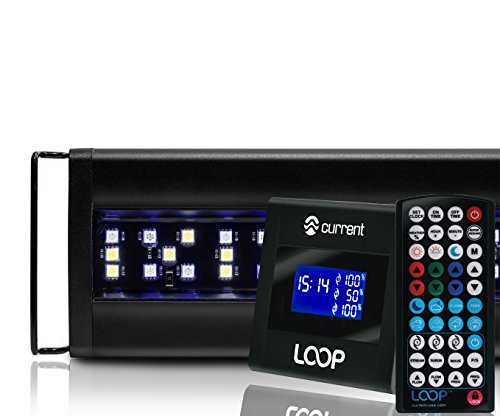
Slim LED fixture with built-in timer keeps photoperiod consistent and prevents light stress.

High-end reef light offers intense, even coverage for demanding corals and vibrant growth.
Check discounted items inAquarium Lighting


