Your fish’s frayed, discolored fins mean bacterial fin rot, and you’re right to feel worried.
Test your water first—amonia and nitrite must read zero, nitrate under 20 ppm—because dirty water feeds the infection.

Complete ammonia, nitrite, nitrate, and pH testing for effective fin rot prevention.

Quick weekly checks for key parameters to catch problems before they spread.

Always-on ammonia monitoring to warn you of toxic spikes instantly.
Check discounted items inAquarium Water Test Kits
Move your fish to a bare ten-gallon quarantine tank with a seeded sponge filter, then treat with API Fin & Body Cure for four days, changing half the water every two days.
Watch for white, cottony patches; those mean fungus, and you’ll add Methylene Blue.
Healing takes patience, but each clear test strip brings relief.
The quiet steps you take now open doors to deeper understanding.
At A Glance
- Identify fin rot by receding edges with white or dark discoloration, distinguishing it from clean cuts or fungal cottony patches.
- Maintain zero ammonia and nitrite, keep nitrates under 20 ppm, and stabilize pH between 6.5-7.5 to prevent stress and infection.
- Quarantine affected fish in a ten-gallon bare tank with seeded sponge filter, changing half the water every two days during treatment.
- Use antibiotics like erythromycin or API Fin & Body Cure for 7-10 days, adding methylene blue only if white fungal patches appear.
- Stock minimally using one inch per gallon as baseline, reduce flow rates causing fin damage, and restore beneficial bacteria post-treatment.
Is This Fin Rot or Fin Nipping? Know in 30 Seconds
Someone’s staring at a fish tank, and something looks off about those fins. You’re noticing ragged edges, wondering what’s happening.
Fin nipping signs show sudden, clean cuts. You spot missing chunks, usually from chasing. Aggressive tankmates dart after flowy tails, leaving sharp, definite tears. The damage looks surgical, not fuzzy.
Fin nipping leaves sudden, clean cuts from aggressive tankmates, not fuzzy, gradual decay. Surgical tears from chasing, not rot.
Water flow impact stresses fish differently. Strong currents push weak swimmers against décor, causing similar injury. You check your filter output position, adjusting direction downward. Adding a spray bar flow distribution system can spread return water gently and prevent turbulence that harms delicate fins.
Fin rot shows gradual, receding edges with white or dark discoloration. The breakdown looks messy, spreading slowly like wet paper dissolving.
Observe behavior first. Then you’ll know.
Fin Rot Causes: Test These 4 Water Parameters First
Grab your test kit, the one with the little glass tubes and color charts, since you’re about to become a water detective.
Fin rot bacteria thrive when bio quality crumbles. They multiply in unhealthy water, waiting to attack weakened fins.
For the most reliable ammonia readings, wait three minutes after dipping your test strip to allow full color development.
Check these four suspects immediately.
| Parameter | What You’re Hunting For |
|---|---|
| Ammonia | Zero ppm — any trace poisons fish |
| Nitrite | Zero ppm — broken nutrient cycling shows here |
| Nitrate | Under 20 ppm — proof your filter works |
| pH | Stable 6.5-7.5 — swings stress immune systems |
Poor biofilm management lets slime coat thin, opening doors for infection.
Fix these numbers, and you’ve removed the bacteria’s breeding ground. Your fish can heal.
Quarantine for Fin Rot: Setup That Actually Works
You’ve tested your water, fixed the numbers, and now you’re staring at a fish with ragged fins that keeps getting worse.
It’s time to move that fish. A quarantine tank design starts simple: ten gallons, bare bottom, a heater set to the species’ normal temperature, and one hiding cave. This gives you eyes on everything, no gravel trapping bad bacteria.
Your filtration setup matters most. Run a small sponge filter, seeded from your main tank so helpful bacteria live there already. Change half the water every two days, testing before and after. Clean water heals fins faster than medicine alone.
A stable quarantine tank stand with adjustable feet prevents wobbling on uneven floors, keeping your setup secure during critical recovery periods.
Fin Rot Medication: Step-by-Step Treatment Protocol
Three small bottles sit on your counter now: the antibiotic, the measuring spoon, and the water test kit.
Check your water chemistry first—ammonia burns tiny gills, and medicine won’t work in poison. Pull out the carbon filter; it drinks medicine like a sponge.
Measure the powder carefully, following your med regimen. Dissolve it, pour slowly, watch the water turn pale.
Treat for four days. On day five, test again. You’re building a schedule, like brushing teeth, not chasing miracles.
When fins stop fraying, you’ve won. Clear edges mean healing’s started. Keep watching.
Consider adding beneficial bacteria supplements to your maintenance routine once treatment ends, as restoring biological filtration helps prevent future outbreaks by stabilizing ammonia and nitrite levels.
When to Add Methylene Blue to Antibiotic Treatment
The bottle of methylene blue sits beside your antibiotics, a dark liquid that stains everything it touches.
You add methylene blue when white, cottony patches appear on the ragged fin edges—that second invader, fungus, joining the bacterial attack.
Methylene blue timing matters: drop one teaspoon per ten gallons only *after* you’ve started antibiotics, never before. This creates antibiotic synergy, like two friends lifting a heavy rock together. The blue medicine opens the bacteria’s protective coat, letting the antibiotic slip inside to do its work.
Watch for blue water turning clear; that means retreat.
Stop if your fish breathes fast at the surface.
Regular water quality assurance testing helps prevent secondary infections that require combined treatments.
Fin Rot Healing Time: How Long Until Fins Grow Back?
How long must you watch damaged fins before translucent edges unfurl into whole sails again?
Your fin regrowth timeline depends on damage severity and your fish’s health. Minor tears mend in two to three weeks. Deep rot requiring antibiotics stretches to four to eight weeks. Complete tail reconstruction needs patience, sometimes two months.
Fin regeneration factors include water temperature, nutrition, and stress levels. Warmer clean water accelerates cell division. Protein-rich food fuels new tissue. Calm environments let energy redirect toward healing.
Healing happens faster when water stays warm, meals stay rich, and life stays calm.
You’ll spot progress when white-clear membranes appear at fin edges. These delicate filaments thicken, darken, and lengthen daily. Don’t mistake early regrowth for remaining infection—that transparency means hope, not disease.
Test iron weekly to support healing, as elevated levels can stress fish and delay tissue regeneration.
Getting Your Tank Back to Normal After Treatment
Your fish’s fins have begun their slow return, and now your attention must swing toward the tank itself—the glass box that held both sickness and healing.
You’ve stopped the medicine, but the water still carries traces of treatment. Start your tank cycling fresh, letting good bacteria rebuild their colonies over two to three weeks. Test ammonia and nitrite twice weekly; zero means safety.
Check your light duration, too. Ten hours daily feeds algae, which steals oxygen from recovering fish. Trim back to six hours, using a simple timer. Watch the glass, the gravel, the filter—clean spaces let healing finish.
A thorough gravel vacuum removes lingering waste and old medication residue that standard water changes leave behind, protecting delicate fins from secondary infections.
Weekly Water Changes That Prevent Fin Rot
Clean water and healthy fins go together because you’re removing the waste that bacteria feed on.
Clean water means healthy fins—remove the waste, stop the bacteria.
Weekly water changes keep your tank balanced. Here’s your routine:
- Test before you change. Check ammonia, nitrite, and nitrate—you want nitrates below 20 parts per million.
- Match your water temperature. New water must match the tank within two degrees to avoid shocking your fish.
- Siphon 25 percent every seven days. Vacuum the gravel to remove hidden waste that degrades water quality.
- Watch your fish respond. Clear eyes and smooth fins show your care is working.
For larger setups, you might consider adding an environment controller to automate temperature and water parameter monitoring between your weekly changes.
Stop Future Outbreaks: Smart Stocking for Your Tank Size
Crowding fish together builds up invisible stress in the water, like too many people breathing in a small room.
You need to think about stocking density, which means how many fish live in each gallon of water.
A simple rule helps: one inch of adult fish per gallon, though messy fish need more space.
Tank capacity planning starts before you buy anything.
Measure your tank, then picture the fish fully grown.
Add fewer fish than allowed, and you’ll see them thrive.
Stress drops, immunity rises, and fin rot loses its foothold.
You control this completely.
Even small 3‑gallon tanks require careful stocking to maintain stable water parameters and prevent the stress that invites fin rot.
Fin Rot vs. Fungus: Spotting Secondary Infections
How can you tell when fin rot has invited a guest?
You’ll spot secondary symptoms creeping in. The ragged edges turn puffy, like cotton balls stuck to your fish’s fins. That’s fungus moving in, and it means you’ll need fungus identification skills fast.
Here’s what you watch for:
- Cottony patches that look like small bits of white bread, not just frayed tissue
- Thick, uneven borders where rot meets strange new growth
- Colors changing overnight from clear to gray to something fuzzy
- Behavior shifts, like your fish hiding more, showing you ouchies hurt deeper
Don’t wait. Catch it early, treat both problems, and your fish heals faster.
Water testing with ammonia nitrogen strips helps catch the stress conditions that invite secondary infections before they start.
Erythromycin vs. API Fin & Body Cure: Which Works Faster
Erythromycin and API Fin & Body Cure Speed Comparison
When your fish’s fins are fraying faster than you’d hoped, you’ll find yourself staring at two boxes on the pet store shelf, wondering which powder works quicker.
Erythromycin acts as a costet dosage—meaning you’ll often double or triple the standard amount to reach effective levels in water, which takes longer, about seven to ten days.
API Fin & Body Cure hits gram-negative bacteria directly, showing visible halt to fin loss in roughly four days.
API Fin & Body Cure halts fin rot fast—four days to visible results when gram-negative bacteria strike.
Neither works if you skip resistance monitoring—that means watching whether fraying stops, or if bacteria fight back.
Speed favors API, but your attention matters most.
Fin Rot Early Signs Most Aquarium Owners Miss
Four Quiet Signs of Fin Rot Aquarium Owners Overlook
Your aquarium glass stays clean, so you don’t lean in close, and that’s where trouble starts. You’re relying on early detection, but you’re missing the quiet clues.
- White or cloudy edging appears on fin tips, like milk spreading on coffee, easy to dismiss in dim light.
- Slight darkening at fin margins, gray or brown creeping inward from the outside.
- Fins held clamped against the body, your fish swimming carefully when they once flowed.
- Reduced flaring in Bettas, less territorial display, like a lamp turned low.
Use this symptom checklist weekly. You catch fin rot here, and you’ve saved yourself weeks of trouble.
Why Your Filter Matters for Fin Rot Recovery
Filter Media and Water Flow
Even though you’re dosing medicine into the water, your sponge or cartridge might be working against you, quietly sipping up the cure before it reaches your fish’s ragged fins.
Your filter media holds good bacteria, yes, but it also traps biofilm buildup, that slippery gunk where fin rot germs hide and multiply. Check your flow rate too. Water moving too fast tires sick fish. Water moving too slow drops oxygenation levels, making breathing harder.
| Problem | Quick Check | Fix |
|---|---|---|
| Filter media | Is the sponge brown and clogged? | Rinse in tank water monthly |
| Flow rate | Do fish struggle against current? | Adjust valve or baffle output |
| Biofilm buildup | See slimy coating on surfaces? | Scrub decor during water changes |
| Oxygenation levels | Are gills pumping fast? | Add air stone or raise surface movement |
You want clean water, not sterile water. Balance things, and your fish will heal.
Emergency Fin Rot: When to Call a Fish Veterinarian
Signs It’s Time for a Fish Veterinarian
A white plastic phone sits beside your tank, silent and heavy.
Your fish needs help beyond your cabinet.
Call for veterinarian triage when you notice these red flags:
- Fins recede past halfway toward the body, exposing raw flesh underneath
- Your fish refuses food for three straight days, sinking to corners
- Antibiotics from the pet store fail after one full week
- You spot bloody streaks near the tail base, signaling internal infection spreading
Emergency dosage calculations differ by fish weight, and guessing causes harm. A fish vet measures precisely, adjusts for species, and saves what home care cannot.
Frequently Asked Questions
Can Fin Rot Infect Fish Eggs?
Fin rot bacteria can infect your fish eggs through egg transmission in contaminated water, raising egg mortality significantly. You’ll prevent this by maintaining pristine water conditions and quarantining infected adults before they spawn.
Is Fin Rot Contagious to Snails or Shrimp?
Fin rot’s gram‑negative bacteria don’t typically threaten snails or shrimp. You’ll notice snail susceptibility is minimal, whereas shrimp immunity usually protects them. You shouldn’t worry about your invertebrates catching it, but you’re wise to quarantine sick fish anyway.
Can I Use Aquarium Salt Instead of Antibiotics?
You can’t fully rely on aquarium salt as an antibiotic alternative. Whereas it’ll ease symptoms and stress, it won’t eliminate the gram-negative bacteria causing fin rot—you’ll still need proper medication for complete treatment.
Does LED Lighting Worsen Fin Rot Symptoms?
No, LED lighting itself doesn’t worsen fin rot, but you’ll stress your fish if you don’t adjust LED intensity properly. Guarantee gentle water flow during recovery, as strong currents further damage fragile, healing fins.
Can Fin Rot Cause Permanent Fin Deformity?
Yes, severe fin rot can cause permanent gen deformity if tissue destruction reaches the fin base, but prompt treatment supports proper fin healing and prevents lasting damage to your fish’s appendages.
Rounding Up
You’ve got the tools now. Spot those torn fins early, test your water weekly, and keep a quarantine tank ready. Treat with erythromycin or API Fin & Body Cure, following each dose exactly as labeled. Stay calm, stay consistent, and your betta will heal. Fin rot’s beatable—you’ve got this.
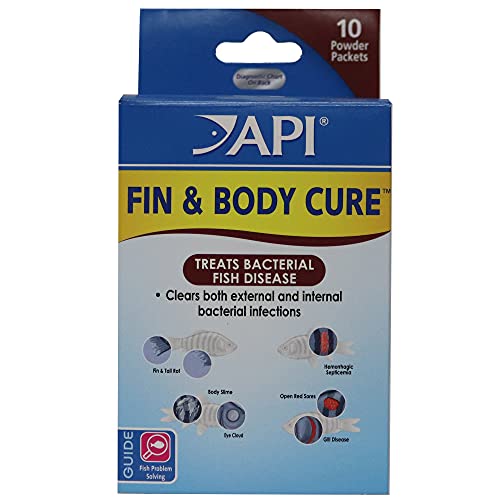
Fights bacterial fin rot and promotes healing of damaged fins.

Antifungal treatment for cottony patches and secondary infections.

Reduces stress and helps repair torn fins with protective coating.
See today's best deals onAquarium Fish Medications


[…] fin rot cases, fuzzy white or cottony patches signal a secondary fungal infection that requires methylene blue treatment after […]
[…] with ammonia‑nitrogen strips identifies stress conditions that invite secondary […]
[…] test strips and wait three minutes for full color development to ensure accurate […]
[…] underlying water quality issues to prevent algae, just as stable water parameters prevent fin rot infections in aquarium […]