
A small glass tank, maybe fifteen gallons, sits on a wooden stand in a quiet corner. Inside, dark gravel mimics the leaf‑littered streams of Paraguay where Black Skirt Tetras first swam. They need soft water, pH near 6.5, and friends—at least five, though ten brings out their silver‑black stripes. The filter hums gently; water moves slower than four inches per second, like a lazy creek. Weekly testing keeps ammonia at zero, since these fish feel stress before they show it, turning gray when scared. Knowing this helps keep them bright and bold, but there’s more to learn about which neighbors they’ll accept.
At A Glance
- House at least five Black Skirt Tetras together in a minimum 15-gallon planted tank with gentle filtration.
- Maintain water temperature between 70–85 °F, pH 6.0–7.5, and hardness 4–8 dKH with minimal current.
- Feed high-quality pellets twice daily and supplement with frozen or live foods twice weekly.
- Choose peaceful, short-finned tank mates like Cardinal Tetras or Cory Catfish while avoiding aggressive nippers.
- Monitor for stress through faded gray coloration and prevent disease with stable parameters and zero ammonia.
Black Skirt Tetra Identification, Origin, and Lifespan
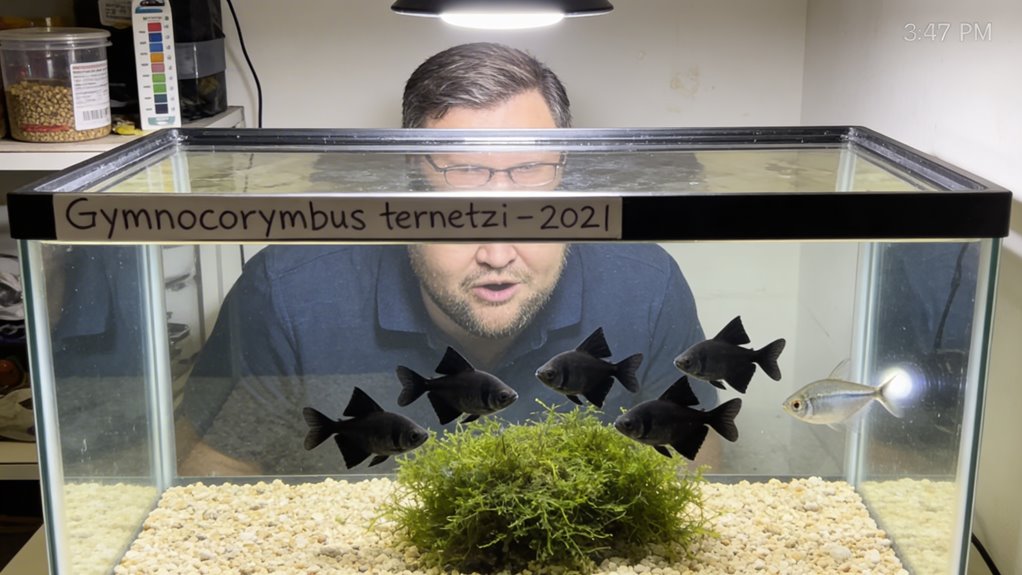
What does a small, skittish fish with a big, flowing fin look like?

Tests pH, ammonia, nitrite, and nitrate so you can catch problems early.

Detoxifies ammonia and nitrite while making tap water safe immediately.

Removes chlorine and supports the slime coat to reduce handling stress.
Check discounted items inAquarium Water Care
That’s the black skirt tetra, a creature that carries its name like a tiny ball gown.
The black skirt tetra coloration spreads from silver-gray bellies up to charcoal fins, darker than storm clouds gathering. They come from the warm, slow rivers of Paraguay, Brazil, and Argentina, where water moves like honey through green shadows.
The skirt skirt tetra lifespan stretches three to five years when cared for gently, sometimes longer. That’s about the time it takes a child to grow from sneaker laces to tying their own.
They’ll recognize you.
Where to Buy Healthy Black Skirt Tetras
A healthy black skirt tetra shows itself in clear water, fins spread like fingers testing the air, so look for fish that swim toward your shadow rather than darting away to hide.
Reputable sellers build trust through transparency, showing their tanks, sharing water test results, answering questions without rushing. Check reviews for consistent health, not just low prices.
| Factor | What to Consider |
|---|---|
| online store | Verify live-arrival guarantees, quarantine practices, customer photos |
| price comparison | Balance cost against fish health, seller reputation, not just savings |
| shipping options | Overnight delivery reduces stress; insulated packaging matters in heat or cold |
| legal restrictions | Some states limit interstate transport; confirm local regulations before ordering |
Local fish clubs welcome newcomers, offering captive-bred fish and mentorship. Aquarium societies host swaps where hobbyists share surplus, creating connections through shared care.
Black Skirt Tetra vs. Glo-Fish Tetra: Key Differences
Even though both fish share the same tetragonal silhouette, they’re not cut from the same cloth.
Black Skirt Tetras wear their original colors—silver bodies fading to black fins, like vintage furniture that holds its value. Glo-Fish Tetras glow under blue light, injected with jellyfish genes that make them fluorescent pink, green, or orange.
These colorological variations tell different stories. Black Skirts represent natural color morphs shaped by rivers in Paraguay. Glo-Fish arrive from laboratories, patented in 2003.
Both swim equally well. Both school in groups of five or more. Neither choice makes someone a better keeper.
Tank Size and Setup for Black Skirt Tetras
Three gallons per fish keeps them swimming easy, so five Black Skirt Tetras need at least fifteen gallons, though twenty feels better. A soft, dark substrate, like river gravel, helps them feel safe, like hiding in shadowy water back home. Plant density matters; thick greenery in back, open space in front, lets them school with confidence. Plantcycling, adding living plants slowly, builds a stable home they recognize as theirs. Gentle filtration type, a hang-on-back with adjustable flow, keeps water clean without tiring small swimmers. These choices say, “You belong here,” and they respond with bright, easy movement.
Ideal Water Parameters for Black Skirt Tetras
Water temperature acts like a blanket they cannot adjust, so keeping the thermometer steady between 70 and 85 degrees Fahrenheit lets their small bodies work without strain, neither shivering nor gasping.
They need pH stability between 6.0 and 7.5, since sudden swings confuse their cells and invite sickness. Water hardness stays soft, 4 to 8 degrees carbonate hardness, matching the gentle rivers they remember.
| What they feel | What we do |
|---|---|
| Safe water | Test weekly, write it down |
| Sudden chill | Watch the heater, protect them |
| Acid burning | Adjust slowly, never rush |
| Hardness stinging | Mix to 6 dKH, like home |
| Belonging | Match their wild water, heart to heart |
Optimal Group Size for Black Skirt Tetras
A tight school of Black Skirt Tetras looks like silver coins tumbling through a current, each fish pressing close enough to feel its neighbor’s tail flick. They need at least five companions to feel safe, though ten creates a braver, brighter family.
School coloration benefits emerge when numbers grow. In larger groups, their silver bodies flash bolder, their black fins deepen to velvet—each fish mirrors confidence through shared movement, like children who stand taller among friends.
Temperament profiling reveals shy spirits in small numbers. Keeping fewer than five brings stress, hiding, faded colors. With proper company, they’ll swim forward, curious and calm, inviting you into their world.
Best Diet for Black Skirt Tetras
What sits at the bottom of a Black Skirt Tetra‘s rounded belly matters more than most people realize.
These omnivores need nutrient balance, not just flakes. Offer high-quality pellets twice daily, morning and evening—that’s your feeding schedule. Each meal should vanish in two minutes, a kitchen timer’s worth of greed.
Supplement with frozen bloodworms or brine shrimp twice weekly, like adding vegetables to a child’s plate. Occasional live food sparks their hunting instinct, a small joy watching them chase.
A well-fed tetra shows deeper blacks, fuller fins. They belong, and you belong, through this simple care.
Compatible Tank Mates for Black Skirt Tetras
The right neighbors turn a glass box into a living room where everyone sits comfortably, and Black Skirt Tetras need company that matches their easy pace.
Tank mate compatibility matters since these fish feel safest with calm, comparably sized friends. Avoid long-finned fish, since Black Skirts sometimes nip flowing fins when nervous.
Community species selection builds a peaceful school. Choose gentle swimmers who share their warm water preferences.
| Recommended Mate | Size | Temperament |
|---|---|---|
| Cardinal Tetra | 2 in | Peaceful, schooling |
| Cory Catfish | 2.5 in | Bottom-dwelling, calm |
| Honey Gourami | 2 in | Quiet, mid-level |
| Bolivian Ram | 3 in | Peaceful, colorful |
Groups of six or more let everyone find their place.
Common Black Skirt Tetra Diseases and Prevention
Even the hardiest swimmers fall sick sometimes, and Black Skirt Tetras face a handful of troubles that show up in tanks across the world.
Ich, those tiny white specks like grains of salt, spreads fast through a school.
Fin rot nibbles away at those flowing fins when water grows dirty.
Fungus blooms like cotton on a damaged scale.
Disease prevention starts with steady hands and watchful eyes.
Water testing, done weekly with simple dip strips, catches ammonia spikes before they hurt.
Clean water, stable heat between 70 and 85 degrees, and gentle handling keep these friends swimming strong together.
Breeding Black Skirt Tetras Step by Step
A small ten-gallon tank, set aside just for this purpose, becomes the stage where new life begins.
Aquarists create this space like a nursery, filling it with soft plants and spawning mops where eggs can hide.
Breeding triggers include warmer water, about 78 degrees, and protein-rich foods such as bloodworms fed for one week. These signals tell the female’s body it’s time. She’ll scatter up to 1,000 tiny eggs among the greenery.
Parents must move out quickly, or they’ll snack on their own offspring.
Fry nutrition starts simple: infusoria, then powdered fry food, finally baby brine shrimp after five days. Patience rewards the keeper with a cloud of new swimmers, each one a small victory shared among those who understand.
Long-Fin Black Skirt Tetra Care Differences
While they share the same scientific name, long-fin black skirt tetras carry an extra burden in their elegant, trailing fins.
- Flow matters: These fins catch water like sails, so keep current gentle, under four inches per second, same as a lazy creek.
- Tank mate choices shrink: In a fin-fin vs. short-fin comparison, nippy neighbors target the long fins first, so skip serpae tetras and tiger barbs.
- Coloration patterns show stress faster: Faded gray means something’s wrong, often before short-fin cousins pale, so watch them like you’d check a friend’s face.
They heal slower from tears, needing pristine water, zero ammonia, and a little extra patience from their keeper.
Frequently Asked Questions
Do Black Skirt Tetras Change Color With Age?
Yes, they do. Young Black Skirt Tetras start pale gray, then darken dramatically as they mature. Their signature black markings, especially across the body and fins, intensify with age. Coloration patterns serve as lifespan indicators too—fading or patchy black often signals stress, poor health, or advanced age. Healthy adults keep bold, consistent dark coloring through their 3-5 year lives. Keep water clean and stable, and they’ll show their best colors.
Why Do My Tetras Hide Behind the Filter?
Hiding tetras signal something’s off. Check the filter intensity—current that’s too strong pushes small fish to corners, exhausted. They’ll wedge behind it, seeking still water. A group under five creates unstable social hierarchy, leaving some bullied into hiding. They need safety in numbers, you see. Test water parameters too; ammonia or nitrite spikes spark fear. Add two more tetras, dim the lights, and they’ll rejoin the open swim— braver together.
Can Black Skirt Tetras Jump Out of Tanks?
Black skirt tetras display jumping behavior when startled by sudden movements or bright lights. Tank height matters—they’ll leap from standard aquariums without secure lids. A tight-fitting canopy prevents escapes, protecting these nervous swimmers from dry land. They don’t jump for fun; fear drives them upward. Give them calm water, dim corners, and a covered home, and they’ll stay safely submerged where they belong with their school.
How Can I Tell if My Tetra Is Sleeping or Sick?
Sleep vs sickness shows in activity patterns. A sleeping tetra hovers still, fins gently moving, near the bottom at night. Fatigue looks different: fish struggles against water, breathes fast, or tilts oddly. Health signs include clear eyes, steady swimming, and eager eating. Watch for three days; normal rest passes, sickness deepens. When worry grows, test water, check temperature, and trust that careful eyes catch trouble early.
Will Artificial Plants Stress My Schooling Tetras?
Artificial foliage won’t raise stress levels in schooling tetras if arranged thoughtfully. They need open swimming space, about six inches clear in the center, with plants—real or plastic—forming a secure perimeter. Dense artificial leaves near the glass mimics riverbank shelter, helping them feel hidden. Without this structure, they’ll feel exposed and anxious. A 20-gallon tank, with plants along two sides, keeps them confident and calm.
Rounding Up
A small tank, soft dark gravel, and five calm friends—that’s all a Black Skirt Tetra needs to glow.
Keep the water steady, test it weekly, and watch for pale fear in their color.
They’ll live five years, maybe seven, if you’re patient and kind.
Feed them well, choose peaceful neighbors, and they’ll teach you that safety comes in numbers.
Good care feels like quiet attention, not fuss.

A compact tank for a breeding pair; easy to cycle, clean, and monitor.

Hatches live food in 24 hours to trigger breeding and feed fry.

Gives tetras a safe site to scatter eggs and makes egg collection simple.
Browse discounted supplies inAquarium Breeding Supplies
They’re worth it.




[…] your species’ needs, then build a crew that clicks. For Black Skirt Tetras, a school of fewer than five leads to hiding and muted colors. That’s the belonging you’re […]
[…] community tanks, staying under 3 inches, so no one becomes a snack. Choose compatible mates like Cardinal Tetra, Cory Catfish, Honey Gourami, or Bolivian Ram for a stable […]
[…] For tank stability, maintain a temperature of 72–80°F to keep their metabolism steady. Avoid rapid pH shifts to protect their health during water […]