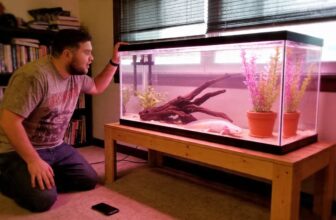
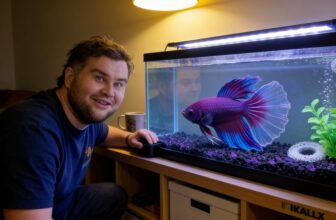
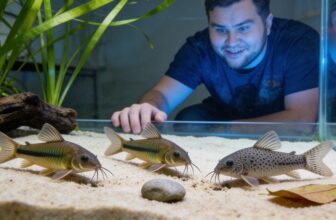
A sponge filter bubbles quietly in the corner of a thirty-gallon tank, its gentle current carrying fine sand across driftwood caves where the Bolivian Ram Cichlid, a small fish no longer than three inches, patrols its territory with surprising calm. Unlike its louder cousins, this cichlid doesn’t bully neighbors; it simply changes color when content, flashing blue and gold like a mood ring you might’ve worn as a child. The feeling here is quiet pride, the kind that comes from watching something fragile succeed through patience rather than force. Keep watching, since the real lesson arrives in how this fish chooses its company.
At A Glance
- Bolivian Rams stay small and gentle, perfect for peaceful community aquariums with tetras, rasboras, and bottom dwellers.
- They thrive in 30-gallon planted tanks with soft sand, dim lighting, and caves for territory and confidence.
- Ideal water conditions include 72-79°F, pH 6.0-7.5, and very soft 0-10 dKH hardness with weekly maintenance.
- Varied diet of spirulina flakes, brine shrimp, and bloodworms dropped near substrate encourages natural foraging.
- Gentle sponge filtration and weekly vacuuming manage their digging behavior while preserving beneficial bacteria colonies.
What Makes the Bolivian Ram the Ideal Community Cichlid?
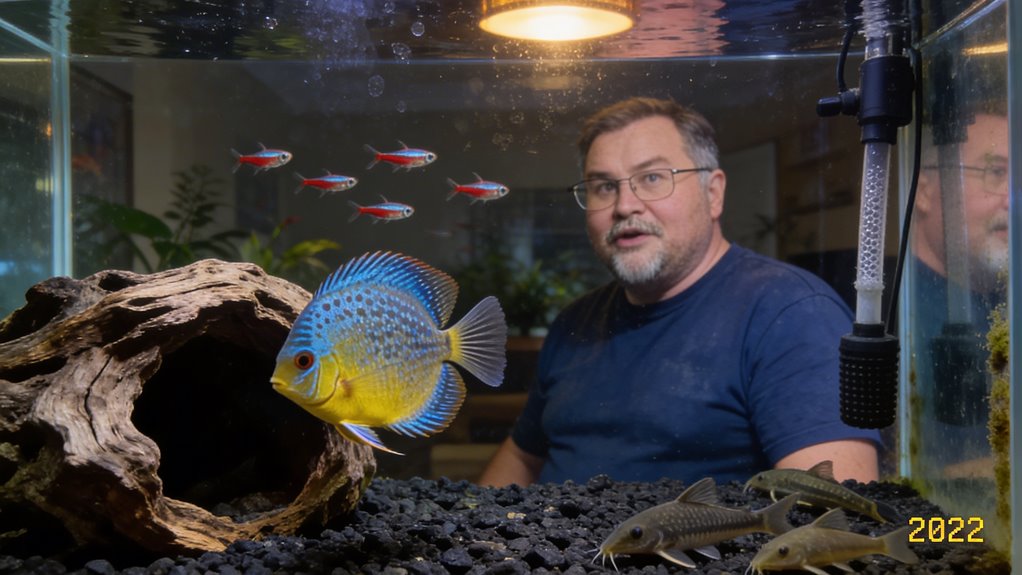
A small fish, no larger than a grown-up’s thumb, drifts through planted water with colors that catch the light like stained glass.
The Bolivian Ram earns its place through gentle manners, not dominance.
Their breed coloration shifts with mood, bronze flushing to rose when content, a signal anyone can read.
They establish a soft tank hierarchy, males claiming small territories without cruelty, females moving freely between spaces.
Unlike pushy cousins, they don’t terrorize neighbors.
A group of four finds balance, each fish knowing its standing without violence.
They belong where others might fight.
That’s the gift they bring: peace you can trust.
Tank Size and Setup That Bring Out Their Best Behavior
Gentleness needs room to breathe.
A twenty-gallon tank serves as the minimum, though thirty gallons allows a small group to flourish alongside without crowding, which brings stress and hides their best qualities.
Substrate texture matters deeply. Soft, sandy bottoms let them sift naturally, pushing grains through their gills in that gentle, constant foraging that calms watchers. Larger pebbles scattered here and there create safe harbors.
Soft sand for gentle sifting, scattered pebbles for quiet refuge—texture shapes their entire world.
Dim lighting, resembling fil lighting through forest canopies, soothes their active bursts and vivid colors.
Open central spaces invite their quick, darting play. Plants, driftwood, and small caves complete a home where shy confidence grows quietly.
Water Parameters That Keep Bolivian Rams Healthy Long-Term
Three numbers matter most for these little fish: warmth, softness, and balance.
The water thermometer, resting flat against the glass, reads 74 degrees Fahrenheit. That warmth keeps their small bodies working right. Softness means gentle water, like rain, with hardly any minerals—zero to ten degrees of hardness. You test this with a simple kit, watching colors change.
Balance arrives through putrient cycling, where good bacteria turn fish waste into safer substances. This microbiome balance needs six to eight weeks to grow strong. You are not waiting alone—we all learn this patience together.
- Temperature: 72–79°F, with 74°F feeling just right.
- pH: 6.0–7.5, slightly acidic water matches their home rivers.
- Hardness: 0–10 dKH, soft and gentle on their scales.
- Weekly testing, so you catch problems before they hurt.
Choosing Compatible Tank Mates for a Peaceful Aquarium
The glass thermometer now sits in a drawer, its work finished, since warm water alone won’t keep these fish happy—they need friends who won’t bully them.
Choosing companions means checking color genetics, as mixing bold species stresses these gentle rams, dulling their natural beauty through intimidation. Habitat simulation matters too—matched water needs create shared comfort, like neighbors who enjoy the same temperature.
They thrive alongside tetras, rasboras, corydoras, and loaches, fish that swim politely without nipping fins. Avoid large, aggressive types that claim territory unfairly. A 30-gallon space lets everyone find quiet corners, building a community where every member feels safely at home.
The Right Diet for Vibrant Colors and Active Foraging
A flake of spirulina drifts through the water column, and the Bolivian ram tilts its body, eyeing the prize.
These fish need nutrient-dense meals for color enrichment.
Feed small portions two to three times daily. Proper feeding-timing prevents waste. Live foods encourage substrate-sifting, which mimics wild behavior and aids algae-control by disturbing debris.
Color-boosting happens with variety.
- Offer spirulina flakes for plant nutrition.
- Add frozen brine shrimp for protein.
- Include bloodworms weekly for vivid reds.
- Drop food near sand to trigger natural foraging.
Good food builds community, one meal at a time.
How to Spot Stress and Disease Before It Spreads
Where do warning signs hide before trouble arrives?
They show up in fins first.
Fins clamped tight against the body, like folded hands, mean discomfort’s visiting. Color fading to gray, that’s another stress indicator waving quietly. Fish that stop sifting sand, that’s worry too.
Disease prevention starts with watching, really watching, every evening when the light turns soft. White spots like grains of salt spell ich, and ragged fin edges whisper infection coming. Water testing weekly, 25 percent changes every seven days, keeps trouble small.
Care builds belonging. These fish trust the keeper who notices early.
Creating Hiding Spots That Reduce Territorial Tension
Even when Bolivian Rams seem gentle, they’ll squabble over space if there aren’t enough places to duck out of sight.
Strategic cave placement breaks up sight lines, so no single fish dominates every corner. Territory diffusion happens when hideaways scatter, letting each ram claim a small patch without war.
Strategic caves scatter sight lines, letting each ram claim territory without war—calm through clever design, not dominance.
You’ll want:
- Half-coconut shells tucked behind plants, two per fish minimum.
- Driftwood caves spaced 6 inches apart, forming loose borders.
- Rock piles with multiple exits, so no one gets trapped.
- Plant thickets at the back, softening hard edges.
This setup brings calm, and your fish feel they belong.
Why Small Groups Work Better Than Pairs Alone
Though a single pair might seem tidy, Bolivian Rams settle into steadier moods when four to eight swim together.
They aren’t schooling fish, but they still need company.
Group dynamics spread attention across many fish, so no single Ram faces constant pressure.
In a pair, one fish dominates while the other hides, worried and pale.
But with six Rams, social hierarchy forms naturally, shifts gently, and keeps everyone engaged.
Each fish finds its place, some bolder, some quieter, all watched over.
The tank feels complete, a little neighborhood where these butterfly cichlids belong.
Peace follows when they aren’t alone.
Breeding Bolivian Rams Without Disrupting Community Harmony
A flat stone or a small flowerpot turned upside down sits on the sandy bottom, and the Bolivian Rams know what it means.
Breeding timing matters most when water holds steady at 76–78°F, usually after a small water change mimics spring rains. The pair cleans their chosen spot together, scraping sand with small mouths, working as a team.
Genetic diversity keeps the whole group healthier, so wise keepers swap a fish with a friend every year or two, like trading seeds in a neighborhood garden.
- Watch for darker colors and belly flushing—that means eggs come soon
- Move other fish to the far side with extra plants as visual walls
- Feed parents small amounts three times daily so they don’t eat their eggs
- Remove fry at ten days old if you want them to survive, or let nature take its gentle course
The community continues swimming, peaceful, undisturbed, and you feel like you’ve helped something fragile begin.
Feeding Strategies for Mixed Community Tanks
Where does all that food go once it hits the water?
It scatters, some caught mid-water, some drifting down. Rapid feeders, like tetras, snap at flakes floating, that’s “flatic feeding”—food suspended, not sunk. But Bolivian Rams feed low, sifting sand through gills, finding missed bits. This creates substrate enrichment, where leftovers become their treasure. The aquarist drops pellets that sink slow, letting rams work the bottom while surface fish feast above. Two zones, one tank, everyone’s included. It’s like setting two tables at one dinner, nobody left hungry. Good planning keeps peace, keeps bellies full, keeps the community whole.
Maintaining Water Quality With Active, Messy Foragers
Silt rises when claws push through sand, a small cloud following every scoop. Their constant digging stirs debris, testing any filter, so substrate cycling becomes vital—bacteria living in sand grains break down waste, keeping ammonia in check.
These little chefs don’t mean to make a mess, but they do.
Here’s how friends keep tanks clear together:
- Use a gentle sponge filter, so sand doesn’t clog mechanical parts
- Vacuum weekly, removing what’s settled without stripping good bacteria
- Add fast-growing plants for natural algae control, sucking up extra nutrients
- Change twenty percent of water twice weekly—small, steady efforts build trust
Clean water means happy fish, and happy fish belong here.
Frequently Asked Questions
Do Bolivian Rams Recognize Their Owners?
Yes, Bolivian rams recognize their owners through visual cues. They’ll swim to the glass when their specific person approaches, tracking movement patterns and associating them with food. This owner bond develops gradually over weeks, as the fish learns which giant shape means feeding time versus danger. They distinguish between familiar faces and strangers, showing more alert, active behavior for trusted humans. It’s not affection—it’s learning, but it feels like connection.
Can They Live Without Live Plants in Tank?
They’ll manage without live plants, though it’s not ideal.
Sand defines substrate choices here—two to three inches lets them sift naturally, mimicking their wild behavior of grazing through riverbeds. Plant plant alternatives like silk leaves, driftwood, or stacked rocks create hideaways that ease their cautious minds, helping them feel secure in open spaces.
A 72–79°F tank with gentle flow and dim corners substitutes for leafy cover, addressing their need for territorial boundaries without greenery.
They’ll show slightly paler colors and skittishness, missing plants’ comfort, but proper hardscape and steady water conditions keep them healthy.
It’s like a cozy room without curtains—functional, but something soft feels missing.
How Long to Acclimate New Rams Properly?
Slow acclimation keeps new rams safe from shock. Float the sealed bag for fifteen minutes to match temperatures. Then, add small cups of tank water every ten minutes, doubling the timing techniques to one hour total. This gentle shift protects their sensitive bodies, much like wading into a cool lake instead of jumping. Patience here builds trust, and trust keeps these quiet fish calm in their new home.
Why Do Males Lose Color Despite Good Care?
Male Bolivian rams fade because of stress, dominance struggles, or incomplete nutrition—even in pristine tanks. Color fading signals emotional distress, like when someone’s quiet at a noisy party. Diet impact matters deeply: without enough carotenoids from varied foods, their ruby patches dull. He’ll brighten when secure, well-fed, and paired. Check ammonia at 0 ppm, offer bloodworms twice weekly, and watch confidence bloom again. It takes 2-4 weeks.
Is CO2 Injection Necessary for Their Plants?
CO2 injection isn’t necessary for these fish to thrive. Many keepers grow healthy Java fern, Amazon sword, and water wisteria without it. These plant alternatives do well with moderate light and fish waste nutrients. A simple setup keeps things calm, clear, and welcoming for everyone in the tank.
Rounding Up
A thirty-gallon tank, kept at 74 degrees, gives these gentle fish room to show their best colors and moods.
They’ll share space with tetras and corydoras without fights, if you give them driftwood caves and soft sand to investigate.
Small meals, often, keep them active and bright. Watch the water, vacuum carefully, and they’ll reward you with calm beauty for years.
Community peace, like friendship, takes steady care.