Look at your aquarium glass, the way light bounces through water. Ludwigia repens catches that light, turning from green to deep red when you give it 3–5 watts of full‑spectrum LED per gallon. You’ll watch stems race upward, then pause, wondering why some leaves yellow while others blaze crimson. The answer lives in your hands: CO₂, nutrients, a pair of scissors every two weeks. But there’s a trick to planting that most miss, something about timing that changes everything. That secret sits just ahead, patient and waiting.
At A Glance
- Ludwigia repens displays deep crimson stems that intensify with age and strong lighting.
- This fast-growing plant reaches 20 inches and requires biweekly trimming to manage size.
- It thrives in 20+ gallon tanks with temperatures of 68–82°F and neutral pH.
- Nutrient-rich substrate and 3–5W per gallon full-spectrum light maximize color and density.
- Compatible with neon tetras, shrimp, and pairs well with Rotala or Alternanthera stem plants.
What Is Ludwigia Repens and Where It Comes From?
What exactly is this plant you’re seeing at the pet store, with its reddish stems and two-toned leaves?
You’re looking at Ludwigia repens, a trailing aquatic plant that belongs in your tank. Native to warm ponds and streams across North and Central America, it’s found its way into aquarists’ hearts everywhere. The stem color—that deep reddish tone you’re noticing—intensifies with age and good light, like a photograph developing in a darkroom. Those histor photos of natural waterways show this same plant carpeting tropical shallows. You’ll feel connected to something ancient when you grow it, rooted in waters far older than your aquarium.
Growth Rate and Maximum Size Before You Buy
Before you bring home a bunch of those reddish stems, you’ll want to know exactly how much space they’re going to take.
Plan for spread before those reddish stems fill your tank faster than you expect.
Ludwigia repens grows fast, reaching up to 20 inches when happy.
Three things shape its speed:
- Light intensity—bright tanks fuel rapid stretching
- CO₂ dosing—you’ll watch stems thicken and colors deepen
- Temperature fluctuations— sudden swings stress the plant, slowing everything down
Without trimming, it outgrows most tanks in months, not years.
You belong in this hobby when you plan ahead, measuring twice so your underwater forest fits just right.
Tank Size and Exact Water Parameters It Needs
Since you’ll want your stems to stand tall without crowding their neighbors, you need a tank that fits their full height.
Twenty gallons gives your Ludwigia repens room to stretch toward twenty inches without brushing the glass. You’ll feel the calm satisfaction of enough space.
Keep your thermometer between 68 and 82 degrees Fahrenheit, with the sweet spot in the mid-70s.
Your pH should rest between 6.0 and 8.0, with neutral water feeling most like home.
Watch your water hardness, keeping it soft to medium at 3-8 KH, so nutrients flow to every leaf.
Choose a gentle to moderate flow rate, mimicking the quiet streams where this plant first belonged. Too fast, and you’ll exhaust its stems; too slow, and debris settles where roots breathe.
These numbers aren’t rigid walls. They’re invitations to create conditions where your aquarium community thrives together.
Substrate and Lighting Setup for Ludwigia Repens
Your hands will first meet the earthy foundation where Ludwigia repens anchors its days, a layer of nutrient-rich plant substrate that feeds hungry roots like soil feeds garden tomatoes. You’ll want nutrient cycling working steadily, since thriving plants outcompete troublemakers for food and light, which means natural algae control you can feel good about.
- Spread two to three inches of aquasoil or enriched gravel across your tank bottom, so roots grip firmly and draw minerals upward.
- Hang a full-spectrum LED fixture delivering three to five watts per gallon, keeping it on ten to twelve hours daily, since light creates the red hues you’re hoping to see.
- Position your light timer where you’ll notice it, building routine that connects you to this living space you’re nurturing alongside fellow aquarists learning together.
Plant Ludwigia Repens So It Roots in 48 Hours
No planting session begins without sharp scissors, clean hands, and stems that have been floating in your tank for an hour to absorb dampness through their cut ends.
Grab your chlor soil—a substrate that holds nutrients like a sponge holds water—and dig a hole one inch deep. Pop the stem in, firm the soil around it like tucking a child into bed, leaving two inches between neighbors so light reaches every leaf.
Check stem health daily: firm green stalks mean success. In 48 hours, you’ll spot tiny white roots curling outward like fingers gripping new friendship. You belong here, growing alongside them.
Spot Healthy Ludwigia Repens at the Fish Store (Skip the Sick Plants)
How can you tell which Ludwigia Repens will thrive in your tank, and which ones will melt away before the week ends?
Trust your eyes, not just store store signage promising “vibrant color.” Healthy stems feel firm, not squishy like overcooked noodles. Look closely at plant health markers before opening your wallet.
- Inspect the leaves: choose specimens with bright olive-green tops and rich red undersides, not yellowing or transparent spots
- Check the stems: pick plants with thick, reddish stalks, avoiding any with brown mushy sections or cotton-like fuzz
- Examine the roots: select bunches with white, fuzzy root tips, steering clear of blackened or rotting bases
You’ve got this, fellow aquarist.
Prune Ludwigia Repens Before It Takes Over Your Tank
When Ludwigia Repens stretches toward your aquarium light, it’s telling you something: it’s happy, healthy, and hungry for more room.
Grab your sharp scissors—kitchen shears work fine—and snip the top lateral shoots, leaving two inches and two nodes behind. You’re guiding growth, not hurting anything.
Space matters here. Stem planting methods keep your cuts tidy: press each trimmed piece about one inch into nutrient-rich substrate, same as your original plant. This maintains tank aesthetics, that balanced look you worked hard to build.
Prune every two weeks, like watering houseplants on Saturdays. You’re part of something living, something that needs your steady hand.
Create New Plants From Cuttings in Under 10 Minutes
Your pruning shears rest on the counter, still wet from trimming, and that’s exactly where new life begins.
You’ve joined a community that shares cuttings like secrets passed between friends.
Propagation techniques turn one plant into many, deepening your aquarium aesthetics without spending a dollar.
Here’s how you’ll do it:
- Snip a healthy stem, keeping two inches with nodes—those little bumps where roots emerge
- Push the cut end one inch into nutrient-rich substrate, packing gently so it stands tall
- Space new stems four inches apart, giving each room to breathe and grow
In days, you’ll see roots. In weeks, you’ll feel pride.
Fish and Invertebrates That Thrive With This Cover Plant
A plastic tunnel, the kind you’d crawl through at the playground, works the same way in your tank—fish slip inside, and their whole bodies calm down.
Your Aquarium décor becomes a living sanctuary where Species interaction unfolds naturally.
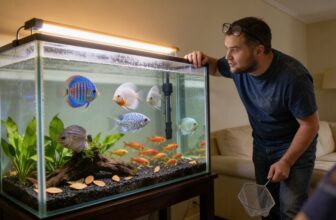
Neon Tetras weave through stems like thread through cloth, finding safety in numbers.
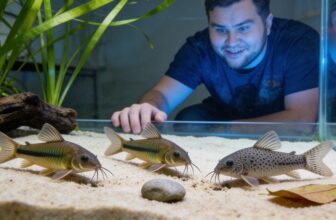
Pygmy Corydoras school beneath red leaves, whiskers twitching for food.
Red Cherry Shrimp graze leaf undersides, picking invisible meals you cannot see.
Ghost Shrimp perch on rising stems, antennae swaying like grass in wind.
You watch shrimp clean while fish rest, feeling peace spread through glass walls.
Fix Yellow Leaves, Melting, and Leggy Growth Fast
If Ludwigia repens lets go of its color, it’s telling you something simple: the balance is off.
Yellow leaves mean your nutrient cycling has slowed. You’ve got hungry plants sitting in empty water. Melting stems cry out for stability, water that’s steady, not shifting day to day. Leggy stretching? That’s a light call, plain and simple.
Here’s how you answer:
- Feed the roots with iron-rich fertilizer weekly, building nutrient cycling your plants can trust
- Raise your light, or extend hours, until stems stand proud and leaves stack tight
- Trim leggy tops for algae control and replant them, making space for fresh, bright growth
You belong here, in balance with them.
Match Ludwigia Repens to Compatible Red Stem Plants
Once you’ve got Ludwigia repens standing tall and crimson, you’ll start noticing something: your aquascape holds more green than you’d like.
You crave harmony, a crew that gets it.
Pair your Ludwigia with stem plants sharing that same hunger for light and food.
| Plant | Stem Stem Color | Nutrient Dosing Need |
|---|---|---|
| Rotala Rotundifolia | Pink to deep red | Moderate, loves iron |
| Ammannia Gracilis | Orange-red bursts | High, demands consistency |
| Alternanthera Reineckii | Burgundy velvet | Steady, rewards patience |
You’ll dose together, grow together, belong together.
Frequently Asked Questions
Can Ludwigia Repens Grow Emersed Above Water?
Yes, you can grow Ludwigia repens emersed, meaning its stems and leaves rise above the waterline. You’ll notice emersed growth brings bigger, rounder leaves than underwater ones—this is called leaf size variation. The plant adapts its shape to catch air instead of filtered light. Keep the roots wet, provide humidity, and watch bright yellow flowers bloom. It’s like how you stretch taller when reaching for something you need.
Does This Plant Require Co₂ Injection to Thrive?
CO₂ injection isn’t mandatory for this plant, though it helps.
You’ll see faster growth, richer reds, and fuller leaves when you boost CO₂ levels, especially under bright lights. Without it, Ludwigia repens still survives, just slower and greener, like a friend who shows up tired but still comes.
Your substrate preference matters too—nutrient-rich soil gives roots what gas can’t provide alone.
You’re not failing if you skip CO₂; you’re choosing patience, that’s all.
Will Copper-Based Medications Harm Ludwigia Repens?
You’ll see that copper-based medications pose real danger to your Ludwigia repens through copper toxicity. The metal, meant to cure sick fish, attacks plant cells too, killing leaves and stunting growth. Always check medication labels for copper content before dosing your tank. If you must treat fish, you can temporarily relocate plants or use copper-free alternatives. Understanding these medication interactions helps you protect both your plants and your pets.
Can I Grow Ludwigia Repens in a Pond Outdoors?
You can grow Ludwigia repens in an outdoor pond planting with ease. This plant, likewise called creeping primrose willow, naturally inhabits tropical ponds and lakes across North and Central America. You’ll want to provide shallow water where stems can trail and spread. Seasonal pruning keeps the dense, mat-like growth from becoming unruly. Small yellow flowers may emerge, producing seeds for natural propagation. Maintain temperatures above 68°F.
Why Are My New Leaves Smaller Than Older Ones?
Your new leaves are shrinking since your lighting isn’t meeting their needs. When light drops, plants adapt by growing smaller, thinner leaves to gather what little energy reaches them. You’re seeing light adaptation in action. Nutrient intensity matters too, but dim conditions trigger this size change first. Check your bulbs, you’re probably running under three watts per gallon, and that gap is asking your ludwigia to compromise. Move it closer to the source, or upgrade your fixture, and you’ll watch those leaves broaden again within two weeks.
Rounding Up
A bright stem of Ludwigia repens, crimson as a sunset, stands in your tank. You have learned what it needs: light measured in watts, water checked with a test strip, scissors for trimming every fourteen days. Growing plants teaches patience, the kind you feel when waiting for seeds to sprout. Trust your hands, trust the process. Your aquarium holds living color since you paid attention. That is enough. That is good work.