Feather duster worms are peaceful filter-feeders, best kept with gentle tank mates like clownfish or neon gobies – aggressive fish stress them, and predators like butterflyfish will demolish those radioles entirely.
They need near-zero nitrates, stable temps around 76°F, and flow that’s present but not punitive; think meandering currents, not fire hoses.

Detects trace copper before it destroys radioles and dissolves feather duster tubes.
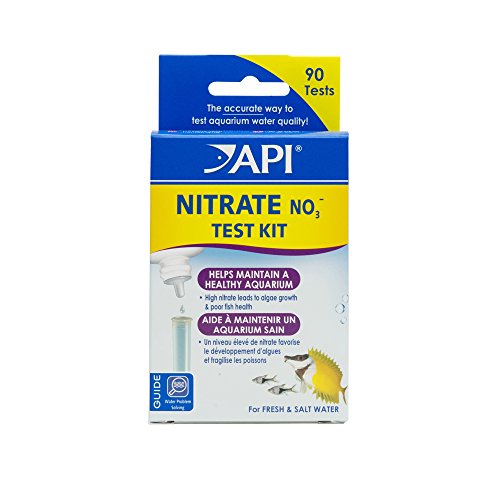
Monitors nitrates to keep levels near zero, preventing stress and crown fading.

Dual-outlet controller runs heaters redundantly, preventing temperature swings that stress feather dusters.
Check discounted items inAquarium Test Kits
Feed phytoplankton or rotifers 3–4 times weekly, and watch for fading crowns or retracted tentacles as stress signals.
A damaged crown can regrow, though slowly, and copper at even trace levels kills them dead.
Keep checking below – there’s more practical stuff ahead.
At A Glance
- Choose peaceful fish like gobies and clownfish; avoid aggressive species that jostle or damage tubes.
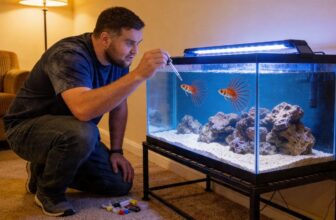
- Target-feed phytoplankton and rotifers 3–4 times weekly upstream using a pipette for optimal nutrition.
- Maintain near-zero nitrates, stable pH 8.1–8.2, and gentle indirect flow to prevent radiole stress or fading.
- Never expose to copper; concentrations above 0.03 ppm rapidly destroy radioles and dissolve tubes.
- Watch for retracted crowns, tentacle loss, or sluggish extension as signs of poor water quality or starvation.
What Is a Feather Duster Worm?
So what exactly is this creature, anyway?
The feather duster worm belongs to the family Sabellidae – though “histor worm ecology” reveals these beauties once confused with early filter-feeding polychaetes, so here we are, sorting the mess. Scientific classification places them as annelids, segmented worms with actual radioles, those feathery crown tentacles waving for plankton. No eyes, no face, just patience and mucus. Like proper filter-feeding invertebrates, they rely on water flow to deliver their microplankton meals.
Sizes range roughly 3–6 inches across, giants hit 8. Colors? Pink, purple, golden, white – choose your aesthetic. They build tubes from sand or chalk, retract when spooked, and basically mind their business. Peaceful, docile, compatible.
Community-minded keepers welcome these. You belong.
The Perfect Tank Setup for Feather Duster Worms
Now, the flow. Tank design matters, I mean, really matters – ten gallons minimum, though bigger means more room to belong, more particles drifting past those feathery crowns.
Lighting optimization? Keep it standard reef-level, nothing fancy. These worms don’t photosynthesize, but they do appreciate the rhythm of day and night, the way light cues the tank’s tiny ecosystem into motion.
Temperature sits between 72-83°F, pH locked at 8.1-8.2, hardness 8-12 dKH. Specific gravity: 1.024-1.026, since precision builds community.
Near-zero ammonia, nitrite, nitrate. Water changes, skimmers, refugia – the usual suspects. Stability invites settlement, and settled worms extend, feed, become part of something.
For maintaining that precise temperature window day and night, a dedicated heat-only controller with dual outlets can run multiple heaters in parallel, ensuring redundancy if one unit fails during a cold snap.
Gentle Flow and Substrate: Getting the Environment Right
Since flow can make or break a feather duster’s day, it’s worth slowing down to think about what “gentle” actually means in practice – not the lazy swirl of a stagnating tank, mind you, but something more deliberate, more like a quiet breeze moving through grass rather than a fire hose blasting a dandelion. Flow flow matters: too sluggish and food drifts past uneaten, too fierce and radioles retract in protest. Aim for indirect, meandering currents, maybe eight to ten times turnover, deflected off rockwork.
Now, the sand substrate – this is where the magic happens. Sabellids need something to grip, to glue their papery tubes against, and sugar-fine aragonite or crushed coral work beautifully. Some aquarists panic about grain size; really, anything that doesn’t compact like concrete suffices. Place them mid-level, partially buried, and watch them settle in like old friends finding their favorite chair. For reef keepers seeking natural mineral sand that anchors tubes without chemical additives, fine aragonite derived from marine sources provides ideal texture and calcium content for tube-building polychaetes.
Choosing Reef-Safe Tank Mates for Feather Duster Worms
Why does compatibility matter so much for a creature that spends its days standing still, anyway? Well, stress kills – slowly, quietly, radioles folding like closed umbrellas. Feather dusters need community, not chaos.
Tank placement matters here. Put them near peaceful neighbors – neon gobies, ocellaris clowns, royal grammas – creatures that won’t jostle their tubes or outcompete them for drifting meals. Lighting preferences? Standard reef lighting suits them fine, no special demands, though neighbors might need more. So match carefully, consider everyone’s needs, and build a tank where the worm belongs.
Just as betta fish require gentle filtration flow to avoid fin stress in community setups, feather dusters thrive when water movement delivers food without dislodging their delicate tubes.
Predators That Will Eat Your Feather Duster Worm
Predator identification starts with the usual suspects: triggerfish, puffers, most angelfish, and those wrasses that pretend they’re just browsing.
The usual suspects wear innocent faces: triggers, puffers, angels, and wrasses playing casual browser.
Large crabs, starfish, and anything labeled “invertebrate muncher” belong on the no-fly list too.
Feeding competition poses its own quiet threat.
When too many filter feeders crowd the same water column, everyone goes hungry.
The worm retracts, sulks, starves.
Installing a protein skimmer with proper GPH matching helps maintain water quality that supports healthy plankton levels for all filter feeders in the system.
What Do Feather Duster Worms Eat?
How does a creature without eyes, mouth, or stomach manage a meal? Feather duster worms, those crown-headed wonders, filter zooplankton, phytoplankton, and detritus straight from the water column, no chewing required.
- Their feathery radioles – those colorful fans – catch particles, flicking them down a groove toward the gut.
- Nutrient cycling happens naturally: they process waste, they recycle, they keep the tank breathing.
For aquarium aesthetics, this passive grazing means constant motion, a living ornament swaying in gentle flow. No eyes, no problem. Just flow, food, and patience.
Maintaining pristine water conditions through biological filtration helps ensure these delicate filter-feeders receive adequate nutrients without competing against excess harmful compounds.
How to Target-Feed Your Feather Duster Worm
Waiting for food to drift by works in the wild, surely, but captivity demands a little more finesse – not much, just enough. Target feeding, frankly, transforms survival into thriving.
Now, feather worms anchor themselves with surprising loyalty when substrate compatibility aligns – sand, crushed coral, whatever holds that tube steady. Flow optimization matters here; too gentle and food stalls, too brisk and the crown retracts in protest.
Here’s the method:
- Draw prepared food into a pipette or syringe – no needles, obviously.
- Position upstream, maybe three inches out.
- Release slowly, letting current carry particles to waiting radioles.
Three to four times weekly suffices. I mean, they’re filter feeders, not gluttons. Observe extension; a retracted crown means stop, reconsider, adjust flow. Simple enough, really.
For aquarists who travel frequently, an automatic aquarium fish feeder with precise portion control can maintain supplemental feeding schedules, ensuring your feather duster’s tankmates stay nourished without disrupting the delicate flow dynamics your worm depends upon.
Best Foods and Supplements for Feather Duster Worms
The menu, such as it is, centers on the barely visible – zooplankton, phytoplankton, the drifting leftovers of a reef’s invisible economy.
Now, for those who want their worms thriving, not merely surviving, plankton diversity matters.
I mean, these creatures didn’t evolve to eat the same thing Tuesday through Sunday.
- Live or frozen rotifers, the gold standard for finicky feeders
- Phytoplankton blends, green clouds of sustenance
- Arcti-Pods or similar copepod suspensions
- Liquid coral foods, applied with restraint
Nutrient timing – dosing when circulation peaks, roughly 30 minutes post-lights-on – maximizes capture efficiency.
And maybe skip the brine shrimp brine shrimp brine shrimp routine.
Variety, people. It’s not just for their benefit; it’s how you join the club of keepers whose radioles extend like victory flags.
Just as planted freshwater aquariums benefit from liquid mineral blends that deliver essential nutrients through the water column, these suspension-feeding worms rely on diverse planktonic particles delivered by current rather than substrate.
Crown Loss and Color Fading: Stress Signals Explained
Feeding a feather duster well means nothing if the animal itself is quietly falling apart, and crown loss – those radioles paling, shrinking, or outright dropping off – is the kind of signal that separates attentive keepers from the ones who wonder two weeks later where all the feathers went. These stress biomarkers speak plainly. Establishing stable pH and buffering through proper rock selection can prevent many of the water chemistry swings that trigger these symptoms in sensitive invertebrates.
| Stress Signal | What It Reveals |
|---|---|
| Radiole fading | Poor water quality, usually nitrates creeping upward |
| Crown retraction | Aggression nearby, or flow too aggressive |
| Tentacle loss | Starvation, copper exposure, or handling trauma |
| Sluggish extension | Temperature swings, pH crashes, the usual suspects |
Crown regeneration happens, slowly, but only once the insult stops.
Why Copper Kills Feather Duster Worms
Three things will wipe out a feather duster colony in a reef tank faster than you can test for ammonia: a starving dragonet, a rogue crab, and copper – specifically, any copper-based medication or contaminated water source sneaking in at concentrations above roughly 0.03 parts per million.
Feather dusters, poor softies, never signed up for this.
Copper toxicity annihilates them since they can’t process the metal through their delicate tissues. Now, here’s what happens when levels spike:
- Radioles shrivel and stop feeding, basically waving a white flag
- The worm evacuates its tube, which is never a good sign
- Copper toxicity triggers tube degeneration, that chalky or mucus structure literally dissolving
- Even trace contamination from old equipment kills within days, so test everything
I mean, you wouldn’t drink from a corroded pipe, right? Same principle.
Copper’s impact is particularly devastating because, unlike many invertebrates that can tolerate low IP68 waterproof rated equipment designed for submersible applications, feather dusters have zero physiological defense against even minimal metal intrusion.
Will a Damaged Crown Grow Back?
Feather Duster Damage Limits and Recovery
Turns out, quite a bit. Crown regeneration, that slow-motion comeback story, happens if conditions align: pristine water, zero ammonia, gentle flow, and the patience of someone watching paint dry.
Stress recovery takes weeks, sometimes months, those feathery radioles inching back like a very committed comeback tour.
Feathery radioles inching back like a very committed comeback tour.
Now, here’s the thing – moderate damage heals. Total annihilation? Less promising. And if the worm ditches its tube entirely, well, that’s evacuation behavior, not renovation. Keep parameters locked, predators absent, food abundant, and your feather duster might just surprise you.
How Do Feather Duster Worms Reproduce?
Reproduction and Life Cycle
Since feather duster worms never learned the birds-and-bees talk, they rely on pure aquatic chaos instead. These broadcast spawners release sperm and eggs into the water column, letting currents handle matchmaking.
Now, breeding timing matters – mature tanks, six to twelve months old, packed with microorganisms, see better success. Eggs hatch in days, and the real drama begins.
- Larvae drift, eating suspended organisms
- They seek suitable substrate for larval settlement
- Once anchored, they build tubes from mucus or calcium
- Radioles unfurl, and independence begins
Some sabellids even clone themselves through scissiparity. No partners, no problem.
Building a Social Colony of Feather Duster Worms
Feather Duster Worm Colonies
Cluster feather duster worms together and watch the tank transform, not through any grand design, but since these filter-feeders happen to like neighbors.
Cluster feather dusters together and let the tank transform through their quiet preference for company, not design.
Colony lighting need not be fancy – standard reef illumination suffices, nothing exotic.
Yet microhabitat design rewards intention: group tubes in loose clusters, perhaps six to ten per square foot, allowing radioles to sway and touch without crowding substrates.
Gentle currents matter more than spacing; they share food drifting past.
Compatibility builds naturally – neither fighting nor cooperation, just compatible existence.
And seeing them bloom together, fans opening in sequence, creates belonging without demanding it.
The colony becomes architecture, not accident.
Daily and Weekly Feather Duster Worm Maintenance
Feather Duster Worm Maintenance
If someone enjoys watching a fifty-dollar filter-feeder dissolve into a mucus ghost, maintenance isn’t optional – it’s just not dramatic.
Daily checks mean glancing at crowns – extended means fed, retracted means stressed, and I mean, nobody wants that.
Now, weekly chores build the rhythm:
- Test water chemistry twice weekly, since parameters drift, drift kills, and drift isn’t personal
- Adjust lighting schedule seasonally, mimicking natural photoperiods that signal biological clocks
- Target-feed with a pipette 3-4 times weekly, upstream of crowns, like room service for tube-dwellers
- Inspect tubes for damage, gently, no touching, just looking, always looking
Stability breeds colonies, and colonies mean you’ve arrived.
Frequently Asked Questions
Can Feather Duster Worms Move Their Tubes?
No, feather duster worms cannot move their tubes once constructed.
Tube movement isn’t in their repertoire – these worms commit to a spot, build their homes from mucus or calcium, and stay put. Their habitat preference leans toward stable substrates where construction lasts: sand beds for sabellids, rocky surfaces for serpulids.
I mean, they’re not nomads. Once glued down, that’s home. No packing up, no house hunting. Permanent residents, those worms.
How Long Do Feather Duster Worms Live?
Feather duster worms typically live 1–4 years in captivity, though some specimens persist longer with pristine conditions. Their tube lifespan often exceeds the animal itself, remaining as ghost architecture after death.
Now, the reproductive cycle complicates longevity tracking. These broadcast spawners release gametes freely, so offspring – genetic clones via scissiparity in some species – effectively extend lineage indefinitely. I mean, individual worms expire, but colonies persist, creating this weird immortality-by-proxy situation.
Life span varies, probably 2–3 years realistically, maybe 5 if you’re lucky and obsessive about water parameters.
At least their tubes look nice, even empty.
Do Feather Duster Worms Have a Symbiotic Relationship With Any Species?
No. Feather duster worms do not form symbiotic relationships with symbiotic algae that live inside their tissues like corals do, and they don’t partner with mutualistic fish for cleaning or protection either.
They’re solo operators, extracting their own food from the water column through those fancy radioles.
Now, they *will* tolerate neighbors – sponges, corals, gentle fish – but that’s coexistence, not true symbiosis.
I mean, they’re friendly introverts, not team players.
Can Feather Duster Worms Close Completely if Threatened?
Yes, they can, and it’s quite the sight.
Tubeing behavior kicks in instantly – those feathery radioles, the crown, sucks back into the tube so fast you’d miss it blinking. By instinct, not choice.
Habitat preferences matter here: tight, protective tubes, whether mud-glued or chalky Serpulid shells, give them that safe harbor. Threatened, gone. Sealed.
Sometimes they overreact to shadows, but hey, better jumpy than eaten.
Are Feather Duster Worms Sensitive to Lighting Changes?
Feather duster worms exhibit moderate light tolerance, though they aren’t highly sensitive to gradual lighting changes. Their habitat preference leans toward moderate, indirect illumination – bright enough to support photosynthetic microorganisms they consume, gentle enough to avoid stress.
Now, sudden shifts? Those cause problems. Rapid intensity spikes or spectrum swaps trigger crown retraction, faded coloration, sometimes complete withdrawal into tubes. They’ll adapt if changes creep slowly, maybe over days, not hours.
I mean, they’re filter feeders, not sunbathers. Their radioles, those feathery crowns, actually prefer subdued corners where currents deliver plankton without harsh beams. Excessive light encourages nuisance algae on tubes, which annoys everyone.
Stable lighting mimics reef crevices they naturally inhabit. Aim for PAR around 50-150, though exact numbers flex depending on tank depth and coral neighbors. They’ve got no eyes, just light sensitivity in radioles – so think ambiance, not interrogation.
- Gradual adjustments: acceptable
- Sudden changes: stressful
- Excessive brightness: algal trouble
Keep it steady, keep it mellow.

Microalgae suspension feeds filter-feeding feather duster worms without clouding the water.

Living rotifers mimic natural plankton, encouraging feather dusters to extend and feed.

Delivers phytoplankton upstream so gentle current carries food directly to radioles.
See today's best deals onReef Aquarium Food