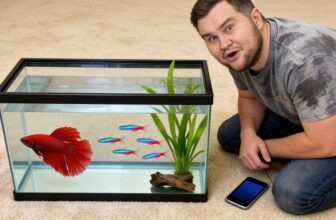
Feed your betta twice daily, 1–2 high‑protein pellets per meal—aim for 35–45% protein, slow‑sinking 1 mm size.
Rotate frozen bloodworms or brine shrimp twice weekly, thawed 20 minutes first.
Skip freeze‑dried unless you soak it, except you enjoy a fish balloon.
Fast one day every 7–14 days to prevent bloat and swim‑bladder drama.
Watch the belly: round, not swollen.
Remove uneaten food fast, or your water turns into a chemistry experiment.
Begging means nothing—bettas lie for snacks.
Stick to this, and your fish will flare instead of sulking.
Details below cover fry, portion sizing, and why peas aren’t the miracle cure your uncle claims.
At A Glance
- Betta require carnivorous diets with 35-45% protein pellets as the staple, supplemented by live or frozen foods.
- Feed 1-2 pellets twice daily with six-hour intervals, and fast one day weekly to prevent digestive issues.
- Monitor belly size and feces to detect overfeeding or underfeeding before health problems develop.
- Fast for 2-3 days and maintain 80°F water to relieve constipation and prevent swim bladder disorders.
- Rotate protein sources weekly and remove uneaten food immediately to maintain water quality and health.
What Should You Feed Your Betta Fish? A Complete Diet Guide
Feeding a betta isn’t rocket science, though you’d think so watching some people dump half a can of flakes into the tank and call it a day.
Your betta’s a carnivore, plain and simple—think insects and larvae, not salad. Live foods like brine shrimp and mosquito larvae hit the jackpot for natural nutrients when you source them right. Frozen options work too; thaw ’em twenty minutes, and don’t go overboard—a cube’s often too much. Freeze-dried? Soak first, or you’re inviting constipation to the party.
Mix it up. Aquation variations keep their digestive systems humming and minds engaged and minds engaged. Tank enrichment through diverse feeding mimics the wild hunting they’ve lost.
Stick to protein-rich, betta-specific formulations. Skip the generic flakes—your fish deserves better than the aquarium equivalent of gas station sushi.
Bottom line: rotate live, frozen, and properly prepped freeze-dried foods. Your betta’s colors pop, energy soars, and you’ll belong to the club of keepers who actually know what they’re doing.
Consider adding high-protein insect-based pellets to your rotation for an extra boost in color and health.
Why Pellets Should Be the Foundation of Your Betta’s Diet
You can scatter live brine shrimp like confetti at a parade, but you’ll still come up short without a solid nutritional anchor. High-quality pellets deliver what your Betta actually needs—full stop.
Pellet texture matters more than you’d think. Too hard, and your fish struggles; too soft, and it clouds the tank. Look for slow-sinking, roughly 1mm pellets that float briefly—Bettas are surface feeders, after all.
Nutrient balance is where pellets win. Reputable brands pack 35-45% protein, plus vitamins and minerals you’d need a chemistry degree to mix yourself. Live foods are excellent, no doubt, but they’re the garnish, not the meal. Including fish like bass or sole that share homophony with everyday words makes this playful comparison even more effective.
Bottom line: pellets first, everything else second.
Live, Frozen, or Freeze‑Dried: Which to Choose and When
Once you’ve locked in your pellet routine, the fun part begins—deciding which extras actually deserve a spot in your Betta’s dinner rotation.
Live foods win for nutrient density—brine shrimp, mosquito larvae, the works—but they demand reputable sources, so check your seasonal availability before committing.
Frozen foods hit middle ground, preserving most nutrients without the hassle of, y’know, keeping things alive. Thaw for twenty minutes first for twenty minutes, or you’ll regret it.
Freeze-dried? Convenient, cheap, but tricky—soak them well, or your fish pays the price. It’s all about nutrient timing, matching protein boosts to your Betta’s energy needs.
Rotate all three for variety, prioritize frozen for consistency, live when you can swing it. A clear mesh aquarium lid also helps prevent jumping while keeping your feeding access easy.
How Much to Feed Your Betta: Portion Sizes That Prevent Problems
Getting portions right means dodging a lot of headaches later, so let’s cut to the chase—your Betta’s stomach is roughly the size of its eyeball, which is adorable and similarly deeply inconvenient when you’re standing there with a whole container of pellets.
Here’s your feedingnutrient timing cheat sheet:
- Offer 1–2 standard pellets per meal, twice daily—less than you think.
- For mini pellets, split 2–4 across the day, respecting that 6-hour digestive window.
- Frozen foods: about 1.8g thawed, no re-freezing (bacteria’s not your friend).
- Prioritize protein-heavy Seasonutrient ratio; plant-based fillers won.
Bottom line: underfeed slightly, watch their belly, and you’ll avoid the bloated-fish blues.
By sticking to proper portion sizes, you also help maintain stable water parameters and prevent health issues like ich.
How Often to Feed Your Betta: A Simple Schedule That Works
Twice daily keeps a Betta thriving, though your schedule might groan at the commitment.
Space feedings 10-12 hours apart—morning and evening works best. This mimics natural hunting cycles, and your fish will learn your routine fast. (Yes, they’ll stare you down if you’re late.)
Aim for 6+ hours between meals. This prevents constipation, a common Betta killer, and keeps digestion smooth. Temperature health matters here—cold water slows metabolism dramatically. Keep your water temperature steady at 78-80°F, or your feeding schedule falls apart regardless of timing.
Stick to this rhythm. Your Betta’s colors will thank you. To ensure portion consistency, consider using an automatic feeder with half-gram accuracy for precise daily rations.
Should You Fast Your Betta? (And How Often)
Yes, you should fast your Betta, and no, you’re not being cruel—you’re being a responsible fish parent. Bettas need digestive rest, just like you after Thanksgiving.
Your fasting frequency matters. Skip feeding one day every 1–2 weeks. Wild Bettas don’t eat daily, so your fish won’t starve. This pause prevents constipation, bloating, and swim bladder disorder—basically, a tummy ache that throws off their balance.
- A lighter Betta, swimming freely without that swollen belly
- Clearer water, since you’re not dumping excess food
- Lower ammonia levels, since less waste means happier tank chemistry
- A fish with brighter colors and more energy, since digestion actually works
The health impacts are real: regular fasting reduces chronic digestive issues and extends lifespan. It’s preventive maintenance, like flossing. Skip it, and you’re gambling with blockages and bacterial infections.
Bottom line: pick Tuesday, pick Tuesday, call it “Tank Tuesday,” and let your Betta lounge. They’ll thank you by not floating sideways. Using a UV sterilizer can also help maintain clearer water and lower ammonia levels by eliminating harmful germs.
How to Spot an Overfed Betta: Signs Before Damage Sets In
Before your Betta starts listing sideways like a tiny, scaly drunk, you’ll spot subtle warnings—if you’re paying attention, that is.
You’ll notice over behavior first: begging becomes aggressive, pores at the glass like you’re hiding steak in your pocket. Then come stress signals—clamped fins, hiding, listless drifting when they’re normally patrol-happy.
Check the belly: swollen, round, you’ll find it. Stringy poop? Classic red flag. Uneaten food rotting at the bottom? You’re feeding the tank, not the fish.
Skip a day, let them clear out. Your Betta isn’t starving—it’s bloated. Just like bamboo shrimp, a betta may exhibit hiding behavior when stressed, signaling the need for stable water conditions and a break from feeding.
Is Your Betta Underfed? Warning Signs Owners Miss
Lateral line sharpness: healthy Bettas have gentle curves, not visible bone ridges. You’re checking your fish, right? Since underfeeding sneaks up, and suddenly your lively companion looks… washed out.
Colorration monitoring matters—you’ll catch fading early. Dull color vibrancy screams nutrient deficiency, like a fish wearing yesterday’s enthusiasm.
Watch for these warning signs:
- Sunken belly, not the healthy tapered kind
- Lethargy, hiding instead of greeting you
- Fading reds and blues turning muddy gray
- Aggressive food begging, even after feeding
We’ve all skipped a feeding. Life happens. But regular colorration monitoring keeps you in the responsible owner club, and your Betta stays the showstopper you brag about.
Nutrient-rich foods like frozen daphnia or bloodworms can help restore copper-rose flank coloration lost from a poor diet.
Constipated Betta? Fix It Before Swim Bladder Disorder Develops
So you’ve got the feeding schedule down, your Betta’s colors are popping, and you’re patting yourself on the back—then you notice your fish floating weirdly, maybe tail‑up, looking like a balloon with fins. That’s constipation knocking, friend, and you’re gonna want to answer before swim bladder disorder crashes the party.
| Gut Health Fix | Why It Matters |
|---|---|
| Fast 2–3 days | Resets digestion, reduces bloating |
| Check temperature fluctuations | Cold slows metabolism, stalls food |
| Stable lighting cycles | Stress alters temperament, appetite |
Your Betta’s gut health ties directly to behavior—erratic temperature fluctuations and wonky lighting cycles stress them out, tanking their temperament and digestion. Skip the pea trick for now; just fast, warm the water to 80°F, and watch. Most cases resolve in 48 hours. Persistent floaters need a vet, not more food. Maintaining temperature stability mimics natural habitats and prevents cold‑induced metabolic slowdowns that worsen bloating.
Peas, Bloodworms, and Treats: Smart Ways to Use Them
Once you’ve got your Betta’s gut sorted and the fasting cleared up, you’re gonna want treats—but not like, birthday-cake-at-midnight treats, more like sensible snacks that won’t wreck the progress you just made.
Here’s how the smart crowd does it.
- Peas – blanched, shelled, teensy-tiny bits for constipation backup, not weekly grub.
- Bloodworms – freeze-dried or frozen, soaked first, served as rare season treats (think holidays, not Tuesdays).
- Probiotic supplements – sprinkled occasionally to keep digestion humming along.
- Texture preferences – rotate between soft frozen and crunchy freeze-dried to their seasonal variations.
Your fish appreciates variety. You appreciate not cleaning up regrets. Red eye tetras also benefit from bloodworms as treats, though they prefer dimmer lighting than Bettas.
Raising Baby Bettas: How to Feed Fry for Healthy Growth
Raising baby Bettas is basically signing up for a second job where your boss is a fish the size of a grain of rice and the stakes are, well, literally life and death.
You’ve got this.
First things first: temperature control is nonnegotiable. Keep that water water at 78-80°F, since cold fry are dead fry. Period.
Cold fry are dead fry. Period. Keep their water locked at 78-80°F and don’t you dare slip.
For fry growth, you’re feeding 3-5 times daily, starting with a micro-worm diet or vinegar eels—tiny, wriggly stuff they can actually swallow. Baby brine shrimp work too, once they’re slightly bigger.
Your fry are sensitive little things. Clean water, stable heat, constant food. That’s the job.
Bottom line: commit fully, or don’t start.
When and How to Transition Fry to Pellet Foods
Three to five daily feedings of live micro-worms won’t last forever, and your fry—those tiny, translucent babies you’ve been babying for weeks—are eventually going to need real food.
- Start mixing in crushed micro-pellets at 4–5 weeks old, fingers crossed they’ll notice.
- Keep water temperature steady at 78–80°F so their metabolism cooperates, since cold fry are picky fry.
- Nail your pellet timing: offer tiny bits right after live food when they’re already hunting.
- Watch their bellies—round but not bloated means you’re officially part of the fry-raising club, you absolute maniac.
Why Uneaten Food Harms Your Betta (and Your Tank)
You’ve graduated from coaxing fry onto pellets, congratulating yourself on those round little bellies, and now you’re staring at floating debris in your adult Betta’s tank like it’s a personal insult. That debris buildup? It’s not just unsightly—it’s sabotaging your water parameters fast.
| What Happens | Why It Hurts |
|---|---|
| Uneaten food rots | Releases ammonia, crashes tank quality |
| Organic waste accumulates | Fuels tank algae blooms you can’t control |
| Biofilm spreads | Bacteria thrive, stressing your fish |
Bottom line: remove scraps within minutes. Your Betta’s swimming in that soup, and you’d hate to explain a $15 fish funeral to your kid.
Create a Weekly Feeding Routine Your Betta Will Thrive On
With your tank finally scrap-free and your Betta giving you that judgmental side-eye at feeding time, it’s time to build a routine that actually works—one you can set your watch by, or at least your phone alarm.
- Monday & Thursday: rotate between frozen bloodworms and brine shrimp, thawed for 20 minutes.
- Tuesday & Friday: feed 2 high-protein pellets morning and evening, adjusting for your fish’s appetite.
- Wednesday & Saturday: offer freeze-dried daphnia, pre-soaked to prevent blockages.
- Sunday: fast day—no food, just rest.
Keep your tank temperature steady at 78–80°F, since digestion slows in cooler water, and remove anything uneaten. Your Betta will thank you, probably with more side-eyes, but healthier ones.
Frequently Asked Questions
Can Bettas Eat Human Food Like Cooked Chicken?
Technically yes, but honestly, you’re better off skipping it.
Your betta’s digestive system isn’t built for cooked chicken—no matter how plain you prepare it, human health nutrition doesn’t translate to fish needs. You’re risking bloating, constipation, or worse, since seasoning residue (even trace amounts) and altered protein sources wreak havoc on their tiny guts.
- Skip seasonings entirely—garlic, salt, oil = bad news
- Boiled, unseasoned bits only, sized smaller than their eye
- Offer once as a rare curiosity, never a staple
Stick to high-quality pellets and frozen bloodworms. Your fish won’t thank you—they lack the facial muscles—but you’ll avoid the guilt of a constipated, floating betta staring at you judgmentally. Keep chicken for your own plate.
Do Bettas Need Vegetables in Their Diet?
No, bettas don’t need vegetables—they’re carnivorous creatures, not salad enthusiasts. You’re not doing them favors with plant nutrition.
Occasionally, a tiny blanched pea (shell removed) can help with constipation, but that’s vegetable enrichment as medicine, not meals.
Stick to protein-packed foods: pellets, live or frozen treats. Your betta’s built for bugs, not broccoli. Skip the greens, keep them mean—well, lively and healthy, anyway.
How Long Can a Betta Survive Without Food?
Your betta’s starvation tolerance stretches about 10-14 days, though you shouldn’t test this.
Their metabolic slowdown kicks in fast, like a phone switching to low-power mode, helping them conserve energy when food’s scarce.
You’ll see them get sluggish, colors dull—a survival trick, not comfort.
Skip the guilt trip if you’re away a weekend; they’re built for it.
Beyond a week? You’re pushing luck, friend. Arrange a sitter.
Should I Use an Automatic Feeder for My Betta?
You probably don’t need one.
Your betta does fine with twice-daily feedings you do yourself, and overfeeding’s the real killer anyway. If you travel weekly, though, a basic automatic feeder—about $15-25—solves that.
Check the maintenance: you’ll still clean it weekly, since gunk builds up. Buy battery-backed models, since power outages wipe out programmable schedules, and keep a backup plan, a neighbor with a key.
Skip it if you’re home daily.
Why Does My Betta Spit Out Its Food?
Your betta’s spit behavior usually means you’re dealing with oversized pellets, poor-quality food, or—classic move—you’re simply overfeeding.
Bettas have tiny stomachs, roughly the size of their eye, so they’ll spit and re-chew, like a picky toddler with broccoli.
Feeding aggression can likewise play a role; competing tankmates or mirror-stress makes them gulp too fast.
Try crushing pellets smaller, soaking freeze-dried bits first, and feeding in calm conditions.
Fast a day if bloating follows.
Rounding Up
Feeding your Betta right isn’t rocket science, it’s rhythm. Think of each meal as a note in a song—miss too many, and the whole thing falls flat.
Stick to quality pellets, rotate in treats, skip a day now and then (they won’t starve, promise), and scoop out anything they ignore. Your fish rewards you with color, energy, and that weird little personality Bettas have.
You bought the tank, filtered the water, googled “betta hammock” at 2 a.m. Finish the job. Feed smart, keep it simple, watch them thrive. That’s the whole game.