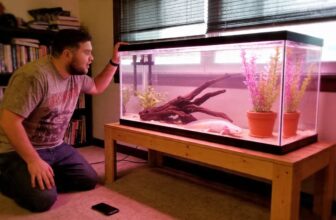
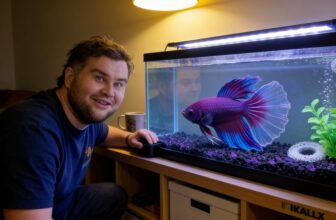
You’ll need a 5–10 gallon tank, heater (25–50W, $15–25), and gentle filter—skip the “betta bowl,” it’s basically a fish hospice.
Cycle it first: fishless takes 4–6 weeks, fish-in demands daily 30% water changes.
Keep water at 76–80°F, test ammonia weekly, and feed 2–3 pellets twice daily—fast on Sundays, since even fish deserve a cheat day.
Add floating plants and a smooth cave for hiding; they’re insecure little drama queens.
Mirror play and ping-pong balls keep them busy, not bored.
Skip the décor with sharp edges, and always dose dechlorinator—chlorine’s not their friend.
With decent care, you’ll get 2–5 years of attitude.
At A Glance
- House bettas in a minimum 5‑gallon tank with heater and gentle filter.
- Maintain water at 76–80 °F with zero ammonia and nitrite, nitrates under 20 ppm.
- Feed 2–3 high‑protein pellets twice daily, fasting one day per week.
- Provide enrichment through plants, hiding spots, mirror play, and weekly decoration changes.
- Quarantine sick fish promptly and treat with aquarium salt or tannins in a separate tank.
Do Betta Fish Need a Filter and Heater?
You absolutely need both, and pretending otherwise is a recipe for a sluggish, sad fish who’ll flick you the side-eye from his slowly chilling grave.
Bettas are tropical fish, not decorative ice cubes. Without a heater, you’re basically running a fish hospice. Heater selection matters: grab a 25‑50 watt adjustable model for tanks 5‑10 gallons, roughly $15‑25. Skip the preset junk, it lies.
Filter maintenance keeps your buddy’s water from becoming a swamp. Gentle flow is key—bettas aren’t Michael Phelps. Clean monthly, replace media sparingly, and you’re golden. Look for a HOB filter with adjustable flow control to ensure the current won’t stress your betta.
Bottom line: buy both, or don’t buy the fish.
Choose the Right Tank Size for Your Betta
Even though you’ve probably seen them wedged into pint-sized cups at the pet store, your betta deserves better than a watery prison cell barely larger than your morning coffee.
Your betta deserves better than a watery prison cell barely larger than your morning coffee.
You’re building a home for a living creature, not storing a decorative object.
Smart tank selection starts here.
Here’s what you need to know:
- 5 gallons minimum — anything smaller strains water capacity and patience.
- 10 gallons preferred — more stable parameters, less elbow grease.
- Skip the “betta bowls” — they’re basically fish torture devices with marketing budgets.
- Measure your space first — a 10-gallon glass tank runs $30-45, fits most desks.
Your fish will thank you with actual swimming, not just sad floating.
A rimless tank with ultra-clear glass provides an almost invisible wall for better viewing of your betta.
Set Up Your Betta Tank: Step-By-Step Guide
Now that you’ve picked a tank that won’t cramp your fish’s style, it’s time to turn that empty box of glass into something worth swimming in.
Start with a dark substrate—think riverbed, not disco ball. It anchors your Betta tank aesthetics, keeping things natural, calm, and all those colors pop.
Add a gentle sponge filter, anything stronger and your betta becomes a tumbleweed.
You’re looking at Betta lighting options now: aim for 8-10 hours daily, low to medium intensity. LEDs around $20 do fine, timers save you from forgetting—again.
Position it away from windows; nobody likes algae soup.
Drop in your heater, set it to 78°F, and you’re basically done.
You may also want a magnetic anti-jump cover to prevent your betta from leaping out.
Plants and Decorations Your Betta Will Love
Since your tank’s finally warm and filtered, it’s time to give your betta something to do besides judging your life choices from the corner. You’re building a home here, not a glass box—so make it count.
- Floating plant placement up top gives your betta shade, security, and a place to nap like the overpriced nap enthusiast he is.
- Decorative driftwood anchors the scape, releases tannins (think weak tea that calms fish), and costs $8‑$20 at most shops.
- Java fern and Anubias—tie them to wood, don’t bury them, or they’ll rot on you.
- A smooth cave or mug (handle out, obviously) completes the vibe.
Skip plastic plants; they’ll shred fins faster than your cat shreds toilet paper.
Use a non-toxic fish-safe gel glue to attach moss or plants to the driftwood and cave for secure placement.
Cycle Your Betta Tank: Fishless vs. Fish-In Methods
Before you drop a living creature into that sparkling tank, you’ve got to teach the water how to clean itself—otherwise, you’re basically asking a fish to live in its own unflushed toilet.
The fishless way: You’re patient, you’ve got time, you add pure ammonia, wait 4–6 weeks as bacteria colonize your filter. It’s boring, yes, but nobody suffers. Cycling tank setup done right means zero casualties.
The fish-in way: You’ve already bought the betta, didn’t you? Hey, we’ve all been there. Feed tiny amounts, change 30% of the water daily, test like your life depends on it.
Water cycling takes discipline either way. Fishless is kinder; fish-in demands hustle. Pick your poison, commit, and join the club of people who actually read instructions. For either method, using 99% accurate test kits with consistent color matching helps ensure ammonia levels stay safe for your betta.
Safe Tank Mates for Betta Fish
Your tank’s cycled, the water’s pristine, and your betta’s strutting around like he owns the place—which, let’s be honest, he does.
Your tank’s cycled, the water’s pristine, and your betta’s already acting like he owns the place—which, let’s be honest, he does.
Now you’re wondering if he’s lonely, or if you’re just projecting.
Betta personality varies wildly. Some tolerate roommates; others declare war on anything that moves.
You’ll need at least 10 gallons, dim tank lighting to reduce stress, and a backup plan when things go sideways.
Safe companions include:
- Mystery snails – slow, armored, mind their business
- Nerite snails – algae-eaters that won’t breed
- Cherry shrimp – cheap snacks, or friends, 50/50 odds
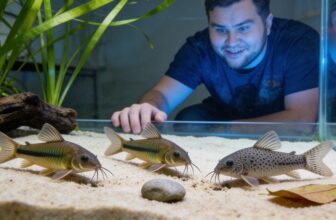
- Corydoras – bottom dwellers staying out of sight
Watch them like a hawk anyway.
For cherry shrimp, ensure stable water conditions to support stress-free molting and survival.
What to Feed Your Betta Fish?
Betta fish are carnivores, which means your little guy didn’t evolve to munch on flakes that look like confetti—he wants meat, and he’ll turn his nose up at anything less.
- Feed him high-protein betta pellets as your base—look for fish meal, shrimp, or insect larva as top ingredients, none of that wheat filler nonsense
- Treat him to frozen bloodworms, brine shrimp, or daphnia twice weekly; it’s like steak night, and his color variations will pop
- Consider his Betta genetics: those flashy fins need quality fuel, not filler
- Skip freeze-dried—it’s the jerky of fish food, crunchy and bloating
Like other insect-eating fish, Betta fans can also try Fluval Bug Bites for a protein-rich, sustainable option.
Bottom line: feed meat, watch him thrive.
How Often and How Much Should You Feed Your Betta?
Twice daily, you’ll drop food into that tiny kingdom—morning and evening, like clockwork, as your betta’s stomach is roughly the size of his eyeball, which is to say, comically small.
Betta feeding frequency matters more than you’d think. Overfeed, and you’ll poison his water; underfeed, and you’ll watch him wilt. Portion size recommendations keep it simple.
- Two to three pellets per meal, maximum
- Fast him one day weekly—his digestive system needs the break
- Soak dried food first, except you enjoy watching him bloat
- Watch his belly: slightly rounded means you’ve nailed it
Using a feeding ring helps contain floating pellets in a small zone, preventing waste from scattering across the surface.
That’s it. You’re in the club now.
Weekly Water Changes for Betta Tanks
Since your betta’s swimming in his own filtered toilet—let’s be honest, that’s basically what a fish tank is—you’ll need to swap out water weekly, not monthly, not “when it looks cloudy,” but every seven days like a responsible adult with a calendar.
— Wait for murky water color and you’ve already failed your fish, so don’t.
Replace 25–30% with dechlorinated water, $5–$8 per bottle, and gravel-vac debris while you’re at it. For efficient siphoning, a dual‑tube kit increases cleaning speed and reach. Keep tank lighting on 8–10 hours daily; algae loves dirty water and darkness, and nobody wants a green swamp.
Your betta’s counting on you. Clock’s ticking.
Test Your Betta Tank Water: Key Parameters to Watch
If you’re guessing your water’s fine since your betta’s still alive, you’re basically playing Russian roulette with a fish—eventually, your luck runs out, and ammonia doesn’t send a courtesy text first.
Grab a liquid test kit, not those strip things that lie like a cheap watch. You’re checking four things that keep your buddy swimming:
- Ammonia: This toxic gas hits zero, or you’re basically cooking your fish—cycle that tank first.
- Nitrite: Still poison, should read zero after cycling completes.
- Nitrate: The less toxic end product, keep under 20 ppm with water changes.
- pH: Aim near 7.0; bettas tolerate 6.5-7.5, but sudden swings kill faster than wrong numbers.
- Hardness: Soft to medium works, so check your tap before adding buffer you don’t need.
For accurate pH readings, a digital meter with auto-calibration helps avoid the inaccuracies of cheap strips.
Test weekly, log it like a responsible adult keeping receipts, and adjust before problems float belly-up.
Spot Sick Betta Fish Early: Warning Signs
Water parameters tell you the tank’s story, but your betta’s body writes the headlines—you just have to read them before the plot twists. Watch for early behavior shifts: a fish that hides more, ignores food, or swims oddly isn’t being dramatic, it’s signaling distress. Faded colors and clamped fins often trace back to nutrient deficiency, especially if you’ve been feeding flake-only diets. Poor nutrition weakens immunity fast.
| Warning Sign | Likely Cause |
|---|---|
| Lethargy, bottom-sitting | Water quality, temperature shock |
| Tattered fins, color loss | Nutrient deficiency, fin rot beginning |
| Gasping, gill flaring | Low oxygen, ammonia spike |
You’re the first responder here. Spot the pattern, fix the root, and your betta rebounds—usually, anyway, except you’ve really let things slide, in which case, we’ve all been there.
Treat Common Betta Diseases at Home
Most betta owners will face a sick fish at some point, and you’ll probably panic first—totally normal, we’ve all stared at a floating betta at 2 a.m. wondering if it’s sleeping or dying. (Spoiler: bettas do sleep, but if it’s been 12 hours, grab your test kit.) The good news? You can handle most issues without a vet bill that costs more than your entire setup.
Home quarantine’s your best friend here, people. DIY medication saves cash and keeps your community tank safe. Here’s your battle plan:
- Set up a 2.5‑gallon quarantine tank with a heater and no substrate—bare bottom means you spot poop problems fast.
- Dissolve 1 teaspoon aquarium salt per gallon for external parasites and mild fin rot, since salt’s the aspirin of fishkeeping: cheap, effective, slightly magical.
- Grab pure Indian almond leaves (around $8‑12 for 50) for natural antibacterial tannins that turn your water tea‑colored and your betta cozy.
- Mix a garlic‑soaked pea for bloating—mash it, freeze it, thaw it, serve it—your fish thinks it’s fancy, you know it’s fiber.
Don’t dump pharmacy meds into your display tank, that’s rookie hour. Quarantine first, treat specific symptoms second, and resist the urge to throw six cures at once. Your betta’s tougher than you think, but they’d like your help anyway.
Keep Your Betta Active: Daily Enrichment Ideas
Why does your betta stare at you like you’re the most boring TV channel ever invented? Since you’re not giving him anything to *do*, that’s why.
Betta fish need mental stimulation, not just a pretty tank. You’re part of a community that knows happy fish live better lives, so let’s fix this.
Try mirror play—hold a small mirror to his tank for 2-3 minutes daily. He’ll flare, chase, and strut like he owns the place. It’s exercise, basically.
Drop a ping-pong ball on the surface. Watch him push it around like a soccer star. Costs maybe a buck, entertains for hours.
Rearrange decorations weekly. Add floating plants he can investigate. Hide freeze-dried bloodworms in crevices—let him hunt.
Your betta’s brain works harder than you’d think. Don’t let it rot.
How Long Do Betta Fish Live? Extending Their Lifespan
If you’re hoping your betta will stick around long enough to judge your life choices for years to come, you’ll need to know what you’re actually signing up for.
Most bettas clock 2-5 years, though bre genetics and color genetics play bigger roles than you’d expect—fancy dragon scales often burn brighter but fade faster, like sports cars with terrible mileage.
Betta lifespan: 2-5 years, but those fancy dragon scales? Sports-car gorgeous, terrible mileage.
Here’s how you join the longevity club:
- House them in 5+ gallons, minimum—anything smaller’s a fish prison.
- Keep that water steady at 76-80°F; they’re tropical, not tough.
- Feed quality protein, not flakes from the discount bin.
- Test parameters weekly; ammonia’s silent but deadly.
Bottom line: pick hardy stock, skip the neon extremes, and you’ll have a companion who outlasts your other hobbies.
Frequently Asked Questions
Do Betta Fish Recognize Their Owners?
Yes, you’ll find your betta recognizes you.
- Owner recognition kicks in through visual cues—your silhouette, movement patterns, even the color of the clothes you wear (they’re not judging your fashion choices… probably)
- They’ll perk up, flare, or swim to the front when *you* approach, not random strangers
- It’s not true affection, just learned association: human = food, but hey, you’ll take it
Bottom line: you’ve got a tiny, grumpy fan who notices you exist.
Can Male and Female Bettas Live Together?
You can’t keep male and female bettas together long-term, though breeding’s a brief exception.
- Tank size matters here—anything under 10 gallons spells disaster, they’ll fight in cramped quarters
- Breitativity (breeding behavior) triggers aggression post-spawning; she’ll need immediate removal
- Feeding frequency drops during pairing, they lose interest in food when territorial
They’re not a cute couple. More like bad roommates who’d rather tear fins than share rent.
Why Is My Betta Blowing Bubbles?
Your male’s blowing bubbles since he’s building a bubble nest—basically a fish nursery made of spit-balls on the surface.
You’ll notice him surface gulping air as he works, which is normal.
Bettas do this when they’re feeling good, hormonal, or just bored.
It’s weirdly charming, honestly, like watching a tiny architect with no architectural training.
- Bubble nest = healthy, happy, or “it’s mating season, apparently”
- Surface gulping = labyrinth organ breathing (fish lungs, sort of)
Bottom line: he’s fine, probably just showing off.
Should I Leave the Tank Light on at Night?
Turn off the light. Your betta needs a night cycle, just like you do after staring at a screen all day.
Aquarium lights run roughly $15-$30; a simple timer’s another ten bucks. Without darkness, you’ll stress your fish, tank decor becomes algae magnets, and water temperature swings creep up from overheating units. Nighttime feeding? Skip it, they’re diurnal (awake in daytime, asleep at night).
- Darkness: 8-10 hours, non-negotiable
- Dim tank decor: reduces glare stress
- Stable temps: heaters work harder under constant light
Bottom line: darkness heals.
Do Betta Fish Need Air Stones or Bubblers?
You don’t need an air stone, but you’ll want gentle water filtration.
Your betta breathes air from the surface—you’ve seen them gulp, right?—so aggressive bubbling actually stresses them out.
A sponge filter or bubble filter rated for your tank size (at least 5 gallons, preferably 10) delivers all the oxygen exchange you need without blasting your fish around.
Skip the airstone, grab a filter with adjustable flow, and you’re set.
Rounding Up
You’ve got this. Caring for a betta isn’t rocket science—it’s just commitment, plain and simple. Give them five gallons minimum, a heater set to 78°F, and a cycled filter. Skip the plastic plants, they’re fin-rippers. Test your water weekly, watch for clamped fins or lethargy, and you’ll dodge most disasters. These fish live 2-5 years when you don’t cut corners. At the end of the day, a thriving betta beats a dying decoration every time.