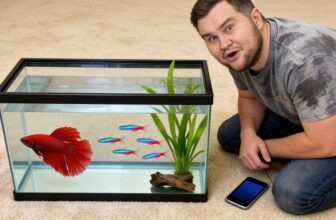
You can, but only if you treat that vase like a mini aquarium, not a coffee table decoration.
You’re looking at five gallons minimum, a 25‑watt heater to keep things at 78°F, and a gentle sponge filter so your fish isn’t swimming in its own waste.
Skip any of that and you’ve built a slow torture chamber, not a home.
Most store‑sold “betta vases” are basically death traps with good marketing.
The nitrogen cycle—that’s the invisible bacteria colony that eats toxic ammonia—needs space and filtration to work, and a tiny vase without gear?
It can’t happen.
You’ll be doing water changes every couple days just to keep your fish alive, which, honestly, gets old fast.
For under sixty bucks you can grab a proper five‑gallon starter kit with everything included, save yourself the daily anxiety, and give your betta room to actually be a fish.
If you’re stubborn about that vase, though, the specifics ahead will keep you from accidentally running a fish hospice.
At A Glance
- A viable vase must hold at least five gallons to support stable water parameters and Betta health.
- Install a 25-watt nano heater and sponge filter to maintain 76-82°F and zero ammonia levels.
- Use rounded decor, silk plants, and smooth caves to prevent fin damage and provide hiding spots.
- Replace 30% of water every 2-3 days with temperature-matched water to avoid lethal shock.
- Transition to a proper 5-gallon tank kit under $60, cycling the filter 4-6 weeks before moving the fish.
Can You Keep a Betta in a Vase? The Honest Answer
So, you want to keep a Betta in a vase? You’ll join thousands who’ve imagined that elegant, minimal look.
Here’s the truth: you *can*, but you’re fighting biology every step.
Your Betta’s genetics—shaped by Southeast Asian rice paddies—demand warm, spacious, filtered water. Legal regulations in some regions actually prohibit inadequate housing, labeling it animal cruelty. No heater means lethargy, sickness, death. No filter means ammonia poisoning. Even a compact kit like a 2-gallon Smart Aquarium includes a triple-filtration system and temperature display, both of which a vase completely lacks. That “low-maintenance” vase? It’s a slow torture chamber.
Your Betta’s genetics—shaped by Southeast Asian rice paddies—demand warm, spacious, filtered water. That “low-maintenance” vase? It’s a slow torture chamber.
The honest answer? Yes, technically possible. No, not ethical. You’ll spend more fixing problems than building a proper habitat from day one.
Why Most Vase Setups Kill Bettas
- No filtration trashes your water-quality; ammonia spikes in days, not weeks
- Zero heater means temperature swings that shred immune systems
- Surface area’s a joke; your fish suffocates slowly
- Roots and pebbles don’t feed a carnivore; malnutrition follows
- Stress crushes genetics, cutting lifespan from years to months
You wanted pretty, you got ethicalta. The math’s brutal: small space equals dead fish, guaranteed. Even if you attempt to cover the vase, magnetic fish tank lids remain incompatible with such cramped containers.
The Minimum Vase Size That Actually Works
If you’re dead set on the vase aesthetic—and hey, nobody’s judging your Pinterest board—the bare minimum starts at five gallons, full stop.
Anything smaller crushes Betta genetics, plain and simple. These fish carry DNA built for shallow rice paddies, not shot glasses. You need room for them to turn, investigate, and actually live.
Water hardness matters too—think 5-20 dGH, which is just fancy talk for mineral content. Too soft, their fins rot; too hard, they stress.
Five gallons gives you wiggle room for stable parameters, a tiny filter, and yes, that heater you’ll need. Skip it, and you’re basically running a fish hospice. For stable water conditions, test ammonia, nitrite, nitrate weekly to maintain balance.
Bottom line: five gallons or find a new aesthetic.
Heating a Small Vase Without Cooking Your Fish
Since you’ve committed to a vase, you’re now stuck solving a puzzle that would’ve been trivial with a real tank—how to keep water warm without turning your Betta into soup. Heater placement controls everything, and, trust me, energy consumption spikes when heating tiny volumes.
- Place a 25‑watt nano heater low, angled up, aiming for circulation
- Check daily; cheap units fluctuate, like your uncle’s scores
- Watch energy consumption climb without insulation around the glass walls
- Wrap the vase in foam to trap warmth, and cut the bill
- Use a thermometer strip; guessing leads to soup, which is nasty
Look for models with automatic shut‑off to prevent overheating the small water volume.
Stay small.
Filter a Vase Without Creating a Whirlpool
Since a filter strong enough to actually clean your vase will furthermore blast your Betta like a leaf in a hurricane, you’ve got to cheat physics a little—think gentler, not weaker. Your filtration design matters enormously here. Grab a small sponge filter, maybe $8-12, and pair it with an adjustable air pump. You’re aiming for barely-there ripples, not white-water rapids. A bubble diffuser helps enormously—those tiny pores break up airflow into soft, silent mist, sparing your fish the spin-cycle treatment.
| Setup Element | Why It Works | Approximate Cost |
|---|---|---|
| Sponge filter | Biological filtration, zero current | $8-15 |
| Adjustable air pump | You control the chaos | $15-25 |
| Bubble diffuser | Gentle, whisper-quiet bubbles | $5-10 |
Position the filter off-center, break line-of-flow with a silk plant or two, and test by watching your Betta’s fins—if they’re sailing like a flag, dial it down. You’ve got this. Regularly monitor for ammonia spikes using easy‑to‑dip test strips to keep your betta safe.
Surface Oxygen: The Bubble Solution
Your Betta might look like it’s breathing easy just hanging there, but that’s your cue to step in.
That maze organ needs oxygen diffusion at the surface, not stale, stagnant water.
You’re not running a fish spa, you’re keeping a living creature alive.
- Add a small air bubbler—$8 to $15, whisper-quiet models work fine
- Position it low, letting bubble dynamics break the surface gently
- Aim for soft ripples, not a jacuzzi; your Betta’s not on vacation
- Check flow daily, adjusting stones if she’s fighting the current
- Monitor her breathing—labored gulps mean you’re losing the battle
One bubbler. Five minutes of setup. Zero excuses.
Using a dual‑stage CO₂ regulator ensures stable gas flow for planted tanks needing supplemental carbon.
Safe Decor and Substrate for Vase Bettas
How do you keep a Betta from shredding its fins on the equivalent of underwater pine needles? You prioritize substrate safety and smart decor choice, that’s how.
Skip the gravel that looks like broken glass. You’re aiming for smooth, rounded pebbles or fine sand, nothing sharper than your grandmother’s manners. Decor choice matters too—avoid plastic plants with edges that could slice, and instead grab silk plants or smooth caves. Your Betta needs hiding spots, not hazards.
Skip the broken-glass gravel. Choose smooth pebbles, silk plants, and hiding spots that won’t slice.
- Rounded gravel: $8-12, prevents fin tears
- Silk plants: $6-10, soft and safe
- Small cave: $5-8, reduces stress
Additionally, using a specific gravity refractometer helps ensure your betta’s water has the correct salinity if you’re using aquarium salt for health.
Bottom line: smooth everything, or you’re the one who’ll feel guilty.
How to Feed a Betta in Limited Space
Once you’ve smoothed out every pebble and silkened every leaf, there’s still the matter of getting actual food into your Betta without turning that carefully arranged vase into a garbage dump.
Precision matters here. You’re working with inches, not acres.
- Use nut feeding techniques—target each pellet with tweezers, no floaters left behind
- Pre-soak pellets to sink fast, preventing uneaten debris at the surface
- Feed tiny amounts, twice daily; your fish’s stomach’s the size of its eye, after all
- Remove uneaten food within two minutes with a turkey baster
- Choose space saving floating rings to contain the feeding zone
Master this, and you’ve earned your place in the micro-aquarium club.
Water Change Schedule for 5-Gallon Vases
Every single water molecule in that five-gallon vase is carrying someone’s bad decisions, usually yours from last Tuesday. You’re changing 30% every three days, minimum. No exceptions.
Small water volumes crash fast. Ammonia spikes, your fish suffers, you feel terrible.
Frequency beats volume here:
- Partial changes: 30% every 2-3 days
- Full clean: never—destroys beneficial bacteria
- Test weekly: ammonia should read zero
Temperature control matters during swaps. Match new water to tank temp (76-82°F) or you shock their system, raising disease susceptibility. Use a cheap thermometer, they’re five bucks.
Skip a change and you’re gambling with their health.
For a vase, an internal filter with flow control can help maintain water quality without disturbing your betta.
The Peace Lily Vase Myth (And Why It Fails)
Why does the Peace Lily vase keep resurfacing like a bad dream you can’t shake? You’ve probably seen it—gorgeous roots cascading down, the fish supposedly nibbling “naturally,” some Zen promise of harmony. Time for myth disproving, friend.
- The cultural origins trace to a 1990s marketing stunt, not Southeast Asian tradition
- Your Betta’s labyrinth organ needs actual surface air, not root-filtered water
- No heater means temperature swings that stress immune systems
- Roots rot, spike ammonia, and suffocate fish—pretty decor, deadly result
- The “self-cleaning ecosystem” claims? Biology doesn’t work that way in two gallons
You’ve got better options. Skip the Pinterest trap.
For a healthier setup, consider using a sump filter with 200 µm filter socks to keep the water crystal clear and free of debris.
When to Ditch the Vase for a Real Tank
That Pinterest trap you nearly fell for? It’s time to let it go.
It’s time to let go of that Pinterest trap you nearly fell for.
You’ve tried the vase, maybe added a plant, crossed your fingers. But your betta’s fins are clamping, he’s gasping at the surface, and you’re doing daily water changes that never quite win. That’s your cue.
The hobbyist community won’t judge you for starting small—they’ll cheer when you upgrade. Betta health crashes fast in unheated, unfiltered puddles. You’re not a bad fish parent; you’re just ready to join the club that knows better.
Ditch the vase when you spot stress stripes, fin rot, or that guilty feeling you can’t shake. For a truly stable environment, you must first cycle the filter over 4–6 weeks until ammonia and nitrite read zero.
Affordable 5-Gallon Starter Kits Under $60
Since your betta’s flirting with fin rot in that mason jar, you’re probably wondering if decent housing costs a fortune. It doesn’t. Smart budget budgeting lands you a proper setup under sixty bucks, easy.
- 5-gallon glass tank ($20-25): Room to turn, stretch, actually live.
- Adjustable heater ($15): Keeps him at 78°F, no chills.
- Sponge filter ($12): Gentle flow, won’t blast those fancy fins.
- Small LED clip ($8): Lets you see what you’re doing, mostly.
- Test strips ($5): Know your water, don’t guess.
Breeder compatibility matters—pros designed these kits for thriving, not just surviving. Upgrade. He’ll thank you. So will your conscience.
Low-Light Plants for Modified Vases
Your betta’s got a decent home now, so let’s talk about making it actually look like something, not a glass prison.
| Plant | Why It Works |
|---|---|
| Java Fern | Tolerates dim corners, no soil propagation lighting needed |
| Anubias | Grows on driftwood, skips substrate cycling headaches |
| Cryptocoryne | Slow but steady, forgives your forgetfulness |
| Marimo Moss Balls | Basically unkillable, your betta pushes them around |
| Java Moss | Carpet-ish coverage, hides fry if things get weird |
You’re not running a botanical garden here. These plants survive low light, need no fancy CO2, and handle beginner mistakes. Stick them in, anchor to rocks or wood, and call it ecosystem-chic. Your fish gets cover, you get cred. Win-win.
Emergency: Signs Your Vase Betta Is Dying
When you’ve stuffed a Betta into something the size of a large coffee mug, you’re basically running a trauma unit, not an aquarium—so knowing the warning signs isn’t optional, it’s survival arithmetic.
Watch for these disease signs before it’s too late:
- Fins clamped tight against his body, like he’s afraid to move
- Gasping at the surface constantly, even when you haven’t fed him
- White cottony patches or weird spots blooming on scales
- Water clarity crashed to pea-soup green or murky brown—you’re changing it too late
- Lying on the bottom, stops eating, colors fading fast
Your fish is screaming. Listen.
Frequently Asked Questions
Can Bettas Survive Without a Filter in Small Containers?
You can, but you shouldn’t—unfiltered small containers doom your Betta to toxic water chemistry and suffering.
Without a filter, you’re the filter. That means daily water changes, obsessive testing for ammonia spikes, and the constant gamble that waste won’t overwhelm your fish. It’s exhausting, unreliable, and frankly, a bit like using a teacup as a bathtub.
Skip the martyrdom. A $15 sponge filter plus basic maintenance beats emergency aquarium therapy every time.
Just grab a proper setup.
How Long Can Bettas Live in Unheated Vases?
You’ll shorten your betta’s life dramatically. Temperature drops below 76°F slow their metabolism, weaken immunity, and invite disease—most unheated vase bettas die within months, not years.
- Temperature temperature: You’re risking 65-70°F water, which is like you wearing shorts in winter.
- Vase size: Tiny space means faster heat loss, no room for a heater.
Bottom line? Upgrade to a 5-gallon tank with a $15 heater, or stick to plastic plants. Your fish will thank you—silently, of course.
Do Bettas Need Complete Darkness to Sleep?
No, bettas don’t need complete darkness. They need a normal night cycle, just like you do.
Your betta’s sleep rhythm follows a circadian cycle—basically, their internal clock. Too much light, and you’ll mess with their rest patterns. Too little, and they get confused.
They’re not nocturnal behavior experts, but they do have light sensitivity. Give them 8-12 hours of light, then darkness. Simple.
A cheap timer ($10-15) handles this automatically. No fancy gear needed.
Bottom line: consistent day-night beats pitch black every time.
Why Is My Vase Betta Building Bubble Nests Despite Poor Conditions?
Your betta’s building a bubble nest since he’s healthy enough to breed, not since he’s happy. Bubble nests are instinct, not approval.
Poor water flow and stagnant conditions don’t stop the urge—they just make his life harder. He’s basically saying, “I’m ready for kids,” since living in a studio apartment with no heat. Cute, but tragic.
Upgrade him to a 5‑gallon tank with a filter and heater. He’ll still nest, but at least he won’t suffer for it.
Can I Use Tap Water Directly in My Betta Vase Without Treatment?
You can’t use tap water directly—it’s a fish funeral waiting to happen.
Municipal tap water contains chlor water (chlorine and chloramine), chemicals that burn your betta’s gills and destroy beneficial bacteria. You need dechlorination first, always.
- Grab a $4 bottle of water conditioner—it neutralizes chlorine‑free threats in seconds
- Let treated water sit 24 hours, or you’re gambling with ammonia spikes
- Test with cheap strips; your fish can’t text you when it’s suffering
Bottom line: untreated tap water kills. Condition it, or don’t bother.
Rounding Up
You can keep a betta in a vase, but you’ll work twice as hard for half the result. Most vase bettas die within months, not years—their natural lifespan hits 3–5 years in proper tanks. You’d need 2.5+ gallons, a 25-watt heater, and sponge filters修剪一下 (that’s “trimmed” in Chinese, sorry, force of habit) to prevent fin shredding. Real talk? Grab a $50 Aqueon 5-gallon kit, call it a day. Your fish will live longer, you’ll stress less, and honestly, nobody visits your house to admire a vase anyway.