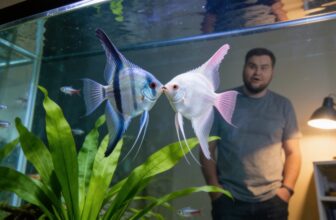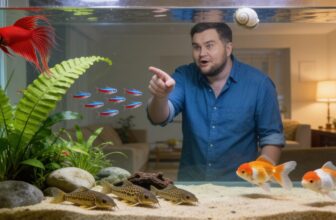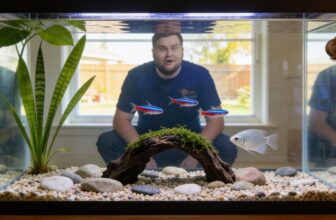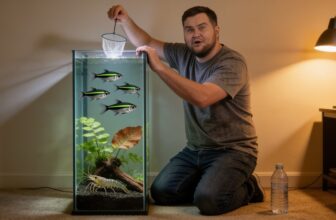
Are guppies schooling fish? Not quite—they shoal, and that difference matters. Schooling means tight, synchronized swimming; shoaling is a looser, social gathering for comfort. Your guppies will drift together casually, not dart in unison.
They only school when spooked by shadows or vibrations, and only with similar-looking fish. This relaxed social style keeps stress low and lifespans long. Mimic their natural rhythm with three to six guppies in a stable 72–82°F tank, and you’ll watch a peaceful, colorful group thrive—not a frantic mob.
At A Glance
- Guppies are shoaling, not schooling fish, forming loose social groups.
- Shoaling involves casual gatherings for comfort, not coordinated, synchronized swimming.
- Schooling is a fear response triggered by threats, creating tight, confusing formations.
- Guppies school only with look-alikes during danger, then quickly revert to shoaling.
- Shoaling reduces stress and energy costs, promoting healthier guppy communities.
Do Guppies School or Shoal?
Whilst you might see guppies swimming in a group and call it “schooling,” the truth is a bit more nuanced. Their behavior reveals guppy personality; they’re social but choosy. They only school tightly together when threatened, and only if they look alike—kind of a clique, honestly. The right filter choice ensures a quiet motor ≤ 40 dB to keep their environment stress-free.
Otherwise, they shoal, hanging out loosely for company without strict formation. This casual grouping boosts tank aesthetics, adding movement without frantic unison. Keep a group of three to six for comfort; a lone guppy gets stressed, which dims those vivid colors.
Bottom line: they shoal by default, school under pressure, and thrive with friends. For a healthy group, ensure low-flow filtration to avoid stressing their delicate fins.
What’s the Difference Between Schooling and Shoaling?
Schooling and shoaling sound like the same thing, but they are not.
Shoaling triggers are social—guppies hang together for comfort, feeding, or just since. They swim loosely, each doing their own thing.
Schooling mechanics, though, kick in under threat. Fish lock into tight, synchronized formations, moving as one to confuse predators.
Think of it like this: shoaling is a friendly gathering at a coffee shop; schooling is a coordinated fire drill.
Guppies shoal by default. They only school when danger looms, and only with look-alikes. It’s less about rules, more about survival.
Why Guppies Prefer Shoaling Over Schooling
Guppies, by nature, are social loafers in the best possible way. They prefer the relaxed vibe of shoaling over the rigid order of schooling—swimming loose, not locked in formation.
Guppies are social loafers, preferring the relaxed vibe of shoaling over rigid schooling.
This stems from guppy evolution, where natural shoaling instincts prioritize safety through simple togetherness, not synchronized moves.
- Lower energy cost – No need to match speeds or directions constantly.
- Flexible feeding – Each guppy grabs snacks wherever, without breaking ranks.
- Less stress – No pressure to perform like a tiny synchronized swim team.
- Better bonding – Casual hanging out feels more like friendship than drill practice.
For a calm, content tank, accept their shoaling nature. They’ll thank you with wiggles.
This shoaling behavior is supported by the same principles found in effective supplements like Brightwell MicroBacter XLM, which enhances biological filtration to maintain the stable water quality that keeps guppies healthy and stress-free.
A diet rich in immune-boosting blend such as vitamins and omega-3 can further support disease resistance in a relaxed shoaling community.
When Do Guppies Actually School Together?
Why does a guppy suddenly snap into formation like a tiny aquatic soldier? It’s the guppy fear response, kicking in when a threat looms.
They school tightly during moments of danger, not for fun. A passing shadow or sudden vibration triggers this, and the predator mimicry effect means they instantly copy each other’s moves, creating a confusing, shifting mass.
This coordinated swimming, a classic schooling behavior, makes it tough for predators to single out one fish. So, schooling happens only when fear is real. For reliable monitoring of water conditions during such stressful events, an ORP redox electrode probe can help track oxidation levels.
No threat? They relax back into loose shoaling, drifting about independently. Schooling is, fundamentally, a survival tactic. For aquarists treating sick fish, removing activated carbon before dosing medications ensures full potency during such stressful events.
Do Guppies Need a Shoal to Be Happy?
Individually, a guppy can survive, but it won’t exactly thrive—think of it as the aquatic equivalent of sitting alone at a party.
A shoal isn’t mandatory, but it’s indispensable for genuine contentment. Without companions, a guppy’s stress response kicks in, dulling its colors and appetite. A reliable setup like the Coospider starter kit provides the quiet filtration and stable temperature that helps maintain a healthy group environment.
- Reduced stress: A shoal dampens the instinctive fear of predators, keeping them calm.
- Better feeding habits: Guppies eat more readily in a group, feeling secure to compete for food.
- Natural socializing: They display playful chases and rest together, reinforcing bonds.
- Vibrant health: Leisurely shoaling keeps them active and alert, avoiding listlessness.
Bottom line: a shoal isn’t a rule; it’s a recipe for a happy, peaceful guppy.
For a small group, a tank of 20 gallons or larger provides ample swimming room and stable water conditions.
How Many Guppies Should You Keep Together?
So you’ve decided a shoal is the way to go—good call. For a thriving community, aim for three to six guppies as a starting point; a 10‑gallon tank fits this nicely, offering each fish about two gallons. Tank decorations, like plants and caves, give them spots to break visual lines and feel secure. A consistent feeding schedule—twice daily with small portions—keeps everyone plump without fouling the water. Adding soft artificial plants with detachable leaves for cleaning makes maintenance even easier while preserving water quality. Here’s a quick guide:
| Tank Size | Guppy Count | Water Volume |
|---|---|---|
| 10 gallons | 3–6 fish | 6–12 gallons |
| 20 gallons | 6–10 fish | 12–20 gallons |
| 30 gallons | 8–12 fish | 16–24 gallons |
Stick to these numbers, and you’re part of the club that keeps stress low and color high. PVC leaves and ceramic base anchors on taller plastic stems can provide additional hiding spots that help shy guppies feel more secure.
Can Male Guppies Live Together Peacefully?
The verdict is clear: male guppies can live together peacefully—think of it as a bachelor pad, minus the dirty dishes. Minor scuffles happen, but serious trouble is rare.
To keep the peace, follow these tips:
- Tank size matters – A 10-gallon tank for three males reduces aggression triggers like crowding. A tank with sturdy low‑profile LED lighting is ideal for showcasing vivid colors during such setups.
- Plant cover helps – Dense plants break line-of-sight, easing hierarchy formation without constant bickering.
- Even numbers work – Odd groups can cause one fish to be picked on; four or six is safer.
- No females nearby – Females spark rivalry; all-male tanks stay chill.
Bottom line: a well-set bachelor tank means colorful, peaceful guppies.
Choosing a tank with adjustable water flow can help tailor currents to keep guppy aggression low in a planted setup.
What Happens to a Lone Guppy Without a Shoal?
A lone guppy in a tank is like one sock in a dryer—it exists, but it’s not really living.
Without a shoal, loneliness effects set in fast. Stress indicators appear: clamped fins, faded colors, and frantic glass‑pacing.
This fish, built for togetherness, loses its spark. It may eat less, hide more, and hover near the heater.
Though death from solitude is rare, the constant anxiety wears it down. You wouldn’t want to be the only human at a party, right?
A single guppy misses the safety of numbers, the simple comfort of kind. Give it friends, or watch it slowly dim.
A consistent photoperiod with a built-in timer helps reduce algae stress in the companion refugium.
Using a digital timer with minute-level scheduling ensures precise daily light cycles for the tank.
How to Introduce a New Guppy to an Existing Shoal
Bubble-wrap the new arrival—metaphorically, of course. Guppies judge by looks, so a fish that doesn’t match their color or fin type may get snubbed. To help the newbie blend in, follow these steps:
- Quarantine first: Keep the new guppy separate for two weeks to avoid spreading disease to the shoal. Use a setup with mesh walls for water circulation to keep the water clean during isolation.
- Match the look: Choose a guppy with similar colors and fin shape, or the existing group may ignore it.
- Adjust the tank layout: Add extra plants and hiding spots for fry protection and to reduce territorial squabbles.
- Introduce slowly: Float the bag in the main tank for 20 minutes to equalize temperature, then release.
Bottom line: A bit of planning makes your shoal feel whole again. Use a Fluval multi‑chamber breeding box as a quarantine tank to isolate the new guppy while allowing water circulation from the main tank.
Do Guppies Shoal With Other Fish Species?
Why would a guppy bother with other species when it has such high standards for its own kind? Guppies will not shoal with other fish breeds. Their social stress spikes when forced into mixed groups lacking visual similarity.
Guppy compatibility hinges on peaceful cohabitation, not shoaling. They swim alongside tank mates like corydoras or mollies, but never in that tight, organized unison. Think of it as polite coexistence, not a friendship. For example, a stand with a 1,200 lb capacity can safely support a heavy 55-gallon setup with tank mates.
For a guppy, belonging means looking the part. So, no, they don’t shoal with others. They just tolerate them. Keep that in mind when stocking your tank. When stocking your tank, ensure your stand’s load capacity supports the combined weight of guppies and tank mates.
Best Tank Mates for Guppies (Shoaling Companions)
Finding the right tank mates for guppies is about compatibility, not chemistry. These friendly fish thrive with companions that won’t nip fins or compete for space.
Finding the right tank mates for guppies is about compatibility, not chemistry.
Ideal shoaling partners include:
- Corydoras Catfish – Peaceful bottom dwellers that share guppies’ calm temperament.
- Endler’s Livebearers – Similar size and shape, plus they respect proper gender ratios to avoid harassment.
- Ghost Shrimp – Hardworking cleaners that ignore fry, aiding fry protection without drama.
- Platys – Hardy, mellow, and they won’t bully smaller tank mates.
Using multi‑parameter water test kits helps ensure tank conditions remain stable for these peaceful communities. Monitoring ammonia, pH, and nitrite levels regularly can prevent stress from sudden water quality shifts. Stick to non-aggressive fish your guppy’s size. A happy community is about belonging, not battle.
Minimum Tank Size for Healthy Shoaling Behavior
How much tank space does a guppy really need to feel like part of the crew? Each guppy needs about two gallons of water—so for a minimum shoal of three, a six‑gallon tank is the starting line. Smaller than that, and the crew feels cramped. A ten‑gallon tank is better, giving them room to roam and display natural shoaling behavior. Remember that a 40‑gallon tank weighs roughly 334 pounds from water alone, so any larger setup requires a stand rated for at least 367 pounds to ensure stability. A stand with X‑bracing reinforcement further prevents wobble and distributes the weight evenly.
Add live plants, like Java fern or Anubias, for cover. Hiding spots, such as small caves or dense foliage, let them dart in if spooked. Guppies are hardy, but tight quarters cause squabbles. Bottom line? A ten‑gallon tank is the sweet spot for a happy, cohesive school of three to five.
How Stable Temperature (72–82°F) Prevents Stress and Promotes Shoaling
Guppies are tropical fish through and through, so they need their water warm. A stable temperature between 72–82°F isn’t just cozy—it’s critical. Fluctuations spike stress, breaking their shoaling rhythm. When conditions are steady, their Metabolic Rate hums efficiently, and Immune Function stays robust, keeping them calm and together. Many top-rated heaters include dry‑burn prevention to automatically stop heating if water levels drop too low, ensuring consistent warmth.
- Regulates Metabolic Rate: Stable warmth keeps digestion and energy levels consistent.
- Boosts Immune Function: Fewer temperature shocks mean stronger disease resistance.
- Reduces Stress Hormones: Consistency lowers cortisol, encouraging tighter groups.
- Promotes Natural Shoaling: Comfortable fish stay close, moving as a unified school.
Your heater investment pays off in a peaceful, bonded tank. No chills, no drama. Many top-rated models feature automatic shut-off and overheat protection to keep the water perfectly stable.
How Shoaling Reduces Stress and Increases Lifespan
Stable warmth keeps guppies calm, but the real stress-buster is company. Shoaling creates social cohesion, a fishy support network that lowers cortisol.
Lonely guppies, like a human at an empty party, fret. In a group, they relax, even within a dominance hierarchy where a few chase. That mild squabbling beats lonely terror. Adding spider wood bundles provides varied shapes for creative layouts and additional hiding spots that further reduce stress.
Less stress means a longer, livelier lifespan. They thrive on belonging, not solo survival. Keep a minimum of three to six. It’s cheaper than therapy for fish, and frankly, more entertaining. For added peace of mind when building habitats, you can use epoxy putty that bonds coral, rock, and wood underwater without impacting water chemistry.
Bottom line: shoal them for happier, healthier guppies.
Frequently Asked Questions
Do Guppies Recognize Individual Tank Mates?
Guppies do not truly recognize individual tank mates as humans do. Their guppy sociability relies on group behavior more than personal bonds.
Think of it this way: a guppy sees a familiar shape and color, shouts “you look like me, we’re pals,” but won’t miss Fred if he’s moved. They’re wired for safety in numbers, not for picking favorites.
So, although they enjoy company, don’t expect a fishy birthday card.
Bottom line: keep a group of similar-looking guppies—they’ll feel like they belong. That’s the real trick.
Can a Single Guppy Bond With a Human Owner?
No, a single guppy cannot bond with a human owner. They lack the brainpower for owner recognition; human interaction is just movement to them. You might wish it could—watching one in a tank feels lonely.
- Guppies are social fish, not pets that bond.
- They need other guppies to feel safe, not you.
For a belonging-feeling, get three at $5 each. That’s true connection. A lone guppy just swims; a school swims with purpose. Keep them together for calm, not a one-fish friendship.
Do Guppies Shoal Differently in Planted Versus Bare Tanks?
Yes, guppies shoal differently depending on tank setup. In planted tanks, high plant density breaks up lines of sight, so guppies form looser, more independent groups—like neighbors who wave but don’t carpool.
Open swimming space in bare tanks encourages tighter, synchronized shoaling, as fish rely on each other.
- Planted: More scattered; plants act as natural dividers.
- Bare: Compact groups; lacking hiding spots.
The bottom line? Pick plants for relaxed vibes, or bare for a more communal feel. Either way, they’ll appreciate company—and some fake greenery.
How Long Does It Take for New Guppies to Form a Shoal?
New guppies typically form a shoal within one to three days. This formation timeframe depends on their comfort level after the acclimation period ends.
Think of it like new kids at lunch—some join the group fast, others hover nervously. They need to feel safe first.
If the tank has hiding spots and calm tank mates, they’ll cluster sooner.
Dad joke: It’s faster than finding a matching sock, but not as fast as guppies breeding.
Bottom line: give them a few days, and they’ll school together like old pals.
Will Guppies Shoal With Fish That Are Not the Same Size?
Guppies typically won’t shoal with fish of a different size. Shoaling is driven by a need for safety through predator avoidance, and a size hierarchy disrupts that. A big fish next to a tiny guppy doesn’t signal “I belong here.” It signals “danger.” Guppies prefer a uniform look—same size, similar shape—because it helps them blend in.
So, stick with same-sized tank mates. Your guppies will feel safer, and you’ll avoid awkward shoal dynamics.
Bottom line: size matters for a cohesive group.
Rounding Up
So here’s the verdict: guppies are shoalers, not schoolers—think of a loose, chatty book club, not a military drill team. They’ll school only when spooked, which is about as rare as a quiet toddler. Keep a group of six or more in a 20-gallon tank, stable at 78°F, to see their social magic unfold. It’s like watching a million tiny, colorful gossip sessions, all day long. They’re happier, healthier, and live longer for it. Bottom line: buy a shoal, not a solo fish.