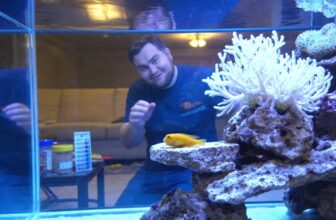
The Bicolor Blenny, *Ecsenius bicolor*, needs 30 gallons minimum, tight-fitting lid included – seriously, they jump.
Males hit four inches, females slightly smaller, with two-to-four-year wild lifespans stretching toward ten in clean tanks.

High-protein algae diet supports natural grazing and vibrant colors.

Treat that mimics natural prey, boosts energy and appetite.

Essential greens for algae-eaters, promotes health and grazing behavior.
See today's best deals onMarine Food
Diet’s simple: filamentous algae, spirulina pellets twice daily, maybe brine shrimp if you’re feeling generous.
Now, tank mates matter.
Peaceful grazers like Kole Tangs? Fine.
Lionfish? That’s just an expensive snack waiting to happen.
Diseases – velvet, ich, fin rot – demand eight-week quarantine in bare-bottom tanks with PVC hideouts and obsessive ammonia checks.
I mean, skip quarantine and you’re basically inviting microscopic disaster.
Healthy blennies perch, scrape, flash those flame tails.
Sick ones hide, breathe fast, refuse food.
The warning signs are there if you’re watching, and there’s more to keeping them alive than this handful of sentences suggests.
At A Glance
- Adult Bicolor Blennies reach 3–4 inches, with males typically 15% larger than females.
- Feed algae-based pellets twice daily, supplemented by live rock algae and occasional mysis shrimp treats.
- Quarantine new fish eight weeks minimum; watch for marine velvet, ich, fin rot, and internal parasites.
- House with peaceful grazers like Kole Tangs and Copperband Butterflies; avoid aggressive or predatory species entirely.
- Provide 30+ gallon tanks with live rock caves, secure lids, 75–80°F temperature, and stable 8.1–8.4 pH.
What Is a Bicolor Blenny?
What exactly makes a fish worth the tank space, the weekly water changes, the occasional heartbreak when it hides for three days straight?
Ecsenius bicolor, the Bicolor or Flame-Tail Blenny, earns its keep through sheer blenny ecology: algae-scraping, rock-perching, reef-tending labor that keeps tanks cleaner than you’d manage alone.
Now, temperament origin matters here. These fish hail from Indo-Pacific lagoons – from Fiji through Indonesia, Sri Lanka to the Maldives – where gentle currents shape passive spirits, though they’ll brawl with fellow algae-eaters if food runs thin.
Born in gentle lagoons, shaped by soft currents – a velvet temper until hunger stirs territorial blood.
Sexual dimorphism adds drama. Males flash deeper blues, extend that swooping dorsal fin like a sail; females keep subtler fires, duller tail flames. Both perch, watch, work. Belonging, it seems, comes in split-colored packages.
Keeping their algae-grazing behavior in check requires a magnetic aquarium glass cleaner sized appropriately for your tank thickness, as their constant scraping can leave coralline residue on viewing panels.
How Big Do Bicolor Blennies Get?
Three inches, maybe four if they’re feeling ambitious – that’s the whole package, fin to flame. These are not fish that outgrow their welcome, or their tanks, which is half the appeal, really – compact enough for modest setups, bold enough to own the space they claim.
Color morphs vary slightly by region, blues deepening near Fiji, flames burning brighter in Indonesian waters. Breeding behavior drives size disparity; males stretch larger, flash those extended rays to court. Females stay modest, demure, practical.
The four telltale measures of a bicolor’s reach:
- Standard adult: 3 inches nose to tail
- Maximum reported: 4 inches, rare specimens
- Male size advantage: roughly 15% larger
- Captive growth: fullest potential with space, algae, patience
Small fish, outsized personality.
A stable sump with adjustable baffle chambers helps maintain the water quality and gentle flow these small reef fish need to thrive.
How Long Will Your Bicolor Blenny Live?
Size settles on the shelf, but time – that’s the real currency, and bicolor blennies know the exchange rate shifts dramatically depending on which side of the glass you swim.
In open water, these flame-tailed workers burn through roughly two to four years. Captivity, though – now that’s where long care flips the script entirely. Ten years isn’t unheard of, given stable conditions and a green thumb for algae cultivation.
Your longevity tips, then:
- Water changes weekly, religiously
- Varied plant-based diet, supplemented not substituted
- Quarantine newcomers like suspicious relatives
Because in this hobby, patience isn’t virtue – it’s survival currency.
Consider programmable light cycles to maintain consistent day-night rhythms that reduce stress and support immune function in reef-dwelling species.
Minimum Tank Size and Rock Structure Needs
Beyond the obvious question of gallons lies the real debate: how much territory does a three-inch eel impersonator actually need to stop pretending it’s a noodle? Thirty gallons, minimum – though twenty works for the loner, the introvert, the single algae scraper who claims the whole rock flow as personal throne.
Even a three-inch eel impersonator needs territory to stop pretending it’s just a noodle.
The real non-negotiables:
- Live rock piled, tunneled, perforated
- Perches at every level – caves, ledges, hiding holes
- Strong but gentle current mimicking reef drift
- Lids secured; these jumpers are escape artists
Mature rock grows their food. Chaos without structure, that’s the blenny’s nightmare.
Introduce floating aquatic plants like Water Spangles to shade the surface, reduce algae, and give nervous fish a more natural reef-edge visual barrier.
Are Bicolor Blennies Reef Safe?
But are they really safe, or is that just another aquarium myth waiting to collapse like a cheap stack of base rock?
Now, *Ecsenius bicolor* earns its reef-safe badge honestly, mostly. Algae scraping keeps them too busy to bother healthy corals, though hungry specimens might sample a polype or two – polyps, not bones, I mean. If you’re struggling with temperature fluctuations in smaller reef tanks, a nano chiller with titanium heat exchangers can help maintain the stable conditions these blennies prefer.
Colorful courtship? The males turn up the blue dial, flare those extended dorsal rays, and suddenly your rockwork’s a dating show. Territorial? Certainly. But reef-threatening? Rarely.
Best Tank Mates for Bicolor Blennies
Where exactly does one seat the bicolor blenny at this underwater dinner party? Not with the grabby cousins, that’s certain. Color tank design matters here – their orange-and-blue drama demands tankmates who won’t outshine or bully.
Finding community means choosing wisely:
- Kole Tangs – grazers who mind their business, mostly
- Ornate Boxfish – slow, weird, universally tolerated
- Copperband Butterflyfish – delicate eaters, no turf wars
- Peaceful Damselfish – small species only, the chill ones
Breeding behavior complicates things; males get possessive of perches when courting. So space helps. Now, 30 gallons minimum keeps everyone honest, but 50? Much better. Room tempers aggression.
For those setting up a dedicated nano system, a 3-Gallon Betta Tank with gentle filtration and low-flow design can serve as an excellent hospital or quarantine tank before introducing new specimens to the main display.
Tank Mates That Will Kill Your Blenny
Strike the wrong fish from your guest list, and the bicolor blenny becomes expensive live food.
Now, algae competition turns ugly fast – royal grammas and bicolor pseudochromis view that same rock film as *theirs*, and your blenny, well, it starves or fights, usually loses.
Eels, groupers, lionfish? Obviously bad news, I mean, the blenny’s basically a snack-shaped target. But here’s the kicker – jumping hazards multiply with bullies. Harassed blennies launch themselves, hitting lids or, worse, carpet.
Avoid these:
- Hogfish, parrotfish (aggressive grazers)
- Scorpionfish (ambush predators)
- Any fish that outcompetes for algae and terrifies
Your community tank belongs to the peaceful.
Even a compact self-cleaning aquarium with stable water parameters helps reduce stress for harassed blennies, though nothing replaces proper species selection.
Water Parameters for Healthy Bicolor Blennies
Once the tankmate drama’s settled and nobody’s threatening to eat or starve your resident algae-scraper, the real assignment begins. Water chemistry keeps blennies alive – simple truth, messy execution. These fish tolerate some slop, certainly, but thriving demands precision.
- pH: 8.1–8.4, stable as old concrete, no swing days
- Water hardness: 8–9.5 dKH, the buffer keeping everything from collapsing
- Flow rate: brisk, not brutal – current enough to toss food past their faces, gentle enough they don’t sign a lease in the sand
- Lighting duration: ten to twelve hours, algae grows, they graze, everybody’s employed
Temperature 75–80°F, salinity 1.024–1.025, weekly changes. Skip the chemistry lecture, just test twice weekly. Ammonia must stay below 0.25 ppm for these sensitive grazers; anything higher compromises their health and grazing behavior.
Building Caves and Perching Spots
How does a fish that’s basically a three-inch anxiety tube with fins feel at home? Secure, mostly. And vertical.
Rockine décor matters here – stacked live rock with caves, ledges, and hidey-holes lets this slender scraper establish territory without brawling. Males especially need perching spots to survey their kingdom, flare that elongated dorsal fin, and feel like somebody.
Now, algae-scraping enrichment isn’t just food; it’s occupation. Rough surfaces, mature rock, varied textures – this keeps the blenny employed, mentally occupied, less inclined to nip coral out of sheer boredom.
Cover the tank. They jump when spooked, and nobody wants a three-inch tragedy behind the stand.
Adding a ceramic copepod refuge block to the rockwork provides additional microhabitat complexity, supporting beneficial pod populations that naturally clean substrate and contribute to the reef ecosystem’s stability.
What Do Bicolor Blennies Eat?
Hungry blennies make poor decisions: nipping at coral polyps, harassing tankmates, sulking in caves like dramatic teenagers.
Feed them right, join the club of keepers who know. These fish are algae scraping specialists, evolved for filamentous stuff, diatoms, the slimy film that coats your rock. Algae scraping isn’t hobbyist jargon – it’s their job, and nutrient cycling depends on it. They convert nuisance growth into fish biomass, keeping your system balanced. Maintain 35 ppt salinity with regular testing to support their metabolic processes and overall health.
What earns membership:
- Filamentous algae and diatoms – live rock serves this buffet
- Algae-based pellets or flakes, since aquariums run low
- Frozen spirulina or marine herbivore blends, the good stuff
- Occasional mysis or brine shrimp, treats not staples
Now you’re in the know.
How Often to Feed Your Bicolor Blenny
Feeding Frequency and Portions
Twice daily, typically, though some keepers stretch to three if their schedule permits and the blenny’s metabolism demands it – it’s not rocket science, but it’s not guesswork either.
Now, feeding frequency matters since these little algae-munchers graze constantly in the wild, so empty bellies make for cranky fish. I mean, nobody wants a hangry blenny terrorizing the tank.
Portion size? Small. Think what they can demolish in two, maybe three minutes – any longer and you’re just polluting the water.
A blenny’s portion is small – gone in two minutes, or you’re just feeding the filter.
A pinch of algae, a few pellets, done.
Watch them eat. Adjust.
You’re part of the club now.
Common Diseases in Bicolor Blennies
Common Diseases and Ailments
A well-fed blenny is a resilient blenny, but even the best-fed fish meets pathogens it can’t out-nibble. Algae scraping keeps their immune system humming, certainly, yet velvet and ich still crash the party. Color morphs matter here – stressed fish pale fast, so any dimming signals trouble brewing.
Common ailments include:
- Marine velvet – that gold dust coating, swift and nasty
- Ich, white spots like salt grains, sends them scraping against rock
- Bacterial fin rot, frayed edges spreading inward
- Internal parasites, wasting despite normal appetite
Quarantine new arrivals. Water quality, stable salinity around 1.024-1.025, that’s your real medicine.
Early Disease Warning Signs to Watch For
Before color fades or fins fray, the blenny whispers its distress in subtler tongues – subtle shifts that demand attention, not panic.
Early detection separates thriving communities from sudden mortality. Stress fractures the microbiome long before visible symptoms emerge. Now, tank monitoring becomes ritual, not chore. Observ disease through appetite loss, erratic perching, or rubbing against rock – small rebellions against normalcy. Color response dims; the flame tail cools to ash.
| Symptom | What to Check |
|---|---|
| Faded color response | Water parameters, tank mates |
| Sheltering, not perching | Stress, disease early stage |
| Rapid breathing | Oxygen, temperature swings |
| Scraping, flashing | External parasites |
| Refusing algae | Microbiome imbalance |
Keep this checklist visible. Belonging means noticing.
Setting Up a Bicolor Blenny Quarantine Tank
Bicolor Blenny Quarantine Setup
Catching symptoms early helps, but prevention wins the long game – hence the quarantine tank, that humble plastic box of suspicion where new fish prove themselves before joining the Commonwealth.
Now, the bicolor blenny, ever the anxious newcomer, needs particular care in this liminal space.
Quarantine lighting stays dim – they’re cave-dwellers, not sunbathers. Water flow stays gentle, almost lazy, replicating lagoon pockets where they perch and graze.
Four essentials for successful isolation:
- Ten-gallon minimum, bare-bottom for visual pest detection
- PVC pipe cave, since dignity matters even in exile
- Ammonia alert, test kits non-negotiable
- Patience, eight weeks minimum – the Commonwealth waits for no one, but accepts all who endure.
Frequently Asked Questions
Can Bicolor Blennies Change Color When Stressed?
Bicolor blennies do change color when stressed, though the shift is usually subtle – dulling from vivid blue‑orange to grayish or washed‑out tones.
Stress response behavior often accompanies this, including hiding, rapid breathing, or skittish darting.
Their habitat preference for caves and ledges serves as refuge when threatened.
Observing these shifts helps aquarists identify problems early, adjusting water conditions or tank mates before health deteriorates.
Color changes signal distress worth heeding.
Do Bicolor Blennies Make Clicking Sounds?
Yes, bicolor blennies engage in clicking communication – sharp snaps produced by grinding specialized teeth together.
Acoustic signaling helps them claim territory, attract mates, and warn rivals.
These sounds carry short distances underwater, maybe two feet or so, barely audible outside the tank.
Now, you won’t hear concert-level volume here, but place an ear near the glass during feeding or disputes and that faint popcorn crackle gives them away.
Will a Bicolor Blenny Eat Nuisance Algae?
Yes, a bicolor blenny will eat nuisance algae. Here’s the breakdown:
- Algae control: Their comb-tooth mouths scrape filamentous algae and diatoms from rocks.
- Nutrient cycling: This grazing reduces algal overgrowth, cycling nutrients back into manageable forms.
- Limits apply – they won’t touch tough growths like bubble algae or cyanobacteria.
Can Two Male Bicolor Blennies Coexist Together?
Two male bicolor blennies cannot coexist. Territorial aggression drives males to establish perching sites, and hierarchical dominance battles escalate until one dominates or dies.
Males grow larger, flash deeper blue, and extend fin rays to intimidate rivals. In tanks under 50 gallons, fights prove fatal. Keep one male with females, or house solitary. Peace requires space, caves, and no mirror competitors.
Why Does My Bicolor Blenny Dart Backwards Suddenly?
Quick checklist:
- Threat detected? Passing shadows, sudden movements, tankmates – triggers the blip-reverse reflex
- Water parameters off? 0.1 pH swing spooks them; double-check temp, ammonia
- Territory invaded? Another blenny, perhaps; they perch, they plot, they spook
Most times it’s brief panic, not illness. Observe pattern frequency – constant means investigate, rare means relax, fish gonna fish.
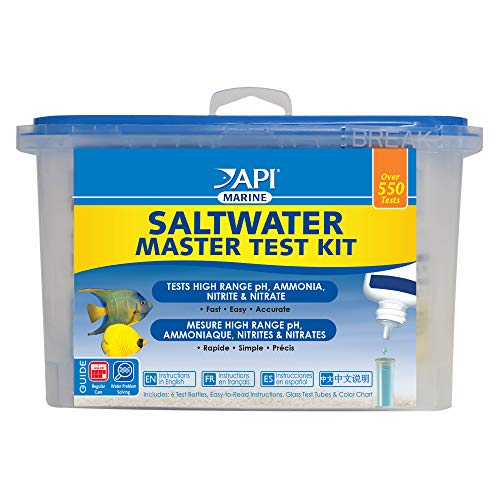
Monitor ammonia, nitrite, nitrate to prevent velvet and ich.

Detoxifies heavy metals, reduces stress during water changes.

Isolate new fish for 8-week quarantine to stop disease spread.
Check discounted items inAquarium Care