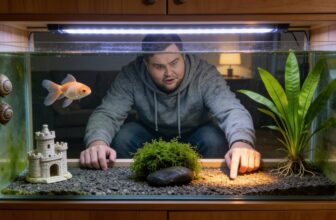
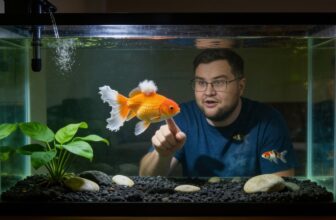
Goldfish ich (white spot disease) crashes tanks fast if you miss the early signs. That “salt grain” sprinkle on fins? It’s a parasite burrowing under scales, multiplying until gills clog.
Catch it in 48 hours and recovery rates jump above 90%. Most hobbyists lose fish because they treat too late—or nuke the tank with chemicals that crash the cycle.

Non-toxic herbal treatment for white spot; safe for community tanks and biofilter.

Antiparasitic for internal and external protozoans; feed or dose in water to fight ich.

Fast relief from ich with malachite green; follow directions for healthy goldfish.
See today's best deals onAquarium Medications
This guide walks the proven combo: partial water changes, heat ramping, and targeted meds without destroying your biofilter. No guesswork. Just steps that actually clear *Ichthyophthirius multifiliis* in 10 days flat.
Ready to save your goldfish? Let’s break down exactly what works—and what aquarium myths waste your money.
At A Glance
- Perform a 25% water change and add aquarium salt before medication.
- Remove activated carbon; use a foam pad and slowly raise temperature to 30°C.
- Boost oxygen with an air stone or sponge filter for gill-damaged fish.
- Use malachite green and methylene blue for community tanks, not copper-based meds.
- Quarantine new fish for two weeks and maintain stable 20°C–23°C water.
What Is Ich and Why Is It Dangerous for Goldfish?
Ich is a parasitic infection caused by *Ichthyophthirius multifiliis*, a single‑celled organism that burrows into a goldfish’s skin and fins. Its biology is sneaky: it feeds, then drops off to multiply in the water. Products like Fritz Aquatics FritzZyme 7 contain live nitrifying bacteria that help maintain water quality during treatment.
This cycle overwhelms a fish’s immune defense, especially if stress has already weakened it. The real danger? It suffocates them slowly by damaging gills.
You’re not alone in facing this; every keeper deals with it. Think of ich as uninvited guests who trash the place—and your goldfish is the host. Catching it early means giving their immune system a fighting chance. Treatments like Seachem MetroPlex can target the protozoan directly when bound to food or added to water.
The 3 Most Common Triggers of Ich in Your Tank
Three troublemakers invite ich into your tank more often than any others. Poor water quality weakens immunity, whereas overcrowding spikes stress and transmission. Temperature shock—sudden swings—stuns goldfish, making them easy targets for the parasite. Here’s how they stack up:
| Trigger | Why It Invites Ich |
|---|---|
| Poor water quality | Stresses fish, slows slime coat |
| Overcrowding | Raises waste, spreads parasite fast |
| Temperature shock | Paralyzes immune response |
Regular water changes prevent these issues, removing toxins before they stress your crew. Aquarium salt helps too, boosting slime coat defense. You’ve got this—keep conditions stable, and ich stays out. Using an automatic feeder with precision portion control helps maintain water quality by preventing uneaten food from decaying. For comprehensive water treatment, API Stress Coat enhances slime-coat protection to help fish recover from stress.
How Ich Sneaks Into Your Goldfish’s Body
Though you might blame bad luck or a bad batch of feeder fish, ich actually enters your goldfish’s body through a surprisingly straightforward process.
The parasite lifecycle begins when free-swimming ich tomites, invisible to the naked eye, latch onto your fish’s skin and gills.
They burrow in, feeding on flesh and creating those telltale white spots.
Your goldfish’s immune response should fight them off, but stress from poor water or temperature shock weakens that defense.
A compromised fish becomes a perfect host.
It’s not personal, just biology done poorly.
You’re part of a community that understands this—knowledge is your best armor.
Using test strips with ion-selective membranes can help you detect dangerous ammonia spikes early, preventing the stress that weakens your fish’s defenses.
Detecting ammonia at concentrations above 0.25 ppm is critical in freshwater tanks to prevent immune suppression.
7 Early Warning Signs Every Goldfish Owner Must Know
Seven early warning signs can save your goldfish from a full-blown ich outbreak, and knowing them is like having a cheat code for fishkeeping.
Seven early warning signs can save your goldfish from a full-blown ich outbreak.
Symptom recognition starts with spotting one or two white specks—tiny salt grains on fins or body. Your fish might hide more, rub against gravel (called flashing), or clamp its fins tight against its body. Rapid gill movement, gasping at the surface, pale color, and loss of appetite are red flags too. Using an 8‑in‑1 Water Test Kit can help you detect early ammonia spikes that stress fish and trigger outbreaks.
You’re part of a club that notices these details.
Tank hygiene plus quick action keeps ich from winning. Catch it now, treat it fast. Using a chemical conditioner like Seachem Prime can help bind toxins and reduce stress during treatment.
White Spots or Salt Crystals? How to Tell the Difference
Distinguishing white spots from salt crystals is a surprisingly common source of panic for goldfish owners. Ich spots look like tiny, evenly-sized grains of salt stuck to the skin, whereas salt crystals are irregular, scratchy flakes that brush off easily.
Diagnosing ich means checking for uniform white dots on fins and body that don’t rub off. Goldfish with ich flash against decor or act lethargic. Distinguish these signs fast—delaying treatment allows the parasite to multiply, making preventing reinfection much harder. Maintaining stable carbonate source water chemistry supports goldfish recovery during treatment. Miss the early window, and you’re playing catch-up with a stubborn hitchhiker. For optimal recovery, consider using a refugium light with full‑spectrum (5 channels) to support beneficial algae growth in the tank.
Step 1: Do a Water Change and Prep the Tank
Before you grab a bottle of ich medication, start with something simpler: a water change and tank prep. Aquarium salt is cheap at two cents a dose, so swap 25% of the water right now.
Lower levels boost surface oxygen; sick goldfish need that for their damaged gills. Goldfish hardiness means they can handle this shock treatment, but it does not stop ich alone.
Feeding inspection matters—watch them eat during prep, it tells you how stressed they are. Every good fishkeeper does this first, since clean water gives your fish a fighting chance. Use a manual siphon vacuum to remove waste and debris during the water change. A priming bulb initiates flow quickly to start siphoning without messy finger-priming.
Step 2: Remove Carbon and Raise the Temperature Slowly
Now that the tank has fresh water and lower levels, the next step removes a common medication blocker and gently warms things up.
Pull that activated carbon from your filter; it neutralizes meds. Discard it, replace with a foam pad. Then, raise the temperature slowly—no more than 1°C per hour, aiming for 30°C. This speeds the ich life cycle, not kills it directly. Avoid Temperature fluctuation; it stresses fish. Watch for Copper sensitivity if you plan copper-based treatments later—some goldfish react poorly. Use a heater with automatic shut-off protection to prevent overheating while warming the tank. A heater with reliable dry‑burn protection will also safeguard the equipment if the water level shifts during treatment.
| Feeling | Reason |
|---|---|
| Relief | Ich cycle speeds up |
| Caution | Meds work without carbon |
| Worry | Copper may burn gills |
| Hope | Fish heal faster warm |
| Unity | We all want recovery |
Gradual warmth, no shocks, helps everyone.
Step 3: Boost Oxygen Levels for Stressed Goldfish
Gills work like tiny lungs, but ich damages them fast. Stressed goldfish need extra oxygen to survive. Boosting oxygen circulation helps them breathe easier during treatment. A good aeration setup can be the difference between recovery and loss.
- Air stone: $5 to $10—bubbles increase surface agitation, essential for gas exchange.
- Sponge filter: $10 to $20—gentle flow adds oxygen whilst keeping water clean.
- Powerhead: $20 to $40—directs water movement, reducing dead spots in the tank.
- Timer: Use it 24/7 during treatment; your goldfish will thank you.
Oxygen is their lifeline. Give them that, and you’re part of the solution.
Adding bio‑balls to your filter media can further boost oxygen levels and support beneficial bacteria for healthier water. Media like CerMedia MarinePure 1.5 gal Sphere Bio‑Filter Media offers ultra‑high surface area for biological filtration.
How to Choose the Right Ich Medication for Your Tank
Good news: your goldfish don’t need a pharmacy degree to get through ich. Choose medication based on chemical compatibility with your tank. Avoid copper if you have snails, shrimp, or live plants—it’s a quick killer for them. Malachite green and methylene blue are safer bets for community tanks, costing around $10–$15 per bottle. Always follow the dosing guide on the label—don’t wing it. Overdosing stresses fish, underdosing fails. Remove activated carbon first; it soaks up meds. For heavy infections, a combined formula works best. Remember: a slow, steady hand beats a frantic pour. Consider that a clear‑water formula prevents clouding and maintains water quality while treating your tank. For bonding or repairing equipment during treatment, ensure any glue used is fish‑friendly, non‑toxic and fully cured before re-exposure to tank water.
How to Use Aquarium Salt to Treat Ich in Goldfish
Simplicity often wins when treating ich. Aquarium salt, at one tablespoon per three gallons, works gently over ten days. It boosts slime coat production, helping goldfish heal without harsh chemicals.
- Start a quarantine protocol immediately; isolating sick fish prevents spreading misery to tankmates.
- Support dietary immunity with high-quality foods; a strong gut helps fight parasites from within.
- Raise temperature slowly to 78°F; this speeds the ich life cycle, making salt more effective.
- Increase oxygenation with an air stone; damaged gills need extra oxygen during treatment.
Salt alone handles mild cases. For severe infections, combine with medication. Proper tank sizing from the start ensures healthy growth and avoids the stress that can worsen ich outbreaks. Remember that using two separate territories within a single tank can reduce aggression and stress during recovery. Your goldfish will thank you.
When Salt Alone Works Best (Chemical-Free Treatment)
A chemical-free salt treatment shines brightest when ich is caught early—say, one or two white spots appearing like tiny, unwelcome snowflakes. Here, the correct salt dosage is one tablespoon per three gallons, simple as that.
The treatment duration lasts no more than ten days, with a 25% water change every few days, replacing lost salt. This method works best since it’s gentle on your goldfish, helping them build slime coat without harsh chemicals.
You’re not nuking the tank; you’re giving it a little spa day. For mild cases, it’s your go-to, no doubt.
How Long Until Your Goldfish Recovers From Ich?
Recovery time for a goldfish battling ich depends on the treatment method and severity of the infection. Using a dedicated quarantine setup, such as a compact hospital tank, can help reduce stress and speed up recovery. Choosing a hospital tank with hidden back-filtration can help maintain stable water parameters during treatment.
How to Clean the Tank After Ich Treatment
Finally, the ich is gone. Now, sterilizing equipment is key. Soak nets, siphons, and decor in a bleach solution (one part bleach to nineteen parts water) for an hour, then rinse thoroughly. For thorough sterilization, consider that a 100-micron filter pad can capture any remaining microscopic tomites in the water column.
Gravel vacuums remove lingering parasites. Replace filter media, as it may harbor tomites. A proper quarantine duration for any new fish is two weeks, minimum, to prevent reinfection.
Perform a 30% water change, then another after three days. This removes salt and medication residue. Your tank is safe again, your goldfish healthy. You did good. For ongoing nitrate control, consider a cut-to-fit woven-fiber pad to help maintain water quality.
5 Daily Habits That Prevent Ich From Coming Back
Your tank is clean, and the ich is gone—nice work. Now, keep it that way with these daily habits that build lasting protection.
Your tank is clean, and the ich is gone—nice work. Now, keep it that way with these daily habits.
- Scan during feeding—watch for flashing or clamped fins; early catch stops a relapse.
- Check temperature—keep it stable at 20°C–23°C; sudden drops reawaken parasites.
- Run UV sterilization—this zaps free-swimming ich before it finds a host. Use a unit emitting 254 nm UV-C to ensure effective germicidal action. For consistent control, choose a unit with dual-stage 24-hour timer capabilities like the WH2408.
- Use a quarantine tank—every new fish, plant, or decor gets a two-week solo stay.
These steps build a shield your fish deserve. Consistency makes prevention a no‑brainer.
When to See a Vet: Signs Your Goldfish Needs Help
Most goldfish owners can handle ich at home, but sometimes the parasite wins the fight. If your fish stops eating, gasps at the surface, or develops red streaks on fins in spite of treatment, you need a vet.
Vet selection matters—look for an aquatic specialist, not just a general pet doctor. A cost estimate for an exam typically runs $50 to $100, plus meds. It’s not cheap, but neither is losing your fish.
You belong to a community that cares enough to know when to call for backup. Bring a water sample; it helps the vet diagnose faster. Using a 40 PPI sponge as a pre‑filter can help maintain water clarity during treatment. For gentle filtration that minimizes stress on sick fish, a dense foam filter provides excellent biological and mechanical support.
Frequently Asked Questions
Can Ich Affect Goldfish With No Visible White Spots?
Yes, ich can affect goldfish without visible white spots. Fish may be asymptomatic carriers, harboring the parasite without symptoms until environmental triggers—like temperature drops or poor water quality—cause an outbreak.
The parasite’s life cycle means spots appear only after it attaches, so a clear fish isn’t guaranteed safe. Check for subtle signs: clamped fins, flashing, or rapid breathing.
Quarantine newcomers and monitor stress, as that’s when ich strikes. Treat proactively if symptoms emerge.
Do Goldfish Develop Immunity to Ich After Recovering?
No, goldfish do not develop lasting immunity to ich after recovery.
Imagine a goldfish’s immune memory as a leaky bucket—it remembers the fight for a while, but reinfection resistance fades fast.
Ich parasites are sneaky, evolving quickly.
So, that tough goldfish back to normal? Still vulnerable.
A former infection doesn’t grant a free pass; it just means the fish survived once.
Bottom line: treat every outbreak separately, since past recovery offers little protection against future ich.
Can I Use Table Salt Instead of Aquarium Salt for Ich?
No, table salt is not an appropriate substitute. Table salt toxicity arises from anti-caking agents and iodine, which harm goldfish.
Aquarium salt, pure sodium chloride, allows precise control of salt concentration without those additives. Using table salt risks killing the fish faster than the ich.
Stick with aquarium salt at 1 tablespoon per 3 gallons; it’s cheap, safe, and designed for this. Think of it like baking—you wouldn’t swap iodized salt for sea salt in a delicate recipe.
Bottom line: get aquarium salt.
Will Ich Survive in an Empty Tank Without Fish?
Yes, ich can survive in an empty tank. The parasite lifecycle includes a free-swimming stage that lives without fish for days, especially in cooler water.
An empty tank still holds the parasite in its cyst form, waiting for a host. To break the cycle, raise the temperature to 86°F for 48 hours, or let the tank sit fishless for two weeks. Otherwise, ich will just hang around, like an unwanted houseguest who won’t leave.
Is It Safe to Treat Ich While Goldfish Are Breeding?
Treating ich during goldfish breeding is like holding a fire drill in a nursery—necessary but risky. Breeding stress already taxes them, and medication toxicity can harm eggs or fry.
Instead of medicating the main tank, move breeding pairs to a separate, clean setup. There, raise temperature slowly and add aquarium salt (one tablespoon per three gallons) to manage ich without harsh chemicals.
This method protects the parents and future spawn. A separate tank is the safe, low-stress choice.
Rounding Up
Ich is a parasite, not a curse. You can beat it. Raise the tank temperature slowly, to 86°F, add a teaspoon of aquarium salt per gallon, and dose a formalin‑based medication like API Ich Cure. Clean the filter daily. Recovery takes a week or two. Then scrub the gravel, boil the decor, and replace the filter media. Give your goldfish clean water, stable temps, and a calm home. Do that, and ich won’t come back.

Measures ammonia, nitrite, nitrate, pH; catch spikes before ich takes hold.

Continuously monitors free ammonia; alerts you to dangerous levels without strips.

Quick dip-and-read tests for key water parameters; weekly checks prevent stress.
Browse discountedAquarium Test Kitson Amazon