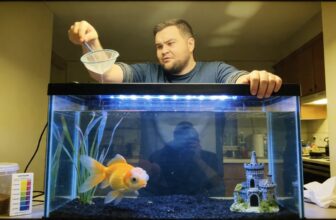
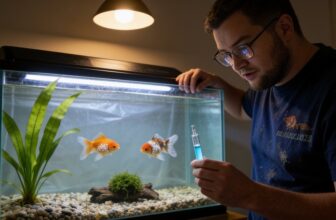
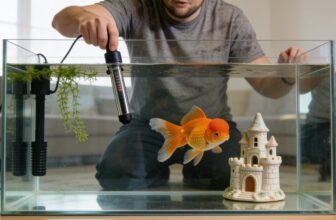
Ammonia poisoning in goldfish is the silent killer lurking in unbalanced tanks, claiming more lives than any other water quality issue.
Toxic ammonia burns delicate gill tissue, damages internal organs, and slowly suffocates your fish from the inside out—a cruel fate that’s entirely preventable with proper monitoring.
Watch for red or purple gills, frantic surface gasping, and unusual lethargy; these are your fish’s desperate distress signals. A liquid test kit like API’s Freshwater Master Kit ($30) remains the gold standard for accurate readings, with anything above 0.25 ppm demanding immediate action.
Emergency treatment starts with a 50% water change and a 48-hour feeding halt to reduce waste. But lasting protection requires understanding your nitrogen cycle, not just quick fixes.
At A Glance
- Ammonia poisoning suffocates goldfish by burning their gills, blocking oxygen absorption.
- Goldfish constantly excrete ammonia through gills and waste, causing rapid buildup.
- Unfiltered tanks trap fish in toxic waste, with no natural flush mechanism.
- Symptoms include gasping, red streaks, clamped fins, and lethargy requiring immediate action.
- Untreated ammonia damages internal organs, leading to slow, painful death without intervention.
What Exactly Is Ammonia Poisoning in Goldfish?
Since goldfish produce waste like it’s their full‑time job, ammonia poisoning is basically the fish equivalent of living in a toxic gas leak.
Goldfish metabolism is hyperactive; they constantly excrete ammonia through their gills and waste.
Goldfish metabolism is hyperactive; they constantly excrete ammonia through their gills and waste.
Ammonia physiology explains how this toxin burns their gills, damages organs, and suffocates them from the inside out.
It’s not dramatic—it’s deadly.
In an unfiltered tank, ammonia builds up fast.
Your fish can’t flush it out naturally.
They’re stuck swimming in their own filth.
Bottom line: without a proper nitrogen cycle, their dirty little hobby becomes a slow death sentence.
Prevention beats panic.
Choose a strong filter, test water weekly, and never overcrowd.
Your goldfish will thrive, not just survive.
In freshwater tanks, ammonia tests should show levels below 0.25 ppm to avoid toxicity.
For reliable monitoring, use a 7‑in‑1 Test Kit that checks ammonia alongside other critical parameters.
7 Warning Signs Your Goldfish Has Ammonia Poisoning
Here are seven warning signs your goldfish has ammonia poisoning, and spotting them early is your only chance to save it.
First, you’ll see behavioral changes—your fish becomes weak, stays at the bottom, or seems disoriented. It might clamp its fins shut, look depressed, or stop swimming normally.
Then comes physical deterioration: red streaks on the body, bulging eyes, torn fins, or excess mucus. Your goldfish will lose its appetite, too.
See one sign? Act fast. Ammonia burns from the inside out, and fish don’t get better on their own. Using a chemical conditioner like Seachem Prime can detoxify ammonia for up to 48 hours during an emergency. For goldfish in ponds, API Pond Stress Coat provides scalable slime-coat support while removing chlorine and chloramine.
Red Gills, Gasping, and Lethargy: Symptoms Explained
The red gills, gasping at the surface, and lethargy—these three symptoms often arrive together like an unwelcome house party. Ammonia Poisoning burns delicate gill tissue, wrecking Gas Exchange. Your fish can’t breathe properly, so it pants at the top, looking miserable. Monitoring with high-precision liquid reagents can catch rising ammonia before it reaches lethal levels. Using a system with color-changing DI resin ensures your replacement water is free of ammonia and other dissolved solids.
| Symptom | What’s Happening |
|---|---|
| Red/purple gills | Ammonia inflames blood vessels; gills look angry. |
| Gasping | Oxygen can’t enter blood; fish tries to grab air. |
| Lethargy | Toxins starve muscles of oxygen; fish just floats. |
| Clamped fins | Stress response; fish feels like a wet blanket. |
These telltale signs mean it’s time to act—your goldie needs help, stat.
How to Test Ammonia Levels in Your Aquarium
Testing ammonia levels isn’t optional—it’s the only way to know if your goldfish is swimming in poison.
Ammonia test kits are your lifeline. You’ll want:
- Liquid test kits, like the API Freshwater Master Kit ($30), give reliable, easy-to-read results.
- Test strips are quicker but less accurate, around $15 per 50-pack.
- Digital meters cost $50+ but offer instant readings.
- Water testing frequency matters—check every 2–3 days for new tanks, weekly for established ones.
Stick with liquid kits for precision. The AAwipes 8‑in‑1 kit uses fiber‑paper test strips that claim 99% accuracy for quick checks.
We’re all in this together, seeking that safe, clear water. For broader health checks, digital meters with app integration can reduce color-chart guesswork.
Step-by-Step Emergency Treatment for Ammonia Poisoning
You’ve tested the water and found ammonia—now it’s time for triage, not tears.
Your emergency protocol begins with a rapid response: a 50% water change, immediately. Use dechlorinated water at matching temperature.
Then, move the goldfish to a quarantine tank—no gravel, just clean water. Choose a quarantine tank with transparent observation walls to monitor the goldfish’s recovery. For optimal visibility during monitoring, select a tank made with ultra-clear glass like the Landen 45P rimless design.
Add a bubbler for oxygen; ammonia damages gills, making breathing hard.
Stop feeding for 48 hours.
Test the quarantine water daily.
If symptoms persist—gasping, red streaks—repeat the water change.
You’re buying time, not fixing the root cause.
Every minute counts.
This buys your goldfish a fighting chance.
The Right Water Parameters for Quarantine and Recovery
- Quarantine duration: two full weeks, no shortcuts.
- pH anchored with a buffer; test daily.
- Ammonia at zero; add a mild filter or daily 25% water changes.
- Keep water soft but stable—hard water shifts pH too fast.
- For goldfish specifically, Seachem Gold Buffer maintains a stable pH between 7.2 and 7.8 without adding phosphates.
- Using a programmable timer such as a digital outlet timer ensures consistent lighting cycles to reduce stress during recovery.
That’s it. Stick to these, and your goldfish gets a fighting chance. No drama, just calm recovery.
Why Goldfish Are Dirtier Than You Think
So you’ve got your quarantine tank dialed in—pH steady, ammonia at zero, two weeks of no shortcuts. But here’s the dirty secret: goldfish are messy by design. Their biological load is enormous; they produce waste like it’s a side hustle. Poor fish hygiene and lax waste management turn tank maintenance into a chore you can’t skip. Check the facts:
| Tank Size | Goldfish Count | Waste Output (Daily) |
|---|---|---|
| 20 gal | 1 small | Minimal, risky |
| 40 gal | 1 adult | Manageable |
| 55 gal | 2 adults | Moderate |
| 75 gal | 3 adults | High |
| 100+ gal | 4+ adults | Very high |
A 20-gallon tank for one? That’s a biohazard waiting to happen. Go bigger—your fish and your water changes will thank you. Their heavy bioload demands robust filtration to prevent rapid ammonia buildup. An adjustable flow filter helps manage stress from strong currents while handling high waste volume.
Overfeeding, Overstocking, and New Tank Syndrome: The 6 Main Causes
Blame the fishkeeper, not the fish. Overfeeding piles rotting food, spiking ammonia fast. Overstocking creates too much waste for the filter. New tank syndrome? No bacteria yet.
These six causes, in order:
- Overfeeding effects: leftover food rots, poison builds.
- Overstocking dangers: more fish, more waste, faster crash.
- No filter: ammonia stays, never converts.
- Uneaten plants: dying greenery adds toxins.
Each mistake teaches a lesson—your goldfish didn’t choose this. Fix the setup, stop the cycle.
For any decent tank, 40 gallons for the first fish, 20 for each extra. Feed only what they finish in five minutes. Clean leftover scraps.
Your fish will thank you. Easier than it sounds. A foam leveling mat prevents wobble and protects the glass from direct contact with hard surfaces. The closed‑cell neoprene material also absorbs pump vibrations and reduces noise in the tank.
How to Kick-Start the Nitrogen Cycle in a New Tank
New tank syndrome sounds dramatic, but really, your tank just has no bacteria yet.
To kick-start the nitrogen cycle, try biofilm seeding—borrowing a handful of gravel or filter media from an established tank. That living slime contains the good bacteria you need.
To kick-start the nitrogen cycle, borrow gravel or filter media from an established tank.
As another option, use dormant seeding: add bottled bacteria starter, which awakens when conditions are right.
Both methods speed up colony growth, turning dangerous ammonia into safer compounds.
You’re not alone in this; every aquarist starts here.
Just avoid rushing—patience now means fewer fishy emergencies later.
A little bacterial boost, and your goldfish can breathe easy.
For a reliable bottled starter, consider a product with documented CFU counts at both manufacture and expiration to ensure viable bacteria. Ensuring proper water quality with API TAP WATER CONDITIONER removes chlorine so bacteria can thrive.
Why Tank Size Matters More Than You Think
Since goldfish produce a shocking amount of waste—each fish can excrete up to a gram of ammonia daily—cramming them into a small tank is fundamentally building a biohazard room.
Tank size directly impacts Goldfish biology and Nitrogen cycle basics.
- Dilution is key: A 40‑gallon tank dilutes ammonia far better than a 10‑gallon one.
- Bacteria need room: Larger water volume supports robust colonies for the nitrogen cycle.
- Waste accumulation slows: Extra gallons delay toxic spikes, giving filters time.
- Fish stay healthier: More space means less stress and fewer ammonia burns.
A 55‑gallon tank, for instance, provides nearly 460 pounds of water that helps dilute waste and supports low‑iron glass for clearer viewing of fish health. Bigger tanks are non‑negotiable—they’re the only way to keep ammonia from ruling your fish’s world. Additionally, a properly rated stand with a 660‑pound load capacity ensures the heavy tank remains stable and level, preventing dangerous wobbles.
Feeding Tips That Stop Ammonia Before It Starts
The most common ammonia generator in a goldfish tank is not the fish—it’s the uneaten food rotting at the bottom. Pellet soaking for 10 minutes softens food, making it easier to digest and less likely to be rejected. Use sinking pellets to avoid surface waste. Feed only what fish can eat in 60 seconds, then remove leftovers. A routine with Tetra Goldfish Flakes provides immune-boosting ProCare that supports disease resistance while reducing waste. An automatic aquarium fish feeder can help prevent overfeeding by dispensing precise portions on a schedule, eliminating the risk of rotting leftovers.
| Feeding Mistake | Ammonia Impact |
|---|---|
| Overfeeding | Uneaten food rots, spikes ammonia |
| No pellet soaking | Hard pellets bypass digestion, foul water |
| Floating pellets only | Fish gulp air, cause buoyancy issues |
| Infrequent feeding | Fish starve, but waste still accumulates |
Stick to a schedule, soak pellets, and watch your goldfish thrive—no rotting leftovers, no ammonia surprise.
How Often Should You Clean Your Goldfish Tank?
Cleaning a goldfish tank is less about scrubbing for show and more about managing invisible ammonia loads, since leftover food and fish waste do not disappear—they rot.
Cleaning a goldfish tank is really about managing invisible ammonia loads, not scrubbing for show.
A proper water change schedule keeps that toxicity in check. Here’s a simple breakdown for belonging to the clean-tank club:
- Perform 20% water changes every 7–10 days, siphoning waste from the substrate.
- Use Quarantine practices for any new fish—two weeks in a separate tank prevents introducing ammonia spikes.
- Test ammonia weekly; if levels rise, increase water change frequency temporarily.
- After tank cleaning, treat replacement water to match temperature, avoiding shock.
Stick to this rhythm, and tank maintenance becomes less about fixing and more about preventing. For effective waste removal, choose a model with three‑stage filtration to trap debris and protect biological balance, such as a manual siphon that avoids electric shock risk.
How to Choose a Filter That Controls Ammonia
A filter won’t magically erase the need for water changes—it just buys you time and keeps the nitrogen cycle on track. The right filter type, like a canister or hang-on-back, should handle 4-6 times your tank’s volume per hour. Filter size matters—oversizing is safer than undersizing, say a 40-gallon filter for a 30-gallon tank. Many canister filters include UV sterilization to further reduce harmful microbes and improve water clarity. For maximum germicidal effect, the 254 nm UV-C wavelength is required to break the DNA of algae and pathogens.
| Filter Type | GPH Rate | Best For |
|---|---|---|
| Sponge Filter | 20-50 GPH | Small tanks, gentle flow |
| Hang-on-Back | 150-300 GPH | Most goldfish tanks |
| Canister Filter | 200-400 GPH | Overstocked tanks |
| Undergravel | 50-100 GPH | Beginners on budget |
If you’re unsure, grab a canister—they handle goldfish’s messy output.
5 Safe Live Plants That Help Control Ammonia Naturally
Plants do the dirty work for free. For goldfish keepers seeking ammonia reduction, smart plant selection turns leaves into natural filters.
Plants do the dirty work for free, turning leaves into natural filters for ammonia reduction.
These five safe live plants absorb toxins without altering pH, making them perfect for beginners and experts alike.
- Java Fern – Hardy, slow-growing, and thrives in low light; attach it to driftwood or rocks.
- Anubias – Thick leaves resist goldfish nibbling; needs minimal care and roots stay exposed.
- Hornwort – Fast-growing oxygenator; floats freely and consumes ammonia rapidly.
- Pennywort – Sprawling stems provide cover whilst scrubbing waste from water.
These plants work quietly alongside filters, reducing maintenance. They make every tank cleaner, safer, and more natural. For example, Hornwort also provides biological filtration and hiding spots for fry. The CerMedia MarinePure spheres offer additional ultra-high surface area for beneficial bacteria in the filter.
Bottom line: Pick one or two from this list. Your goldfish will thank you with brighter colors and livelier behavior.
Frequently Asked Questions
Can Ammonia Poisoning Spread to Other Fish?
Yes, absolutely. Ammonia poisoning spreads since it’s the water itself that’s toxic, not a contagious germ. Any fish sharing that tank inhales the same poison through their gills.
A proper quarantine protocol for new or sick fish gives their immune response a fighting chance to adapt. Without it, you’re just watching a slow-motion disaster unfold.
Think of it as a bad neighborhood—everyone’s at risk until you fix the water quality (a $10 test kit is cheaper than losing your whole school). Bottom line: treat the tank, not just the fish.
How Long Does It Take for Goldfish to Recover?
Recovery timeline depends on the treatment methods used. Goldfish usually show improvement within a few days of being placed in clean, quarantined water (pH 7.2-7.8, 20-23°C). Full recovery can take one to two weeks.
Perform large water changes, but never treat the main tank with fish inside—that’s like using a flamethrower to put out a candle.
Quarantine for two weeks, then fix the cause. Bottom line: fast action = faster recovery.
Can a Goldfish Survive Ammonia Poisoning Without Treatment?
Goldfish survival without treatment is near zero. Untreated ammonia burns gills, causing slow suffocation. One fish may linger for days, fading at the tank bottom.
But here’s the dry truth: no water change means death. Belonging to the responsible keeper group means acting fast. Think of it like leaving a friend in a smoke-filled room—grim.
A filter costs fifteen bucks; a quarantine tank, thirty. Skip treatment, and you’re basically hosting a funeral.
Bottom line: never test survival odds. Just do the water change.
Does a Filter Remove Existing Ammonia From the Water?
No, a filter alone doesn’t remove existing ammonia—it’s not a magical sponge. Ammonia removal requires a biological filter housing beneficial bacteria, which convert toxins.
Filter efficiency depends on size, flow, and maturity; a cheap cartridge might fail. Think of it this way: filters prevent buildup, not cure poison. Pair with water changes for real results. Stick to proper filtration, or your goldfish learns a harsh lesson.
Can Live Plants Completely Prevent Ammonia Buildup?
No, live plants cannot completely prevent ammonia buildup, regardless of their helpful role. Their uptake rate is often slower than goldfish waste production, especially in overstocked tanks.
Additionally, plant decomposition risks add to ammonia—dying leaves rot just like leftover food. Plants are allies, not miracles.
Use them alongside proper filtration and regular water changes. They slow the problem but don’t solve it alone.
Rounding Up
Ammonia is the silent tank-killer, invisible until your goldfish is gasping like a sprinter at the finish line. One keeper lost three fish in a single night since he skipped a water change. That’s a 100% casualty rate from a zero-dollar test kit. Don’t be that guy. Test weekly, clean often, and feed less than you think. Your fish will thank you—by not dying.