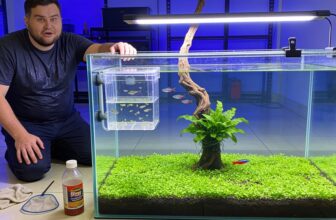
You’ll need a 20-gallon tank with gentle flow and dim light filtered through floating plants like Amazon frogbit, since these fish come from dark, soft-water streams in Bolivia and Brazil uncovered in 1933.
Keep your water between 72°F and 82°F, pH 6.0 to 7.5, and hardness under 18 dGH.

Monitors pH, ammonia, nitrite, and nitrate so you can keep stable, healthy water.

Tracks hardness and buffering to match soft, acidic conditions Black Phantom Tetras love.

Quick dip strips give fast water quality readings when you need a check between full tests.
Check discountedAquarium Test Kitson Amazon
Feed small flakes twice daily, plus frozen treats weekly, and keep at least five fish together so they feel safe enough to show their bold black fin edges and red highlights.
Watch for their famous mock battles between males, a performance that looks fierce but never draws blood, and you’ll soon see why patience rewards you with six years of quiet, rippling beauty.
There’s more waiting just ahead.
At A Glance
- Keep at least five individuals in a 20-gallon tank with soft, acidic water and gentle filtration.
- Maintain temperature between 72–82°F with pH 6.0–7.5 and weekly water changes.
- Feed small portions twice daily using fine flakes, frozen daphnia, and sinking algae wafers.
- Provide dim lighting, floating plants, driftwood, and dark substrate to mimic their natural habitat.
- Monitor males for mock aggression displays and house only with peaceful, non-fin-nipping species.
What Is a Black Phantom Tetra? Species Overview
A small fish with a dark, secretive name lives in your aquarium, and you’ll want to understand it.
The Black Phantom Tetra, *Hyphessobrycon megalopterus*, carries historical significance as a staple in the aquarium trade since its 1930s discovery in Bolivia and Brazil’s river basins. You’ll notice its flat, tetragonal body and that striking eye-shaped marking behind the gills, like a shadow watching back.
Aquarium folklore whispers about phantom tetras haunting murky waters, though they’re peaceful, social creatures. You might feel quiet wonder at their synchronized swimming. Males flare dramatic black-edged fins; females glow with red on pelvic and anal fins, slightly plumper, similarly captivating. These tetras thrive in soft, acidic water conditions, which can be maintained using pH buffers designed to stabilize water chemistry without introducing harmful phosphates.
How Big Do Black Phantom Tetras Get? Size and Lifespan
Although you might hope for a giant showpiece, Black Phantom Tetras stay small, reaching only about 1.5 inches from nose to tail when full-grown—that’s roughly the length of your thumb’s top joint.
Their compact size means you don’t need a massive tank size; a 10-gallon minimum works, though 20 gallons lets them swim freely and feel safe, which is larger than the 1.2 gallon acrylic starter kits sometimes marketed for single bettas.
You’ll enjoy their company for a lifespan of about five years, sometimes six if you keep their water clean and steady. That’s a good stretch of time to bond with them.
Their small stature hides big personality traits. They’re active, social swimmers who flash their coloration variations—smokey-gray bodies with that striking black eye-spot—like little living jewels darting through your plants.
Male vs. Female Black Phantom Tetras: Identification Guide
Knowing your fish’s size helps you spot another puzzle, their gender, which shapes how they behave and glow in your tank.
Look for sexual dimorphism, meaning males and females show different physical traits.
Sexual dimorphism lets you tell males from females by their unique physical features, like fin length and body shape.
Males grow sleeker bodies with longer, flowing fins edged in black.
Females stay slightly plumper, especially when carrying eggs, and you’ll notice their fin coloration carries a warm surprise.
Check her pelvic, anal, and tiny adipose fin for red tones, like blush on a cheek.
His fins stay darker, almost inked.
Watch them drift together, and you’ll feel calm noticing these gentle differences, like recognizing friends in a crowd.
Providing adequate aquarium decorations for hiding spots helps reduce stress and encourages natural displays of these subtle gender differences, especially the shy, flowing movements of females seeking shelter.
Minimum Tank Size for Black Phantom Tetras
Before you bring home a shimmering group of Black Phantom Tetras, you’ll need to pick out a tank that’s roomy enough for their playful habits. These fish are active swimmers, like children who need space to run during recess, so you should consider 20 gallons the practical tank size minimum for a small school.
Smaller tanks make them feel cramped and anxious, like being stuck in a crowded elevator. When you add 5 or more fish, you create comfortable community dynamics where they play and show off without stress. More space means happier, healthier tetras with room to shine.
A low-iron glass tank with 45° beveled rimless edges provides the clearest view of their shimmering colors and active behavior.
Water Parameters Black Phantom Tetras Need
A reliable test kit becomes your most important tool once you’ve filled the tank, since Black Phantom Tetras need specific water conditions to stay healthy and show their best colors.
You’ll want to keep the water between 72°F and 82°F, ideally right in the middle at 77°F.
The pH should sit between 6.0 and 7.5, which means slightly acidic to almost neutral water. Hardness matters too—up to 18 dGH works, but 10 dGH feels best for them.
For accurate weekly testing, consider a digital pH pen with 0.01 precision and automatic temperature compensation to catch dangerous fluctuations before they stress your fish.
| Parameter | Ideal Range | Why It Matters |
|---|---|---|
| Temperature | 72°F – 82°F | Keeps metabolism steady, prevents stress |
| pH | 6.0 – 7.5 | Mimics their murky home waters |
| Hardness | Up to 18 dGH | 10 dGH supports healthy scales |
pH stabilization fluctuations can harm these fish quickly, so you’ll test weekly and change water gradually. Your substrate composition also affects water chemistry; dark sand buffers pH gently, just like the riverbeds they know.
Filtration and Equipment for Black Phantom Tetra Tanks
When you set up a filter for your Black Phantom Tetras, you’re really building a tiny river that never stops moving, just like the slow, murky streams they came from in Bolivia and Brazil.
You’ll want gentle water flow, about 4-6 times your tank volume per hour, since these fish dislike strong currents. Low-light filtration helps here—that’s when you avoid bright lights near the filter intake, keeping your tetras feeling safe in dimmer water, just like their shaded homeland.
UV sterilization, a special light that kills tiny harmful germs, keeps water clear without chemicals.
Consider this simple equipment:
- A hang-on-back filter with adjustable flow, rated for your exact tank size
- A sponge pre-filter, which looks like a black foam block, to protect baby fish and shrimp from getting pulled in
- A dimmable LED light on a timer, giving 8 hours of soft daylight and 8 hours of restful darkness
For larger setups, a spray bar flow distribution system can spread return water gently across the surface, preventing turbulence that would stress these delicate fish.
Best Plants and Hardscape for Black Phantom Tetras
Since Black Phantom Tetras hail from dim, plant-choked streams where sunlight barely pierces the surface, you’ll want to recreate that sheltered world right inside your glass box.
You’ll layer floating foliage like Amazon frogbit across the top first, since this dims the plant lighting below just enough to make your fish feel hidden and safe.
Next, you’ll tuck driftwood roots into the dark corners, rough bark and all, since that hardscape texture gives beneficial bacteria cozy places to grow.
You’ll anchor java fern and anubias to these wood pieces, choosing plants that thrive in low light without fuss.
| Plant or Hardscape | Purpose | Placement |
|---|---|---|
| Amazon frogbit | Floating foliage; dims plant lighting | Surface cover |
| Driftwood roots | Hardscape texture; anchors plants | Corners, back |
| Java fern | Low-light growth | Attached to wood |
| Anubias nana | Shaded ground cover | Foreground base |
You’ll feel calm watching your tetras dart through these shadowy tunnels, their phantom spots flickering like secrets in the gloom.
For an even easier floating option, consider Water Spangles which multiply automatically and require no trimming while creating natural shade that reduces algae growth.
What to Feed Black Phantom Tetras: Diet and Schedule
If you watch your Black Phantom Tetras closely during feeding time, you’ll notice they nibble at almost anything that drifts by. You’ll want to maintain proper feeding frequency, offering small amounts twice daily rather than one large meal. This keeps their nutrient balance steady and prevents uneaten food from fouling the water.
Picture their dinner plate:
- Fine flake food forms the foundation, like breakfast cereal each morning.
- Frozen daphnia or bloodworms become their weekly treat, think of it as Friday pizza night.
- Soft algae wafers sink slowly for bottom grazing, like salad after the main course.
You skip a day occasionally; their small stomachs appreciate the rest.
For an occasional protein boost, consider slow-sinking micro-granules like Fluval Bug Bites, which contain black soldier fly larvae to enhance color and support immune health in tropical freshwater fish.
Black Phantom Tetra Behavior and Temperament
Look into your tank at dusk, and you’ll catch these little gray shadows waking up, their fins rippling like flags in a slow breeze.
You’ll want to keep at least five together, since their schooling dynamics bind them like neighbors who look out for each other across a fence. They feel safer, swim bolder, and their silver-blue stripes flash more often in a group.
Watch two males square off, and you’ll witness tankal aggression—mock battles where they circle, flare fins, and chase without biting. It’s theater, not cruelty. They rarely hurt each other. Peace returns quickly, like neighbors shaking hands after a loud disagreement.
Like needle-wheel impeller technology that relies on precise mechanical harmony, their social dynamics depend on balanced interaction to function optimally.
Compatible Tank Mates for Black Phantom Tetras
What kind of neighbors play well with these soft-spoken swimmers?
You’ll want peaceful fish that share their gentle rhythm.
- Red Phantom Tetras – These cousins shimmer like copper pennies against dark substrate choices, creating a breathing display tank of synchronized movement.
- Celestial Pearl Danios – Small, spotted jewels that don’t crowd the water column, letting your phantoms claim middle territory.
- Honey Gouramis – Top-dwelling, peaceful spirits with honey-colored fins; they’ll greet you without startling your tetras below.
Avoid aggressive fish and fin-nippers. You wouldn’t invite a bully to a quiet party.
A protein skimmer matching your tank’s bioload ensures pristine water quality that benefits all these peaceful community fish.
How Many Black Phantom Tetras Should You Keep?
Best School Size and Group Recommendations
Six Black Phantom Tetras marks the minimum, though ten creates a braver, more beautiful school. They’re shy alone, and their colors fade without friends nearby.
A larger group lets males show off their mock fights, which helps you see their best markings. When you’re thinking about breeding, recall that group living keeps stress low, and stress hurts color genetics passed to fry. In a 20-gallon tank, you’ve got room for this small crowd.
Watch them tighten into a shimmering cluster, and you’ll feel the quiet joy of a complete little world.
Black Phantom Tetra Breeding: Setup and Spawning
Breeding Setup and Spawning
You’ve watched your ten tetras flash through mock fights, and now their performance looks ready for something more. Breeding Black Phantom Tetras takes a little planning, but you’ll get there together.
- A separate tank, just five or ten gallons, with soft water—pH around 5.5, hardness near 4 dGH—feels like home to them.
- Dim lighting, like morning under trees, calms the pair and protects scattered eggs from sharp eyes.
- A mesh bottom or spawning mop, where eggs fall safe and parents can’t reach them.
Condition your pair with live foods, then introduce them at dusk. By dawn, you’ll find tiny pearls waiting.
Raising Black Phantom Tetra Fry: First 30 Days
By dawn, your tank holds hundreds of eggs no bigger than salt grains, and your job starts now.
By dawn, your tank holds hundreds of eggs no bigger than salt grains, and your job starts now.
You lower the light intensity to a soft glow, dim as morning mist, since bright beams stress the tiny bodies forming inside.
After three days, the eggs hatch into fry you can barely see. You feed them infusoria, microscopic swimming food, twice daily.
At day ten, you introduce baby brine shrimp, measuring portions no larger than a pinhead.
You watch their bellies turn pink, a sign of dye absorption from the shrimp, proof they’re eating well.
Black Phantom Tetra Diseases and Prevention
Disease Prevention and Treatment
Those tiny fry you’re tending will face threats you can’t see, threats that wait in every tank.
You’ll spot disease symptoms early if you watch closely: white spots like salt, torn fins, or fish gasping at the surface mean trouble’s started. Prevention strategies keep your water safe—test weekly, change 25% every seven days, and never overfeed.
- Ich parasites appear as tiny white grains; raise temperature slowly to 86°F for three days.
- Fin rot shows ragged edges; trim damaged tissue with clean scissors, dose aquarium salt.
- Velvet coats fish in gold dust; darken the tank, treat with copper-based medicine immediately.
Stay patient, stay watchful.
Frequently Asked Questions
Can Black Phantom Tetras Breathe Surface Air?
You can’t rely on surface air for these fish; they’ve got habwater respiration through their gills alone. Since they’re active during nocturnal feeding times, you’ll want stable, oxygen-rich water throughout the tank, not just at the surface.
Do Black Phantom Tetras Have Labyrinth Organs?
Black phantom tetras don’t possess maze anatomy, so you’re not observing atmospheric respiration in these fish. They’ll rely entirely on dissolved oxygen through their gills, and you’ll need good water circulation and aeration to keep them healthy.
Are Black Phantom Tetras Jumpers at Night?
Yes, you’ll need a secure lid since their nocturnal activity includes nighttime jumping. You shouldn’t underestimate this behavior—even peaceful tetras leap when startled in darkness, so you’re protecting them with a proper cover.
Can Black Phantom Tetras Change Color With Mood?
Yes, you’ll notice their color patterns shift with mood. Stress response causes them to pale, whereas comfort deepens their smokey‑gray and intensifies that dark eye‑shaped marking behind their gills. You’ll see males display more vividly when competing or courting.
Do Black Phantom Tetras Need Moonlight Simulation?
You don’t need moonlight simulation for black phantom tetras, but you’ll benefit from consistent photoperiod effects. Stable lighting supports their natural rhythm; you’re maintaining health without moonlight timing, though dim evening cycles won’t harm them.
Rounding Up
Your aquarium waits, ready for these quiet swimmers with their phantom masks. You’ll find patience rewarded as they trust you, flashing silver when the light hits just right. Keep their water clean, their school large, and you’ll witness something peaceful unfold—small lives depending on your care, growing familiar, becoming yours. That responsibility feels heavy sometimes, but good heavy, like carrying something worth holding. Two, three years from now, you’ll still watch them, still glad you chose to learn.

Floating leaves create shaded hiding spots that make Black Phantom Tetras feel secure.

Undemanding low-light plant thrives on driftwood and gives natural cover along the bottom.
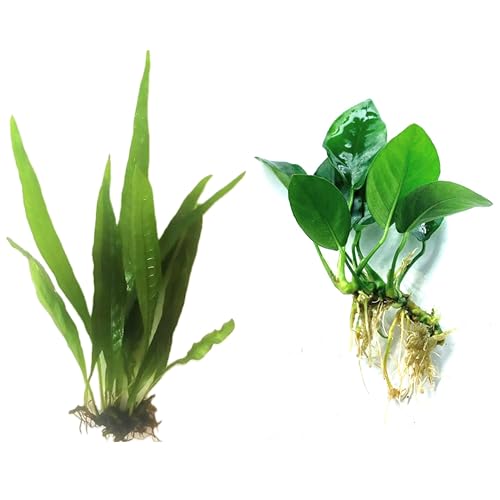
Hardy leaves anchor to wood and tolerate dim tanks, ideal for serene tetra setups.
Browse discountedAquarium Plantson Amazon