You’re better off growing corals in a shallow, fish‑free frag tank than your main display—less algae, fewer water changes, and way faster growth.
Go with a long, shallow rectangle (6–8 inches deep, 18–24 wide) for light penetration without swimming.

Compact light hits perfect PAR for fast coral growth without overheating water.
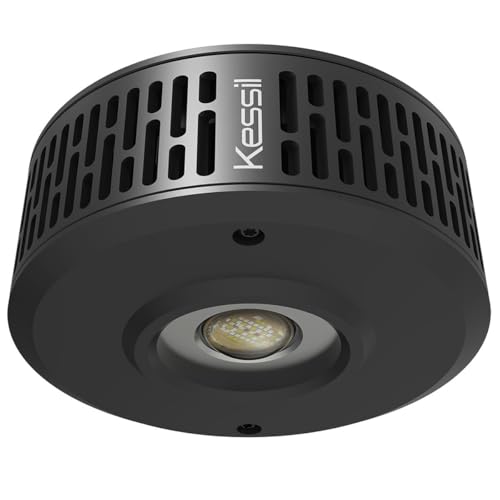
Deep shimmer and intense color pop make frags look their best.

Wireless control and full spectrum support thriving coral propagation.
See today's best deals onAquarium Lighting
Skip fish entirely to keep nutrients low.
For all‑in‑one ease, grab the Innovative Marine Lagoon 25 PRO.
Prefer custom? Planet Aquariums builds tailored units.
Stick around—the next bit covers flow and filtration specifics.
At A Glance
- Choose shallow, long tanks (6–8 inches deep) for optimal light penetration and easy access.
- Use low-intensity LED lights with 60–130 µmol/m²/s PAR and 6–8 hour photoperiod.
- Install gentle, continuous flow cycling tank 10–20 times hourly, avoiding strong currents.
- Employ low-bioload filtration with carbon pads and perform weekly 20% water changes.
- Keep frag tank fish-free to minimize nutrients, algae, and coral pecking damage.
Why a Dedicated Frag Tank Beats Propagating in Your Display
Why complicate your main display with racks, glue, and constant snipping?
You’ll get cleaner water, faster growth, and way less hassle with a dedicated frag tank.
No fish means lower nutrients—fewer water changes, no algae battles.
It’s shallow, so you’re not swimming to reach every frag.
You keep your show tank pristine and your propagation zone simple.
Less stress, more coral.
It’s the insider move for serious fraggers.
Bottom line: separate tanks give you control without the clutter.
Your display stays a showcase; your frag tank becomes your workshop.
Belong to the crew that knows better.
To keep that frag tank water crystal clear, pair it with a protein skimmer featuring a DC needle‑wheel pump for near-silent, adjustable waste removal. This pump type uses a hybrid needle‑wheel pinwheel impeller to create exceptionally fine micro‑bubbles for higher skimming efficiency.
What Depth, Width, and Shape Work Best for Frag Tanks
Except you enjoy giving yourself a backache, stick with a frag tank that’s only 6 to 8 inches deep. That depth lets you reach frags easily, and your arms won’t cramp. Width and length matter more—gives you space for racks and egg crate. For stable coral mounting, consider using a CaribSea Life Rock Frag Zone to promote healthy attachment and growth. Ensure your chosen stand can handle the total weight of a loaded frag tank by looking for models with a weight capacity of 1,100 lb for reliable support.
- Depth: 6–8 inches. Just enough for coral growth, not for drowning your frustration.
- Width: 18–24 inches minimum. Fits standard rack systems without awkward jigsaw-puzzle placement.
- Shape: Long, shallow rectangles. Avoid cubes or tall tanks—they waste space and complicate light penetration.
Go wide, stay shallow, and keep your back happy. That’s the winning formula.
Where Should You Actually Put Your Frag Tank?
Where do you even put this thing?
You’ll want it near your display tank—yeah, for easy coral transfer without dripping water through the house.
Stick it close to an outlet, too; powering pumps and lights is non‑negotiable.
Keep it out of reach from kids and pets—safety first, people.
A steady temperature’s key, so avoid drafty windows or hot garages.
Basement or separate room works if you’re after low visibility.
Quick water changes become your new best friend.
You’re building a frag zone, not a showpiece.
For optimal coral growth, selecting a lighting fixture with a 60-130 µmol/m²/s PAR range ensures healthy photosynthesis and consistent development.
To prevent jumpers during maintenance, consider a secure lid with a magnetic closure for easy access.
How Much Flow Does a Frag Tank Need?
You’ll need gentle, continuous flow—nothing that blasts your frags like a fire hose. Aim for a submersible pump or gyre pump that turns over the tank volume 10–20 times per hour. That’s enough to sway polyps without dislodging them.
- Use a wavemaker on pulse mode—creates a natural surge while keeping flow soft.
- Position the outlet diagonally—prevents dead spots without creating a sandstorm (if you skip substrate).
- Dial it down if frags look stressed—tissue recession means you’re too aggressive.
You’re part of the crew that knows less is more. Keep it calm, and your corals will thank you.
For consistent performance, choose a quiet, corrosion-resistant pump built for reef environments to protect sensitive frags. Adding a Fluval spray bar to the return line gently distributes water across the sump surface like rain.
Choosing a Filter System That Matches a Low-Bioload Setup
Since you’ve got the gentle flow dialed in, let’s talk about keeping that water clean without overcomplicating things.
With no fish and light feeding, you’re running a low‑bioload setup. That means a simple hang‑on‑back filter works fine. It removes debris and circulates water.
Add a sponge pre‑filter to catch larger bits. Use carbon pads for clarity—switch them out monthly.
You don’t need a protein skimmer or sump. They’re overkill here.
Stick with bare glass and siphon waste weekly. You may also find fine nylon mesh nets useful for skimming surface debris or handling small coral fragments without snagging.
Your corals thrive on consistency, not hardware. Keep filtration minimal, matching your gentle load. Many HOB filters include bio‑media critical for ammonia to nitrate conversion, supporting biological balance without extra equipment.
You’re already in the right club.
Controlling Phosphate and Nitrate With Simple Water Changes
When you’re running a frag tank with no fish and light feeding, phosphate and nitrate usually stay low on their own—but not always. Still, you don’t need complex gadgets. Simple water changes work wonders if you’re consistent. Testing at least twice weekly ensures you catch nutrient drift before it becomes a problem, as recommended for healthy fishkeeping.
- Schedule small changes weekly. Swap 20% every seven days; that’s enough to reset nutrient drift without stressing your corals.
- Use pre-mixed saltwater. Match temperature and salinity to your display tank—no surprises, no shock.
- Siphon debris first. Vacuum the bare bottom before refilling; you physically remove the source, not just dilute it.
If your frag tank requires extra help, consider using Seachem Purigen to trap ammonia, nitrite, and nitrate simultaneously.
You’ve got this. Keep it simple, keep it steady, and your frags will thank you.
Managing Nutrients in a Frag Tank Without Overcomplicating
Water changes alone won’t cut it for every frag tank—especially if you’re feeding corals heavily or growing nutrient-hungry species.
Water changes alone won’t cut it for every frag tank—especially if you’re feeding corals heavily or growing nutrient‑hungry species.
That’s fine; you’re in good company.
Instead, grab a power filter with GFO (granular ferric oxide—it binds phosphate) and activated carbon. That combo quietly manages your tank without fuss. Toss in a small protein skimmer only if you’re really pushing food. For a secure hold on frags during setup, ultra‑thick cyanoacrylate gel bonds permanently in seconds and is reef‑safe.
Avoid over-feeding; it’s the silent killer of clarity. Siphon uneaten food weekly. Keep lighting controlled—too much invites algae.
For consistent feeding while you’re away, consider a quiet motor feeder with user-friendly portion controls to prevent excess nutrients.
This isn’t rocket science. You’re keeping it simple, like us. Your frags will thank you.
Why Bare-Bottom Tanks Make Cleaning So Much Easier
Since sand traps food, crud, and mystery gunk you’ll never fully see—let’s be honest, it’s basically a time‑release algae pill—a bare‑bottom frag tank sidesteps that whole mess.
You want to belong to the clean‑tank club? Here’s your membership card.
- No siphoning sand beds. You simply wipe the bare glass with a magnet scraper, then siphon the gunk straight out. Done.
- You spot trouble instantly. Detritus collects in plain view, not hiding under grains. You’ll see it and act before algae blooms.
- Less gear, less fuss. No need for sand‑specific bacteria or deep‑bed maintenance. Your frags get the clean water they deserve.
Bottom line: bare glass equals less scrub time, more coral time.
When cleaning the bare glass, a sand spatula can be used to scrape soft algae from edges without scratching the surface. Using a PVC/resin feeding ring with a suction cup keeps floating food contained near the coral, reducing waste and filter clogging.
Keeping Your Frag Tank Water Temperature Stable
Maintaining water temperature is half the battle in a frag tank, and it’s surprisingly easy to win.
Maintaining water temperature is half the battle in a frag tank, and it’s surprisingly easy to win.
You’re already part of the crew that keeps corals healthy—so don’t let temperature swings be your downfall.
A simple heater, set to your display tank’s temp, does the trick.
For outdoor setups, you’ll need shade cloth by day and a heater by night.
No fancy gear needed, just consistency.
- Use a quality heater with a controller.
- Avoid temperature spikes; they stress frags fast.
- Match your parent tank’s temp exactly.
Models like the Hyger 500W include over‑heat protection and low‑water shutdown for extra safety.
You’ve got this.
Stable temps mean happy corals, and that’s what we’re all after.
Keep it steady, keep it simple.
Adding a concentrated water conditioner like Seachem Prime supports slime‑coat health and detoxifies ammonia during water changes, further reducing stress on your frags.
Lighting That Grows Corals, Not Algae
Use a low-intensity LED like the Kessil A80 ($150) or AI Prime 16HD ($250) at 40% power.
Run photoperiods of just 6–8 hours; longer invites green fuzz.
Target a 15,000–20,000K spectrum (think deep blue) to boost coral growth, not nuisance algae.
For consistent batch quality, many aquarists rely on Fritz Aquatics Reef Pro Mix for its zero-residue dissolution and stable parameters.
Keep it simple, and your frags will thank you—no green slime, just happy nubs. You’ve got this.
Always pre-dip new arrivals with a botanical coral dip to eliminate hitchhikers like flatworms and nudibranchs before adding them to the frag tank.
Choose the Innovative Marine Lagoon 25 PRO for All-in-One Simplicity
Want an all‑in‑one frag tank that works right straight away with zero tinkering? The Innovative Marine Lagoon 25 PRO’s for you—it’s basically a coral starter kit disguised as a tank. You get a built-in Mightyjet DC pump and PurityPack media, so filtration’s handled before you even add water. No fussing with external stuff; just plug it in and go. Pair it with a DaToo Mini Programmable Timer for precise 6‑step dimming and sunrise/sunset simulation to reduce coral stress. For additional nutrient export, consider an AquaReady Nano HOB Skimmer to handle light bioloads with ultra‑quiet efficiency.
The Innovative Marine Lagoon 25 PRO is a coral starter kit disguised as a tank.
- Shallow design: easy frag access, no deep-water fumbles.
- All-in-one simplicity: less gear, more growing.
- Clean aesthetics: fits right into your reef room.
Bottom line: grab it if you want a no-brainer frag system that makes you look like you’ve done this before—first time or hundredth.
Pick Planet Aquariums for Custom Frag Tanks
Why settle for off-the-shelf when you can get exactly what you need? Planet Aquariums builds custom frag tanks right in Texas, so you’re not stuck with generic dimensions. They tailor every detail to your propagation goals, giving you a tank that fits your space and workflow perfectly.
- Custom sizing: Choose any length, width, and depth—no more squeezing frags into awkward corners.
- Feature options: Add overflows, drilled holes, or built-in sumps; skip what you don’t need.
- Texas craftsmanship: Hand-built with thick acrylic or glass, they’re built to last without breaking your budget.
You’ll feel like a true insider with a tank designed just for you.
For organizing your frags, consider adding magnetic N52 magnets for secure, adjustable placement on thicker glass.
Always verify that your wall can support 30‑gallons of water before hanging heavy setups using the included mounting hardware.
Use the Zoomed 50-Gallon Lowboy for Shallow Width
If you’re after a wide, shallow tank without the wait or custom cost, the Zoomed 50‑gallon lowboy is a solid shortcut.
It’s 48 inches long, 24 inches wide, and only 8 inches deep—perfect for reaching frags without drowning your forearm.
No sump needed, just hang a simple filter on the back.
You’ll fit egg crate racks easily, and the open top lets you suspend lights overhead.
At around $400, it’s a concrete bargain for serious fraggers.
You’re not waiting months for custom glass, just grabbing a proven workhorse.
Belong to the club that propagates smarter.
For a smaller-scale setup, consider a 7‑gal Rimless Cube with low‑iron glass for pristine coral clarity.
Why Most Fraggers Skip Fish Altogether
Except you’re a big fan of siphoning fish poop, you’re better off leaving the finned creatures in your display tank—most fraggers do, and for good reason. Fish create unwanted waste that spikes ammonia and phosphate levels, triggering algae blooms you don’t need.
Keep fish in your display tank, not your frag system—less waste, less work, less damage.
- Less waste, less work: No fish means fewer water changes, so your frags enjoy cleaner water longer.
- No pecking damage: Even reef‑safe fish nibble delicate new growth, stunting your propagation efforts.
- Simpler, cheaper setup: Skip the protein skimmer and extra filtration—your bare tank handles it fine.
Bottom line: keep fish where they belong—in your display tank—and your frags will thank you.
Frequently Asked Questions
How Do I Acclimate New Frags to My Frag Tank?
You’ll drip-acclimate new frags slowly—float the bag for 15 minutes to match temperature, then add a tiny drip of your tank water per second for 30-60 minutes. This gentle shift lowers shock risks.
Remember, your frag tank’s low-nutrient water isn’t forgiving. No fish means less waste, but frags still need stability.
Skip rapid methods; they’re a recipe for melt. Stick with slow drips, and you’ll see happier corals.
What Is the Best Way to Glue Frags to Plugs?
You’ll want a gel‑type superglue (cyanoacrylate) for easy application.
Put a dab on your frag’s base, press it onto the plug, hold for ten seconds, and you’re done—no fumbling with epoxy goo.
For tricky spots, dry the plug with a paper towel first.
I’ve glued my thumb to more plugs than I’ll admit, but the gel gives you a slower set.
Bottom line: gel superglue wins for quick, mess‑free attaching.
How Often Should I Test Water Parameters in a Frag Tank?
You should test your frag tank water weekly at minimum—it’s dead simple.
Skip the daily drama; your low bioload means less nutrient chaos.
Check alkalinity, calcium, and magnesium every seven days, plus nitrate and phosphate every two weeks.
If you’re new, test more until you see the pattern.
Consistency beats obsession here.
Remember, you’re not running a lab; you’re just keeping frags happy.
Bottom line? Weekly tests keep you in the club without the burnout.
Can I Use Tap Water for Water Changes in a Frag Tank?
You can use tap water for a frag tank, but you shouldn’t—it’s a gamble you’ll likely lose.
Tap water contains chlorine, chloramines, and trace metals that stress corals, fueling algae instead of growth.
Instead, use RO/DI water (reverse osmosis deionization), which strips out impurities for pennies per gallon.
A basic RO/DI unit costs $50–$100 and saves you headaches.
Bottom line: tap water works short-term, but RO/DI guarantees your frags thrive long-term.
Don’t risk it for convenience.
How Do I Treat Pests Like Aiptasia in a Frag Tank?
You’ll want to manually remove aiptasia with a syringe or hobby knife, it’s the safest bet for a bare-bottom frag tank.
Injecting them with lemon juice or Kalkwasser paste works too, just don’t overshoot—stuff can nuke your water.
Skip chemical treatments; they’re overkill for your small setup.
A few peppermint shrimp might clean up stragglers, but they’ll need removal afterward.
Stick to mechanical removal, aiptasia won’t survive consistent attention.
Rounding Up
So, here’s the verdict: skip the display tank for your coral project—you’ll only frustrate yourself chasing stray frags under a rock.
Grab a dedicated system, like the IM Lagoon 25 PRO ($350, all-in-one, 24x20x12 inches). It’s shallow, simple, and you’ll thank yourself later. No fish, no fuss—just dial in flow, keep phosphate under 0.1 ppm, and let your corals grow. Bottom line: focus beats fancy every time.

Quiet, reliable filtration keeps frag water polished and reef-safe.

Simple, efficient biological and mechanical filtration for low-bioload tanks.

HOB filter with surface skimmer helps keep frag tank crystal clear.
Browse discountedAquarium Filterson Amazon