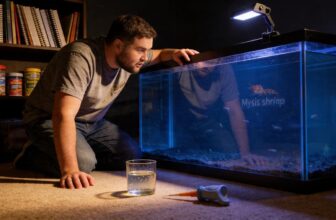
Rabbit snails bring calm, steady energy to your aquarium as they graze on algae and leftover food. You’ll need a 30-gallon tank with soft sand, two inches deep, so they can burrow and rest their heavy shells.
Keep water at 74–76°F with a pH of 7.3–8.5, which means slightly hard, alkaline conditions that protect their calcium shells from dissolving. Feed calcium-rich foods like blanched spinach and cuttlebone every other day.
They live peacefully with tetras and shrimp, and because each female lays only one egg at a time, your tank won’t crowd quickly. With steady care, you’ll watch them thrive past three years, and there’s more to uncover about choosing a healthy one at the store.
At A Glance
- Rabbit Snails roam the tank floor, grazing on algae and detritus between peaceful rests.
- Their calm, non-aggressive nature suits community tanks with tetras, gouramis, and shrimp.
- Fine sand substrate allows natural burrowing behavior and protects their sensitive feet.
- Easy calcium management through vegetables and cuttlebone prevents shell damage.
- Self-limiting reproduction produces only 2–3 offspring monthly, preventing overpopulation.
Rabbit Snail Tank Size and Setup Basics
To set up a proper home for rabbit snails, you’ll need a tank that holds at least thirty gallons of water.
You’ll lay fine sand across the bottom, soft enough for burrowing without scraped skin.
Choose sturdy decor filtration that moves water gently but steadily, cleaning waste without trapping tiny feet.
Add aquarium lighting on a timer, twelve hours daily, so algae grows for grazing and plants feel welcome.
A tight lid matters too, since these curious climbers investigate edges after dark.
Check your heater keeps water between 74 and 76 degrees Fahrenheit, steady warmth for active days.
You’re building security, piece by piece.
Consider a low-iron glass tank for optimal clarity when observing these active snails and any plants you add.
Water Parameters That Rabbit Snails Need
Once you’ve set up the tank, you’ll want to check your water chemistry, since rabbit snails feel safest when their environment matches the warm, mineral‑rich streams of Sulawesi, their island home. Aim for 74–76°F, pH 7.3–8.5, and hardness 2–15 dKH. Alkaline shell water prevents their spiral homes from dissolving. You’ll need reliable nitrate control, too, as levels above 20 ppm cause real harm. Test weekly. Change water regularly. Your snails depend on you for this stability, and meeting these numbers means they’ll thrive, not merely survive. For accurate results, use moisture‑proof sealed test strips or liquid reagent kits stored in a cool, dark place to preserve their 99% accuracy rating.
| Parameter | Ideal Range | Why It Matters |
|---|---|---|
| Temperature | 74–76°F | Mimics Sulawesi warmth, keeps metabolism steady |
| pH | 7.3–8.5 | Stops shell corrosion, maintains healthy shell water |
| Hardness (dKH) | 2–15 | Supplies minerals for strong shell growth |
| Nitrates | Under 20 ppm | Crucial nitrate control prevents shortened lifespan |
Best Substrate for Rabbit Snail Burrowing
When you watch a rabbit snail glide across the bottom of your tank, you’ll notice it doesn’t just slide—it pushes.
Your snail digs to feel safe.
Choose fine sand, two inches deep, since gravel cuts soft bodies. The substrate texture matters: smooth grains let muscles grip without tearing.
Rabbit snails need burrowing depth to rest their heads and cool their feet, like you burying toes in beach sand on a August afternoon. They’ll tunnel completely under, then emerge slowly, testing the water with waving antennae.
Avoid coarse or sharp materials. Your snail can’t tell you it hurts, but you’ll see it stop trying, and feel the quiet disappointment of a creature giving up.
Aqua Natural Sugar White Sand offers an ideal fine grain option that rinses easily and settles quickly for burrowing snails.
What to Feed Your Rabbit Snail for Strong Shells
Three calcium‑rich foods sit on your counter right now, and your snail needs them.
Your rabbit snail’s shell coloration depends on what you offer. Without enough calcium, that spiraled armor grows thin, weak, and pale. You must protect your friend.
Feeding frequency matters: drop food every other day, watching closely. You’ll learn your snail’s rhythm, trust builds slowly.
Gather these necessities:
- Blanched spinach leaves, soft and green
- Crushed eggshells, baked clean
- Cuttlebone, that white bird treat
- Specialized calcium wafers, sinking slow
You’re nurturing a living sculpture. Each meal strengthens tomorrow’s spiral.
Calcium Sources and Feeding Routine
Three calcium‑rich foods sit on your counter right now, and your snail needs them.
Your rabbit snail’s shell coloration depends on what you offer. Without enough calcium, that spiraled armor grows thin, weak, and pale. You must protect your friend.
Feeding frequency matters: drop food every other day, watching closely. You’ll learn your snail’s rhythm, trust builds slowly.
Gather these necessities:
- Blanched spinach leaves, soft and green
- Crushed eggshells, baked clean
- Cuttlebone, that white bird treat
- Specialized calcium wafers, sinking slow
You’re nurturing a living sculpture. Each meal strengthens tomorrow’s spiral.
Adding calcium carbonate composition rock to your aquarium provides a slow‑release mineral source that continuously supports shell development.
Tank Mates That Won’t Harm Your Rabbit Snail
A strong shell means nothing if a hungry neighbor sees your snail as supper.
Your rabbit snail needs tankmate compatibility that prioritizes predator avoidance above all else. You’ll want peaceful companions, not hunters. Choose tetras, honey gourami, ghost shrimp, or otocinclus—gentle fish that swim past without biting. These neighbors share space politely, never treating your snail’s antennae like string cheese.
Avoid crayfish, cichlids, and most goldfish; they’ll crush or consume your cleanup crew. Research every potential tankmate‘s temperament before purchase. Peaceful communities create calm, and your snail will investigate openly, feeling safe.
A calm water environment similar to what peaceful sump systems achieve helps reduce stress for timid tankmates like rabbit snails.
Normal Rabbit Snail Behavior: Active, Resting, or Hiding?
The tank grows quiet, and suddenly you’re wondering where your snail went.
Your rabbit snail hasn’t vanished; it’s probably just resting. These creatures balance activity and stillness throughout the day.
Your rabbit snail hasn’t vanished; it’s probably just resting.
- You’ll spot them gliding across glass, face wrinkled, antennae drooping like soft ears.
- You’ll find them burrowed in sand, completely still, shell half-hidden.
- You’ll notice increased nocturnal activity when lights dim, their prime exploration time.
- You’ll sometimes witness brief territorial disputes over prime algae spots, though they’re brief and gentle.
Motionlessness feels worrying, but random rest defines their rhythm. Trust the pattern.
Unlike magnetic algae cleaners, rabbit snails rely on their own grazing to keep glass surfaces spotless—a peaceful alternative for aquarists who prefer biological cleanup crews.
Signs Your Rabbit Snail Is Stressed or Sick
Watch your snail’s shell like you’d watch a friend’s face for signs of worry. Thin, pitted, or chalky shell means trouble’s brewing, often from missing calcium or wrong water chemistry. For planted tanks, test kits with 0.1 ppm iron sensitivity help maintain trace levels that support healthy biofilm and algae growth your snail depends on.
You’ll notice stress signals when your snail stops grazing algae, even when it’s everywhere. Poor nutrition shows in sluggish movement and closed operculum for days.
Watch response burrowing behavior, too: if your snail won’t dig into fine sand like it usually does, something’s hurting. Lethargy, floating, or strange smells speak of illness. You know your snail’s normal rhythm. Trust that knowing. Act quickly when patterns break.
How to Fix a Cracking Rabbit Snail Shell
When you spot hairline cracks tracing your rabbit snail’s spiral shell like frost on a windowpane, you’re witnessing a cry for help that’s both urgent and fixable.
You’ll feel worry tightening your chest, but steady action saves your friend.
For shell repair and pH balance, you must:
- Test your water immediately—you need pH between 7.3 and 8.5, nothing lower.
- Add crushed coral or cuttlebone, raising hardness to 2–15 dKH slowly, over days.
- Feed calcium-rich vegetables daily—blanched spinach, broccoli bits.
- Watch for improvement within two weeks, patience steadying your hope.
Your snail depends on you.
Maintaining proper water mineral balance requires the same attention to carbonate hardness that marine hobbyists give to their reef tanks when managing bacterial media and nutrient levels.
What to Do If Your Rabbit Snail Contacts Copper
How quickly can trouble hide in a bottle labeled “fish medicine”?
How quickly can trouble hide in a bottle labeled “fish medicine”?
You’ll spot copper toxicity when your snail clams shut, wilts, or tumbles bottom-up.
Act fast. You’ll scoop her into clean, dechlorinated water, matching her tank temperature exactly.
You’ll skip copper-based fixes forever. They’re poison to her soft body.
Research treatment protocols before disaster strikes. You’ll keep a hospital bucket ready, aged water standing by.
You’ll read every label twice, asking: does this contain copper sulfate?
Dual-stage check valves prevent backflow contamination in emergency water changes, protecting sensitive invertebrates from unexpected chemical exposure.
You’ll feel worried, then relieved, then vigilant.
You’ll remember fish medicine cures one creature and kills another. You’ll separate them first, every single time.
How to Trigger Rabbit Snail Breeding in Home Aquariums
Though rabbit snails mature slowly, you’ll find patience pays off when you know what buttons to press.
Breeding triggers center on mimicking natural seasonal cues. You’ll create the right conditions using these four steps:
- Warm the water to 78–82°F for one week, like a gentle summer rain, and feel hope stir.
- Feed calcium-rich foods daily—spinach, broccoli—so shells grow strong, and notice your care rewarded.
- Lengthen light to 10 hours, copying spring’s longer days, and watch anticipation build.
- Add leaf litter or driftwood, releasing tannins that signal rainy season arrival, and trust nature’s quiet promise.
One egg, one baby. Small miracles.
For optimal water quality and nutrient export that benefits breeding conditions, consider adding a refugium with macroalgae lighting providing 420–470 nm blue wavelengths to support healthy plant growth and stable parameters.
Why Rabbit Snail Populations Stay Manageable
Rabbit Snail Reproduction and Population Control
A single pearl of an egg, no bigger than a grain of rice, holds the whole secret.
You notice each female releases just one baby per egg, not dozens like pest snails.
This built-in rate of growth control means you won’t face sudden overpopulation.
The population genetics of rabbit snails limit reproduction speed naturally.
You might see two or three newcomers per month, never a hundred.
Warm water encourages breeding, but biology sets the pace.
Biology, not temperature, ultimately governs how fast these snails multiply.
You feel relieved, knowing you won’t need emergency interventions.
Your tank stays balanced, your cleanup crew remains peaceful, and you enjoy their company without worry.
How to Help Your Rabbit Snail Live Past 3 Years
Water Chemistry for Longer Life
Since most rabbit snails only reach one to three years, you’ll want to pay close attention to the invisible chemistry floating in your water.
Treat these longevity hacks as small promises you keep:
- Test ammonia weekly; even a trace feels like breathing smoke to their soft bodies.
- Keep your thermometer steady at 74–76°F, since temperature swings confuse their slow, steady hearts.
- Offer calcium-rich foods, watching their shells grow stronger like armor you built together.
- Avoid breeding triggers—warmer water hurries life along too fast.
When your snail passes the three-year mark, you’ll know patience created something lasting.
Rabbit Snail vs. Other Aquarium Snails: What Sets Them Apart?
Rabbit Snails vs. The Rest
Your snail has lived three years, or you’re choosing your first, and you wonder what makes this creature different from the others gliding across glass.
Three years of quiet companionship, or the first careful choice—what sets this snail apart from the rest gliding past?
Rabbit snails display unmatched shell coloration—amber spirals, dark chocolate bands, or spotted patterns that turn heads.
You notice breeding cues when water warms past 76 degrees; they spawn slowly, one pearl-egg at a time, unlike pest snails exploding overnight.
Their operculum, a trapdoor made of hardened protein, shields them partially while mystery snails seal completely.
At three to five inches, they dwarf most cleaners.
You watch them lumber like tiny elephants, and you feel calm, knowing you’ve chosen patience over frenzy.
How to Pick a Healthy Rabbit Snail at the Store
Signs of a Healthy Rabbit Snail
When you stand before the tank at your local shop, you’ll want to look past the shells and watch how they move.
A healthy snail stretches fully, antennae twitching like curious rabbit ears.
Shell variations—brown, spotted, or golden—matter less than vigor. You’ll spot cracks or pitting, signs of poor water, and feel concern, not pity, for suffering creatures.
Price comparison helps; cheap snails often hide sickness, costing more later.
- Choose active movers, not clamped shut specimens
- Reject shells with holes or chalky white patches
- Count intact antennae, both should wave freely
- Ask when the shipment arrived—fresh stock survives better
You’ll carry home resilience, not regret.
Frequently Asked Questions
Can Rabbit Snails Flip Themselves Over if Upside Down?
Yes, you’ll find they possess reliable self righting mechanisms for flipping behavior. Rabbit snails actively twist their elongated bodies and muscular feet to roll onto their sides, then push against surfaces until they’ve corrected themselves.
Do Rabbit Snails Uproot Carpet Plants When Burrowing?
You’ll notice carpet erosion and root disturbance occur when rabbit snails burrow, as their active digging displaces fine substrates. Their strong burrowing behavior can loosen delicate root systems, so you’ll want to secure plant edges or choose hardier carpet species.
How Often Do Rabbit Snails Need Water Changes?
Your water change schedule should include 20–30% weekly changes, though you’ll adjust filtration frequency based on bioload; test parameters regularly since they’re sensitive to ammonia and nitrates that shorten their lifespan significantly.
Can Rabbit Snails Survive a Tank Power Outage?
You’ll find rabbit snails possess decent poweroutage resilience in your tank, surviving 6–12 hours without filtration or heat if water stays warm. You’ll want to wrap the tank in blankets and avoid feeding to maintain oxygen levels.
Do Rabbit Snails Biofilm Driftwood Like Other Snails?
You’ll see them actively graze biofilm driftwood alongside algae control duties, scraping surfaces with their downward-facing mouths. They’re not picky cleaners—driftwood, glass, and decorations all receive attention from these inquisitive, active snails throughout the day.
Rounding Up
Rabbit snails give you quiet company, the kind that pads through your tank with soft persistence. You won’t feel wonder, exactly, but something steadier—contentment, maybe, watching those orange antennae sweep the glass at dawn. They ask so little. Give them clean water, something sandy to dig in, and time. They’ll give you years of small, honest work in return. That’s a fair trade, friend. That’s peace you can hold in your hand.