A Midas blenny needs 30 gallons minimum, 90 if you’re feeling ambitious with a harem.
Think live rock caves, sealed lids – these fish jump – and water between 73°F and 82°F.

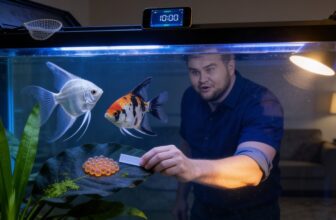
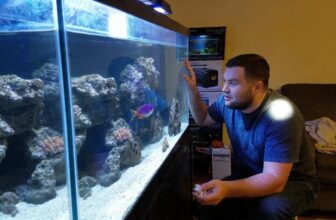
Spacious 30-gallon tank gives your blenny room to roam.

Secure lid prevents jumping while allowing easy feeding.

Maintains stable temperature for healthy Midas blenny.
Check discounted items inAquarium Tanks & Accessories
They’ll eat algae, frozen mysis, brine shrimp, whatever you offer really, but small meals twice daily keeps them from getting pushy.
Tank mates? Skunk cleaner shrimp, Royal Grammas, Longfin Bannerfish – peaceful types who know boundaries.
Breeding’s the tricky part.
Nobody’s cracked captive breeding yet since the fry need live copepods and rotifers immediately, and without those cultures, you’re looking at dead larvae by day three.
Now, the social structure gets weird: one male, multiple females, strict vertical hierarchy.
Multiple males?
Zero survival.
But if you set things right, they’ll stack themselves like apartments, cirri wiggling to keep the peace.
Watch for ich, velvet, fading color – early signs matter.
And cleaners help, though partnerships take weeks to click.
There’s more moving parts here than the setup suggests.
At A Glance
- Require minimum 30-gallon tank with sealed lid to prevent jumping.
- Feed algae-based staples daily with protein supplements twice weekly.
- House one male per system; multiple males fight lethally over territory.
- Provide tight caves and ledges for vertical harem hierarchy stacking.
- Use cleaner shrimp and gobies as natural parasite control partners.
What Tank Size Does a Midas Blenny Really Need?
One blenny, thirty gallons minimum – bre tank space matters, cramped fish stress, hide poorly, fare worse. Ninety gallons fits two, maybe, if social hierarchy stabilizes, though breeding triggers remain mysterious, captive successes zero. For those considering a sump setup, the FijiCube 20-gallon baffle kit offers adjustable chambers that can help maintain stable water quality in larger blenny tanks.
Tank décor needs live rock, caves, overhangs – substrate type, live sand, foraging crucial. Lighting schedule supports algae growth, natural behavior. Filtration method runs mechanical, sump optional. Acclimation process: drip, patience. Quarantine protocol, non-negotiable. Water testing frequency, weekly minimum.
Belonging starts with proper space.
Temperature, pH, and Salinity Ranges for Midas Blennies
Where exactly should the thermometer sit, and does it even matter? Well, yes, obviously – corner placement catches microclimates, middle placement gives averages, and I mean, pick your poison. Midas Blennies don’t demand perfection, just stability. For reliable readings, choose a ±0.1 °C high precision digital thermometer with the probe positioned mid-water column away from heaters or filters.
Now, the numbers, such as they are:
- Temperature: 73°F–82°F
- pH: 8.1–8.4
- Salinity: 1.020–1.025
These ranges aren’t suggestions, they’re guardrails. Stray too far and you’re inviting stress, disease, or that lovely water anti-condition where everything goes sideways. Algae bloom? Often follows parameter swings, so consistency matters more than hitting some mythic ideal.
Test weekly. Adjust slowly. Your blenny won’t thank you – they’re fish, not pets with gratitude – but it’ll live longer.
Rockwork, Hiding Spots, and Jump-Proofing Your Tank
Water numbers matter, certainly, but fish don’t swim in test strips. They swim in homes, and Midas Blennies need theirs built right.
Rockwork design means caves, overhangs, live rock stacked with purpose – places to perch, to vanish, to belong.
| What they need | What happens without | What you feel watching |
|---|---|---|
| Tight caves, dark corners | Glass-surfing panic, pale stress | That itch to fix it, fast |
| Sturdy ledges above sand | Exhausted floating, exposed flanks | Relief when they settle |
| Locked-down, gap-free lid | Floor discovery, heartbreak | The shame of “I knew better” |
Jump proofing tips are non-negotiable: these fish launch when startled, and carpet is not a habitat. Plywood, eggcrate, whatever works – just seal it.
A well-designed rimless aquarium with 45° beveled edges and a foam leveling mat provides the clean sightlines and stable foundation these jumpy fish demand.
Why Midas Blennies Need Moderate to Strong Water Flow
Watch a Midas Blenny in a still tank and something looks wrong – not sick, exactly, but stalled, like a bird pacing a cage too small for flight. These fish evolved in surge zones, and their bodies remember.
- Flow‑induced respiration matters. Moving water forces oxygen across their gills more efficiently; without it, they work harder just to breathe.
- Nutrient‑driven plankton growth thrives in currents, delivering the suspended meals they evolved to hunt.
Now, aim for turnover around 20–30 times hourly. Too gentle and they hide, listless. Too chaotic and they exhaust themselves. Somewhere between, they perch, alert, alive – finally home.
Proper IP68 waterproof pumps and powerheads can maintain this flow safely in saltwater environments without electrical hazard.
Midas Blenny Diet: What to Feed and How Often
How does a fish that grazes algae in the wild end up preferring brine shrimp in your tank? The Midas Blenny adapts, that’s how, and your feeding frequency shapes that shift.
The Midas Blenny adapts – your feeding frequency shapes that shift from algae grazer to brine shrimp enthusiast.
- Offer algae-based staples daily, rotate in spirulina-enriched frozen foods, and watch portion sizes – this isn’t a buffet
- Maintain nutrient balance across plant matter and occasional protein, since imbalance shows in dull color and sluggish behavior
- Feed 2–3 times daily, small amounts, and observe if tank mates steal the goods
For bottom-feeding herbivores, sinking wafers with concentrated algae can serve as an excellent supplemental food source that mimics natural grazing behavior while supporting digestive health through high fiber content.
Now, consistency builds trust, and trust keeps your blenny thriving, not merely surviving.
Protein Sources That Keep Midas Blennies Thriving
| Protein Source | Serving Suggestion |
|---|---|
| Mysis shrimp | Frozen, thawed, twice weekly |
| Brine shrimp | Vitamin-enriched, alternate days |
| Chopped clam | Raw, small pieces, once weekly |
| Copepods | Live, for fry and adults alike |
| Rotifers | Cultured, crucial for offspring |
Now, balance matters. Too much protein clouds water, too little stunts growth. I mean, these fish aren’t picky, but they are purposeful feeders. Algae enrichment forms their foundation, yet protein supplements build their resilience. Owners who nail this ratio join the quietly competent keepers, those whose blennies cruise rockwork with obvious vigor. Trace element supplementation supports overall metabolic health in marine herbivores like blennies, much as iron and micronutrients sustain vitality in planted freshwater systems.
Midas Blenny Compatibility: Safe Tank Mates to Choose
Once those protein needs are squared away, the real puzzle becomes who shares the rockwork. Midas Blennies crave reef integration that feels like home, not a cage match. They’re peaceful spirits, really, just hopping from ledge to ledge, minding their business.
Peaceful spirits hopping from ledge to ledge, minding their business – Midas Blennies need rockwork that feels like home, not a cage match.
- Skunk Cleaner Shrimp: mutual grooming, no drama, everybody wins
- Royal Gramma: similar size, different zones, minimal side-eye
- Longfin Bannerfish: gentle giants that keep parasites in check
Breeding remains elusive in captivity, so community harmony matters more than ever. Choose tank mates who respect boundaries, and your Midas finds its place in the ecosystem.
For those considering a smaller setup, low-flow filtration is essential when housing delicate species like the Midas Blenny alongside peaceful tank mates, ensuring gentle water movement that won’t stress their fins or disrupt territorial boundaries.
Tank Mates to Avoid With Midas Blennies
Not every fish plays nice, and the Midas Blenny – peaceful, hop-happy, already working without a swim bladder – doesn’t need the stress of bad neighbors.
| Threat Level | Problem Species | Why They Clash |
|---|---|---|
| Severe | Other Midas Blennies, males especially | Territorial wars, constant cirri-flashing aggression |
| Severe | Large angelfish, triggers | Food bullies, fin-nippers |
| Moderate | Fast zooplankton feeders | Outcompete at feeding time |
| Moderate | Stressed newcomers | Disrupt micro-fauna culture stability |
| Note | Avoid during breitativen breeding attempts | Fry won’t survive predation or chaos |
Skip the drama. Build a crew that lets your blenny perch, hop, and belong. Maintaining stable water chemistry with tools like media reactors can reduce stress-induced aggression by keeping ammonia, phosphate, and dissolved organals in check.
How Midas Blennies Form Harems
Since Midas Blennies lack the swim bladder that lets most fish float effortlessly, they’ve evolved a social workaround: instead of defending three-dimensional territories, males claim real estate – caves, overhangs, the good ledges – and stack females beneath them in a loose, vertical hierarchy.
- Visual signaling, mostly through cirri wiggling and color flashes, keeps the harem hierarchy intact without constant brawling
- Lower-ranked females hover closer to the substrate, literally beneath their station in life
- New arrivals assess gaps in the stack before settling, sort of like apartment hunting but with more fins and passive aggression
It’s efficient, if not exactly egalitarian. In captivity, providing adequate PAR distribution from LED lighting helps maintain their natural vertical spacing by clearly defining territory boundaries through light intensity gradients.
Why Two Male Midas Blennies Will Fight to the Death
Although the harem system appears orderly enough from the outside, it collapses into chaos the moment a second male enters the picture, and that’s not hyperbole – two males in the same tank will fight, often until one is dead, as evolution never budgeted for diplomacy.
The court hierarchy is absolute, zero-sum, and hardwired.
Each male reads rival sensory cues – posture, cirri position, color flashes – interpreting them as existential threat. Now, territorial marking becomes weaponized advertisement. They rub, they flare, they charge.
I mean, there’s no negotiation phase. The rivalry escalates in hours, sometimes minutes. Subordinate males rarely submit; they fight until shredded or dead.
One male per system. That’s the rule.
Maintaining water quality assurance through regular testing becomes critical when housing any Midas Blenny, as stress from poor conditions can exacerbate aggression even in solitary males.
Signs of Ich, Velvet, and Stress in Midas Blennies
How exactly does a fish tell you it’s sick? Midas Blennies, bold yet fragile, signal distress through subtle changes – discoloration, fin clamping, rapid breathing. Parasite indicators appear as white salt-like specks (ich) or dusty gold coating (velvet), often accompanied by flashing against rocks. Stress signs include hiding, loss of appetite, or darting behavior when the tank feels exposed.
- Rapid respiration and gill inflammation often mean velvet, which moves fast, so act quick
- White cysts pinpoint ich, a classic parasite that spreads through shared water
- Fading color and erratic swimming signal stress, usually from poor water or bullying tank mates
Watch closely. These fish won’t beg for help.
Cleaner Shrimp and Fish That Reduce Midas Blenny Parasite Loads
Natural Parasite Control for Midas Blennies
What keeps a Midas Blenny free of freeloaders without reaching for chemicals? Cleaner shrimp, parasite reduction through natural behavior – nature’s tiny hygienists scrubbing gills and scales. Fish cleansers, parasite control via mutualism, not medicine.
| Cleaner | Role |
|---|---|
| Skunk Cleaner Shrimp | Removes external parasites, dead tissue |
| Neon Goby | Cleans skin, reduces parasite loads |
| Longfin Bannerfish | Targets larger parasites, gill maintenance |
Now, these partnerships work best in established systems with stable water. I mean, shrimp need hiding spots, gobies need territories, and everybody needs patience – roughly two to four weeks before routines settle, though results vary.
Community-minded aquarists share their observations, tag their setups, swap notes. The method’s organic, affordable, oddly satisfying to watch.
Why Nobody Has Bred Midas Blennies in Captivity Yet
How We Still Can’t Breed Midas Blennies
Three decades of saltwater aquarium keeping, and the Midas Blenny remains a stubborn symbol of what we can’t quite crack.
- Harem spawners with staggered hatching times – they nest-guard, indeed, but good luck synchronizing that circus.
- Captive nutrition gaps: wild zooplankton profiles, the fatty acids, nobody’s cracked the full recipe yet.
- Genetic bottleneck looms – wild-caught only, so aquarists share this puzzle, this gap in our collective trophy wall.
We watch males hover over eggs like proud landlords, yet fry vanish, starve, or get snapped up. It’s humbling, honestly. The community keeps notes, posts fails, waits. Some secrets stay ocean-sized.
Why Midas Blenny Fry Depend on Copepods and Rotifers
Why Live Copepods and Rotifers Are Essential for Midas Blenny Fry****
The real chokepoint in Midas Blenny breeding isn’t the adults, who’ll spawn readily enough – it’s the larvae, tiny as eyelashes, drifting into existence with mouths too small for anything you’ve probably already got in your freezer.
Now, here’s where copepods and rotifers become non-negotiable:
- Size match: Fry mouths measure maybe 100 microns, so Artemia? Forget it. Dead on arrival.
- Nutrition delivery: Copepods pack that nutal camouflage of lipids and proteins, invisible armor for fragile swimmers.
- Microbial symbiosis: Rotifers arrive pre-loaded with beneficial bacteria, jump-starting digestive systems fry didn’t finish building.
Skip the live cultures, and you’ve invested months in a harem system watching day-three mortality hit ninety percent. I mean, brutal math.
Frequently Asked Questions
Can Midas Blennies Change Color With Mood?
Midas blennies do shift color with mood, though color perception shifts vary by individual. Stress darkens them, contentment brightens their golden hue, and territorial displays flash deeper tones.
They communicate dominance through cirri – those hair-like eye projections – while their bodies speak volumes without words.
Watch closely, the color tells you everything, and nothing, all at once.
How Long Do Midas Blennies Typically Live in Captivity?
Captive mortality figures put Midas blenny lifespan longevity at roughly five to eight years, though some specimens push past a decade with diligent care.
Water quality, diet consistency, and stress reduction prove decisive factors. Poor conditions slash these numbers dramatically.
Reliable long-term data remains scarce – most keepers lose track or upgrade tanks – but well-maintained individuals in established reefs routinely clear the five-year mark.
Do Midas Blennies Make Clicking or Vocal Sounds?
Midas blennies aren’t known for vocalization patterns or acoustic communication; they rely instead on cirri, those hair-like eye stalks, for sending signals. No clicking, no pops, just silent, wiggling diplomacy.
Now, if you’re hoping for chatter, look elsewhere – possibly at breeding attempts, though nobody’s cracked that code yet.
I mean, they barely tolerate their own kind, so conversation seems optimistic.
Keep watching those cirri; that’s where the real talking happens.
Is Quarantine Necessary for New Midas Blennies?
Yes, quarantine is necessary.
Quarantine protocols run four weeks minimum, sometimes six if one is feeling paranoid – and paranoia pays off here. Isolation benefits include spotting marine ich, velvet, or stress ailments before they devastate the main tank. New arrivals often carry invisible trouble; a separate 10-gallon setup with sponge filter, PVC hidey-holes, and daily observation catches problems early.
Skip quarantine, risk everything. Simple math, really.
Can Midas Blennies Regenerate Damaged Cirri?
Cirri regeneration occurs gradually, typically within weeks to months depending on damage severity and water quality.
The stress response triggered by cirri loss – whether from aggression, netting, or rough handling – can suppress immune function, slowing recovery.
Optimal conditions, stable parameters, and minimal harassment accelerate regrowth.
These hair-like eye projections, functional for communication and species identification, usually restore to full length if the blenny remains healthy and undisturbed.

High-protein mysis shrimp satisfies carnivorous blenny cravings.

Algae-rich wafers mimic natural grazing behavior.

Nutrient-packed brine shrimp boosts color and vitality.
Browse discountedMarine Fish Foodon Amazon